
The information in this article was borrowed from the Academia publication “The Armed Resistance Movement in Kosovo 1918-1928 according to the Albanian press” by Veli Kryeziu, published in 2022. Link to publication here.
In 1919 the Albanian insurgents led by The Armed Resistance Movement (KMKK), supported by Albanian patriots like Hasan Prishtina in Albania, drafted a program for Albanians declaring how to act against Yugoslav forces but without compromising the lives of civilian Serbs. Among the many points, one highlighted that:
“Killed Albanians and unarmed victims and massacred by Serbs and Serbian army will not be buried until a foreign commission comes and verifies Serbian atrocities against Albanians, and informs Europe and America about these cruelties.”[1][2]
Many Albanians in Kosovo and Albania resisted being incorporated in the often changing Yugoslav regimes, knowing that the new “Yugoslav” forces were the same Serbo-Montengrin troops who had committed hineous massacres of defenseless civilians. The Serbian terror and violence during the years of 1918-1927 was unprecedented; therefore, Albanians ruled out any chance of ever living in peace.[3][4] This view was enforced during the Albanian–Yugoslav border war (1921) and the Yugoslav colonization of Kosovo. All three kingdoms continued with a harsh Anti-Albanian sentiment. Many Albanians continued to be imprisoned, killed and deported regardless of which Yugoslav regime ruled, particularly in 1918.[5] Many Yugoslav soldiers returned only after having burned down Albanian villages and massacred the population in Northern Albania.[6]
Massacres
According to the Albanian newspaper “Dajti” from November 7, 1924, and data retrieved from the Archives of the National Defense Committee of Kosovo, between 1918 and 1921, the following can be read:[7][8][9][10][11][12][13][14][15][16]
Prizren
In the province of Prizren, during this period, the Serbian troops had killed 836 people, imprisoned 2,708 people, beaten 120 people, destroyed 770 houses and looted 1,562 houses.
Gjakova
In the province of Gjakova, during this period the Serbian troops had killed 68 people, imprisoned 205 people, beaten 25 people, destroyed 56 houses and looted 78 houses.
Peja
In the province of Peja, the Serbian troops had killed 1,563 people, imprisoned 3,803 people, beaten 240 people, destroyed 714 houses and looted 1,970 houses. The Newspaper Shqipëri e Re published an article on September 11, 1921, reporting that Serbian paramilitaries assisted by the Yugoslav army burned 300 houses in the districts of Pejë and Gjakova and killed more than 350 people, as well as looting over 1000 houses in the region of Dukagjin. The soldiers also looted 1200 large and small cattle.[17]
Mitrovica
In the province of Mitrovica, the Serbian troops had killed 133 people, imprisoned 700 people, beaten 30 people, destroyed 42 houses and looted 104 houses. In 1924 two villages were destroyed and 300 families killed.[18] Between 1919 and 1921, around 1.330 Albanians were killed in Mitrovica.[19]
Prishtina
In the province of Pristina, the Serbian troops had killed 4,600 people, imprisoned 3,659 people, beaten 353 people, destroyed 1,346 houses and looted 2,190 houses.[20]
Ferizaj
In the province of Ferizaj, the Serbian troops had killed 1,694 people, imprisoned 2,407 people, beaten 194 people, destroyed 724 houses and looted 960 houses.
Kaçanik
In the province of Kaçanik, the Serbian troops had killed 340 people, imprisoned 1,304 people, beaten 167 people, destroyed 298 houses and looted 356 houses.
Gjilan
In the province of Gjilan, the Serbian troops had killed 656 people, imprisoned 2,406 people, beaten 226 people, destroyed 452 houses and looted 634 houses.
Preshevë
In the province of Preševo, the Serbian troops had killed 267 people, imprisoned 975 people, beaten 285 people, destroyed 180 houses and looted 240 houses.
Llap and Dukagjin
On January 6, 1921, the forces of the State of Slovenes, Croats and Serbs committed many atrocities in the region of Dukagjin, Llap and Drenica resulting in hundreds of burned houses.[21]
Diber
Between 1918 and 1920, Yugoslav forces committed many atrocities on the population of Diber. On August 15, 1920, the Albanians revolted, which was followed by conflicts until Diber was liberated through the border of 1913.[22]
Plav and Gusinje
On March 25, 1919, the Kosovo Committee sent a report in French to the British Forign office reporting that between February 17–23, 1919, Serbo-Montenegrin troops massacred the population of Plav and Gusinje.[23]
Around 600 women and children were killed.[24]
Rožaje
In the month of February in 1917, Serbo-Montenegrin troops massacred 700 Albanians in Rožaje and 800 in the region of Gjakova, and used artillery to destroy 15 villages in Rugova.[25]
Podgur
On December 15, 1919, a Montenegrin detachment from chetniks tried to disarm an Albanian tradesmen in the village of Podgur, which resulted in 138 houses being burned down and old men, women and children massacred.[26]
Rugova
In 1919, Yugoslav forces committed many atrocities in Rugova in the village of Shtupeq.[27][28]
Keqekolle
In January 1921, Yugoslav forces committed many atrocities on the Albanian civil population of Keqekollë and Prapashticë.[29][30] Most of the victims were women and children.[31][32][33][34]
Shahoviq, Pavino Pole and Vranesh. According to the Serbian paper “HAK”, throughout the State of Serbs, Croats and Slovenes, various massacres were committed in the villages of Shahoviq, Pavino Pole and Vranesh in the 1920-30s.[35][36]
Dushakjë
In 1921, there was a massacre carried out by Serbo-Montenegrin military and paramilitary chetniks against the Albanian population in the village of Jabllanica in the region of Dushkajë. The perpetrators were Kosta Pećanac, Milić Krstić, Spire Dobrosavlević, Arseni Qirković, Gal Milenko, Nikodim Grujici and Novë Gilici. 63 civilians were killed during the day.[37] Sadri Adem Kasumaj, who was a 15-year-old boy at the time, described the massacre in detail. Among the killed was a 60-year-old man named Sali Brahim. The village was looted and burned.[38]
Drenica
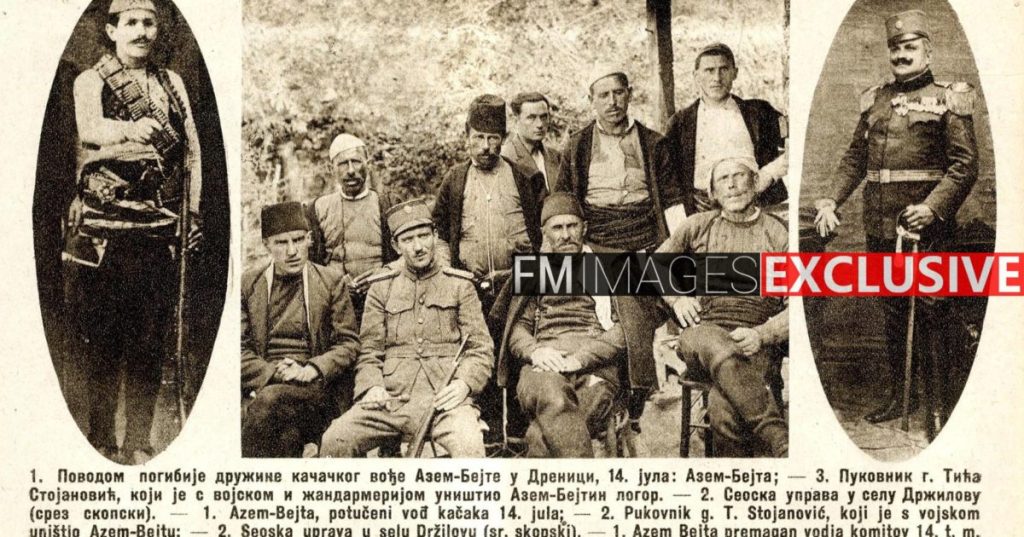
On July 15, 1924, Yugoslav forces committed massacres in the Drenica region, according to the Serbian newspaper HAK, published in Skopje on December 30, 1924. The newspaper also mentioned crimes committed on the Albanian population in Pristina, Prapashticë, Dumnicë-Zagori in Vushtri, Mitrovica and in the region of Rozhaë and Sandzak area. The village was razed, and 120 houses were burned. About 3,000 head of cattle, buffaloes, cattle, oxes, horses and small cattle were stolen.[39]
References
- ASHAK, F. nr.872: 45.
- Kryeziu, Veli; Dugolli, Bujar. The Armed Resistance Movement in Kosovo 1918-1928 according to the Albanian press. p. 240. Retrieved 19 August 2023.
- Geldenhuys, D. (22 April 2009). Contested States in World Politics ([…] of the state to the Kingdom of Yugoslavia (meaning South Slavs) in 1929 brought no respite for the persecuted Albanians. The retribution to which they were subjected (including massacres) continued the now familiar cycle of grievous ed.). Springer. p. 109. ISBN 978-0-230-23418-5. Retrieved 19 August 2023.
- Bytyçi, Enver (1 April 2015). Coercive Diplomacy of NATO in Kosovo. Cambridge Scholars Publishing. p. 12. ISBN 978-1-4438-7668-1. Retrieved 19 August 2023.
- Wasserstein, Bernard (12 February 2009). Barbarism and Civilization: A History of Europe in our Time. OUP Oxford. p. 282. ISBN 978-0-19-162251-9. Retrieved 19 August 2023.
- Jarman, Robert L. (1997). Yugoslavia: 1938-1948 (In some parts of Northern Albania, they (Serbian soldiers) only retired after burning the villages and massacring the population. ed.). Archive Editions Limited. p. 351. ISBN 978-1-85207-950-5. Retrieved 19 August 2023.
- Shaban Braha, Gjenocidi serbomadh dhe qëndresa shqiptare ( 1844-1990), Lumi-T, Gjakovë, 1991, p. 225-375.
- Hamit Boriçi, Një shekull e gjysmë publicistikë shqiptare ( 1848-1997), Tiranë, 1997, p. 84-85.
- Blendi Fevziu, Histori e shtypit shqiptar 1848-2005, Onufri, Tiranë, 2005, p. 60.
- Fjalori enciklopedik shqiptar 1, ASHSH, Tiranë, 2002, p. 410.
- Ramadan N. Ibrahimi, Masakrat serbe në Malësinë e Gallapit në janar të vitit 1921, në: ” Gallapi gjatë rrjedhave të historisë”, Prishtinë, 2010, p. 162.
- Albanian paper “Dajti”, nr. 20, Monday, 24 mars 1924.
- “Dajti”, nr. 53, 7 November 1924.
- Hakif Bajrami, Komiteti Mbrojtja Kombëtare e Kosovës dhe qeveritë e Tiranës për krimet serbe në Kosovë, Prishtinë, 2008; Lush Culaj, Komiteti Mbrojtja Kombëtare e Kosovës 1918- 1924, IAP, Prishtinë, 1997.
- Shih: Tahir Abdyli, Hasan Prishtina ( ribotim), GME, Prishtinë, 2003.
- Ali Hoxha, Faik Kasollja, Islam Sharofi, Haki Sharofi- veprimtaria fetare dhe atdhetare.., pun. i cit., p. 416- 417.
- ‘Komitë serbe në Dukagjin’, Shqipëri e Re, 11 shtator 1921, no. 46: 1.
- The Practice of Bourgeois Class Justice in the Struggle Against the Revolutionary Movement of the Workers, the National Minorities and the Colonial and Semi-colonial Peoples. Mopr Publishing House. 1928. Retrieved 19 August 2023.
- Pllana, Nusret; Kabashi, Emin (2001). Der Terror der Besatzungsmacht Serbien gegen die Albaner (in Albanian) (1918-1921, sont tues beaucoup d’albanais ainsi que leurs maisons brulees. Dans la prefecture de Peja 1563 personnes tuees et 714 maisons brulees; a Mitrovica 1330 personnes et 42 maisons brulees. ed.). Arkivi Shtetëror i Kosovës. p. 33. ISBN 978-9951-404-00-6. Retrieved 19 August 2023.
- “Gazeta “Dajti” e Hafiz Ibrahim Dalliut denoncuese e krimeve serbe mbi shqiptarët në periudhën ndërmjet dy luftërave botërore”. Orientalizmi Shqiptar. No. (Faksimile të marra nga gazeta “ Dajti”, emri i gazetës dhe një tabelë, ku tregohen mizoritë e serbëve mbi shqiptarët më 1918-1921). (Translation: (Facsimiles taken from the newspaper “Dajti”, the name of the newspaper and a table, showing the atrocities of the Serbs on the Albanians in 1918-1921). 3 June 2019. Retrieved 19 August 2023.
- “Masakrat serbe në fshatrat e Llapit dhe Gollapit në ‘Bozhiqin’ vitit 1921”. Bota Sot. Retrieved 19 August 2023.
- “Krimet dhe mizoritë serbe në Dibër dhe në krahina tjera shqiptare 1912-1941 (DOKUMENT)”. KOHA (in Albanian). 24 June 2023. Retrieved 18 August 2023.
- Elsie, Robert; Destani, Bejtullah D. (30 January 2018). Kosovo, A Documentary History: From the Balkan Wars to World War II. Bloomsbury Publishing. ISBN 978-1-78672-354-3. Retrieved 19 August 2023.
- The Practice of Bourgeois Class Justice in the Struggle Against the Revolutionary Movement of the Workers, the National Minorities and the Colonial and Semi-colonial Peoples. Mopr Publishing House. 1928. p. 96. Retrieved 19 August 2023.
- State, United States Department of (1947). Papers Relating to the Foreign Relations of the United States. U.S. Government Printing Office. p. 740. Retrieved 19 August 2023.
- Jarman, Robert L. (1997). Yugoslavia: 1918-1926 (Un detachement montenegrin do comitadjis a esanye de dearmer un ommercant albanais. Vers le decembre 15 ont eu lieu les massacres Podgur. On a detruit 138 maisons; 400 maisons pillees. Villeards et enfante massacres. (Translation: A Montenegrin detachment from comitadjis tried to disarm an Albanian trader. Around December 15, the Podgur massacres took place. 138 houses were destroyed; 400 houses looted. Villers and child massacres.) ed.). Archive Editions Limited. p. 165. ISBN 978-1-85207-950-5. Retrieved 19 August 2023.
- “100 VJET NGA MASAKRA NË SHTUPEQ E KATUNDET E TJERË TË RUGOVËS – Dielli | The Sun”. 22 February 2019.
- Draga, Nail. “Masakra e Rugovës – vazhdimësi e politikës gjenocidale ndaj shqiptarëve”. Retrieved 19 August 2023.
- “Masakrat në fshatin Prapashticë sipas burimeve historike dhe rrëfimeve nga familjarët e mi”. Lajm.co. 10 January 2021. Retrieved 19 August 2023.
- “21:19 / E Diele, 10 Janar 2021 / Blerim 100 vjet nga Masakra e Keqekollës dhe masakrimi i mulla Ademit”. Retrieved 19 August 2023.
- Sherifi, Remzije (2007). Shadow Behind the Sun. Sandstone. p. 35. ISBN 978-1-905207-13-8. Retrieved 19 August 2023.
- “Masakra në Prapashticë dhe Keqekollë”. January, 1921. 1996. Volume II. 2011
- Studia Albanica (in French). L’Institut. 1981. p. 74. Retrieved 19 August 2023.
- RSH), Instituti i Historisë (Akademia e Shkencave e (1993). The Truth on Kosova. Encyclopaedia Publishing House. p. 143. Retrieved 19 August 2023.
- “Terrori dhe dhuna shtetërore serbe-malazeze kundër lëvizjes shqiptare në Sanxhak dhe Kosovë, 1920-30”. Prizren Post (in Albanian). 11 October 2018. Retrieved 19 August 2023.
- “Terrori dhe dhuna shtetërore kundër lëvizjes shqiptare në Sanxhak dhe Kosovë në fillim të viteve 20-të të shek. XX”. ekonomiaonline.com (in Albanian).
- Krasniqi, Mark (1984). Lugu i Baranit: monografi etno-gjeografike (in Albanian). Akademia e shkencave dhe e arteve e Kosovës. p. 37. Retrieved 19 August 2023.
- “Masakra e Jabllanicës (Shqiponjës) së Dushkajës e vitit 1921”. http://www.islamgjakova.net. 7 June 2011.
- “MASAKRA NË DRENICË SIPAS GAZETËS “HAK””. Dardania Press (in Albanian). 21 March 2023.
- ^ NijaZi, Ramadani (2020). Shtegtim në histori – I / Nijazi Ramadani . – Gjilan : Rrjedha, 2020.–libra ; 21 cm. [Libri] I. – (Gjilani në rezistencën kombëtare në juglindje të Kosovës 1941-1951) : (studim dokumentar monografik) – 295 f.ISBN 978-9951-453-24-0. Gjilan: 2020. fq. 277–281. ISBN 978-9951-453-24-0.
- “Masakra e Sopotit, 4 nëntor 1944!”. lajmpress.org. 4 November 2021. Retrieved 19 August 2023.


 Balkan Academia