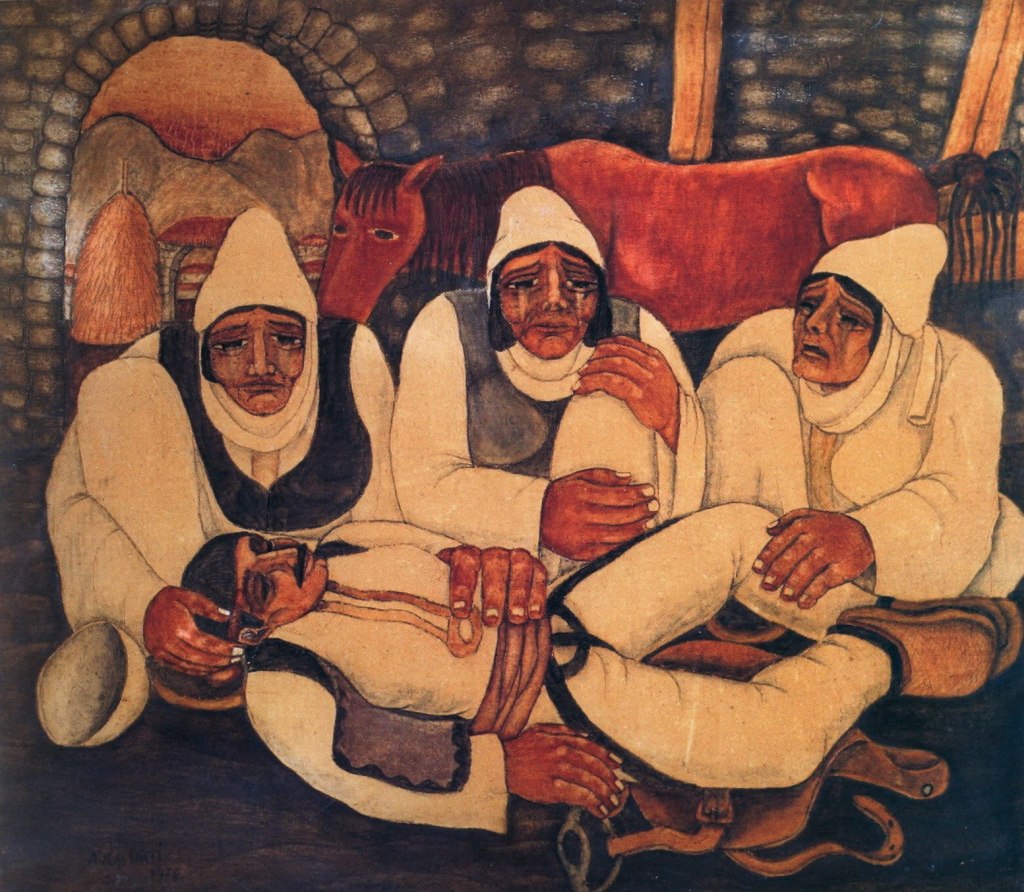

In October 1913, reports of atrocities against the local Albanian population were received from the Austrian Consul General Jehlitschka in Skopje. In one there was talk of the destruction of ten small villages, whose entire population had been killed. First the men were forced to come out of the village and shot one by one; then the houses were set on fire, and as the women and children fled the flames they were murdered with bayonets. In general, according to the Consul General, the officers took charge of shooting the men; the murder of the women and children was left to the ordinary soldiers.
Another source described the behavior of Serbian soldiers after the occupation of Gostivar, Around 300 Muslims from Gostivar, who had not taken part in the uprising at all, were arrested and led out of the city at night in groups of twenty to thirty men, where they were beaten to death with the butts of rifles and stabbed with bayonets (the sleeping ones would have been shot). Residents of the city awakened. They were then thrown into a huge open grave that had previously been dug for this purpose. These were not “acts of spontaneous brutality,” concluded Jehlitschka, but “an elimination or extermination operation carried out with cold blood and systematically, apparently under higher orders“. Such reports, which were shown to coincide with those of British representatives in the region, inevitably influenced mood and attitudes.
Reference
Christopher Clark. “Die Schlafwandler Wie Europa in den Ersten Weltkrieg zog”. 2013. Link

 Balkan Academia