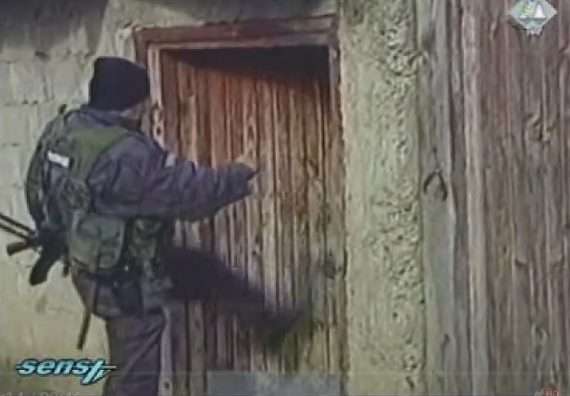

In Belgrade, the Center for Humanitarian Law has published a documentary that accuses the head of the Serbian army, Lubisha Dikovic, of involvement in war crimes in Kosovo, as well as in operations to hide bodies, writes ‘balkaninsight.com’. According to this documentary, around 1,400 civilians were killed in 1999 in the area of Kosovo, which was under the control of the 37th Brigade of the Yugoslav People’s Army, led by Dikovic, reports albinfo.ch.
This documentary is entitled “General Dikovic and the 37th Brigade of Kosovo” and is based on the testimonies of the victims and documents from the International Criminal Tribunal for the former Yugoslavia, but also on the research carried out by the HLC during its work on the two files “Lubisha Dikovic” and “Rudnica”, which were published in 2012 and 2015. This documentary lasts 23 minutes. The evidence shows the role of the Yugoslav Army in the mass murders of Albanian civilians in Izbica, Qirez, Savarina, Rezalle and other villages in the Drenica region.
Some of the remains of a number of victims were later discovered in mass graves in Serbia. 47 bodies of victims were found in 2014 in a mass grave in the quarry of Rudnica, near the city of Rashka in Northern Serbia. The 37th Brigade was responsible for removing troops from the villages of Rezalle, Staro Cikitovo, Donji Zabelj and Gladno Selo in an attempt to cover up the crime. Crimes committed by the 37th Brigade were partially addressed during the trial of former Serbian President Milan Milutinović and other high-ranking officials at the Hague Tribunal, but no one from the brigade was ever prosecuted.
Reference
https://www.albinfo.ch/dokumentari-qe-tregon-per-krimet-serbe-ne-kosove/


 Balkan Academia