
Data on the city of Gjilan during the First World War (1914-1918) are scarce. Therefore, it is of interest to present information of scientific importance, which argue and illuminate interesting moments of this three Albanians during the First World War. The entry into the War of the Kingdom of Bulgaria, on October 14, 1915, changed the balance of forces between the Central and Entente Powers. The Army of the Kingdom of Serbia, due to the military attack made by the Austro-Hungarian and German Army in the north and the Bulgarian Army in the east, was forced to withdraw gradually towards the south.
As a result, the Bulgarian Army quickly advanced in the direction of Kosovo, defeating the Serbian Army and occupying its eastern territories. Thus, on October 22, 1915, Bulgarian military troops entered the vicinity of Gjilan, while on November 18, 1915, they entered this city. The Bulgarian state immediately began to study the general political, social, economic and cultural-educational situation in Kosovo, sending a group of Bulgarian academics and professors to the newly occupied countries, who stayed in Kosovo during the summer of 1916, for carried out a scientific expedition.
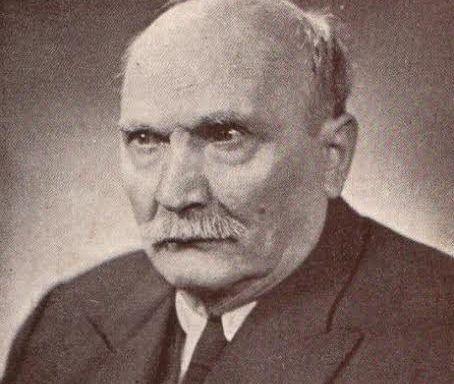
Among them was prof. dr. Stefan Mladenov (1880-1963), philologist and specialist in historical and social sciences. He was also a member of the Academy of Sciences in Bulgaria. In his study entitled “Journey through Macedonia and Pomerania”, Mladenov highly appreciates the ethnic structure of the population of Gjilan, especially the Albanians and their specific language. According to him, Gjilan was the center of the district within the district of Pristina. Albanians constituted the main national structure of the population.
According to him, the District of Gjilan has 85,539 inhabitants. Of them 54,570 Albanians, 28,881 Orthodox Serbs, 268 Gypsies and 1,820 Catholics (Albanians and Serbs?) Or in percentage: 63.5 percent Albanians, 33.5 percent Serbs and three percent other nationalities and ethnicities. The Bulgarian professor admits that the time of the scientific expedition and his stay in Gjilan and the surrounding areas were not enough to study the characteristics of this Albanian center in more detail. He points out that in the summer of 1916, the District of Gjilan was characterized by frequent murders and robberies, which combined with the old habits of a traditional, economically poor population, which used its numerical superiority over other nationalities and ethnic groups – because of the belief in human values and the new political circumstances.
Professor Mladenov, evaluating the Albanians as staunch allies of the Ottoman Empire, justified their approach to the Bulgarian power. According to him, the Albanians were motivated to take retaliatory actions against the Serbian element in this region, due to the hatred for the crimes committed by the Kingdom of Serbia against the Albanians in the years 1912-1915, in which the Serbian minority was also a participant. An interesting statement, of historical and linguistic importance, which the Bulgarian professor highlights, is that according to him “the Serbs of Gjilan have very little resemblance to the real Serbs”, underlining that “the language (of the “Serbs” of Gjilan, F . R) is quite different from those (Serbs of the borders before 1912, F. R)”.
He denies that there has been no Serbian propaganda among the Serbian minority of this region for two decades and at the same time tries to emphasize that a handful of Bulgarians had lived in this territory until before the Russian-Ottoman War of 1877-1878, even in this District where , according to him, there were also Bulgarian schools. Despite the fact that the scientific expedition of Bulgarian academics and professors in Kosovo and other countries also had a political character, which served Bulgarian interests, the historical, linguistic, demographic, social, economic and cultural-educational findings and evaluations that have reflected it should be appreciated this trip to the Bulgarian scientific expedition.
The linguistic dilemmas and the asymmetric relations between the Serbs, which the Bulgarian professor raises especially towards the “Serbian” element in this region, highlight the doubts that the Christian population, namely the Orthodox one, is not completely Serbian and completely Albanian. This fact necessarily raises the suspicions that in the territory of Gjilan there was a considerable number of Orthodox Albanians, who were necessarily assimilated during the years 1912-1915, when Kosovo was occupied and administered by the Kingdom of Serbia. This doubt is reinforced by the fact that representatives of the Serbian military and police administration in Kosovo, respecting the principles of Serbian politics, demanded “Serbization at any price” of Kosovo and its population.
Reference
Mladenov: “Serbs of Gjilan have no connection to other Serbs”. Telegrafi.com. Written by Fitim Rifati. https://telegrafi.com/mladenov-1916-serbet-e-gjilanit-skane-ngjashmeri-serbet-e-vertete/


 Balkan Academia