
Written by: Reshat Avdiu.
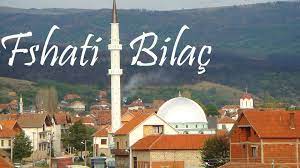
Bilaçi, this medieval town dates back to written documents from 1375 and until the end of 1912, apart from being an Ottoman military center, it was also an Ottoman commercial-administrative center. As an administrative center, it remained and functioned even after 1912, where it continued its activity as a municipal administrative unit even during the regimes of the princely and royal princes of Serbia.
As we said above, during the Ottoman rule, after the border was established down there in South Moravia in Ristoc, the Ottoman military camp was formed here in Bilaç. The bazaar of Bilaç at that time stretched from both sides of the road and the neighborhood of Bilaç was covered with 18 military stores and 2 stores of the civilian sector. And it was called kapali Qarshia e Bilaçi (covered qarshia).
Through these shops, mostly goods of different assortment were traded, where the same goods were brought by traders from the military sector, as well as from the civilian sector, through Arabajinjas (carriers) from Skopje and Thessaloniki. The goods that were traded in these shops were in short supply such as: salt, gas, kuminashi (basmi), sugar, since then it was bought in small quantities by the villagers because it was very expensive, it was rarely found and kept by the housewives (hosts) only when they made some coffee, to any guest as more rare and dear, coffee was roasted and made from barley and rye.
Fejzullah Lutfiu – Çitaku says that in Bilaç, in addition to 18 military stores and 2 civilian stores, there was also a mejhane (tavern, cafe), a sweet shop, five barbershops and three shops, or a shoemaker’s workshop, which was run by Xhafer Emini from Bushtrani, a migrant of forcibly displaced during 1878 from the city of Vranje. We will talk about this family and the relative of Fejzullah Çitak that the Bratosellce Serbs burned in the bakery after 1912 later in this historiographic note.
In Bilaç there was also the municipality in the center of Qarshia, it was a two-story building, and with the entry into Bilaç in 1944 of a partisan formation. A member of this military formation sets fire to the municipal building! Saying these words to her, “Dobro veče gespodja opšvino” (Good morning, lady of the municipality). As Fejzullah Lutfiu-Citaku said, in our municipality of Bilaç, there were many documents of Turkey and Serbia and Krajlita, there were land deeds of Albanian immigrants from Vraja and its surroundings.
The Zabitlar horse stable with the military warehouses, after they looted it well, they also do the same with the Bilaçi District, stealing all the goods from its stores, both of the military sector and also of the civilian one, the Slavic pyromaniac army set it on fire after they took Bilaç from the beginning of October 1912. They also destroyed all the cemeteries of the soldiers, then also those of Zabitlari, where they are still today and testify to the vandalism and pyromania of the Serbian army.
Interestingly, these cemeteries had been separated, the vacant military superiors and the simple soldiers without ranks were also buried in separate plots, only one grave of a military superior (zabitllari) was left undamaged. During the siege of Kralevina of Serbia, the Turkish military barracks was turned into a four-year school. Where for us, since 1941, lessons in the Serbian language were conducted and followed by its teacher Zafir Stoshiqi, who often told the students that we Serbs came from Galicia, Russia, 1200 years ago.
In this school in Bilaç, besides the Serbian students, Albanian and Turkish children attended the lesson, while the Majhup children did not attend the school at all. We will talk about this school and the municipality of Bilaç later when describing the events in retrospect for Bilaç. As long as we are in Bilaçi, it should also be mentioned that in this medieval town, from Masurica and its surroundings, as well as from Fushëgropa e Vranje, several immigrant families were displaced by the violence of the Serbs from their old homes during the years 1878-1883.
They had settled and built their new hearths to live in, hoping that one day they would return to their old Memleqet. During the year 1864, a battle took place in Bilaç between the few Albanian insurgent forces and the Turkish forces led by the brave of our mountains Deli Agush Agë.
As a minor, he and his family, like many other migrant families, had been forcibly moved from the city of Vraja. Many years before Otto von Bismarck’s Berlin Congress of Germany, where they settled and erected their tower-style stone house, there above the Bilaçi Glass in the Çitakke District. It will be shown below how many immigrants who were violently displaced from their homes in the South of today’s Serbia were Turkophiles.
That’s why Aleksa Bogosavljevic himself in his writing “O Arnautima” ed. in Nis 1897 says:
“Albanians always hate the Ottomans and their state under which they feel dependent, on the other hand they have strong feelings for their tribal state”.
“He expressed this attitude even more clearly in his autumn where between others say:
“Arnautu div hero” (brave and undefeated Albanian)
“Zlo ti se sa svih strana sprema” (Evil is being prepared on all sides)
“Al u krvi junačkoj mu” (But in your brave blood)
“Baš ni kapi Turkske nema” (There is no point of the Turk)
From these lines of his it is implied that the Albanians were being attacked from all sides and, as was said above about their conquering goals, they even presented them as Turks. Therefore, his word for that time was very valuable and was a powerful blow against the slanders that were made to the Albanians from all sides. On the other hand, the author in question clearly admits that the Serbian actors, who displaced the Albanians from those countries, they made a lot of mistakes, both from the economic and political aspects.”
After the suppression of the Albanian uprising in blood and iron, helped with all the Turkish military forces sent by Zeki Pasha himself from the Turkish Military Garrison of Kumanovo that was stationed with all its military forces in the village of Čerkez of Kumanovo and by mercenary forces of the former Pasha of Vraja Hysen Mehmet Pasha. While the additional forces of the Turkish army were coming to Kodra e Çukarka near Preševo, to help the additional camp of Bilaç Deli, Agush Aga got the news about the arrival of additional Turkish forces from Kumanova and that they were not far from Bilaç in Çukarka hill. He, with his wife and five of his most loyal warriors, decided to stay until the sacrifice in his stone house, which happened. That for us Albanians in this world without justice, which the occupiers always did to us, there was no other way left for us, so that we express our hatred for the usurpers in joy by saying: “The Albanian in this world has two joys, one when he is born, and one in war with ra”. The Turkish army saw the uprising of the Albanians of 1864 in Bilaç in blood and iron.
The people of these parts, regardless of nationality, as a sign of respect and memory for their insurgent Agush Again, sang songs of bravery and endurance, which are still sung at Albanian weddings today, since the Albanian writing and language was dominated in this region, with many barbarisms from Turkish and Slavic, the only educational institution at that time was the mejtepi of the Bilaç mosque, where Albanian and Turkish children were taught from the Qur’an, to write in addition to the Arabic alphabet, the Slavic Cyrillic was also used.”He expressed this attitude even more clearly in his autumn where between others say:
“Arnautu div hero” (brave and undefeated Albanian)
“Zlo ti se sa svih strana sprema” (Evil is being prepared on all sides)
“Al u krvi junačkoj mu” (But in your brave blood)
Baš ni kapi Turkske nema There is no point of the Turk (2)
From these lines of his it is implied that the Albanians were being attacked from all sides and, as was said above about their conquering goals, they even presented them as Turks. Therefore, his word for that time was very valuable and was a powerful blow against the slanders that were made to the Albanians from all sides. On the other hand, the author in question clearly admits that the Serbian actors, who displaced the Albanians from those countries, they made a lot of mistakes, both from the economic and political aspects.”
After the suppression of the Albanian uprising in blood and iron, helped with all the Turkish military forces sent by Zeki Pasha himself from the Turkish Military Garrison of Kumanovo that was stationed with all its military forces in the village of Čerkez of Kumanovo and by mercenary forces of the former Pasha of Vraja Hysen Mehmet Pasha. While the additional forces of the Turkish army were coming to Kodra e Çukarka near Preševo, to help the additional camp of Bilaç Deli, Agush Aga got the news about the arrival of additional Turkish forces from Kumanova and that they were not far from Bilaç in Çukarka hill.
He, with his wife and five of his most loyal warriors, decided to stay until the sacrifice in his stone house, which happened. That for us Albanians in this world without justice, which the occupiers always did to us, there was no other way left for us, so that we express our hatred for the usurpers in joy by saying:
“The Albanian in this world has two joys, one when he is born, and one in war”.
The Turkish army saw the uprising of the Albanians of 1864 in Bilaç in blood and iron. The people of these parts, regardless of nationality, as a sign of respect and memory for their insurgent Agush Again, sang songs of bravery and endurance, which are still sung at Albanian weddings today, since the Albanian writing and language was dominated in this region, with many barbarisms from Turkish and Slavic, the only educational institution at that time was the mejtepi of the Bilaç mosque, where Albanian and Turkish children were taught from the Qur’an, to write in addition to the Arabic alphabet, the Slavic Cyrillic was also used.
During the passage of time from the song in question, “Deli Agušova Ora (Dance of Deli Agushi)” was also born, played and performed with zurle and tupana (drum), at weddings and other Albanian parties, since the birth of musical groups from Albanians. This beautiful traditional Albanian dance is no longer sung or played, before Albanian weddings and parties, the arixinja were performed as musical groups with zurle and tupana.
As it is, the Reforms of the Ottoman Tanzimat of Gjylhane that were undertaken and applied during the years 1839-1876, had a negative impact to a large extent among the Albanians of Arnautlëku of Niš in general and the Albanians in Fushëgropa of Vranje in particular. Such measures and reforms for Albanians applied by the High Gate at the beginning of the years 1453-1687 had a negative effect on the collection of jizya and that those types of books were only valid for the Christian population and that until that time, the majority of the population the Albanian majority was of the Christian faith.
However, the Albanian population of the area of Nish, with that of Masurica and the Morava Valley of Vranje, had not yet converted to the Islamic faith and were still poor. And that the High Gate also obliged these funds of ours during the years 1453 – 1687, to pay the jizya, this Turkish-Ottoman obligation because they were of the Christian – Orthodox faith.
Reform after reform proposed and implemented by the High Gate, our forefathers reached the Tanzimat reform of 1839-1876. Here, regardless of religion or nationality, they were obliged to pay the obligations imposed on them by the High Gate. According to Sabit Ukë and Millovan Spasić, both of them say that: “Many Albanian families, fleeing from the many Turkish feudal obligations, concentrated in mountain places suitable for blacksmithing, where with all that they were also engaged in agriculture and the master of the time respectively with natural economy.
“While according to Millovan Spasiq, entire Albanian villages in the mountain countries did not pay any taxes and taxes to the then Ottoman government.” But all the Albanians in their autochthonous lands could not all leave the lowlands and migrate through the mountains to escape the tax obligations imposed by the High Ottoman Gate. The remaining Albanians in the lowlands, cities and villages came out openly that these tax measures and other obligations were intolerable for the wide popular spectrum of Albanians as well as other non-Albanian ethnic groups in the world.
A part of them was plundered to such an extent that from time to time they returned the rifle to the Turkish government. But this did not affect the cooling of the Albanian-Turkish relations so much, because these demands were minor from the various Albanian raiding leaders, then these were also not supported and encouraged by the broad spectrum of the popular masses, but were in narrow guises clan (tribal) and Bajrakarist without any clear definition and specific purpose, in short they did not have any real political or economic program, against the Albanian nationwide demands.
When the Albanian League of Prizren was formed in 1878. It was dual at the beginning with its clear programmatic and political positions. In addition to the fact that its main goal was to defend the destruction and devouring of Albanian lands by the Great European Powers. One of the demands of Lidhja was the refusal of the Albanian population not to respond to the payment of taxes and other obligations that at that time the High Gate obliged them.
Sulejman Vogshi was elected as the Minister of Defense in the assembly of Lidhja, where he would press the warring formecines of Lidhja for territorial and state autonomy. The relations that had been more or less good between the Albanians and the High Gate somehow began to cool.
The Revolution of Prizren in 1864, led by their spiritual leader Agush Aga, rose up in open armed local conflict against the Ottoman occupation. There are no written and confirmed documents about the conflict of Bilaç in 1864, but there are unwritten testimonies, i.e. spoken among the people, which enable to some degree the enlightenment and reasoning of the causes that resulted in the armed conflict.
And that one of the causes that led to the extreme of the conflict, was and remained that the Turkish administration also obliged the population of these territories with all kinds of taxes (taxes) that were called and paid as taxes in tithes, hence the jelep taxes and the crippled etc. Even in the song that the people of these parts had dedicated to the war and sacrifice of Agush Agai until his self-sacrifice.
There it is said that there was a large Serbo-Turkish army which was moving around Bilaç, through Qarshi in the direction of the mosque. When the leadership Bilaças Agush Agai, he had seen the Turkish army that was superior to our Albanian army, small in number and poorly armed. Then additional Turkish forces were sent from the garrison of Vraja led by the descendants of Hysen Pasha of Vraja and from the garrison of Kumanova led by Zeki Pasha to help the tabor of Bilac.
And that the Turkish forces had arrived from Kumanovo and were located not far from Bilaç on Çukarka Hill near Preševo. The few Albanian fighting forces are broken and shattered. Agush Agai, seeing the unenviable situation on the battlefield, closes with some friends who had saved him from the first clash with the tabor of Bilaç, in his stone house, with him was his wife, who would also join the resistance of against the Turkish army.
Oso Kuka of Bilaç knew very well that his tower would be destroyed and his friends would be killed, that his wife would be exiled by the Turkish army. It had happened that Agush Agai and his comrades had fought to the last bullet and all had been taken by surprise by the Turks and the Turkish mercenaries paid by the ancestors of Hysen Pashai, with the exception of his wife whom the Turks would later release .
The Turkish army would exile many of the Albanian insurgents together with Agush Again there in the bajbokana (prison) of Vraj, where in 1865, by order of the Turkish reformer Mithat Pasha, Agush Agai was buried in front of the Hamam of Vranje for alms.
The mountainous Pcinja had remained miserable, because the population of the Pcinja district saw Agush Agai as their protector and savior from the heavy Turkish imperial yoke, because in these localities, until then, to a large extent, alongside the Serbian population, the autochthonous Albanian population also lived. While in the mountain village in the Rujan Highlands in Upper Starcë, a stone tower was erected over time, which is still called Starcë Tower, which was used by the government’s border guards until 1912 as a military outpost between the Turkish army and the the Serbian one.
For the population of Bilaç and its surroundings, during the conflict that took place in 1864, led by the kidnapped host Deli Agush Again. As long as he lived, he was always with a rifle in his hand, and he never wanted to ignore the demands and obligations of the Turkish Ottomans.
Haberet (news) that went to the Porta from the people in the Turkish administration that was stationed in Vrja e Kumanovo.
The news that had been widely circulated that the kidnapped man Deli-Agush Agai from Arnaulleku i Bilaç recently raised his head and returned the rifle with several other insurgent Arnauts to the High Gate of Istanbul. Therefore, it has gone so far that it does not consider the demands and decisions of the latter at all. the Turks knew that eventually they would fall into open conflict with the Albanian insurgents and especially Deli-Agush Again, not only would it be fatal for the Albanian insurgents themselves but also the Turks themselves would not escape so easily.
In time, they had decided to set a trap for him even before the conflict of 1864. The Turks used that terrible Serbian motto that says: “Svi vuci siti ama i ovce su na roju”, “all the wolves are full, but the sheep are also in number”. Agush Agai used to have a certain “companion” with the archpriest Pahomie of the monastery of St. Prohor Pcinjski of Diogenes Dardan, the Turks knew this very well, some zabitlar and military, they go one day for a routine check, up to the Upper Starca Tower and, from there to lose track with some soldiers and their sejm, they go down to the church of the monastery, they found out and made a deal with the priest that he should help the Turks in capturing and eliminating the kidnapped Arnaut Deli-Agush Aga.
The Church of the Monastery of Pcinja, which until then was located entirely under the territory administered by Turkey. And that for this service the said Monastery and its bishops would be handsomely rewarded well from the High Gate of Istanbul.
Even the District of Pcinja with its settlements had listened to Deli-Agush Agai’s voice and named him in time for his leadership and bravery against the Ottoman Empire, so the lower layers of the peasantry of both ethnicities, such as the Albanian and the Serbian, loved him and they valued the Brave of our mountains. They identified him as the man and the protector of their peasant interests, because the obligatory sequences from the Porta were the same for the lower peasant classes as for the Albanian ones as well as for the Serbian ones that the jelepi and the tenths of the rent in the agricultural economy obliged both parties without difference of religion and ethnicity.
One day, the archpriest, through his own bishops, brings word to Deli-Agush Agai, that the priest Pahomie of the monastery wants to see his “friend” Deli-Agush, the big bear of the mountains of Rujan, that something is not right. The Albanian insurgent had smelled in time the trick that was being prepared for him by the Turks, but he had decided to go and see his “sick” bloodthirsty “friend” as they had informed him.
There, at Guri i Madhë under Starcë, a legend has been born and survived among the inhabitants of the locality of Bilaç and its surroundings, both among the Albanian population and among the Serbian population. That when Deli-Agushi had offered the tower of Starca well, his horse had investigated the danger that was threatening his owner and there on the Great Stone of the Western Starca he had stepped on him and his tracks had remained buried and deepened on the stones and from that moment his father changed his path and from the other sporadic road he reached the church of the monastery of Saint Prohor Pcinjski.
But all this was talked about by the population as a lot and so it remained a legend, that the traces of the horse’s horseshoes have deepened and remained on the big stone, also like the foot when it steps in the mud, how the traces remain, as well as the horse’s feet the Agush Agait knights are deeply engraved on the Great Stone under the Lower Starca!
As for Dovlet’s army and sejment, as well as for Priest Pahomie and other bishops in church service, Deli-Agushi of Bilaç was a terror and fear for them. According to the confession of Fejzullah Lutfi-Çitaku from Bilaç, an old woman of 90 years of age says that when one of the monks (monks) informed the head priest of the Monastery that Deli-Agushi were coming.
He was not the one who had come out to meet him as a “friend-friend”. But to save his head he climbs the stone steps of the church building when he hears the knock of the horse the priest Pahomie climbs to the third floor of the church building, also the horse with its rider climbs the stone steps of the church building, when the priest Pahomie hears the sound of the horse that he and his rider were going up to the church building, out of fear the priest Pahomie jumps from the window to the ground and drowns himself!
The priest Pahomie committed suicide, due to the fact that he had smelled the situation that Deli-Agushi of Bilaç had found out about the trap he had prepared for him with the Turks, to eliminate him. Where then his head would be worth florins and florins to the Turks. When he sees this scene of the suicide of the high priest Pahomie, the Brave of our mountains understands even better the treachery prepared for him.
As with his hypocrisy in the presence of other parishioners, Pahomije also says these words to the priest “my friend” why did you jump and drown, I came alone with him seeing that you invited me because you were “sick” I came for nothing other bad. After returning from the Monastery of Diogenes, the news goes to Zeki Pasha, the Commander of the Kumanova Garrison who, as we said above, was stationed in the Circassian village not far from Kumanova and the sejmen of the former Hysen Pasha of Vraja, then the latter Pasha of Kumanovo, through the telegraphist dragoman of Kumanovo, informs Xhavit Pasha and other pashalars in Skopje, that the plan to capture and kill Deli-Agushi by Arnautleku of Bilaç had failed.
So the Turks prepare three additional camps from Kumanova and Vraja and send them to Bilaç to chase and kill the Albanian insurgent from Bilaç. This has been written above in this historiographic work.
Fejzullah Çitaku says that to this day, high above Bilaç, in addition to the cave and his pears, there is also Guri i Shpum, where he often sat down to rest and survey the terrain.
After the numerous fights he had with the soldiers and sejment always there, he shook off his fatness from the bullets. How many bullets took Deli-Agushin, but none of them penetrated his body. According to the word of mouth that had spread to the world in Bilaç’s Cauldron, it was said that Agush Again, that the Great God is protecting him because he is a righteous.
He had a great desire to kill only the zabitlars, even the biggest ones who had more moles (ranks) and for this the people said God protects him, that today neither the sword cuts nor the rifle kills him. Analyzing the many songs about the war and the stoic endurance of Deli-Agushi and the other kachaks of our mountains, Xhahit Ramadani wrote among the three: in the monthly newspaper “Veprimi” of November 1996.
“That Presheva and its surroundings are rich with popular creativity both in prose and poetry: During its stormy history, the people knew how to weave songs and marked important historical events and their brave men. A special place in the popular creativity of this region is occupied by “KAÇAK SONGS” . One of the most beloved and popular songs that has been sung for more than 100 years in the villages of Moravica, Preševo and beyond is today the song about the well-known kaçak by Bilaçi Deli-Agush Agën”.
“The reason why Deli Agushi, born in Bilaç, went to the mountain and became a kaçak has not yet been clarified, it is noted that in the sixties of the 19th century, he was a chaush in the tower of the village of Starcë, Agushi, abandoned his duty as a non-commissioned officer and went to mountains. In the village of Bilaç, his birthplace, where most of the stories are told about him among the people, there are two versions of why Agushi escaped.
According to the first variant, one day in the middle of the village, one of the “scumbags” Deli Agushi (accuses him of untrue things). He could not bear this insult and humiliation in the presence of the men of the village, so he went home, took the rifle and killed the one who wanted to take his face publicly.
Hasan Jusufi “Çakërri” from Bilaç recently confessed to me in 1969 the version of why Agush Agai came out kaçak. In the bazaar of Bilaç, in the presence of many people, Deli Agushi gets confused (bashes) with words with the minxha, or with the minxha’s son. This one, in the presence of the men, hits Agushi so much that it makes him sad, that he rushes home, takes the rifle and kills his relative.
After the murder, it did not occur to him to surrender to sejmen and state bodies. He armed himself with many others, formed a group of outlaws and stood against the hykmet. To the invitations of the Turkish governors to surrender, he replied that he can only talk to them through the point of a rifle. As a coward, for a short time, he had put fear into the core of the people.
The women put the children to sleep by scaring them: “Shut up, sleep because Deli Agushi is coming.” In Bilaç, this fact is also narrated about Deli Agushin: before Kaçak came out, he had never left them without saying “besh vakt” (the five meals of prayer). But the life in the mountain influenced him to change habits and become rude and wild.
As a kachak, Agushi mostly behaved in the terrain from Bilaç to the Pçinja river, hiding in the villages around the monastery of Saint Prohor Pçinjski. According to the data of Jovan Haxhi-Vasiljevic: “Deli Agushi acted as a kachak from 1860 or 1861 until 1865, when he was buried in front of the hammam in Vranje, by order of Mithat Pasha, the reformer from Nishi”.
Some Serbian historians treat Deli Agush as a “Turkish tyrant” (Turkish chieftain), who killed and looted with his friends. For this reason, every song in the Serbian language ends with the verse: “More plaçe Pçinja sirotinja”. It is said that Deli Agushi forcibly took the priest’s daughter Anta from the village of Starcë with him to the mountain, but the priest, with the help of the Turkish government, managed to get his daughter back and marry her to the priest of Starcë, Stoilku.
Deli Agushi finds the opportunity and kills Stoilku who had the courage to marry the woman whom Deli Agushi himself claimed to marry.
It is narrated in Bilaç that a certain Stojanin, protoger (kasnec), during the time of Turkey, Deli Agushi ordered him to beat the drum (dobosh) and gather all the adults of Bilaç. But, out of fear of the Turkish governors, the archdeacon did not dare to carry out Deli Agushi’s order.
The next day, Deli Agushi met Stojani and asked him: Why didn’t you call the village yesterday when I told you to? I was afraid of the Turkish hypocrisy, replied Stojani, trembling, and fell on his knees to forgive him for the mistake he had made. Deli Agushi, with confused eyes, addresses him: Stojan, I’m here hiqmet, you had to carry out my order. Deli Agushi showed no mercy, took out the cobra and killed Stojani. Regarding the nationality of Deli-Agushi, opinions are divided by historians and researchers about his work.
The first notes about Deli Agushi are given by Jovan Haxhi-Vasileviqi in the above-cited work, where he states that Deli Agushi was Albanian: “AGUŠ” najsilniji arnautin i arabaša oko šesdesetih godina prasaga veka XIX.” (AGUSHI was one of the chief pirates- the most powerful Albanian kaçakas of the sixties of the last century XIX). In the same book, J. Haxhi-Vasileviqi says: that Deli Agushi occupied the Vraje-Kumanov road as a bandit and committed violence in the surroundings.
The opinion that Deli Agushi was Albanian by nationality is also supported by the literary critic Milosh Savkovic. “Bio je na glasu kaçak Deli Aguš na putu between Skoplje and Vranje” (The Kaçak Deli Aguš was in the voice on the road between Skopje and Vranje) ( 7 ).
Some recent authors, such as dr. M. Zllatanović, J. Trifunoski, S. Stojanović, etc., in their works, claim that Deli Agushi was Turkish and that his great-grandfather came to Bilaç from Konja (Asia Minor) eight generations ago.
Otherwise, his family was of good quality, mentioned in Bilaç and rich. Unfortunately, it is not known to us that any of the Albanian historians and researchers have written so far about the personality, the villain and the activity and intentions of this mentioned villain. Several songs have been sung about Deli Agushin, in different versions, in Albanian and Serbian.
In the house of Ramadan Beqiri in Bushtran, municipality of Presheva in January 1969, our own well-known historian from Bujanoc Xhahit Ramadani, being a student, recorded the song of Deli Agushi by the informant Azem Sylejmani which we will give in its entirety. It sings how those who came to arrest Deli Agushin at his house in Bilaç returned without completing their duty. Beqir Garja lost his way in the yard out of fear.
Dan Çarri hides under the barn to save his life. She sees her headscarf falling as she runs away and complains that “it’s bad for the blackheads on my beard”. The popular singer hyperbolizes Deli Agushin as a brave and successful hero who fights himself against five people.
Deli Agushi, according to popular traditions or (popular mouthpieces), is described as a big man, tall, fast, hearty, hearty, beautiful and with a moustache. He was a fan of fast horses, above all he was brave and was not afraid either of the army or of the minors (majors). Even the officers who were tasked with arresting him avoided meeting him. Several times, the most famous brave men of that area were sent from Vraja to Bilaç to capture Deli Agushin, but they turned back, fleeing to save their heads.
As a man of extraordinary bravery, who did not know what fear is, that is why the Turks have added the epithet “Deli” to his name, which means strict, Deli Agush, the thirtieth Agush.
Mr. Xh. Ramadani says:
“With a zaman in Kazan and Presheva, there was a fight between two families. One of Presheva and the other of Rahovica. The families were big and rich. So that the conflict does not grow or become bigger as the people say. The peaceful people of this area immediately take the initiative to reconcile these two families, but in vain. Since the country’s government did not succeed in reconciling these two feuding families.
One day, the men of Shkodra came with big, beautiful, strong horses and with fast steps. In Presheva, the men from Shkodra were received with great respect and honor. Many rams and calves were slaughtered to entertain the distinguished and fortunate guests from Shkodra. For a week, the men from Shkodran stayed in Presheva, changing the guesthouses of one hostile party and sometimes the other, spending whole nights without sleep.
Their convincing words; “the forgiving and brave man is the one who extends the hand of reconciliation, not the one who kills,” echoed in the odad; Presheva and Rahovice, like bells, but in vain, the hand of reconciliation was not extended because it could not be extended. After a while, these words came to the ears of Deli-Agush Aga, the brave and brave man of our mountains who at that time was hiding from the Turkish governors in the “Prohor Pcinjski Monastery” as well as in the villages near Bilaç, Svinjishte, Sebrat, Starca and Uzove etc.
Mitat Pashai, the reformer and valia of Nis, who had built the new causeway, as it was popularly called the Great Causeway, during the end of the 19th century, where it was intended to promote and advance the development of trade in the Presheva Valley, which was connected through Kumanovo with the Vardar Valley. Mithat Pasha had declared war on the Kachaks and Bashibozuks in order for the trade caravans to move and circulate without fear and for trade to flourish in that world.
Now even Deli-Agush Aga of Bilaç, who until then was not afraid of the Turkish Sultan, no longer he dared, as before, to cheer me up, drinking brandy and tobacco and listening to the pleasant voice of the songs of the Zurla in the Han of Bilaç, which was located around Jada e Madhe.
In spite of the danger that would happen to him from Sullatan’s army, Agushi tells his friends that I went to reconcile those two families.
What the Shkodrans and others could not do, I will do. distrust, this goodwill of Deli-Agush Agai. Those who knew Agush Again well, immediately knew what he was going to do. They knew that he would either reconcile with them, or he would kill the one who didn’t listen to him, he taught the feuding families and without introducing himself who he was and where he was from, looking for an inn, as a chance traveler.
After dinner, he asks the old man of the house about his aunt, and the old man informs him, with the trouble that he had with a family and he intended to take blood, the old man told him in a loud voice.
Deli-Agush Agai asked the old man how many liras the blood cost, and offered him the bag of liras, the surprised old man answered that I don’t want money, but I want blood!
Then, Deli-Agush Agai took out a bullet and gave it to the old man, and said; order now and kill me. The old man was confused at that moment. Angry Agush Agai takes out his cobra from his companion and points it at the old man. O old man, so far I have killed 99 people, God has given it to me blood drinker to become the hundredth, you will get the money, you will forgive my blood, I will kill you, decide!
The old man, frightened by the broken and blurred eyes of Deli Agushi, stands up and forgives his blood without even taking the money”. Thus, in Bilaç and in Kazan and in Presheva and Bujanoca, it was told about the reconciliation that no one else had been able to do except Deli Agushi, the great bear of our mountains of Rujani. The Turks then gave the house of Agush Agai to a local Serb to live in, where after a long relative time, several immigrant families who had moved from Masurica during the years 1870-1883, where they had initially settled in Bushtran, Preševo .
During the Titoist era, they moved and came to Bilaç during 1960 and from that Serb who the Turks had given the house of Agush Agai for residence, during the time of the Serbian Queen, the same Serb had also become its legitimate owner. Jakup Avdiu from Bushtrani came and bought the house of our Albanian President, where even today Jakup Avdiu’s son, Rrahim Avdiu, lives in the same house with his family
It is characteristic to note that the outer walls of the house are very wide, three or more boxes built of stone, with small windows and the doors are made of bung wood and those kind of boards are thick like a type of palzina nailed with nails made in one of the smithies of Bilaç, which were numerous then.
While the roof was built from very thick wood, these were also from bunga, i.e. the crests of the house-tower were then nailed on these crests other trees that Rrahim Avdiu told them were palzina and that these palzinas were then painted with thick mud, the house, namely the tower, was covered with trough-shaped tiles, which the residents often called maghupi tiles.
Fejzullah Çitaku then says that the Maghup people came and settled in Bilaç much earlier than the Arnauts (Albanians) from the vicinity of Vraja came to these parts. The Maghup people were brought here by turk kazani (Turkish cauldron). It is characteristic of the Maghup people that they spent the whole day in the summer under the shadows of the trees near the Barracks of the Turkish Military Tabor of Bilaç and that the food that was left over after the soldiers and military leaders ate or as they were also called zabitllar.
From the jemekxhiu (greenery) of the military kitchen, the food was shared in the same way to these Majup, who waited with their kusies made of copper. Where the same kusies were then used by the population hanging on the vines in the chimneys in the fire room and that among the Albanians of Masurica and Vraja, the fire room was also called shpi.
Milk was mostly boiled in these kusi, then kaxhamaku was prepared for the extended family in them, while the biggest kusi was also used for the one buried in the chimney in the north to heat water for cleaning. These types of copper boxes always had to be tinned often, because they oxidized and the oxide of the same emitted a blue color and had a bitter taste.
While the bread, in addition to being baked in the ashes in the fireplace, it was also baked in a crepule (pan) and this was always made of red clay. In Bilaç, Iftar with Takbir was expected – says: Mynever Esatbei Ramadani from Bujanoci, born in Bilaç, once had a bell, the village of Bilaç was so big that a city eavesdropped on it. On Tuesdays, people from all over came to the bazaar.
While the evenings of Ramadan passed very happily.
On the eve of Ramadan, great preparations were made in homes. The rooms in our houses were whitewashed and cleaned with foundations, then the walls around the street were also whitewashed with lime.
Due to the fact that relatives came with us, they wished us the holy month of Ramadan, and in this way great respect was shown to the well-wishers. Before the First World War (at the time of the Ottomans) there was a Turkish military barracks in Bilaç. There was a hill (shore) near it, and from this hill the messenger of the Iftar, with a ball, announced it.
Even the hill was called the hill of the ball (top bair) they always told him.
In his studies Dr. Mihajlo Kostiq “Preševska Kotlina” (Valley of Preševo) writes about Bilač and its surroundings and says: “Bilač started to develop instead of Preševo from the 16th century, because the road through the mountains of Rujan, even today, is an empty circulation for the Presheva Valley, because they made the continuous connection of the Presheva Province with the East.
And that it has always maintained its valuable circulation function, from Pçinja to Qystendil, then this road led from the monastery of Saint Prohor Pçinja to Bilaç. Bilaç was highlighted as one of the biggest circulating crossroads at that time because many roads led to the Kumanovo Province through the mountains of Rujani. The main road was the one that went from the western side of Rujani to Leran and further to Kumanovo.
This road of Leran was in connection with Morava Valley – South on one side and on the other side with that of Nagorić. Along that road, there were certain places where travelers with camel caravans rested.
It was also called devište (kamilarište), or Čuka e deve, or simply the causeway of camels. Then from the eastern side of Leran, also according to the testimony of Jovan Haxhi-Vasilevic (1913), he says that camel caravans roamed the potez of the road until recently.
Bilaçin, which the Turks also called Delibash. The Turks had settled long before these parts were conquered by the Serbs. Bilaçi had 103 Turkish houses there around the year 1909. The Turks lived a civic life, mostly they dealt with trade and craftsmen of various crafts, then they had their own school and mosque. The circulation function of the road without problems for trade and development of various artisans in that world had made Bilaç as the most popular settlement.
In the end, according to J. Haxhi-Vasilevic (1913), the Turkish government and citizens from Vraja “have always favored Bilaç to the detriment of Presheva. Even before the 18th century, Bilaç was a commercial town.”
Albanians have lived in Preševo since the time of their settlement, while in Bilaç only the “Çitak” Turks lived. Even the expression that was born and survived in the people “like in the old days” or “the delight of those years is never forgotten” – according to Fejzullah Lutfiut-Çitak.
During the socio-economic development, the Presheva Valley, in the last years of Turkish rule, had begun to be known as a province of a special order, first of all with the construction of the Great Wall by the Turkish reformer of Albanian origin, Mithat Pashai, then with the construction of the railway line Moravicë – Vardar 1886 – 1888. While, during the sixties of the XIX century, namely in 1863 – 1865, the construction of the Moravicë Causeway or as it was also called in the people the “King’s Road” (Carski) was completed Drum).
It ran from Vranja to Negoc, then through the field of Bilaç, it went further in the direction of the Kumanova Valley. To avoid the alluvial mud of the Moravica plain, the “Great Causeway” of Mithat Pashai was built at the foot of the mountains of Rujani. Around the road of Moravica, Hani i Bilaçi, with that of Pajazit in Somolica, as well as Hani i Rexhepi from Çukarka, were in the area.
The inns in Moravica, Presheva, in the Great Road of Mithat Pasha in the field of Somolica and in that of Bilaç, begin to decay (destroy) eventually, during the time of interstate definitions between the Ottoman Empire, truncated until then with its concessions and failures through the conferences and congresses of the Great European Powers and the border definitions with Serbia in 1878.
And finally the inns were destroyed with the construction of the railway line in 1888. Until the 60s of the 19th century, the servants in these inns were mainly cincars (Vlachs. Some of the innkeepers were involved in agriculture and blacksmithing, and then they also bought immovable agricultural property.
On the upper road through the Presheva Valley, Stojan Novkoviqi in October 1886, between Bujanovac and Presheva, came across the Bilaçi Inn, which was in use during his time, and this traveler also came across the abandoned Pajazit Inn in Somolica. He described the Bilaçi Inn in detail, stating that such types of inns have been built since the Middle Ages.
This inn had 2-3 meter high walls with large doors, a square courtyard with an area of 50-60 meters. Near it, around the Great Road, there was the tap of the inn, which is still standing the test of time. Therefore according to J.F. Trifunoski (1948) in Bilaç in 1878-1879. a barracks was built for the Turkish military garrison, which has also influenced the revitalization of the Moravicë-Pcinjë road.
For the supply of the garrison and the increase in the demand for road traffic through this settlement, which was very developed in that world and stretched around the mountains of Rujani, many inns and cafeterias of the time were opened, then all kinds of trade and other handicraft shops.
In the economic life, the cincars from Ardhacak and the merchants from Velezha have distinguished themselves the most. They had their shops and “stores” in Bilaç. The neighborhood with the daily bazaar and the annual bazaar, has developed around the school barracks and the municipality of Bilaç. In addition to the peasants from Moravica, Pcinja and nearby districts, merchants also came from Upper Morava, Kriva Pallanka and Ovçe – Polja, etc.
And that Bilaçi has been among a special importance of economic development, A. Uroševici (1949) has also emphasized by studying Kumanova. He pointed out that “pottery was brought from Bilaç to Kumanovo during the Turkish era.” On the other hand, the commercial workers with the colonial and manufactured goods have also supplied the commercial workers of Presheva.
In the old Yugoslavia of the Kingdom of Yugoslavia, Bilaçi has lost much of its meaning of economic and social development. From the advanced qarshia, before and during 1912, known for its 120 shops, in 1940 only 15 were kept. For the Albanian settlements of both Svinjishte that were inhabited by ethnic Albanians as a whole, also for the neighborhood of Tahir Stajkocë, then that of Uzova and Pcinja as localities, there is evidence of the presence of Albanians. Like that of Svinjishte with Sylë Svinjishte.
As for the Locality of Pcinjë with Hasan Arvanicë, who was there long before the violent displacement of Albanians from today’s South Serbia, according to the Turkish records of 1831, he resided and lived with his family in Pcinjë. Hasan Arvanica of Pcinja was a very rich man, where he had three hectares of very fertile land around the River of Pcinja. It is characteristic to mention that during that time he had raised and cultivated an orchard with all varieties of trees and that Hasan Arvanica’s orchard was planted in a layout in a way his orchard was a kind of park and stretched along the river Pchinja.
Many family heads of the settlements that gravitated to that world in the Pcinja District had complained to H. Arvanica that he had married not an Albanian but a jevge (Mazhupe) from Bilaçi. And the other Albanian settlement, with a literal toponym derived from the Albanian language, is Allgunja, where the Albanians of this locality had moved, much later than the Albanians of Arvanica and other localities inhabited by Albanians from the Pcinja District itself.
This violent eviction of the autochthonous Albanians from this region will begin in 1912, and will last from the end of 1918, somewhat later. As for the settlement of Klenik, which is said to have been inhabited by Albanians up to Kodra e Spançevci, unfortunately we have no archival data.
While for the Albanian settlements of Lower and Upper Starca, the inhabitants of these two localities are mostly engaged in breeding because the land they had was scarce, not so fertile. They were mainly connected and cooperated closely with the Turkish military outpost of that time that was established during 1878 and was called the Starca Tower Outpost. This border demarcation line divided the state border between the Serbian Principality of Milan Obrenović and the Ottoman Empire.
The same border line then passed through the settlement of Klenik and went down to Morava in Ristoc and went up to Upper Vërtogoshe, then it passed over the Vraje of Kisha e Saint Ilija, where it then entered the Highlands of Gallapi, i.e. the Vilayet of Kosovo. With the definitive withdrawal of the Ottoman Army during the beginning of October 1912, almost all the ethnic Albanian settlements that we mentioned above with the Turkish Army, they also moved, some of these families went and emigrated to Turkey together with the Turkish Army, some settled in the towns of Bujanovac, Presheva, Kumanovo and Skopje. We will talk about the settlement of Uzova later during this historiographical description, the residents of this settlement with several other families who came from
in 1802 from Konya, Turkey. They were settled among the Albanian residents, these autochthonous residents of this locality, for better living conditions during 1852, most of the residents moved, and that part of them settled in Vraje and another part settled between Nish and Aliksinc in the settlement called Katund, Tërllat or later after 1878 it would also be called Molla e Kuqe.
While Svinjishtja, as a locality, lies 8-9 km southeast of Bilaç, it was always inhabited until 1912 by ethnic Albanians. Where the same residents were mostly engaged in farming and working the little land they had. Our elders have told us many times that in Svinjishte lived the headman of this locality and his name was Sylë Svinjishja, he was a wise and well-respected old man from both Svinjishte and its neighborhood Stajkoce, which is located in the northwest of Svinjishte, where the Albanian named Tahir Stajkoca lived with his relatives, and they, like the residents of Svinjishte, were engaged in keeping sheep and working the land they had few. While on Reka e Madhe etje in Stublina they had the common cemeteries, where even today they testify from their large number and the beautiful large place of their extension where they include a plot of approximately 2500-3000 m2.
Before and during the year 1912, all the inhabitants of both Svinjishte moved, a pretty large part of this locality settled in Skopje, where then a part of them emigrated to Turkey, while the other, smaller part would settle in Norce, Preševo . But the inhabitants of Stajkoca all move away and emigrate to Turkey. The remaining assets of the Albanians of these settlements and other surrounding settlements after their migration, a part where the best lands and houses were, were usurped by the Serbs who came from the Pcinja Highlands and other mountainous localities. As for the other assets that had remained unoccupied, the relatives of these evicted families had united them after a while and turned them into their manors.
The most famous manors in that world were: the manor of Presheva, then the manor of Ajdin Aga from Rahovica. While Tahir Stajkoca’s property was not usurped by the local Serbs, the existing properties he had on Reka i Madhe and Stubli were bought by the descendants of Tahir Stajkoca, and Ymer Agas’s father from Bushtran added it to his existing property and formed his fiefdom.
It should also be emphasized that for Ymer Aga of Bushtrani, immediately after the anti-fascist liberation of AVNOJ’an Yugoslavia, this Lord of our village was the first Albanian deputy of the Vranje District at the Titist Yugoslav Assembly. During the 1941-1945 LNC, he was an active member of the National Liberation Councils for the District of Presheva and Bujanoca.
When the Bulgarians started to burn Bushtrani and its inhabitants were taken to shoot them because they were helping the LNC. Ymer Aga, it is up to this gentleman to convince the Bulgarian superior of the executive team that all the information that you you took them as a team. Ymer Agai of Bushtran knew Bulgarian and Turkish very well and that in their Bulgarian language he had communicated the whole conversation he had with them. Let’s be clear that he had given this high officer of the executive team, a nice fish from his wealth as a reward, to save the inhabitants of his village.
The Chamber of this Lord has always been open to everyone regardless of ideological, clan, national or religious determination. Once, in one of the meetings of the National Council of the Republic of Croatia in 1942, you stated “turbid water is flowing today in these timeless times, but the water will flow and go, the sand stones of the river will remain.”
That the Fascists of the Bulgarian Tsar Boris together with their servants will one day go away like the water of the river, while the stones and sand of the river will remain. The people of these localities will remain and survive the war. Ymer Aga of Bushtrani had it all, he was the richest man in the entire area of Presheva and Bujanoci, and then he was a man of good, generous Albanian character.
The Albanians of Bilaçi with its settlements that gravitated through the mountainous areas of Rujani, as well as the other Albanian settlements of Pcinja District with the withdrawal of the Turkish military camp during the beginning of October 1912 from Bilaçi. There is also a complete migration of the population from the territories that we mentioned and described above. This migration of Albanians from their autochthonous hearths was done out of fear that the Serbian military forces, which immediately, after the entire withdrawal of the Turkish Army from their military positions until yesterday. The Serbs immediately began to invade these eastern territories (boshadisura).
Even the Albanians of these settlements had a bitter and quite fresh experience of the suffering of their brothers from Sanxhak of Nish, Toplica, Kazaja e Vrajë, etc. had gone through. During that wild winter of 1877-1878, by the wild murderous, sodomist and pyromaniac beasts of Millan Obrenovic, Vozhd of the Serbian Principality. During the Turkish struggle for the protection of the border demarcation line: Mirash, Pçinjë, Starcë e Eperme, Klenik, Moravë, Ristovc, Vërtogosh i Eperme and the church of Saint Ilis above Vranje.
Many Albanian men, among the bravest, from the settlements of the border area were mobilized voluntarily and with rifles in hand they fought so that the Turkish Army would remain in its previous positions. The Albanians, until the League of Prizren in 1878, did not have their own regular army to defend their interests. And for that Albanians lined up as vassals, sometimes in the Turkish Army against the Serbian one, then again as vassals in the Serbian Army against the Turkish one.
During that time of 1912, Idriz Seferi, rifle in hand, fought with his brave men, but the battles and his wars were concentrated in the Karadak Highlands of Preshevo and Skopje, while the Albanian territories on the Eastern side of the mountains of Rujan, Mirash, Pcinja, etc. The Albanian insurgents of Idris Seferi did not cover in their defense, these Albanian lands on this side of the railway, along the Moravica River in the direction of Morava i Bujanoci.
For this very reason, the Albanians of the Albanian settlements on the Eastern side of Karadak of Presheva lined up and fought as vassals sometimes in one and sometimes in the other opposing army. The Albanians in these conditions and circumstances created by the politics of the time, could never articulate their immediate national demands and that, after every battle fought by one or the other army, the Albanian demands were thrown to the margins of time, forgotten and neglected.
Even during the bloody battle for the capture of Kumonova by the Serbian Army on 24.X.1912 that took place near the village of Nagoric i Vjetër near Kumanova. Even here among the Turkish Army, many Albanians from these parts had joined their weapons in the war now as vassals with the Turkish Army against that Slav. But among the Turkish Army over time, in the logistics sector itself, murts (trathtars) were infiltrated, these murts were members of the Balkan nationalities that had risen in a victorious war against the Ottoman Empire, and that over time had gained trust in the Porta Highness as loyal to the Sultan.
When the military logistics sector from Thessaloniki and Skopje was requested to send ammunition (ammunition) to the soldiers on the front of the war, the same variant was as in the Battle of Plevna in Bulgaria during the year 1877-78 when the invincible military dreyfus Osman Nuri Pasha had run out of food and medicine for his army. And because of the great effort that he had in vain, he looked from the sea with binoculars to see if the King was taking pockets and food for his soldiers, instead, the chests were filled with amurlluk (soldiers’ caps), soap, shoes and other things not necessary for the battle and the defense of the hitherto unconquered castle of Plevna or Pleme e Vogël.
As we said above, when from Thessaloniki and Skopje, guns and other military equipment were also requested here for the front of the war for the defense of Kumanovo and the border demarcation line: Mirash, Pcinjë, Starcë e Eperme, Klenik, Moravë, Ristovc, Vërtogosh i Eperm and Saint Ili, the soldiers on the front lines of the war received boxes filled with soap, shoes, socks and other items unnecessary for the war.
These things openly testify to the sabotage and failure of the Turkish war policy, then there were high military superiors without Turkish conscience, from people of the Slavic community, for example whether Stojani or Millani, from the bunar (well) or the kroi of Hasan, to bring them to Hysen someone brought out a pitcher of cold water. This Turkish zabiti gentleman was standing somewhere under the shade of an oak near their istikams, waiting for the order from the Kumanovo and Skopje Garrison Command to finally withdraw from Rumelia, because they had lost the war in time.
Reference


 Balkan Academia