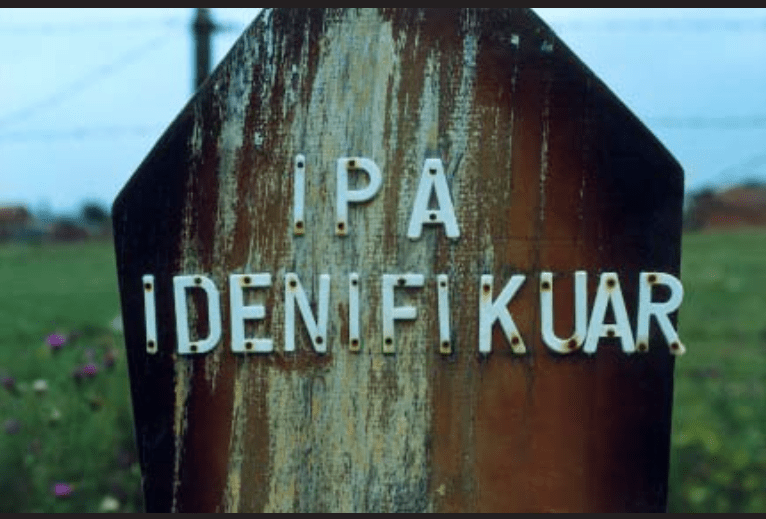

Kosovo was never part of Serbia according to international law.
“[…] Therefore, from 1912 to 1918 Kosovo was technically an occupied territory, with Serbia having only de facto, and not de jure, control over Kosovo.”1
During October 1918, the Serbian army, with the help of its ally, the French army, succeeded in reconquering the northeastern Albanian lands, which it had conquered in 1912 and which were recognized by the London Conference. In order to avoid the resistance of the Albanians, the command of this army, on September 29, 1918, dropped hundreds of proclamations by plane in several cities of these territories (Kumanovë, Skopje, Prizren, Gjakovë, Pristina, Mitrovica, Novi Pazar, Plavë, Guci).
Through them, Albanians were invited to fight against the Austro-Hungarian army and to defend the Serbian minority. It was pointed out that if the request was granted, they would be offered “friendship”, which meant that they would be part of the occupation of their lands. The new state of Yugoslavia was proclaimed on December 1, 1918. It was officially called the “Kingdom of Serbs, Croats and Slovenes” (SKS) and the Kingdom of Serbia, Kingdom of Montenegro (with which Nicholas and his dynasty were overthrown) and from parts of Austria-Hungary, including Slovenia and Croatian territories.
Serbia was the dominant element, not only because of its size and commanding army, but also because the ruler of Serbia, the crown prince, Aleksandar Karagjorjevic (who became regent in his place, in 1914), was declared king of the new state. As for Kosovo, it was included in this process by itself, because it was considered an integral part of the Kingdom of Serbia.
All commentators of that time, as well as all subsequent historians, seem to have accepted this idea as a clear and legitimate fact. Malcolm believes that the truth – in terms of legitimate facts – is different. According to him, Kosovo (including Sanxhak I.A.) has never been legally united with the Serbian state. Malcolm adds:
“However, the strange truth is that Kosovo has not been legally incorporated into Serbia, even according to the standards of international law.”
Constitution of 190 was still in force in Serbia
When Kosovo was occupied in 1912-13, the constitution of 1900 was still in force in Serbia. Article 4 of this constitution makes it clear that no change in the borders of Serbia can be valid without the consent of the Great National Assembly and not the “Ordinary Assembly” or parliament. So we are talking about a wider assembly that had to be convened to specifically consider constitutional issues, and such an assembly was never held to discuss or ratify the expansion of Serbia’s borders, which would include Kosovo and Macedonia.
From the Serbian point of view, it is claimed that, although the correct internal constitutional procedure of Serbia was not respected, the territories were annexed in accordance with international law and thanks to the treaty-making power that the king had. However, the truth and facts show that Kosovo did not belong to Serbia by any criteria.
Furthermore, Kosovo is not legally incorporated into Serbia either according to domestic law or in accordance with international laws and standards. Because, according to Zef Mirdite, (U povodu knjige Noela Malcolm “Kosovo. A Short History”) the author argues, when a territory passes from one state to another with the help of occupation and that during wartime, that act after the war must be recognized by agreement between the two warring parties.
This refers to the London agreement that was signed after the war between the Balkan allies (including Serbia) and the Ottoman state. However, Serbia has never ratified it. The same is true of the Treaty of Constantinople, concluded in March 1914 between Serbia and the Ottoman state, according to which the Treaty of London was considered ratified.
Serbia has never done it either. The same is the case with the agreement in Sevres in 1920, and even with the one in Ankara in 1925, which remained invalid and ineffective in connection with the act of annexation of Kosovo to Serbia. Namely, with the agreement in Ankara in 1925, Turkey considered Kosovo a part of Yugoslavia, and not Serbia. With the formation of the Kingdom of Serbs, Croats and Slovenes, (according to the author Rexhep Shkrijel), the kidnapping and destruction of Muslim property began – “of aga and beylers, who were looted and burned, and a number of aga and beylers and their servants were killed”.
These robberies were committed by Serbian peasants (kmets) because they believed they had a right to the land they had leased for cultivation. As is known, the servants were tenants of the land, while its real owners were the agallars and beylers. Except in Sandjak, Kosovo and Macedonia, many Muslims lived in the new Kingdom.
The Kingdom of the South Slavs of Serbs, Croats and Slovenes tried to get rid of the disloyal Albanian population, which was considered a disruptive factor, and thereby acquire land suitable for colonization. A series of direct and indirect measures encouraged undecided Muslims to migrate and for that purpose the state institutions of the Kingdom of Serbs were used of Croats and Slovenes (Yugoslavia).
Immediately after the establishment of the Kingdom of Serbs, Croats and Slovenes, populating Kosovo, Dukagjin and Macedonia with Serbs, Montenegrins and Slavs was a priority task. For many Serbian politicians and some scientists, the Albanian population has always been a serious problem that needed to be solved.
In the article “Problems of our internal colonization”(«Problemi naše vendre kolonizacije»), which was published in the magazine Letopis Matice srpske (Novi Sad, 1925, book 303, vol.3), Anton Melik declares that:
“Arnauts, in some areas, reached an absolute majority, because, according to our statistics from 1920, they make up 63.9% in the district of Kosovo, 60.5% in the district of Zveçan, 65.9% in the district of Prizren, and Dukagjini up to 80.8%….The main task “should be the destruction of the unity of the inhabited Arnauts, in that way the Kosovo Plain and Dukagjini should be colonized in the first place“.
In the doctoral dissertation Agrarian Reform and Colonization in Kosovo (1919-1941) (Pristina, 1981), Mi. Obradovic writes the author Petrit Imami, (2016, Serbs and Albanians..,) notes that one of the causes that created tension and caused dissatisfaction among Albanians in Kosovo was the way in which the government exercised the Serbian solution “The Serbian bourgeoisie and wanted to break the compactness of the Albanian villages bringing settlers to them.
The proud Albanian could not tolerate the humiliation from the aggressive settlers, so this was the cause of the murders and the creation of new kachaks. (…) The gendarmes also contributed to the bad relations between the settlers and the Albanians.
In the line of duty, they committed abuses, incited the settlers against the Albanians, looted everything they liked and killed without any reason. After Serbia established an occupying administration through a military and police regime, it committed terror and genocide against Albanians, using various forms of violence.
After the end of the First World War, on May 1, 1918, the National Defense Committee of Kosovo was established in Shkodër. The program of this committee envisaged the solution of two main tasks: ensuring the independence and territorial integrity of the Albanian state and the annexation of Kosovo and all occupied Albanian regions with Albania, in a single nation state, as a necessary condition for political development, economic and cultural of the Albanian people.
Hoping, like other patriotic organizations, that the Peace Conference in Paris would resolve the Albanian issue, the Kosovo Committee sent it successive memoranda demanding that the independence of the Albanian state be respected and the injustices done to Albania be remedied at the Conference of London. The committee, which had in its program the liberation of Kosovo and other Albanian regions, the protection of the independent Albanian state and its democratization.
Reference


 Balkan Academia