
Published for the first time on Wikipedia using a pseudonym.
Albanokratia (Greek: Αλβανοκρατία, romanized: Alvanokratia, Albanian: Shqiptarokrati, Turkish: Arnavutluk hükümeti) is a pejorative term for the rule by Albanian elites in regions of the Ottoman Empire between 1750-1846.[1]
The word is a combination of “Alvanos” (Greek for Albanian, see Albanos) and “kratos” (strength). During periods of Ottoman instability, Albanokratia increased as local lords relied more on their own policies than Ottoman centralism. Famous albanocrats were Mehmet Bey Bushati and Kara Mahmud Pasha in Shkodër, Ali Pasha Tepelena of Ioannina and Mohammed Ali in the Western Balkans and Egypt.
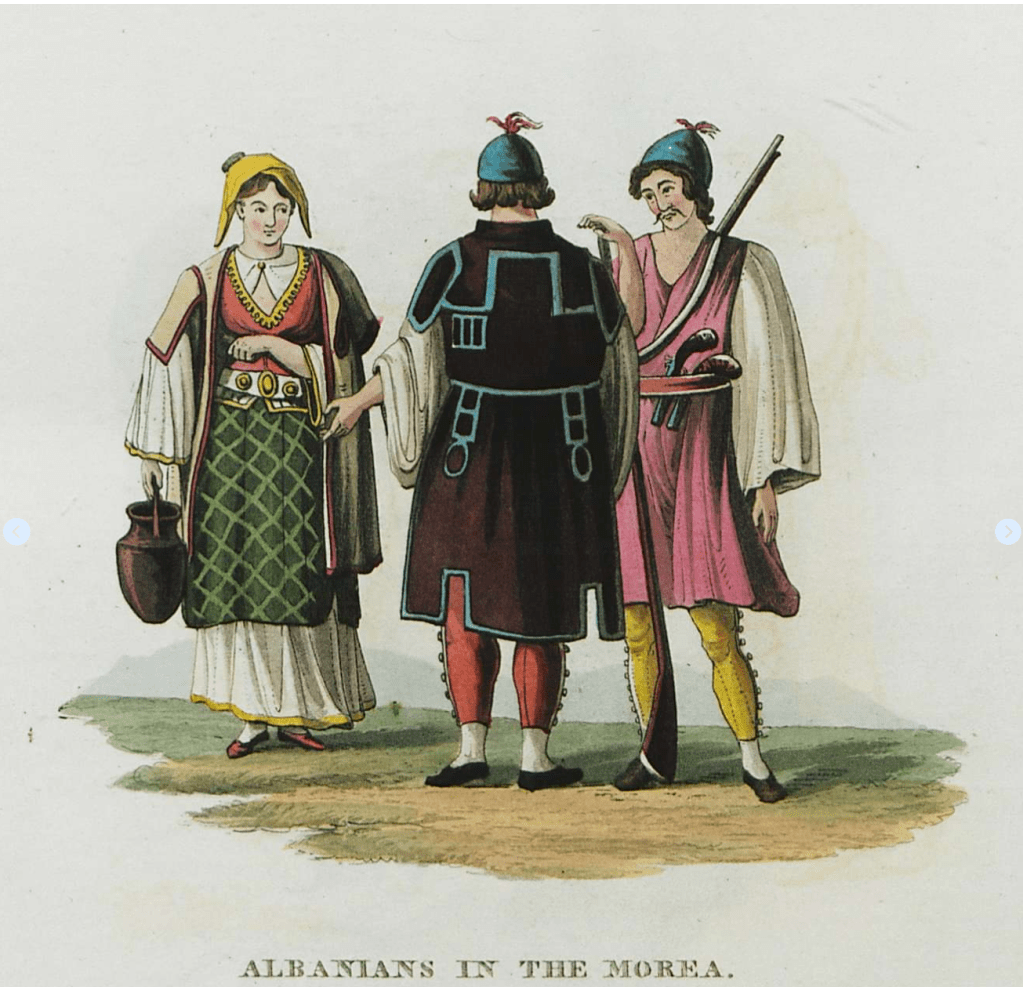
During the Russo-Turkish War (1768–1774), Albanian warbands were brought in to suppress the Orlov Revolt in the Morea.[2] They remained there for several years after, plundering the country demanding payments from the locals.[3]
References
- ↑ Kolovos, Elias (2007). The Ottoman Empire, the Balkans, the Greek lands: toward a social and economic history : studies in honor of John C. Alexander. Isis Press. p. 43. ISBN 9789754283464. Retrieved 16 November 2019. Search this book on
- ↑ Elias Kolovos, Antonis Anastasopoulos (2007). OTTOMAN RULE AND THE BALKANS, 1760-1850 CONFLICT, TRANSFORMATION, ADAPTATION (PDF). p. 125. Retrieved 29 December 2019. Search this book on
- ↑ LIKE THE MAFIA? OTTOMAN MILITARY PRESENCE IN THE MOREA.

 Balkan Academia