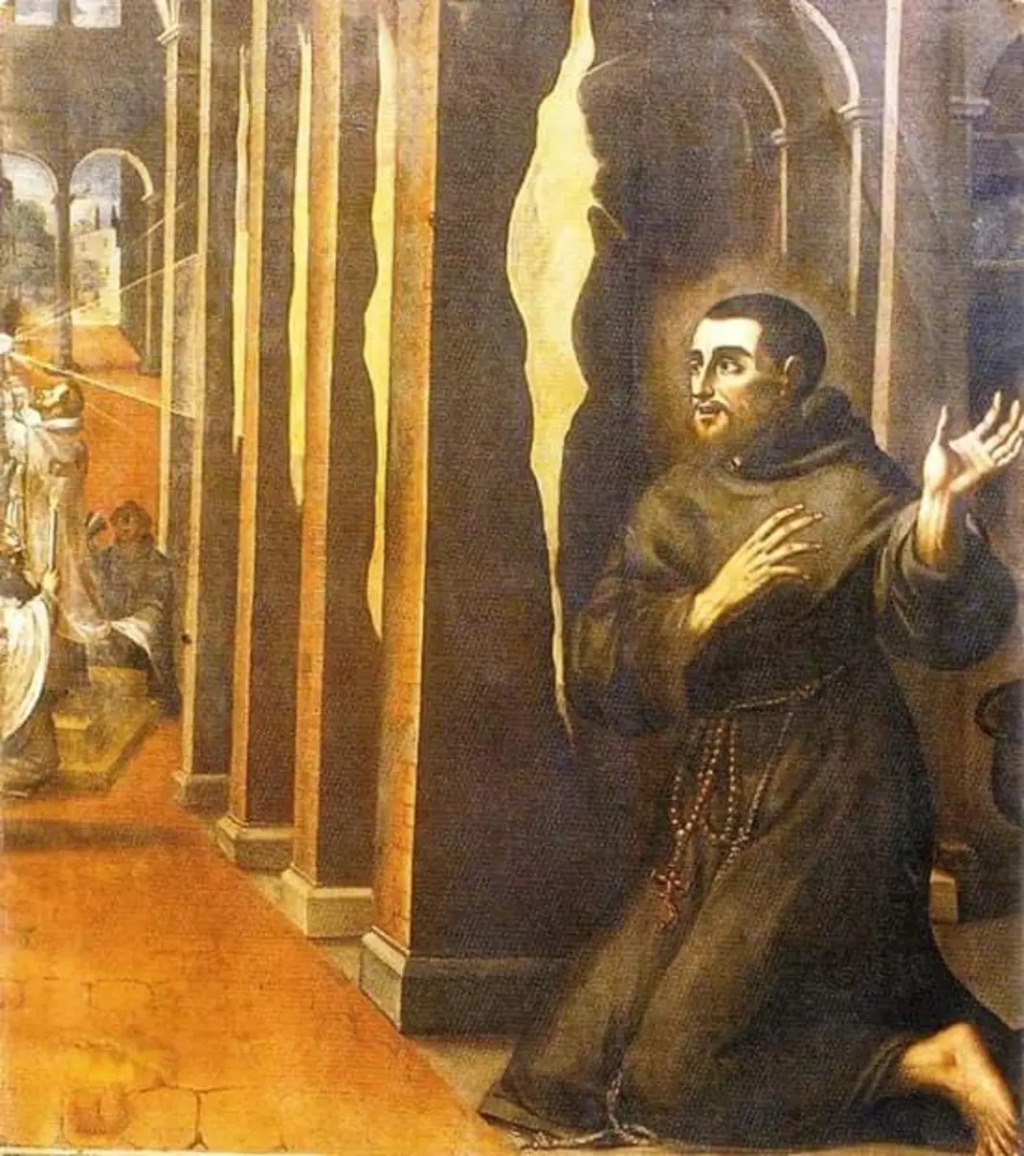

Written originally by me on Wikipedia using a pseudonym.
Don Antonio Velislavi (Bosnian: Antun Velislav) (fl. 1600s) was a Bosnian Benedictine monk from Ragusa and abbot of San Sergio and Bacco monastery in Albania and the deputy bishop of Shkodër. In 1596, Velislavi was appointed abbot of the monastery of Saints Sergius and Bacchus at the Bojana river. In 1598 they turned to the Pope asking for the extension of the assignment and the delegations, which was granted with the brief issued on 1 April 1598.
Their faculties were the same indicated in the brief precedents: to the bishop was assigned for further three years the role of apostolic visitor to the ecclesiastics and the faithful of the regions of Samandria, Belgrade and Serbia, and Ignazio Allegretti also received the same post in the Posega, Temesvár and Sirmio regions[1] . In 1606, the Holy office ordered Antonio Velisalvi and Ignazio Alegretti, former apostolic visitor of Hungary, to report their activities in Hungary.
They left Ragusa and traveled through the kingdom of Bossina, and after an 8-day voyage, they passed through the province of Possega situated between the rivers Drava and Sava, in the town of Bagnaluc. There they found to zoccolanti friars[2] . In 1546, Antonio traveled to the Sandzak of Buda were there were 76 clergymen and 13 years later, only 9 lived in the same place.
In 1607, Velislavi writes to the Holy Office: “The majority of the churches is roofless, there are not any altars, bells, saints’ statues or fonts, but priests christen at houses or in the fields”[3] . Velislavi writes in his reports of interfaith marriages and gives an example of a Christian woman who despite being married to a Turk, remained Catholic all her life[4] .
In Turkish Hungary, the two Benedictine monks treid to reconvert the locals. They were however oppossed by Bosnian Observant Franciscans, who told Ottoman authorities that the Ragusan monks were spies. Ottoman authorities arrested the Ragusans and they were released after Ragusan merchants payed a large ransom. The monks later informed the Pope that the Bosnian Franciscans had converted to Islam and thus been granted spahi land[5][6].
Crimes reported by Albanian bishops
Between 1602-03, many letters were sent to Pope Clement VIII by the bishop of Stephania, Nikollë Mekajshi, of Albanian origin, and by the bishop of Sappa, Niccol Bianchi, who listed crimes which the bishop of Lezhë, Innocenzo Stoicino, and the abbots Antonio Velislavi and Francesco Scoroveo, had committed: the Ragusans did not speak the Albanian language, they despise the Albanians, committed abuses, took away the furnishing of the churches and the income of the local churhces in Ragusa. For these deeds, the Holy See was asked to revoke the mission and appoint new bishops of Albanian nationality, which shows the rather harsh tone against foreign priests, and in particular, the Albanian clergy’s hatred towards Ragusa and Slavs in general [7][8] .
References
Antal, Molnár. Missionari benedettini ragusei nell’Ungheria Ottomana. (1587-1612) (https://www.academia.edu/36
651114/Missionari_benedettini_ragusei_nellUngheria_Ottomana.1587-1612) (Translation: 1596 the pontiff
appointed Stoicino as bishop of Alessio while Antonio Velislavi became, probably in that same period, abbot of the
monastery of Saints Sergius and Bacchus at the Bojana river.22 Despite the assignment of these tasks in Albania,
the Raguseese Benedictines did not want however to renounce the mission in Ottoman Hungary and, for this, in
1598 they turned again to the Pope asking for the extension of the assignment and the delegations, which was
granted with the brief issued on 1 April 1598. Their faculties were the same indicated in the brief precedents: to
the bishop was assigned for further three years the role of apostolic visitor to the ecclesiastics and the faithful of
the regions of Samandria, Belgrade and Serbia, and Ignazio Allegretti also received the same post in the Posega,
Temesvár and Sirmio regions. ed.). pp. 55, 60, 62, 65, . Retrieved 5 November 2019.
- Antal, Molnár. Raguzai bencés misszionáriusok jelentése a hódolt Dél-Magyarországról (1606) (http://epa.oszk.h
u/01500/01500/00003/pdf/Molnar_Antal.pdf) (PDF). Bevezetés. pp. 55, 56, 57, . Retrieved 5 November 2019. - Varga, Szabolcs. Gods in the Part of Hungary under Ottoman Rule Popular Religiousness and Religious
Syncretism in South Transdanubia and in the Southern Part of the Kingdom of Hungary in the 16th-17th Centuries
Crimes reported by Albanian bishops
References
(https://www.academia.edu/20393934/Gods_in_the_Part_of_Hungary_under_Ottoman_Rule_Popular_Religiousn
ess_and_Religious_Syncretism_in_South_Transdanubia_and_in_the_Southern_Part_of_the_Kingdom_of_Hunga
ry_in_the_16th-17th_Centuries). Retrieved 5 November 2019. - Magina, prof. univ. dr. Doru Radosav dr. Costin Feneşan, Adrian. DE LA EXCLUDERE LA COABITARE.
BISERICI TRADIŢIONALE, REFORMĂ ŞI ISLAM ÎN BANAT (1500-1700) (http://real.mtak.hu/13941/1/A.%20Magi
na%2C%20De%20la%20excludere%20la%20coabitare.pdf) (PDF) (Translation: Another issue under discussion
is interfaith marriage. Marriages in the “heretic” environment, schismatic or even unbelievers, were everyday
events. Benedictine Antonio Velislavi gives the example of a Christian woman who, though married to a Turk,
continued to be considered a good Catholic all her life. In the case of the union of an Orthodox Serb with a
Catholic, the latter was forced to abjure the Roman faith and was reborn in the Eastern rite before being married,
as Serbian priests considered baptism in the Roman rite invalid. ed.). „Această lucrare a beneficiat de suport
financiar prin proiectul Programe postdoctorale pentru dezvoltare durabilă într-o societate bazată pe cunoaştere,
cod contract: POSDRU/ 89/1.5/S/60189, proiect cofinanţat din Fondul Social European prin Programul
Operaţional Sectorial Dezvoltarea Resurselor Umane 2007-2013”. p. 144. Retrieved 5 November 2019. - Tollet, Daniel (2007). La religion que j’ai quittée (https://books.google.se/books?id=51sfhH9O0K4C&pg=RA1-PA1
59&dq=Antonio+Velislavi&hl=en&sa=X&ved=0ahUKEwjpwuGR09LlAhWlwsQBHZRsBz0Q6AEINzAC#v=onepage
&q=Antonio%20Velislavi&f=false) (in French) (The other Bosnian Franciscans voluntarily became Muslim ed.).
Presses Paris Sorbonne. ISBN 9782840505198. Retrieved 5 November 2019. - Tóth, István György. Between Islam and Catholicism: Bosnian Franciscan Missionaries in Turkish Hungary, 1584-
- The Catholic Historical Review, Vol. 89, No. 3 (Jul., 2003), pp. 409-433 (http://www.hist.ceu.hu/files/resourc
es/courses/Toth.pdf) (PDF). 2009: Catholic University of America Press. pp. 429–430. Retrieved 5 November
2019. - Antal, Molnár. Missionari benedettini ragusei nell’Ungheria Ottomana. (1587-1612) (https://www.academia.edu/36
651114/Missionari_benedettini_ragusei_nellUngheria_Ottomana.1587-1612) (Translation: In the letters the sins
committed and the damage caused by the bishop of Alessio, Innocenzo Stoicino, and by the abbots Antonio
Velislavi and Francesco Scoroveo were listed in abundance: according to reports, the priests from Ragusa did not
know the language or the uses of the place, they despised the Albanians, they committed abuses, they took away
with them the furnishings of the churches and the income of the local churches in Ragusa, they used donations
and alms in commerce and so on. For these misdeeds the Holy See was asked to revoke the missions, appoint
new bishops of Albanian nationality and that the Ragusan missionaries be recalled. Such instances manifest an
unusually harsh tone towards foreign priests, very hard even compared to the usual one in the ecclesiastical
controversies of the time; not only: there is a profound hatred on the part of the Albanian clergy towards the
Ragusa and Slavs in general. ed.). pp. 51–53, 59, 60–65. Retrieved 5 November 2019. - Antal, Molnár. The Catholic Missions and the Origins of Albanian Nation-Building at the Beginning of the 17th
Century (https://www.academia.edu/40392298/The_Catholic_Missions_and_the_Origins_of_Albanian_Nation-Buil
ding_at_the_Beginning_of_the_17th_Century) (The Albanian-born Nikolla Mekajshi (Nicolò Mechaisci), bishop of
Stephania and Nikolla Bardhi (Nicolò Bianchi), bishop of Sappa, together with the local clergy, bombarded Pope
Clement VIII and influential cardinals associated with him in 1602 and 1603, giving a long account of the sins and
offences committed in Albania by Innocenzio Stoicino, bishop of Alessio and abbots Antonio Velislavi and
Francesco Scoroveo, all Ragusan priests. They stated that the Ragusans did not know the local language and
customs, showed contempt for the Albanians, committed abuses, allowed local church fittings and revenues to be
taken to Ragusa, used donations for trade, and so on. In addition, they requested the Holy See to withdraw the
Ragusan missionaries and appoint Albanian-national bishops in their place. Their submissions spoke out against
foreign priests with a vehemence unusual in church disputes of the time, and they bear witness to a fierce hatred
of Slavs and Ragusans among the Albanian clergy ed.). p. 77. Retrieved 5 November 2019.

 Balkan Academia