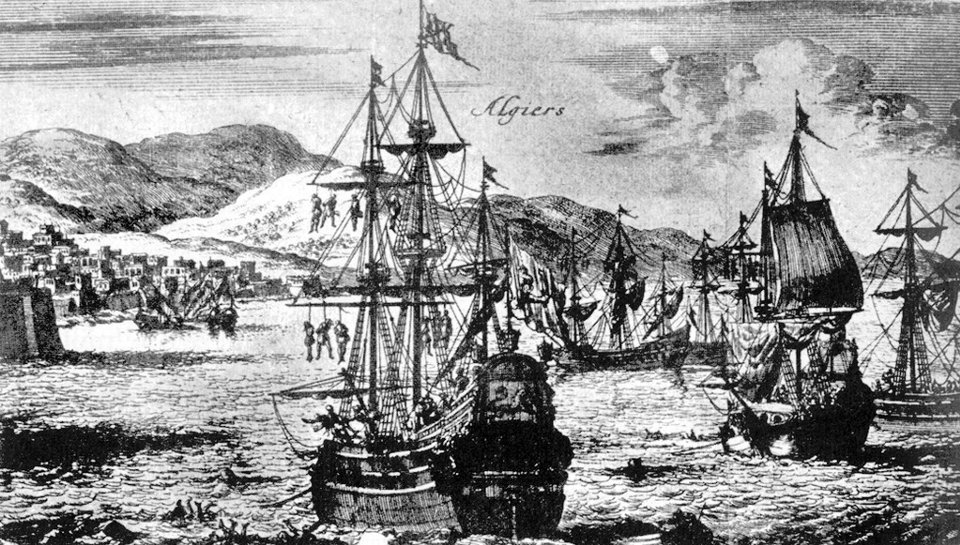

Bego Bobota, Liho Reis, Jer Reis and Ali Hoxha were Albanian pirate known for having plundered islands and kidnapped citizens of Dubrovnik during the 18th century.
Beg Bobota (Also known as Beg Ulqinaku)
“Beg Bobota was the only one among them who had some olive trees next to his house that could be sold. However, here the solidarity among the people of Ulcinj worked in such a way that none of them wanted to give money for Bey’s olives, which will go to the Republic of Dubrovnik. The Dizdar of Ulcinj and the Aga informed Dubrovnik the government that apart from burning down the houses of the defendants, they failed to achieve anything else.
In a special note, the government was informed that the Ulcinj authorities had also burned Beg’s gaeta which he himself renounced at Šipan, and, as already mentioned, they sent her to Ulcinj the people of Dubrovnik themselves.
According to the people of Dubrovnik, Bego Bobota also ransacked the following year, in 1726 along the Adriatic, and Ali-hodža around the islands of Scia and Zakynthos. In May of the said year unnamed pirates from Ulcinj robbed the church in Lisac. Dragoman Magrini reported this to the Bosnian Pasha.
In August of the same year, Ulcinj pirates kidnapped four residents of Lastovo, Paskoj Stjepanovo Šutić aka Brezubac, Vicka Matovog Pasquali, Luka Matovog Šarić and Kuzma Lukša Glumac and Dragomaniac. This time, Magrini went to the new Pasha of Shkodër under the pretext that he would to congratulate him.
His real task was to investigate whether the aforementioned four kidnapped are in Albania, how many pirates are in Albanian waters and what they robbed, and what attitude will the new Pasha take towards the people of Ulcinj? Namely, it was said that he was energetic and that he would really burn all the pirate ships that went on a robbery spree. However, the new Pasha who was expected to “change the face of Albania” was soon killed.
War of 1714-1718
A few years before the start of the war (1714-1718), the Dubrovnik area, how land, as well as water, and Dubrovnik sailors and merchants were more frequent targets of Ulcinj pirates. Pirates kidnapped Dubrovnik subjects claiming that they were subjects of Venice with whom the Ottomans were at war. A few years after the end of the war, the Pasha of Shkodër began to act independently of the Porte, which again favored the Ulcinj pirates. Namely, the Port showed an increasing desire to neutralize the pirates. The peak of the danger from Ulcinj pirates, as far as the people of Dubrovnik are concerned, was reached in the period from 1725.
Until 1731, The islanders, especially the people of Venice, being among the most vulnerable, were forced to protect themselves. The Republic had none ways to effectively and completely protect its subjects. It was hard to tell the difference Ulcinjan peace-loving sailors and merchants from pirates, because they often engaged in both and other work.
Dubrovnik’s subjects were threatened by the same people who arrived in the city with certificates that they have never engaged in piracy. In addition, they are now maritime trade was also threatened as dishonest competitors who used blackmail to obtain leases for their ships. Complaints against pirates, and requests that after the committed misdeeds, punishment and compensation for damages, were rarely fulfilled. The people of Dubrovnik are regular
reported the crimes of the Ulcinj pirates, knowing that it would not be of much use.
As a rule, they turned to the Ulcinj authorities, who were known to mostly cooperate with pirates. Istanbul is far away, so it was more expedient to persistently maintain some kind of peaceful relations with the people of Ulcinj for mutual benefit. Nevertheless, with more serious offenses and in periods when attacks were more frequent, the people of Dubrovnik did not hesitate from referring suits to the Porte. And in those cases, they regularly addressed the people of Ulcinj,
thereby letting them know that they have not denied them the right to be the authority on problems with pirates.
Acta Turcarum
According to data provided by Acta Turcarum, these attacks became more frequent after 1709. During the 1725-1731 period, callous Bobota and Ali-Khoja (Hoxha) pirates frequently attacked the citizens of the Dubrovnik Republic, among whom even were taken prisoners and deported to Barbary. The inhabitants of the island of Mljet testified that pirates from Ulcinj used to land on the island pose as merchants, but then would steal everything they found. During the first half of the 18th century, Ulcinj inhabitants used to come toDubrovnik to repair or have new boats built, and sought medical advice from Dubrovnik doctors. The authorities of the Dubrovnik Republic helped them sell
slaves as well as set free imprisoned Ulcinj citizens. Ulcinj inhabitants who had certificates that they had never been involved in piracy were those who robbed and plundered. The Dubrovnik authorities tried to protect their own interests and avoid open conflict.”
Ali Hoxha (Ali Hodja)
“In the meantime, the consuls in Durrës were preparing to send their representative to Istanbul who will complain that the Pasha of Shkodër is not taking any action against the pirates. Namely, recently Liho-reis, the nephew of the infamous Ali-hodja, kidnapped 6, 7 people and sold them in Ulcinj. Since it was not known to which nation the unfortunates belonged, all the consuls in Durrës had submitted a request to the Pasha to release them.
And in 1726, an attempt was made to deal harshly with pirates. Some of them had their houses burned, and others were taken to the galleys. In the same year, Arslan Pasha Bushati was executed for collaborating with pirates. Despite these measures, the pirates continued to rampage. In 1736, at the request of the Venetian bailiff, the sultan tried again to act harshly by forbidding the harboring of pirates in any of the Albanian ports. In another firman, issued the same year, the sultan threatened the Ulcinj authorities that they would be left without salaries if they were not more efficient.
Also, the people of Ulcinj had to be forced to vouch for each other that they would not commit piracy in the future. It seems that the people of Ulcinj reconciled after the said fermans, because in 1737 a ferman of a preventive character was issued in which there is no mention of new pirate crimes. In 1738, Odaveri Mahmudbegović took the place of Pasha of Shkodër, who clashed sharply with the people of Ulcinj. Odaverdi was soon deposed, and the new pasha was killed in 1739.
According to the firman from 1740, Kapidžibaša should again force the people of Ulcinj to guarantee for each other that they will not commit piracy. Only after the firman was repeated in the same year, the Ulcinj kadi drew up a document with 85 names of ship owners of mutual guarantors, and the name of a separate guarantor was also listed next to each name. Just three months later, the first on the list captured several Venetian subjects in Durrës and released them only when the Venetian consul paid him.
Sultans firmans: capture Ali Hoxha and Beg Ulqinak
At the end of 1725, the Sultan issued two firmans addressed to the newly appointed Skadar Pasha Arslan: one referred to Ali Hoxha, and the other to his fellow citizen Beg Bobot, also known as Beg Ulqinak.
According to those decrees, Ali Hoxha’s brother and son were to be imprisoned until the kidnapped Dubrovnik subjects were freed, the Dubrovnik felucca hijacked by Bego was found, and the damage caused by the robbery was to be compensated. In order to prevent the others from piracy, the sultan requested that the Ulcinj kadi draw up a court document in which the ship owners from Ulcinj would undertake and guarantee for each other that they would not engage in piracy.
In a very harsh tone, the Sultan warned Arslan Pasha that during the signing of the peace treaty in Požarevac in 1718, the Ottoman state undertook to seize the ships from the Ulcinj pirates and, if necessary, burn them, just as every newly built ship would be burned.
However, Bego Boboti (whom the Venetians tried to poison with food in November), and Ali Hodža with five armed fusti in front of Senigalia, around Hvar, on Cape Rodoni and around the island of Zakynthos, roamed the Adriatic the following year as well. The latter continued similar actions on the Ionian Sea the following year. In a decree from Istanbul, the beys of Janina and Delvina were asked to “punish this band of Albanian robbers” (Arnavud taifesinin cezadanidili emredimillir) because of Ali Hoxha’s attack on the Venetian merchants.
After repeated complaints from the people of Dubrovnik in Istanbul about the actions of Beg Bobot and his crew, the houses of the defendants were burned in Ulcinj in 1726, and the damage was compensated by the Ulcinj aga. Porta’s representative sent Arslan Pasha’s head to Istanbul (it was displayed in front of the sultan’s palace), and a larger group of Ulcinians was chained and sent to the galleys.
Reis Jer of Ulqin
“During the next few years, the people of Dubrovnik continued to carefully monitor the movements of Ali-hodža. And in 1727, that pirate roamed around Zakynthos. According to the letters of the Dubrovnik government to the people of Ulcinj, in August 1728, the Ulcinj Reis Jer, who was returning from Dalmatia with his tartan, looted in Koločep and in Slano. In May 1730, the crew of an Ulcinj tartan attacked and robbed a Dubrovnik ship near Šipan.”
Reference

 Balkan Academia