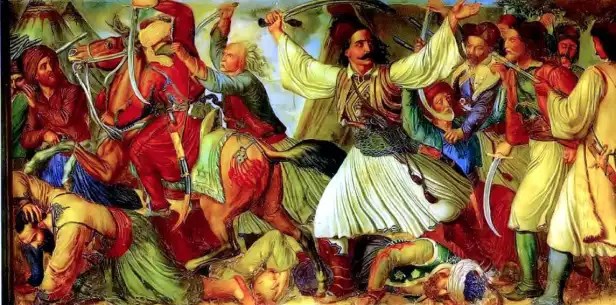

14th century
Bartholomei of Ulcinj and Lekë Zaharias contact with Saxons
“It is clear that these are not random examples of contact, as is also shown by the fact that some regional Albanian rulers of northern
Albania had business ties with the Saxons. It seems that the ruler of Lekë Zaharia and Bartholomei of Ulcinj had such connections from
1374, respectively 1442″1
Ulqin trader Andrija Belčić (Andri Belci) in 1336
“Andrija Belčić from Ulqin traded in the 14th century in Serbia. In February 1336, he paid part of the debt to the Venetian merchant Marko Zana (Alb: Mark Zana) by sending him skins and wax to Dubrovnik. In addition to being delivered for debts, skins were apparently exchanged in Dubrovnik for other goods, primarily fabrics, or, on the other hand, they were bought for cash, and then sent to Venice for sale.”2
16th century
Albanian Voivode Pernava Bey in 1510
” … given by the Albanian voivode Pernava bey on 13 September 1510 stipulates a regular contract of employment with the Venetians who undertakes a service without space limits, behind a monetary compensation and the reserve of the prisoners’ bounties”.3
“1510, ind. XIII, September 13. Instrument with which Pernava bey vaibvoda … “4
Albanians of Hydra and Spetsia and France
“When Mohamed II was questioned, Biele migrated to the nearby islands of Hydra and Spetsia, and in this way it became clear that the inhabitants of these islands still speak the Albanesian (Albanian) language to this day”.5
“In the Middle Ages, foreigners in France were called albani or albini,
therefore. B. droit d’Aubaine.”6
17th century
Albanian Marco da Scutari in 1670s
“Mrs. Giulia, wife of Mr. Marco Albanese from Scutari, soldier on horseback in the Crouati Company of Captain Niccolò Milovichi, passed away at the age of approximately 58, premonitory of the sacraments of the Church buried in the Cathedral Church of this city in a burial of Saint Anthony the one towards the Altar of the Blessed Virgin of the Most Holy Rosary.. “7
Albanian Paulo Buzezia (Pal “Buzët e Zi” (lit. black lips) or Buzia) (d. 1665)
“In the house of Simona Fagnata, in mid-May 1665, Messer Paulo Buzezia died, who is said to have been of the Albanian nation, and otherwise a lieutenant of Captain Nikola Bubica. He received all the necessary sacraments, and was buried in the church of St. Francis. Due to the inability of the curate, the Pula priest Giovanni Maria Mismas led the ceremony.”8
Albanian captain Giacomo Crutta (Kryethi), Resi Paulo Albanese of Bojana and Cabsi Gieli (Cabsi Gjeli) in Zadar in the 17th century
- Crutta Giacomo, Captain of an of armed boat, Albanian, 1608-1611.9
- Albanian soldier Resi Paulo Albanese di Bojana (Res Pal Shqiptari i Bojanes) in 1605… “10
- Cabsi Gieli (Gjeli) in 1605
Verified Albanians from Zadar in the 16th-17th century, according to Napisao Roman Jelić in his “The population of Zadar in the second half of the 16th and the beginning of the 17th century seen through marriage registers“.11
- Basti Domenego Albanac in 1604
- Albanes Primo in 1601
- Bianchi Rade from Ulqin.
- Bianco Zuane Albanese in 1594
- Bocelli Paulina (Prenede) from Ulqin.
- Bracil Alfier Albanese in 1605.
- Braichichi Helena Paulo Albanese in 1592.
- Brinci Piero Albanese, captain in 1594.
- Buerin Biba Albanese, 1605.
- Bugna Nicolo Albanese in 1610.
- Bucain Gega Albanese in 1605.
- Buchmire Simon de Dulcigno (Bukmire Simon of Ulqin) in 1590
- Bucoviza Gega Albanese in 1608.
- Bususi Col Albanese in 1605.
- Pier Caruci (Pjer Caruci), Albanian captain in 1594.
- Marco Chiessa (Mark Qesa) in 1612
- Primo Chimessa (Primë Qemesa?)
- Clossi Andrea (Klosh Andri) of 1604
- Colombsa Biesco Albanese in 1603
- Colonza Geronimo da Dolcigno Albanese in 1613.
- Captain Pal Albanese in 1605
- Conosi Pal Albanese in 1605.
- Chruđa Theodora (Tussa) Albanese in 1594.
- Cruda Tussa Albanese in 1594
- Cruta Paula Albanese 1605
- Crutta Giacomo Albanese cap. di barca armata 1608.
- Fanemi Tussa capural Albanese 1610.
- Gigni Paulo cap. Albanese.
- Zuane sartor Albanese da Dulcigno 1605
- Giaolicich Zorzi Albanese 1611
- Paulo Albanese cap. 1596
- Grinullo Zorzi Albanese 1609.
- Heglani Marietta (qu. Zorzi cavalier) Albanese? 1609.
- Isy Lecca soldato Albanese? 1589.
- Domenego Albanese 1596
- Leroli Zorzi Albanese 1603.
- Mahina Zorzi Albanese 1608.
- Zuane Albanese 1608.
- Marinci Andrea Albanese 1592.
- Maro Zorzi Albanese 1609
- Matarici Stefano Albanese 1605.
- Mazzi Giovani (qu. Giac?) Albanese de Cauro Rondon 1611.
- Medovich Catharina (Nico) de Antivari Albanese 1591
- Meda Stefano Alfiere da Alessio Albanese 1608 (Mida).
- Mehilla Catharina (Domenego cap.) da Dulcigno Albanese 1594.
- Mehilli Nico Albanese 1600.
- Narastri Vassigli soldato sopra la barcha armata, Albanese 1608.
- Palli Paulo Albanese da Boiana 1605.
- Petta Zorzi Albanese 1583.
- Petreo Domenego pre. capelano da Albanesi, Albanese 1604
- Pnisco Catharina (Bitri) Albanese 1601.
- Redo Helena (Beppo) 1604. – Albanese?
- Resi Paolo Albanese da Boiana soldato 1605.
- Rogami Gregorio Albanese 1602.
- Sbuxa Diana (qu. Angelo cap.) Albanese 1598.
- Scura Zorzi mo. Albanese 1610.
- Semiglianovich Stana (qu. Michiel) Albanese 1605
- Piero soldato nella barca armata, Albanese 1612.
- Smachi Andrea Albanese 1597.
- Stipangev Piero (Nicho) alfier Albanese 1605.
- Strusich Nico Albanese 1599.
- Suma Col logotenente Albanese 1604,
- Andrea Albanese da Gionoma 1605.
- Svimiri Piero cap. Albanese 1583.
- Tiecca Paulo (qu. Marin) Albanese 1599.
- Ugrini Michiel (Marin) Albanese da Dulcigno 1590.
- Zuane Albanese 1603 (Utiesse)
- Vlami Diena (qu. Giovani) Albanese 1597.
- Andrea Albanese 1603
- Vuccho (Zuanne) da Ganba Albanese 1613.
- Albanese Piero marinaro habit, a Zara 1594.
- Petreo Domenico Albanese capellani degli Albanesi 1604—606.
- Albanese Piero habit, a Zara 1594.
- Gamba Zuane da Dulcigno Albanese 1599
- Di Como Pal cap. Albanese 1605 (Conosi).
- Crutta Giacomo cap. di barca armata, Albanese 1608-611.
- Meda Stefano alfier d’Alessio Albanese 1608
- Mehilla Domenego cap. da Dulcigno Albanese 1594.
- Sbuxa Angelo Albanese, cap. 1598.
- Stipancev Piero Albanese, alfier 1605,
- Franxi Lecca (Frenxhi Leka) iz Trumpsi (Bojana).
18th century
Armed conflict of 1729 between the peasants of Brga and Albanians Salih and Mahmud from Ulqin
“In 1729, there was an armed conflict between the people of Brga and soldiers from Carina. It all started in front of the house of the Dubrovnik noble family Giorgi, where the people of Brga were drinking together with Salih and two other soldiers from Carina who were natives of Ulcinj. From the testimony of the defendants and witnesses, it is difficult to determine how the fight started, and there is no doubt that the effect of alcohol was crucial.
A certain tension was felt at the moment when a resident of Brga started talking in Croatian with one of the residents of Ulcinj. Hearing the unfamiliar language, another Ulcinian got upset and objected to his compatriot, recommending him to “stop talking to the devil”. Then the soldier Salih had an argument with Bar Božin from Brgać. In the next moment, there was a shooting in which other Brga residents and Turks joined in, descending from Carina.
Soldiers Salih and Mahmud were wounded in the skirmish. The Senate’s verdict on the main culprits was more than harsh: the house of Boško Petar Marinov was razed to the ground, and as he was on the run, it was
announced that whoever killed him would receive a reward of 100 ducats, which would be settled by the sale of his property. In order to calm the tension on the border, the people of Dubrovnik immediately officially informed the Ottomans about the punishment. Vicko Petar Marinova was banished forever from the Republic, … “12
Pirates Andri Zorzi and Reis Scura from Ulqin in 1702
“In August 1702 Andríja Zorzi from Perast and Reis Scura from Ulcinj
were put on trial. The latter lost his ship and cargo on the shores of Albania. For that, he accuses Zorzio of cutting the ropes and anchors and thus the ship perished. In this dispute, the arbitration judges Ivan Bolica and … “13
Albanian Pirate Ceno Cieri of Ulqin in 1751
“The Venetian authorities take various measures for the safety of
navigation and maritime trade. They try to find out the pirate’s intentions. Cumano reported Vanr. prov. 21. XII. 1751 that he found out that the Tripolitanian shipowners had built two new shambeks, with which they were endangering maritime trade. The dangerous UIlcinian Ceno Cieri was also involved … “14,15
Albanian merchant Hasan Zotto from Ulqin in 1785
“… Hasan Zotto from Ulcinj could not sell the load of wood he brought from Albania to Gruž. Therefore, he left that tree to Valjal, so that he could sell it to him. A dispute arose over the sale of that wood, which has been going on since 1785. It seems that Valjalo…”16
Albanian pirate Ahmed Obri Aga from Ulqin in 1749
“The ship Janošević Boža was hijacked by pirates at sea near Petrovac and set on fire there in April 1749. The captain of the pirate ship was named Ahmed Obri-Aga from Ulcinj. The pirate ship had 8 guns
and 112 men. The Dobrot boat was abandoned outside Petrovac.”17
Albanian sailors repairing their ships
“During the first half of the 18th century, according to the letters from Ulcinj, Acta series Turcarum in Dubrovnik, the following Ulcinians repaired their ships:
In 1723. Mehmed-reis, in 1727. Jusuf-reis, and Sulejman-reis inspected the ship before going on business for the Pasha of Skadar, in 1737. Redžep-reis Hoka, 1739. Ibrahim-reis, Mustafa-reis and Jusuf-aga, year 1740. Hasan-reis, 1744. Mehmed-reis, 1746. Mehmed-reis Komanli (alb. Komanlia), and Redžep Birić built a ship in In 1748, Husejn-reis was building a ship, and Huzir-reis was repairing it.
According to undated documents, Palik-aga and Captain Ibrahim repaired their ships in Dubrovnik. and Hasan-reis Šabij (alb. Hasan Shabi), who arrived in Dubrovnik with goods from Trieste, had to inspect the ship and enable him to sell olive oil. On one occasion in Dubrovnik, he painted and decorated the ship of the Pasha of Skadar. All the mentioned Ulcinians have arrived to Dubrovnik with letters of recommendation from Ulcinj dizdar and aga. In 1745, from Ulcinj Dizdar also sent a letter of recommendation for all merchants from Ulcinj and those who build ships. that no one would disturb them in Gruž and the city scaffolding.”18
Omer Reis Lunja, who killed the former dizdar of Ulqin in 1737 and Buran (alb. Burrëhani) with debts in 1750
“In 1737, the Ulcinj dizdar repeatedly asked the people of Dubrovnik to
they extradite Omer-reis Lunja, who killed the former dizdar, so she was ordered to go after him warrant. Captains from some Christian and Turkish ships allegedly saw Lunja in Dubrovnik for a long time. The people of Dubrovnik energetically refuted the accusations, and the fact is that Omer-reis Lunja entered the infirmary in July 1736. In 1750,
less successfully, shelter was sought by Buran-reis who could not return to Ulcinj because debts, the people of Dubrovnik informed the Ulcinj authorities about it.”19
Ulqin merchants transporting in merchants
“During the first half of the 18th century, in addition to merchants from Albanian ports, Ulcinj sailors also brought merchants from Dalmatia, Trieste, Rijeka, Ancona, Venice. In the mentioned period, people from Ulcinj arrived in Dubrovnik infirmaries with tobacco and other goods: in 1722 Jaho from Ulcinj brought 3 bags of tobacco and 22 cloaks, and Mehmed-reis 4 bags of tobacco. In 1726, Ramo Demir arrived
with 20 bags of tobacco. In 1736 Usta Idra came with one bag of tobacco.
In 1738 Šinel Kulči (Shinel Kuqi?) with 6 bales of tobacco, and in 1748 Ahmed-reis with 3 bags of tobacco. The same year Redžep-reis Karadiš sold copper in Dubrovnik. According to Turkish sources, in 1708 Lukša from Dubrovnik rented his house in Gruž to Ali from Ulcinj Beriši (alb. Berisha) who arrived in the port of Gruja with a ship loaded with grain.”20
Hasan Res Spada of Ulqin (alb. Shpata?) who was “out of his mind”
“In 1737, there was a problem with Hasan-reis Spada, who, according to the estimates of the people of Dubrovnik, was “somewhat out of his mind”. This man from Ulcinj arrived in the port of Dubrovnik with a tartan loaded with grain. After that, he dismissed the crew and ignored calls to sell grain in Gruž, Cavtat, or in ports where grain is normally sold. The ship of Hasan Spada simply floated in the city harbor for a long time, the people of Dubrovnik asked the people of Ulcinj to come and take it away.”21
Dubrovnik mediating in the release of captured Albanians from Ulqin
“In addition to mediating the release of slaves captured by the citizens of Ulcinj, the people of Dubrovnik also mediated the release of the citizens of Ulcinj captured and taken to Italian cities. Thus, in 1732, the people of Dubrovnik advocated for the rescue of Sulejman Reis in Monopoli, and in 1738, for several citizens of Ulcinj captured in Barletta.”22
Various accounts of pirates from Ulqin and Durrës in 1712-1713
10 Ulqin ships in 1712 and Husein Reis at the port of Gruja
“In 1712, according to Pasarević’s report, there were ten Ulcinj pirate fusti at sea. In May of that year, Husejn-reis was with a captured Spanish trabacula in front of the entrance to the port of Gruja, where he managed to hijack the Venetian galleys. One of the citizens of Ulcinj who escaped from the captured trabacula entered the city itself with a weapon. Since he was immediately arrested, the Ulcinj authorities asked the Dubrovnik authorities to release him, otherwise they would complain to the Porta. “(imbid p.107)
Pirates Husein Reis Pastrovic, Hasan Dalic, Idra Reis, Mehmed Reis, Hasan Tufa
“At the beginning of 1713, Husejn-reis Paštrović, reis son of Bajram Kurtaz, Hasan Dalić, Idra-reis, Mehmedreis, Hasan Tufa and some other pirates attacked a felucca near the island of Stari Ulcinj with Dubrovnik and French merchants. These merchants loaded their goods on the Dubrovnik pier and sailed to Durrës. The pirates killed three sailors, looted the goods, and sank the ship.”23
“The people of Dubrovnik appealed to the Porta and the Pasha of Skadar and the Ulcinj authorities. In August 1713, a firman was issued addressed to the pasha of Skadar and the kadis of Ulcinj and Bar to investigate and punish the perpetrators. Pasha Arslan from Skadar informed the Dubrovnik government that the houses of the accused were set on fire, and they are still being searched for.”(imbid p.107)
Ulqin pirates Reis Tora in 1715 attacking Dubrovnik ships
“In 1715, in April, Reis Tora attacked several Dubrovnik ships in Albanian waters that, with the sultan’s permission, were going to procure grain. The pirates wounded several sailors, looted all the goods and dragged them to the ship with them. A little later, Reis Omer Dangalos attacked a Dubrovnik felucca in the port of Mljet. Soon, an Ulcinj tartan was near Mljet. Landing on the island, the crew attacked the shepherds, robbed them and stole 15 sheep from them. After that, the people of Ulcinj from a gaeta slaughtered two oxen on Mljet and attacked one of the villages.”(imbid p.107)
Reis Bekri (Beqiri?) and Sefer (alb. Seferi) in 1717 in Lastovo
“In 1717, reisi Bekrin and Sefer were with two fusta near Lastovo. They captured 7 residents of Lastov, ransacked several barracks, and, among other things, completely looted the local church, even taking away the bars from one of the windows. With mediation the Pasha of Shkodër managed to buy the said seven abductees for 38 sequins.”(imbid p.107)
July 1717 when Ulqin pirates kidnapped Petar Šuljažić Fabro from Lastovo
“In July 1717, the people of Ulcinj suddenly kidnapped Petar Šuljažić Fabro from Lastovo under the pretext that he was not a Dubrovnik subject. In August of that year, the reisis Ali and Skala kidnapped ten more Lastov residents from Palagruža. In October, the people of Dubrovnik reported to Pasarević that the people of Ulcinj attacked the Senj frigate near Ancona and, among others, captured the Pelješčan Savin Kopšić, who is now owned by a certain Seleri-age.”(imbid. p.107)
Ali Reis pirate in 1717
“By the end of 1717, Pasarević managed to free all Dubrovnik subjects except for Petar Šuljažić and Savin Kopsić. At the beginning of 1718, the people of Dubrovnik reported to the new vice-consul in Durrës, Ivo Gozze, that Ali-reis, whose tartan ran from Mljet to the Ston Canal, attacked a French merchant ship sailing for Venice with a cargo of grain and wax.”
Further kidnappings in 1718
“The subjects of Dubrovnik should have been warned not to buy the goods stolen from that ship, as well as any other stolen goods. The Dubrovnik vice consul had the right to punish those who violated this provision at his own discretion. In June 1718, two fustas from Ulcinj and one scampavia robbed and attacked everything they came across in Dubrovnik waters.”
Captain Murteza of Vlorë
“The people from Ulcinj kidnapped Stjepan Burluka Marinovo, a resident of Lastov, under the pretext that he was from Korčula. They also attacked the boat of a Pelješčan. In April 1719, it was known that Stjepan Burluk was with Captain Murteza in Valona. Murteza demanded 150 sequins for his release.”
Reis Baraška of Ulqin
“This sum was much higher than the one paid in 1717 for 7 Dubrovnik subjects, so the people of Dubrovnik invoked the privileges according to which their subjects may not be taken into slavery, consequently, nothing should be paid for the release of those who were still captured.”
“In August 1723, the people of Dubrovnik complained to the Ulcinj dizdar that the Ulcinj pirates were robbing everything they came across. Reis Baraška attacked a Dubrovnik barge, robbed it and took two Dubrovnik subjects into slavery. Pasarević, once again appointed vice-consul in Durrës, was ordered by the Dubrovnik government to announce that they would be forced to stop all trade with Ulcinj if this continued.”
Albanian pirates Beg Bobota and Ali-hodža
“For the next ten years, Dubrovnik’s subjects were especially threatened by Ulcinj pirates, thanks to the notorious Beg Bobota and Ali-hodža. Alihodža was one of those pirates who, after the issuance of the firman in 1722, were forced to flee from Ulcinj. Since then, he sailed under the flag of Tripolitan pirates, and he settled and married in Tripoli. Before he started raiding Dubrovnik’s waters and land, Ali-hoxha attacked, among other things, an English ship in Albanian waters, killing its crew, and a French ship, robbing it of 1,600 sequins. His brothers were his brother Husejn and son Mehmed.”
Calling this pirate “the source of all evil”, the sultan himself helplessly concluded that he could never be stopped. Dubrovnik vice consul Pasarević sent the first news about this pirate in March 1724. Then Ali-hoxha with a large number of Ulcinj pirates boarded a Tripolitan tartanella in S. Giovanni di Medua. In August of the same year, the Dubrovnik government asked Pasarević to check the news that Ali-hodža was roaming the Adriatic with two Tripolitanian skirts.”
“Since Ali-hodža as a merchant was well acquainted with the Dubrovnik soil, the people of Dubrovnik were afraid, and in the following years reporting on the movements of this and other pirates would be Pasarević’s main task.19 Less than a year later, Ali-hodža attacked Dubrovnik’s subjects for the first time. In the vicinity of Mljet, his pirates seized two boats and abducted a monk.”
Albanian pirates from Ulqin in 1725
“A month later, in July 1725, pirates from Ulcinj hijacked the felucca of a Dubrovnik subject returning from coral hunting near Šipan. A felucca built in Naples was very valuable. After killing two people and wounding one, the pirates transferred to the ship. The wounded and the killed were thrown into the sea. The others managed to save themselves.”
Beg Bobota Seferov (Beg Bobota Seferi)
“As the pirate’s boat was of much poorer quality, the pirates sank it by transferring their belongings to the Dubrovnik felucca. The value of the coral found on it was estimated by the people of Dubrovnik at 500 sequins. The sailors who escaped later testified that they recognized the perpetrators as merchants from Ulcinj whom they had previously seen in Gruž and Ombla.”
Albanian pirates Mustafir Reis Skala (Shkalla), Hadza Toska, Bag Kurdi Ahmedov, Zhe Geri, Sejdi Sukobiri, Omer Shkura and Shaban Trinka
“It was about Beg Bobota Seferov, who was the leader of the action, and about Mustafireis Skala, Hadza Toska, Bag Kurd Ahmedov, Zhen Ger, Sejdi Sukobiri, Omer Shkura, Shaban Trinka. After this new raid, the people of Dubrovnik immediately sent Ivo Stela, commander of the infirmary, to Ulcinj to file a complaint with the local authorities.”
“According to the government’s instructions, Stella should have stayed in Ulcinj until the felucca was found and the perpetrators caught. In order for justice to be done consistently, the Pasha of Skadar should have arrived in Ulcinj. Stella’s mission was a complete failure. The felucca was not found, just as the kidnappers were not found, and the Pasha of Skadar did not appear. After some time, the people of Ulcinj sent Stella home, claiming that without the Pasha of Skadar, their hands were tied. The people of Dubrovnik were forced to turn to the Porte.”
Dubrovnik complaining to Istanbul
“Writing to Kirika in Istanbul, the Dubrovnik government complained about the failure of Stella’s mission. Stela, as the people of Dubrovnik hoped, should have arrived in Ulcinj before the pirates and caught them with the loot in their hands. However, the people of Ulcinj had foreseen this. Bego thus arrived in Ulcinj before Stela, stayed for a very short time and then sailed for Cape Rodoni and beyond.”
“The dizdar of Ulcinj and the age promised to write a collective petition to the Porte in favor of the people of Dubrovnik, and if the pasha of Skadar does not appear, they will write a petition against him as well. The procedure of the Pasha of Skadar did not surprise anyone, because it was an open secret that he cooperated with pirates and regularly received the usual share of the booty (in the time of Evlija Čelebija, this usual share was 10%).”
“The people of Ulcinj knew that he was in action along with Beg, there were thirteen other pirates, however, they mentioned only the names mentioned above, while the others were protected for reasons known to them. The people of Dubrovnik demanded that the stolen felucca be returned and that they be paid 500 sequins for the stolen corals. As for Alihodža’s misdeeds, they demanded that his son and brother be caught and not released until the kidnapped Dubrovnik subjects return to their homes.”
Dubrovnik demanding that the Sultan burn the pirates ships in 1725
“The Dubrovnik government reminded the sultan of his order to burn pirate ships, which no one carried out, and this order was supposed to protect the interests of all countries whose ships sailed in the Mediterranean, in addition to those of Dubrovnik. Thanks to the efforts of Kirik at the Porta, the Sultan issued two firmans at the end of 1725 addressed to the newly appointed Pasha of Skadar, Arslan.”
“The Sultan was extremely dissatisfied with the actions of his predecessor Bajram. The first firman referred to Beg Bobota, and the second to Ali-hoxha. According to these firmans, the brother and son of Ali-hodja had to be imprisoned until the kidnapped Dubrovnik subjects were freed, the Dubrovnik felucca that had been stolen by Bego had to be found and the damage caused by the robbery had to be compensated.”
“In order to prevent others from piracy, the sultan requested that the Ulcinj kadi draw up a court document in which the ship owners from Ulcinj would swear and be guarantors for each other that they would not engage in piracy. In a very sharp tone, the Sultan warned Arslan Pasha that when signing the peace treaty with the Venetians in 1718, he committed himself that the Ulcinj pirates’ ships would be seized and, if necessary, burned, just as every newly built ship would be burned. Arslan Pasha was authorized and obliged to very rigorously implement measures against the Ulcinj pirates. However, Arslan Pasha was no better than his predecessors.”
Hasan-bey of Kapidžiba setting out to meet with the Pasha of Shkodër
“At the beginning of December 1725, Hasan-bey of Kapidžiba went to Ulcinj, where he was supposed to meet with the Pasha of Skadar and hand over the mentioned firmans to him. Arslan himself informed the Ulcinj authorities about the arrival of the kapijibasha, asking them not to oppose the burning of the Bey’s ship and the confiscation of his property.
Bego Bolotti sunk a ship near Šipan
“It should be noted that the people of Dubrovnik took out the gaeta, which Bego sunk near Šipan, earlier and sent it to Ulcinj. Dubrovnik dragoman Andrija Magrini set off from Istanbul together with the Kapidžibaša. His task was to supervise the search of the houses of the accused pirates in the hope of finding some of the loot and tracking them down. Kapidžibaša will ask the Ulcinj kadija to draw up the aforementioned document with a list of shipowners from Ulcinj and their guarantors.”
“This document will be sent to the sultan, and a copy to the people of Dubrovnik. Also, at the request of the people of Dubrovnik themselves, Magrini should have asked the kadija to compile a list of all merchant ships exclusively of verified and virtuous Ulcinians who will also vouch for each other. As could be expected, none of the accused pirates were found, and neither was the booty. They found the felucca completely naked.”
“Since the mentioned pirates, apart from the houses that the Ulcinj authorities had burned down, mostly had no property that could be sold to compensate for the loss, the Pasha of Skadar proposed to the sultan that the ulufadji (Turkish mercenaries who guarded the city) pay for the damage. Let’s dwell for a moment on the properties of the accused pirates.”
“Bego Bobota was the only one among them who had some olive trees next to his house that could be sold. However, here the solidarity among the people of Ulcinj worked so that none of them wanted to give money for Bey’s olives, which will go to the Republic of Dubrovnik. The Ulcinj dizdar and the age informed the Dubrovnik government that apart from burning down the houses of the accused, they were unable to achieve anything else. On a special note, the government was informed that the Ulcinj authorities had also burned Beg’s gaeta, which he himself had renounced near Šipan, and, as already said, they sent it to Ulcinj”.
Albanian pirates Lunja, Barashka, and Dangali
“The Ulcinj kadija did not draw up a document that was supposed to contain a list of Ulcinj merchant ships. The people of Dubrovnik received a copy of the document requested by the sultan. All those mentioned in this document vouch for each other to renounce piracy, and next to almost every name listed is the name of a special guarantor. In the mentioned document, some surnames of pirates (Lunja, Baraška, Dangalos) who caused trouble to the people of Dubrovnik can be recognized.”
Bego Bobota and Ali Hodza in 1726 sailing in Zakynthos and Scia and various kidnappings
“According to the people of Dubrovnik, Bego Bobota also roamed the Adriatic in 1726, and Ali-hodža around the islands of Scia and Zakynthos. In May of that year, unnamed pirates from Ulcinj robbed a church in Lisac. Dragoman Magrini reported this to the Bosnian Pasha. In August of the same year, pirates from Ulcinj kidnapped four residents of Lastovo, Paskoj Stjepanovog Šutić aka Brezubac, Vicko Matovog Pasquali, Luka Matovog Šarić and Kuzma Lukša Glumac.”
“Dragoman Magrini went this time to the new Pasha of Skadar under the pretext of congratulating him. His real task was to investigate whether the aforementioned four are in Albania, how many Berber fusts are in Albanian waters and what they have looted, and what attitude the new Pasha will take towards the people of Ulcinj. Namely, it was said that he was energetic and that he would really burn all the pirate ships that went on a robbery spree. However, the new pasha who was expected to “change the face of Albania” was soon killed.”
The misunderstanding in Polače of Mljet in 1726
“In May 1726, the Ulcinj tartan arrived in Polače on Mljet, causing real panic among the inhabitants. While the people of Venice who happened to be in the vicinity fled with their heads regardless, the people of Ulcinj shouted after them that they were merchants of corn, grain and tobacco and that the only thing they wanted was food and drink, which they intended to pay for.”
Having stolen the tools of the local carpenter and mason, which the latter had left behind while fleeing, the people of Ulcinj returned to the ship. Soon a dozen armed Venetians gathered on the shore. After the harsh words, there was also a shooting started by the locals. The people of Ulcinj then sailed away. To the inquiries of Senator F. Sorg, who was conducting an investigation into this case, the people of Venice replied that they had to walk under arms and organize guards, because the people of Ulcinj were constantly attacking them.
They claimed that the people of Ulcinj never landed on the island without kidnapping, stealing, and killing. All of them pretended to be merchants. They stole cattle from shepherds, robbed houses, harassed the locals. They recently kidnapped a local man and only returned him when 150 ducats were paid to them. All witnesses unanimously claimed that the situation was intolerable and asked for help from the Republic.
Haj from Ulqin
Testifying in detail about the misdeeds of the people of Ulcinj, they cited as an exception that confirms the rule a certain Haj, who was peaceful and harmless, and even offered help in solving problems with his fellow citizens. During the next few years, the people of Dubrovnik continued to carefully monitor the movements of Ali. And in 1727, that pirate roamed around Zakynthos.
Ulqin reis Jer (Zher?)
“According to the letters of the Dubrovnik government to the residents of Ulcinj, in August 1728, the Ulcinj reis Jer, who was returning from Dalmatia with his tartan, looted in Koločep and in Slano. In May 1730, the crew of an Ulcinj tartan attacked and robbed a Dubrovnik ship near Šipan.”
Kidnapping of 1726
“The Dubrovnik subjects, who were kidnapped by Ali Hodža in 1726, were still in captivity in Tripoli, despite all attempts by the Dubrovnik government to free them. The Tripolitanians refused to return them, claiming that they were Venetian subjects, and considering the peace between the Ottomans and Venice, concluded in 1718, they had no right to keep Venetian subjects either.
In 1729, the apostolic prefect in Tripoli contacted the Dubrovnik government offering to release Fran Orebić, who had been kidnapped from Pelješac and imprisoned in Tripoli, for 108 sequins. Let’s note that Fran Orebić was not kidnapped by Alihodž. A little later, Friar Antonio Sanchez and Friar Lorenzo found themselves in Dubrovnik.”
“Garcia, who undertook to release 22 Dubrovnik subjects within four months, most of whom were in Tripoli, where they were sent by Ali-hoxha. The Santa Maria Maggiore cashiers will pay them 25 sequins per person, with 200 sequins in advance. However, the captured Dubrovnik subjects will eventually be freed through the Porte. Among them, the only monk Frano Simlico, son of Đuka Ivanov from Babino Polje, managed to free himself at the beginning of 1732, a few years before the others. The Tripolitan Pasha freed him for 530 thalers.”
Pirates of 1742
“In 1747, pirates from Ulcinj attacked a French ship and on that occasion killed Peraštan’s captain. Grill. This event disturbed the people of Perašta so much and awakened in them a desire for revenge, that the Venetian authorities themselves had to fight to prevent any contact between the warring parties. On the same ship was a Dubrovnik citizen named Zvane Zupan who was kidnapped and sold in Shkodër. The Dubrovnik government threatened the people of Ulcinj that they would inform the sultan about this case.”
Omer Struca in 1748
“In 1748, reis Omer Struca landed with his party on the rocks of Konavo and collected 25 locks from a pasture. Although still present, the danger of Ulcinj pirates it was reduced to a smaller size in the second part of the thirties and during the forties measure.”
Croatian ship repairer Anton Pilato (Antunom Pilatom)
“… archival data, that Antun Pilato is in Albania, mostly in Ulcinj, then in
Shkodër and Durrës. During that time, he benefited the people of
Ulcinj, whose ships he repaired, and most of all the Pashas, for whom he
built new ships. The government also benefited from his stay in Albania,
because Pilato was on good terms with the pashas, especially with
the dangerous Mahmud Pasha, and he often informed the Dubrovnik
government about the important political and economic events of that time.”24
” … ships had to leave suddenly, for which we have information that it
happened in Ulcinj. The issue of Đumruk appeared to a stronger extent every year. 1795, when Antun Pilato reports to the government from Ulcinj that Hasan Bey, the commander of Ulcinj, seized four ships that came to load wood needed for the shipyard in Gruž for the account of private individuals. The crew was imprisoned in the Ulcinj fortress, and they are on ships … “25
“He interrogates various shipbuilders, shipwrights, and other persons who have returned from Albania, for many particulars about that fee. Again, we meet here with Antun Pilat, who in Ulcinj charges 2 piastres for a car (sometimes less) and issues teskeres. It is also said about Ivan Valjal that he also leased some Đumruk in Albania. The pasha of Skadar left the djumruk in Ulcinj to the local muslin. It cannot be determined exactly whether dumruk was paid for one piece of wood or for one…”
“… performed by the Pasha of Skadar. After returning from Albania, Jugović is all about this news conveyed to the Small Council. Even then, Antun Pilato informed him that some Albanian corsair had stopped a Dubrovnik ship, but he let him continue his journey freely, saying to him: You are our jatelji.”) For the role played by the Georgian in these dangerous times shipbuilder Antun Pilato, it must be said that, although he was in a very … “26
Albanian merchant Antun Ašik (Anton Ashiki) in 1788
“When Proto Vicko returned from Albania in the aforementioned year 1788, he reported to the government about the circumstances there, according to custom. He gave valuable information about the movement of the army that the Pasha of Skadar sent towards
Kruja. Vicko stated that all Albanians who are in Dubrovnik, and especially Antun Asik, report to Albania everything that is done in Dubrovnik. He heard from many people how
Asik spoke unfavorably about the people of Dubrovnik who sided with the emperor and … “27
“Albanians constantly want to build ships, but not having qualified shipbuilders at home, they are constantly looking for them in Dubrovnik, and sometimes they turn to and Korčula. Through Antun Ašik, a merchant from Ulcinj who often stays in Dubrovnik, the government found out when he returned to Dubrovnik from Shkodra in 1785, that he was grazing – he is suing that the requested counters are not sent to him. They haven’t started building Šambek yet, but already
only the wood is prepared.”28
Hassan Zati in 1777
“By the way, the foreigners who brought the wood were very competitive with the people of Ulcinj. Until 1777 The people of Ulcinj used their ships to bring wood for ships to Gruž and Korčula. It was in 1781. Hasan Zati also worked. On behalf of the Albanian traders, the people of Dubrovnik also transported wood to Alexandria, and the people of Ulcinj also did the same.”29
Sailors Guči Ali-Arapi, Daut Kalija amd Alibasa in 1770
” … Two of them were sea captains and had their own ships. They were Guči Ali-Arap and Daut Kalija. The Arabs did not have a real surname, but took the names of their masters, such as Maksud Arap Bećira Jusuf (alb. Maksud Arapi Becir Jusufi). Those who were free were not called Arabs, but Arabs, so e.g. Tahir Arabi. We will find their names in the list of captains from Ulcinj. In 1770, Alibaša from Ulcinj brought two female slaves from Egypt … “30
Assan Cassani of Scutari (Hassan Kazani of Shkodër) and Rectas Reis Dulzignotto (Rectas Ulqinaku)
“Assan Cassani, a Scuterino merchant, was the first character, who
he appeared in Patras asking me for compensation of eleven thousand Zechini with the hidden favor of the commander of that time; on the quoi to the Excellent processor of Your Excellency in my reverent letters 10 April 1774 S.N. and I managed to get him to assist me claimed with the favor of Rectas Reis Dulzignotto, was commander of that sad nation in Patras and appointed to guard those seas and the Gulf of Lepanto with a powerful Sciambecco… “31
Rajs Ulcinjanin (Rais Ulqinaku)
“… the Venetian trabacula passed by Valdanos, all the blacks (meaning the pirate crew) wanted to attack them, but Rajs, who is from Ulcinj, did not allow it, because they were near Ulcinj. Namely, the people of Ulcinj agreed with him that he must not attack anyone in the vicinity of Ulcinj, because otherwise they would not allow him to land on land. He hopes that the pirate ship will soon sail to Africa so that these ports will be freed from attack … “32
The assassination of Algier Bey M’hammed ben Bekr (Mohamed Ibn Bekir, or Mohamed Khodja) killed by an Albanian named Ozen Ali in 1754
“On 11 December 1754 the dey Mohammed was distributing wages to the Janissaries, when an Albanian, named Ozen Ali, he approached him as if to kiss his hand and suddenly, instead, he gave him a jab in the shoulder with a pistol. Placing the murdered man’s turban on his back, he stood up on the … “33
Albanians of Perroi (Peruj), Hrtkovci and Nikinci in Zara, Croatia
“Austria hosts Albanians in the two villages of Hrtkovci and Nikinci near Mitroviz in the Peterwarden Regimental District and in Dalmatia near Zara, namely in the suburb of Borgo Erizzo, Croatia. Arbanasi, and in Ploča. The former, who belong to the tribe of the Klementians, are called Klimente, also Cimirote, by the Serbs, and who call their language Klimentist, Wind. 88, entered their current residence at the time of Serbian immigration under Patriarch Arsenius IV (Ioannović) in 1737.”
“The Dalmatian Albanians came to their current homeland in 1726 under the Venetian Provveditore Erizzo from the two villages of Albania Brisk or Brist and Šest at the instigation of Vincenz Zmajević, who, formerly archbishop of Antivari (Bar), became archbishop of Zara in 1711. Since the Albanians in Zemunik have stopped speaking Albanian, according to the information of my esteemed friend, Professor Ivan Berčić, there are currently 1,239 Albanians in Dalmatia, of which 1,174 live in Borgo Erizzo, while 65 live in Ploča.”
“The original Albanian inhabitants of Peroj (Alb. Perrúa, with the article Perrói, river bed, Thal) near Pola in Istria, who immigrated in 1657, gave up their Albanian nationality. According to A. Ficker, the number of Albanians in Austria is 3,500 souls”34
18th century relations between Russia and the Pashas of Scutari and Janina
“It would certainly be an exaggeration to attribute greater importance to these relationships in the context of Russian Balkan policy. The Albanian pashas of Scutari and Janina mostly used the negotiations with Russian government representatives only as a means of exerting pressure on the Porte; Russia itself was unwilling or unable to commit major resources to the benefit of some Albanian mountain tribes. In general, Russia had no direct interest in Albanian territory … “35
References
- https://www.google.se/books/edition/Onomastica_Jugoslavica_glasilo_Mu%C4%91uakad/4oRiAAAAMAAJ?hl=sv&gbpv=1&bsq=Ulcinjanin&dq=Ulcinjanin&printsec=frontcover ↩︎
- https://www.google.se/books/edition/Acta_historico_oeconomica_Iugoslaviae/9s3sAAAAMAAJ?hl=sv&gbpv=1&bsq=Ulcinjanin&dq=Ulcinjanin&printsec=frontcover ↩︎
- https://www.google.se/books/edition/Venezia_e_i_Turchi/q2khEAAAQBAJhl=sv&gbpv=1&dq=Pernava+bey+1510&pg=PA29&printsec=frontcover ↩︎
- https://books.google.se/books?id=e0nqFbnBFfQC&pg=PA107&lpg=PA107&dq=Pernava+1510&source=bl&ots=CAj8lyDlup&sig=ACfU3U3NWwaWVZcPaBp7hPjWP9wHWVCACA&hl=sv&sa=X&ved=2ahUKEwintv7PpdWFAxVECRAIHQZHB4YQ6AF6BAgGEAM#v=onepage&q=Pernava%20&f=false ↩︎
- https://www.google.se/books/edition/Host_Bibliographic_Record_for_Boundwith/ENBKAQAAMAAJ?hl=en&gbpv=1&dq=albanier&pg=PA415&printsec=frontcover ↩︎
- imbid. ↩︎
- https://www.google.se/books/edition/Anali_Zavoda_za_povijesne_znanosti_Hrvat/q2VpAAAAMAAJ?hl=en&gbpv=1&bsq=albanese+soldato&dq=albanese+soldato&printsec=frontcover ↩︎
- https://hrcak.srce.hr/file/18008 ↩︎
- https://www.google.se/books/edition/Starine_na_sviet_izdaje_Jugoslavenska_ak/jCISAAAAIAAJhl=en&gbpv=1&bsq=albanese+soldato&dq=albanese+soldato&printsec=frontcover ↩︎
- imbid. Starine na sviet izdaje Jugoslavenska akademija znanosti i umjetnosti Books 48-49 By Jugoslavenska akademija znanosti i umjetnosti , 1958p. 496 ↩︎
- Starine na sviet izdaje Jugoslavenska akademija znanosti i umjetnosti Books 48-49 By Jugoslavenska akademija znanosti i umjetnosti , 1958. p.507 ↩︎
- https://www.google.se/books/edition/Na_razme%C4%91u/SG5pAAAAMAAJ?hl=sv&gbpv=1&bsq=Ulcinjanin&dq=Ulcinjanin&printsec=frontcover ↩︎
- https://www.google.se/books/edition/%D0%93%D0%BE%D0%B4%D0%B8%D1%88%D1%9A%D0%B0%D0%BA/OSMiAQAAIAAJ?hl=sv&gbpv=1&bsq=albanije+reis&dq=albanije+reis&printsec=frontcover ↩︎
- https://www.google.se/books/edition/%D0%93%D0%BE%D0%B4%D0%B8%D1%88%D1%9A%D0%B0%D0%BA/OSMiAQAAIAAJ?hl=sv&gbpv=1&bsq=albanije+reis&dq=albanije+reis&printsec=frontcover ↩︎
- http://almanah.co.me/Ostale/PDF/casopis/Almanah%2045-46%20za%20sajt.pdf ↩︎
- https://www.google.se/books/edition/%D0%93%D0%BE%D0%B4%D0%B8%D1%88%D1%9A%D0%B0%D0%BA/ckC4AAAAIAAJ?hl=sv&gbpv=1&bsq=Ulcinjanin&dq=Ulcinjanin&printsec=frontcover ↩︎
- Godišnjak Volym 22. Kotor (Montenegro). Pomorski muzej, Поморски музеј Црне Горе. 1974. p.146 ↩︎
- https://hrcak.srce.hr/file/348340, p.104 ↩︎
- imbid. p.104 ↩︎
- imbid. p.104 ↩︎
- imbid. p.105 ↩︎
- imbid. p.106 ↩︎
- imbid. 107 ↩︎
- Godišnjak Volym 22. Kotor (Montenegro). Pomorski muzej, Поморски музеј Црне Горе. 1974. p.52-53↩︎ ↩︎
- imbid. Godišnjak Volym 22. Kotor (Montenegro). Pomorski muzej, Поморски музеј Црне Горе. 1974. p.52-53 ↩︎
- imbid. p.41-50, p. 54. ↩︎
- https://www.google.se/books/edition/Anali_Zavoda_za_povijesne_znanosti_Istra/sqMMAQAAMAAJ?hl=en&gbpv=1&bsq=Antun+A%C5%A1ik&dq=Antun+A%C5%A1ik&printsec=frontcover ↩︎
- https://hrcak.srce.hr/file/350159 ↩︎
- https://mne.ul-info.com/mustafa-canka-brodogradnja-u-ulcinju-od-16-do-19-vijeka/ ↩︎
- https://www.google.se/books/edition/Historija_pomorstva_i_ribarstva_Crne_Gor/jzzRAAAAMAAJ?hl=sv&gbpv=1&bsq=Ulcinjanin&dq=Ulcinjanin&printsec=frontcover ↩︎
- 7928-565-14100-1-10-20130920.pdf ↩︎
- https://www.google.se/books/edition/Boka_kotorska_u_doba_Venecije/pDhMAQAAIAAJ?hl=sv&gbpv=1&bsq=Ulcinjanin&dq=Ulcinjanin&printsec=frontcover ↩︎
- https://www.google.se/books/edition/I_corsari_barbareschi/vfw9AAAAMAAJ?hl=en&gbpv=1&bsq=un+corsari+albanese&dq=un+corsari+albanese&printsec=frontcover ↩︎
- https://www.google.se/books/edition/Denkschriften_der_Kaiserlichen_Akademie/U2lQAQAAMAAJ?hl=en&gbpv=1&dq=albanier&pg=RA3-PA338&printsec=frontcover ↩︎
- https://www.google.se/books/edition/Saeculum/o5tmAAAAMAAJ?hl=en&gbpv=1&bsq=albanischen+pirat&dq=albanischen+pirat&printsec=frontcover ↩︎


 Balkan Academia