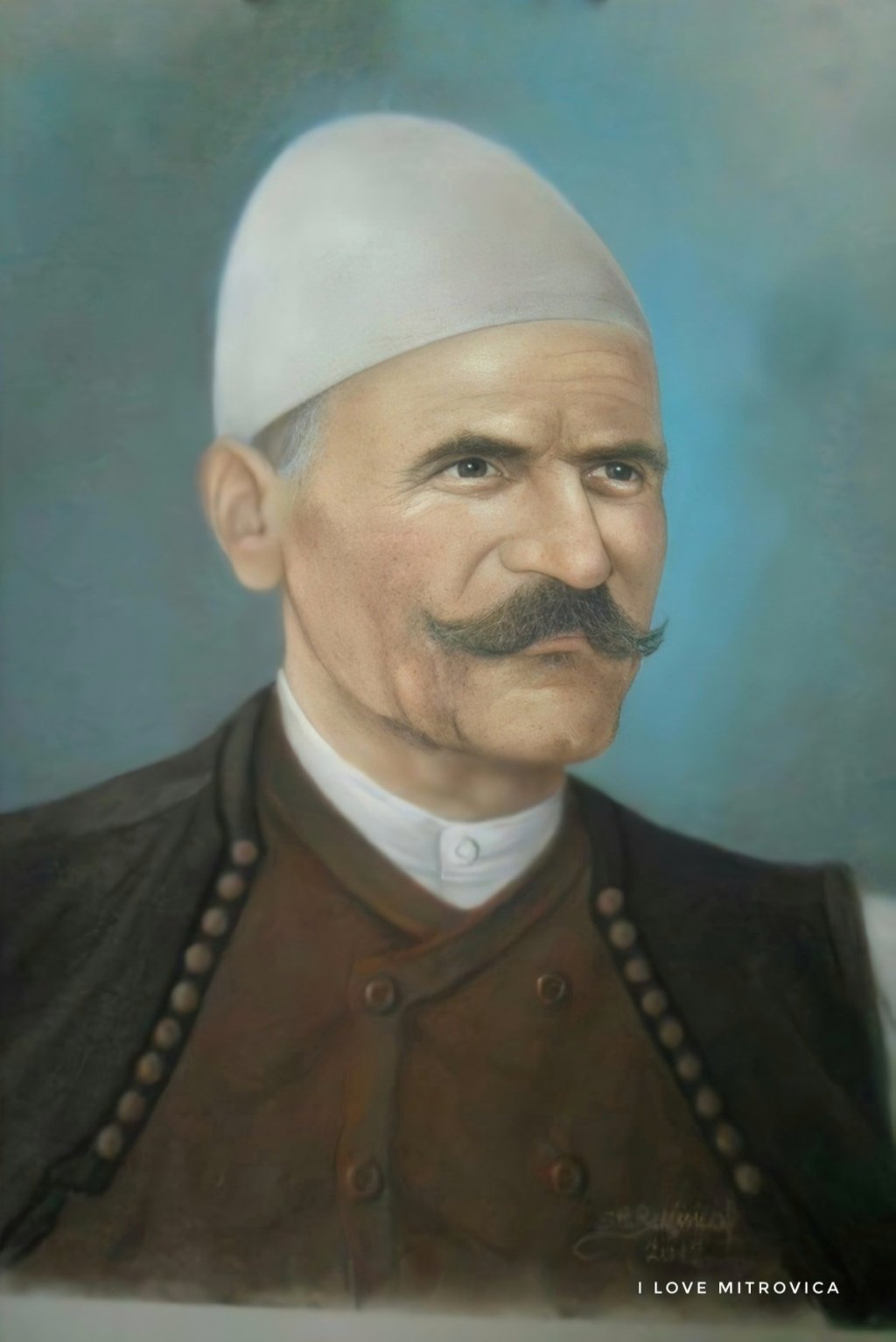

Kadri Bistrica (b. 1880, Vilayet of Kosovo, Ottoman Empire – d. 1941 Sllatinë, Kosovo, Kingdom of Albania) was an Albanian Balli Kombetar soldier who fought invading Chetnik forces in 1941 during World War II. Bistrica is known as a heroic figure amongst Albanians of Mitrovica as he died fighting invading Chetniks.1
The Battle of Ceraje and Sllatinë2
The Battle of Ceraje and Sllatinë was a skirmish between three Albanian Ballists and Serbian Chetniks led by Draža Mihailović in 1941 in present-day northern Kosovo. The farmers involved were Kadri Bistrica and the brothers Rexhep and Rifat Dedina, while the leaders of the Serbs were Tomash Gjurovic, Mashan Gjuric, Zhika Markovic, and Vojsllav Llukacevic.
The battle ended with the Chetniks retreating. Kadri Bistrica died during the fight after being hit from multiple directions, and Rexhep died when a hand grenade exploded. Rifat was wounded by gunfire but survived. The battle is mentioned in Albanian folklore.
After Nazi Germany incorporated Kosovo as part of the independent Kingdom of Albania and armed Albanians allied with the Nazis, parts of northern Kosovo were tense. The Battle of Ceraje and Sllatinë began unexpectedly after Draža Mihailović sent a division of Chetniks to ethnically cleanse a part of the Shala region in Sllatinë, present-day Kosovo.
There, they encountered the Albanian Ballists who were selling firewood. The Chetnik leader, Tomash Gjurovic, challenged Kadri Bistrica to a duel, which Bistrica accepted. During the duel, Gjurovic was shot in the head, and his men opened fire on Bistrica and the other two. Bistrica was shot and killed on the spot, while Rexhep picked up the rifle and returned fire.
He was also shot and wounded, and the brothers retreated to a factory building. The Chetniks threw grenades, and one of them exploded near a coal machine, causing it to explode and burn Rexhep’s clothes. Rifat managed to throw back one of the grenades before it detonated, killing many Chetniks. Ahmet Selaci, leader of the Albanian Ballists, was quickly notified of the battle and arrived with his men, causing the Chetniks to retreat to Raska, present-day southern Serbia.
Before the battle, Ballists Miran Hajra-Batahir, Shaban Ofçari, Man Beqiri-Vllahia, Feriz Maxhera, and Jahir Bistrica had fallen, leaving Bistrica with few men. The survivor, Rifat, was transported back home to the Shala region by horse and carriage, where he recounted the battle. In Mitrovica, this story has inspired Kosovo Albanian folklore, and many artists still sing about the battle today. There is a school named after Bistrica.
References
- Saraci, Hilmi. “Hilmi Saraçi: Në përkujtim të dy luftëtarëve të shquar të rezistencës kombëtare Ukshin Kovaqica dhe Smail Sfarça (The memory of the Balli Kombetar)”. Zemrashqiptare.com. Retrieved 2011. ↩︎
- https://web.archive.org/web/20150602162436/http://www.ballikombetar.info/shalaebajgores.php ↩︎


 Balkan Academia