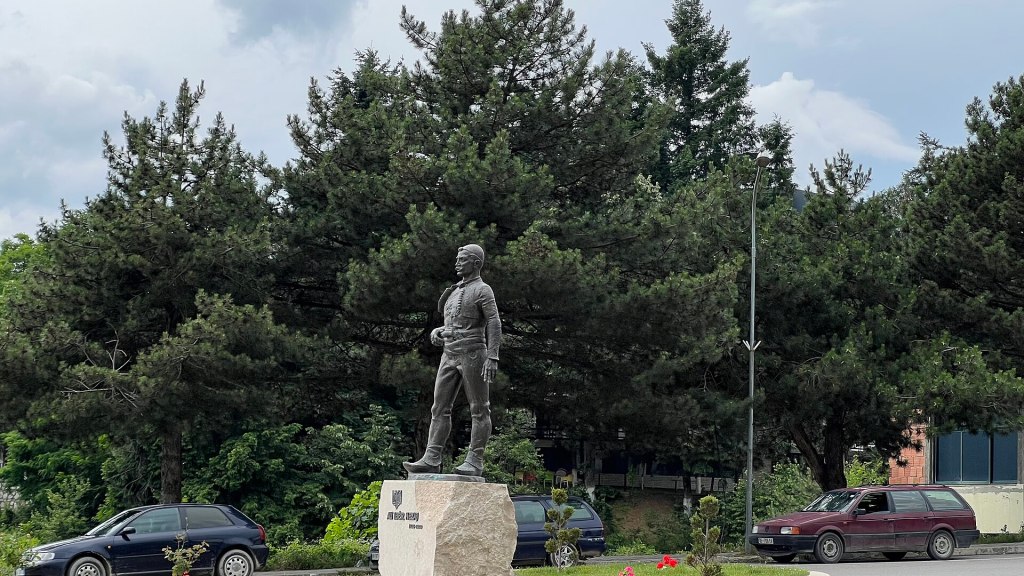

Ali Ibër Nezaj (1835-1900) was one of the main leading figures: military, political, diplomatic, humanitarian, of the Albanian League of Prizren (LSHP) and of the Albanian National Renaissance.
He was a member of the National (Central) Committee of the Albanian League of Prizren, of the first Government of the four vilayets of the Albanian Nation since the glorious time of Gjergj Kastriotit-Skënderbeu, with 13 members in total, elected, equipped with executive power, with chairman Ymer Haxhi Prizreni (Ymer Drini); was the Albanian “Provisional Government”; otherwise: “Useful Government” – was called at that time, in 1881, by Sami Frashëri, the great ideologist of the Albanian National Renaissance.
He was also elected as a member of the General Council of the Albanian League of Prizren (with 56 members), the highest body of the LSHP, with legislative powers, with Iljaz Paşë Dibra (Iljaz Paşë Çoku) as chairman, one of the organizers of the LSHP and a from its top leaders.
He was also the Vice-Chairman of the Financial Affairs Commission (otherwise: the Ministry of Finance of the LSHP) headed by Sylejman Vokshin, one of the most prominent personalities in the organization and direction of the military activity of the LSHP. He was Deputy Commander of the Armed Forces in the LSHP Provisional Government (1881). He was one of the main military and political leaders in the largest military battles of the LSHP.
Ali Ibër Nezaj, after nearly half a century (since 1855) with participation and leadership in all those meetings and assemblies, in numerous military actions and battles in the face of Montenegrins, Serbs, Ottomans; after two war wounds on his body; after facing with sacrifices the difficulties of Kachak life while fleeing persecution from foreign invaders, he passed away in 1900, at the age of 65, in his second tower, in Osek of Gjakova, Dukagjin Plain (Republic of Kosovo).
Life and death
Ali Ibër Nezaj was born in 1835 in Tershana, Vice-prefect of the Highlands of Gjakova (Tropojë).
His father, Ibër Ali Kurti (Nezaj), from the well-known Vllaznia Nezaj in Buçaj (born around 1800) was an institution, representative, leader: First: in the early days it was one of the houses “Oxhak” (” of Nezajve”, honorific) of the ethno-historical-administrative province of Shipshan (together with the “Fireplace” houses of Bajram Sylejman Lushaj-Gegaj, Bajram Sefa-Papaj, Bajram Uka-Qeliaj, Deli Bajrit-Mellaj, Dellazët-Kuçan); therefore, among the previous genetic generations, Ibra was a “chimney boy”.
Second: Ibra was the “Pari(a)” (among the chiefs) of the Shipshan tribe, in the ethno-administrative jurisdiction of the Bajrak of Shipshan (with the first Bajraktar of Shipshan, Din Bajram Bajraktari (1830), with the center/headquarters in Kasaj ( Papaj), while the “First Door” of Shipshan province was the oldest, it was in Lushaj, Gegaj). Thirdly: Ibra had proved it with his patriotic, fighting, organizing and leading, eldership activity, from the Plain of Dukagjini (Kosovo), Western Sanxhak (Plavë-Guci, etc.) and up to Moraçë (today’s Montenegro).
Resistance against Ottomans in 1845
Ibër Ali Nezaj was among the fighters and leaders known in several uprisings, actions, battles, wars: 1) In the armed uprising of the highlands of Gjakova and Reka in 1845 against the Ottoman regime, where about 8,000 self-armed highlanders defeated the Turkish forces in Morina Pass and Prush and entered militarily and triumphantly in the city of Gjakova and other cities of Dardania, forcing the Turkoman garrison of Reshit Pasha with over 30 thousand soldiers to leave even beyond Sanjak of Kosovo.
The military forces of the Shipshan province were led by the bajraktari Din Bajram Bajraktari, while Sylejman Abaz Lushaj and Ibër Ali Nezaj were leaders in the battle formations of the bajrak. While those of Bajrak i Gashi were led by Haxhi Brahim Bajraktari; of Krasniqe from Binak Alia and Sokol Rama (of Mulosmanaj); of Bytyç from Mal Dul Bajraktari and others. 2).
Battles against Montenegrins in 1852-1855
In the battles from Plavë-Gucia to Moraca during the years 1852-1855 of the “7-year war” against Albania (1852-1858) of Prince Danilo I Petrović-Njegosh of Montenegro, where Ibra stood out as a brave warrior and leader rare. 3). In the summer of 1855, in an armed confrontation, Ibra was killed by the Slavs of Velika of Plavë.
Noble Gjylë Bërbati of the Sandzak of Shkodër from Hoti.
Ali Ibër Nezaj’s grandmother, noble and noble, Gjylë Bërbati, in her ethno-genesis, was from the first tribe in Sanjak of Shkodra, from Hoti (“Hoti i Vendit”, “Hoti i Moçëm”, before c. 1330, ” Hoti i Kujit”) in Plavë-Guci, were a genetic branch of Hoti tribe who came from a long time ago in the village of Berbat on a plateau height of the Holy Mountain of Shkëlzen, ethno-historical and geo-administrative provincial territory of Bajrak of Gashi of Guri.
The tower of Ali Ibër Nezaj, burnt down three times: by the Ottomans (Turks), by the Serbo-Montenegro Slavs (1913), by the coming communism (1944), was rebuilt by its heirs, between generations, in all three times of the destruction. Such towers with a name in the province of Shipshan were the Tower of Haxhi Brahim Padesh in Gegaj (also called “Pasha”), who also had another tower in Osek of Gjakova (where Ali Ibër Nezaj lived the last years of his life).
Ahmet Sadrija Tower in Ballban (“Culture Monument”, Papaj), the legendary hero of the “Gjakova Action” (1878) and the “Historical Battles of Nokšić” (1879-1880) etc. and the closest friend of the heart and arms of Ali Ibër Nezaj in the whole province of Shipshan; The tower of Hal Qerimi (of Zyber-Vesel-Ali Kurt-Vesel-Neza) in Buçaj (close cousin of Ali Ibër Nezaj, Ali-Ibër-Ali-Kurt-Vesel-Neza) and many others.
In the people, from Kaher, everywhere, the Tower of Ali Ibër Nezaj, was considered divine, with one of the main figures of the mythological belief of the Albanians, as “Clock Tower”. The tower of Ali Ibër Nezaj was the first tower of the plan and the execution of the first massive military battle of the Albanian League of Prizren, known in Albanian history as the “Action of Gjakova” (September 3-6, 1878).
Also, this mountain tower of Ali Ibër Nezaj was the last headquarters of the LSHP (1881), where, after the Battle of Shtime-Slivovo, Ymer Efendi Prizreni – the chairman of the Albanian League of Prizren, who the people Ali’s loyalists escorted him on the journey of no return Bytyç-Pukë-Shkodër-Ulqin, where the Turko-Slavic mafia poisoned him and tragically massacred him in the coastal city, where his abandoned grave is still found today.
Even Sylejman Vokshi, the Commander of the LSHP Army, this time (1881) stayed for about 5 months. There, in this “epilogue” of the LSHP, in this tower and in other generous patriotic hearths of Shipshan, there were sheltered with high hospitality and several other important figures of the LSHP, and, together with them, close to them, their loyalists, even some fighters of the Guard and the Army of the League.
In this historic, traditional, generous alpine tower, the following have stayed throughout the time of organization of the leadership of LSHP: Haxhi Zekë Byberi of the Albanian League of Peja; Jakup Ferri of the historic province of Plavë-Gucia; Ali Pashë Gucia (Ali Hasan Rexhepagaj), kaymekan of Gucia, one of the leaders and commanders of the LSHP; Pashko Vasa (Vaso Pashë Shkodrani) – former senior official of the Province of Kosovo (1877), diplomat, writer, poet, among the contributors to the organization and promotion of the LSHP.
Ahmet Koronica-Kadiu of Gjakova is one of the prominent figures of LSHP; Shuaip Spahiu- Vice President of the LSHP Provisional Government (elected in May 1880) and Chairman of the LSHP Branch for Prizren; Shaban Efendi Prizreni (doctor of theological sciences, Shaban bey Pllava, pilgrim from Opoja); Zija Prishtina (Zija bey Gjinolli) – Member of the National Committee of the LSHP; Mulla Jaha Musaj, personal secretary of Ali Pasha Gucia, kadi (lawyer) in Plavë, educated in Istanbul; Kadri Bajri – Bajraktari of Rugova; and many, many others.
Albanologists and researchers document the role, importance and magnificence of this glorious historical tower: “The house (tower) of Ali Ibre (Nezaj), either in Osek near Gjakova, or in Buçaj in Shipshan of Tropoja, will become the center of the Men’s Assemblies who gathered from all over Kosovo and from the Northern Highlands. Especially the House (Tower) in Buçaj i Shipshani, will be the shelter of the most famous men of Kosovo and other Albanian lands, where they will discuss and debate the fate of the Albanian lands, the fate of our people, for The covenant that had to be organized as soon as possible”. )
– “Rare are the towers in which so many personalities of national history have been hosted as in the tower of Ali Ibra, i.e. Braha Ali” (his son), – emphasizes one of his researchers, the distinguished poet, Hamit Aliaj – Grand Master.
The great fame of the outstanding patriot Ali Ibër Nezaj reached Istanbul, so much so that Sultan AbdulHamid II sent an official “Envoy of the High Gate” with an imperial suite to his tower in Buçaj of Shipshan in the Gjakova Highlands for to see his power, “his palaces and his army”. He was greatly amazed when he saw with his own eyes the small village, the tower with few rooms, when Alia told him how little land and cattle his wealth was in the fields and mountains, that “his army” was only “a rifle habertare” (conspirator) that when he had to gather the entire Highlands of Gjakova there, ready for war (giving him hand-picked the “Mountain Valley” and counted its tribes). He returned the answer to the Sultan that those mountains and their people are difficult to conquer with only the Imperial Army.
Montenegrins theft of Ali Nezaj herd of sheep in 1855
In the summer of 1855, Montenegrins from Plava, led by their chief Turr Vuksani, stole Ibër Ali Nezaj’s herd of sheep with lambs in the north, in the alpine pastures, in the vicinity of Lkeni i Dashi, in the mountain of Dobërdol. The Nezajs used to go out to the mountain also in Pojana and Ujeze (Tellat e Nezajve). Ibra with his shipshaniks and other warriors from the Highlands, after re-climbing the mountain, not accepting and enduring this serious and bad robbery for the traditions and honor of the Albanian Mountains, marched towards the village of Velika, took his herd even more.
On the way back, near Shkëmbi i Vujkut in Dobërdol, they reached the platoon of the Velika Montenegrins, where they had a battle. They had a cavalry duel, where beyond the classical rules of the duel, two were killed: Ibra of Shipshan and the chief Vuksan of Velika. The rifles of the conflict, of the face-to-face battle between the Albanian mountaineers and the capacious Velika Slavs, who stole the rifle of Ibër Ali Nezaj there and escaped from where they had come, towards Velika. The body of Ibër Ali Nezaj, according to his bequest, stated that:
– “When death by rifle, bury me where my blood flows”.
He rests at Kërshi of Vujkut in the mountain of Dobërdol, exactly where the border of three Balkan states divides today: Albania, Republic of Kosovo and Montenegro.
The Montenegrins stole Ibër Ali Nezajs rifle
Taking the “war trophy” of Ibër Ali Nezaj’s rifle was a “second death”, because the rifle and the woman were cults, the most sacred, most inviolable things for Albanians, for the Highlands of Gjakova, for the Highlanders of the Albanian Alps. So, his 20-year-old son, Ali Ibër Nezaj, as well as his brother Ahmet Sadria of Shipshan and his probate (brother) of almost the same age, Jakup Ferrin, but also with others, that fall and winter, until spring, made the plan to attack Velika and take Ibër Ali Nezaj’s rifle.
In the Highlands of Gjakova and everywhere, the expression was often used: “You are soulless, how did Velike leave me!”, because the Velika Slavs of that time were like the Arkans in Kosovo, they were “a hive of militarists, a nursery of criminals” who committed crimes by killing and children, women and old people, who robbed everything in the houses of the Albanians, burned their houses, ruined the lives of the Albanians in the Alps, in Vrri and Bjeshke, in Plavë-Guci, the Gjakova Mountains and everywhere.
There were over 30 Albanians of Shipshanik and about 100 warriors, who with a detailed plan, in secret, on a day of celebration for the Velikas, who were also drunk from Montenegrin plum brandy, set fire to the village of Velikë. All the notorious Velika Montenegrins and Ali were killed.
Ibra and Ahmet Sadrin entered the tower of Turr Vuksan and retrieved the gun of Ibër Ali Nezaj. It was a great, extraordinary battle, so much so that from that day until more than two decades later, in the Battles of Nokšić, when they heard the cries: “O wait for Ali Ibren and the Highlands of Gjakova” for the giants, “enclave of criminals”, and they felt fear to their core anti-Albanian.
Ali Ibër Nezaj entered the “Mountain Chamber”, this “Parliament”, the People’s University, early on, at the age of 20, after the murder of his father, and from the spring of 1856, when he took the “slave rifle, trophy” from the nobles. of his father and after that great and resounding battle against Velika and the anti-Albanian velikas, he had another “status”, his name entered the odes and assemblies of the Northern Albanians, entered history, remained in songs, traveled through the generations Albanian.
References
- [1]Prof. dr. Xheladin GOSTURANI, albanolog, Tiranë: Ali Ibra dhe Lidhja Shqiptare e Prizrenit”. Monografi. SHB “Koha”. Tiranë, 1999. Fq. 149. ISBN: 9992763729
- [2]Hamit ALIAJ, studiues, Tiranë-Tropojë: “Ali Ibër Nezaj / Monografi. Red. Beskida Aliaj. SHB “Kristalina KH”. Tiranë, 2012. Fq. 192. ISBN: 9789995643836
- [3]Xhafer BELEGU, historian, diplomat, Elbasan: “Lidhja e Prizrenit e veprimet e sajë: 1878-1881”. Monografi. SHB “Kristo Luarasi”. Tiranë, 1939. Fq. 199.
- [4]Prof. dr. Shevqet Sahit CANHASI, Gjakovë: “Strategu dhe Burrështetasi Sulejman Vokshi (20 shkurt 1815-1890)”. Monografi. Shoqata e Intelektualëve “Jakova”. Gjakovë, 2021. Fq. 482. ISBN: 9789951661553
- [5]Elez QERIMAJ, historian, Tropojë: Malësia e Gjakovës (Tropoja) në Rrjedhën e Historisë Kombëtare”. Monografi. SHB. “Kristalina KH”. Tiranë, 2008. Fq. 348. ISBN 9789995665050 Myftar MEMIA, studiues, Tiranë: Fjalori Enciklopedik Shqiptar. Vëll. II. Tiranë, 2008. Fq., 969.
- [6].- Myftar MEMIA, studiues, Tiranë: Fjalori Enciklopedik Shqiptar. Vëll. II. Tiranë, 2008. Fq., 969.
- [7]AQSH. Tiranë. Fondi 170 – “Komisioni i Vetqeverimit, të Malësisë së Gjakovës” (25-Vjetori i Pavarëisë së Shqipërisë). Viti 1937. Dosja Nr. 55. Fq. 20
- [8]Ibrahim Kadri MALAJ, studiues, Tropojë: “Lindja e “Oxhaqeve në Malësinë e Gjakovës”. Studim. Gazeta “Tropoja”. Nr. 6. Tiranë, Shkurt 2019.
- [9]Ali LUSHAJ, studiues, Tropojë: “Shipshani i Malësisë së Gjakovës”. Monografi. SHB “Dardania”. Tiranë, 1999. Fq. 484.
- [10]Hamit ALIAJ: “Ali Ibër Nezaj”. Monografi. (Po aty). Fq. 34. ISBN: 9789995643836.
- [11]Prof. dr. Xheladin GOSTURANI: Ali Ibra dhe Lidhja Shqiptare e Prizrenit”. Monografi. (Po aty). Fq. 21. ISBN: 9992763729.
- [12]13.- Hamit ALIAJ: “Ali Ibër Nezaj”. Monografi. (Po aty). Fq. 48-55. ISBN: 9789995643836


 Balkan Academia