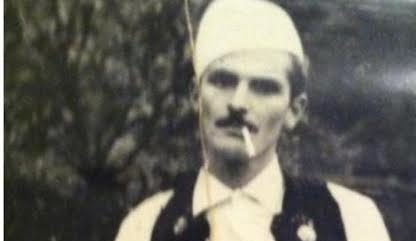

Written originally by Ramiz Lushaj.
The homeland province of Plavë-Gucia (with the tribes Hot, Kelmend, etc.) has its long-standing ethno-historical ties with the old and warlike tribe of the ethnic Albanian Kuçi, a tribe divided into several large groups: the Old Kuçi, Kuçi i Ri (Drekalët), Triepshi (Trieshët).
The ethno-historical territory of Kuçi, according to academician Mark Krasniqi, had a territorial extension in the southeast of the Bërda mountains to the north of the Komi mountains, in the west from the Moraça river and its tributary Malla Rijeka, from the south to the Dolani plain (north of Podgorica ) and the mountains of the right side of the Cem river, from the east to the upper basin of the Vermosh river.
The Kučas recognize themselves as belonging to the Berisha tribe, separated from it. This is also proven by the Albanologists Franz Baron Nopça, Karl Palç, Edith Durham, etc. Once upon a time, their villages, as a geo-physical designation and a medieval economic-social community, were called “Bertishi Mountains” (Berisha). Kuçi was the “common home of the Berishas”, from where they moved along the coast to Kotorr, but mainly in Northern Albania along the banks of Drin, Tara, Lim, Sitnica. They kept the surnames Berisha, but also Kuçi, etc.
Hoti lake of Plava (Mountains of Hoti), the birthplace of Shar Ibra of Mustaf Mujaj (Haxhaj), appears in documents of the Monastery of Deçan in 1330, according to the Croatian albanologist Milan Shuflaj.
Kuci, Markaj Patrovic, Pipraj, Gjurash (Cernojeviqe) are known as Albanians in the 15th century
In the “The History of the Albanian People”, the region of Diocle(Zeta) from the XVI, especially its upper part, appeared to foreigners as a place “with different peoples and religions”. However, throughout the Middle Ages, the province and entire communities such as Kuči, Markaj (Markovics), Pastrovics, Pipres, Gjurashes (Cernojeviches), etc. are known as Albanians”. Kuçi appears for the first time in the name of the builder of the Monastery of Deçan (1327-1335), the Franciscan Vita Kuçi, who comes from Kotor (branch of Meduni) and one of the owners of its land, Haka Kuçi, as well as within the monastery enclosure, is the grave of a Kuçiot citizen, while in Tuz (1335) Pjetër Kuçi, etc. is mentioned.
Albanian families from Kuci
From the Albanian Kuçi, several clans (brothers, barques) came to the land of Plavë-Gucia, such as the Ferraj and Shahmanj of Plava, the Nikocaj, the Radonicë and the Bekteshë of Gucië, the Pepaj (Berishas) in the Upper Ultina of Lim, or the Haxhialiaj, the Lloncarët, Mulaj (Mulliq), Delaj, Dervish, Çekaj of Gucia, as well as Haxhimushaj, Kerciq, Kuç, Medunaj, Shabai, Tosk, of Plava, etc. The first Kučas settlement was in Guci in the century. XV, year 1495, when the Bektesh came from the bishopric of Bërda. Tevona, in 1636, the Radoničs also come, etc.
Turkovic of Plavë
The Turkovics of Plava are also from Kuçi. They have changed their religion and ethnicity, they have turned into eternal Montenegrins. In the historical memory, they are known for bio-political and ethnic hatred and for actions and crimes up to genocidal towards the Albanians in Plavë-Guci and its surroundings.
Vojvoda Dre Kali (Drekali)
Vojvoda Dre Kali (Drekali) of Kuči te Ri, whom the legends also connect with the Skanderbeg dynasty, left a genetic and throne descendant Lalë Drekal (with 1,500 warriors under arms), count, great hero of the Albanian nation. This, the second Drekali, was one of the (chief) organizers of the Assembly at the Moraca Monastery (1608) near Lake Shkodra, in the Troll of Hoti, with Albanian, Serbian, Montenegrin and Macedonian leaders; of the Kuči Assembly (in two sessions, July 15 and September 3, 1614), gathered in its tower, as the first general Balkan assembly; of the Assembly of Prokuple (1616) and the Assembly of Belgrade (1620), with many representatives from ethnic Albanian territories and neighboring countries.
Count of Kuçi, Lala Drekali, married twice and had five sons: Vujoshin, Ilko, Çejon, Mijën, Vukun. When they parted with each other through a cynical trick, they left the worst part of the joint property to Vuk, since he was with another mother. This was clear to the point of rebellion with the local drekals and fled without returning from the motherland, to Podgorica, in the Durrës mahalla (Dracka mahalla). The anti-Albanian Kuçasi Mark Milani in one of his works confesses that these Vuks changed their religion and became Muslims. Therefore, from then on, Turkovic was called. They were put in the service of the Ottoman Empire. At one time, in the (back)stage they knew and contributed as close friends with King Nicholas of Montenegro.
From this branch of Podgorica came a genetic line of the Turkovics who, for Slavic interests and for their own reasons, settled in Plava. There, by the lake, in a very good place, with a special view. They have erected there a visible tower and premises. They feel quite privileged by the Montenegrin government, since all Turkovics in the last centuries are an elite, active and loyal part of the structures of the present-day Cernagora state with two capitals: Cetina and Podgorica. Often times, especially in the electorates, they have been the hosts of today’s seven-term prime minister, Milo Djukanovic, the real “master” of Montenegro.
When Albanians were killed often
Kuçi member Mark Milani is from the Popovic family, Popovi, one of the seven sons of Ilia Lalë Drekal, the Albanian leader of Kuçi, who in 1756 he declared that his tribe is Orthodox and belongs to the Shkodra Mountains. He is the cousin of the Turkovics of Podgorica, the descendants of Vuk Lalë Drekal, who, both sides, are linked by genes and actions as anti-Albanian.
The Plavë-Gucias are extremely tired of the local Turkovics, who in their generation served the Ottomans, Montenegrins, Bosniaks and Serbs against the ethnic Albanians who over the centuries gave everything for Albanian national freedom and independence.
The Turkovics enter that category as the bad luck of Plavë-Gucija, so much so that even historians in their publications on this historical period classify them as “sworn enemies of the Albanians”, etc.
When they started to take away the sun and darken the lives of the ethnic Albanians, when they started to handcuff and bleed them with the state, etc. then the Plava-Gucias rose up in full revolt and in full force and destroyed their three towers in Plava. I wanted to set them on fire… I extinguished their lives. Sorry about the troll. I stopped jogging that day. I forgot his name beyond the next day.
The unfaithful Turkovics beg Albanian loyalty to the Curranajs, who have contributed and shed blood for the Albanian nation, in the war with the Ottomans and the Slavs. Incidentally, I have known some curranaj of Plava as good people in their daily work.
Curranaj and Turkovic were related to each other: nephew and uncle.
Albanian loyalty and blood ties saved the Turkovics from brutal death, but ethnic Albanians Plava-Gucias never escape the anti-Albanian fire of the Turkovics on the shores of Lake Plava and in the domes of the Montenegrin state.
Mark Milani (1883-1901) with two Albanian parents, Orthodox father and Catholic mother, also spoke Albanian, was a smart boy with a strong physique, a young (il)legal assassin, one of the dangerous Cubans and thieves of caravans along the valleys of Moraca, Cemi, etc. Nami came out as “the strongest of the country” everywhere.
Prince Danilo I (1826-1860), blessed and prosperous by the Russian emperor Nicholas I as prince of the Principality of Montenegro with only 1,500 km2 of geo-political territory, took 23-year-old Mark Milan into his court. He grew up there with hatred against Albanians, trained as an invading soldier and a criminal, experienced public beatings and enigmatic murders, entered the labyrinths of Balkan politics. He was more than 8 years older than the young prince on the throne, Nicholas I, but pan-Slavization strongly tied the two together, so much so that they created the “United Serbian Youth” organization in the Principality of Serbia (1866-1871) and, after they were legally banned there, they re-established the other one in Cetina, the “Serbian Union for Liberation” Organization.
At the age of 29, they started giving him awards, decorations, and titles. They made him voivode, count, duke. For his anti-Albanian contributions to the bloody union of Kuč with Montenegro in 1874, he was elected to the Senate of Montenegro. In the great “Battle of Fundinave” in the valley of Kuč on August 2, 1877, he led the Montenegrin forces to victory in the war against the Ottomans.
Member of the Council of State of Montenegro, [7] Mark Milani, was the commander of the Montenegrin military forces in the two great historical battles of Nokšić (December 4, 1879-January 11, 1880). There, by his side, in the war, one of his cousins, Popovic, was killed by the Albanians, one of the Prijt soldiers, the leader of the Montenegrin “internationalist”, Miladin Popovic, Tito’s first exponent as a PKJ delegate in Albania. who found opportunities and retaliated with paybacks for stripping LANÇSH of traditional Albanian nationalism, of nationalist efforts for an Ethnic, Natural, United Albania.
In the “Battle of Nokšić”, the first shot was fired by Hoti of Plava and the last by Rugova of Kosovo, the history of the generations should know that in front of Mark Milan and his Montenegrin army, the cuciotes of Plavë-Gucia like Jakup Ferri fought with him themselves, Nuh (Nuc) Shahmanaj, Avdyl Pepaj, Adem Bajraktari (Radoniçi) together with Husa, Halil and Syla, Ferhat Nikoçi, Abdulla Bekteshaj and dozens of others. The people experienced the war of the plava-gucias cuciotes in their kangs: “Padishah me t-tregu nji serie / A man’s pride was cut by him / And they say about emma Jakup Ferri”.
Before the War of Nokšić, the Kuci member Mark Milani (Popovic) who knew well the code and power of the Albanian Besa tried unsuccessfully to carry out such an act of treachery, disloyalty, with the Albanians of Plavë-Gucia, the armed forces of the Albanian League of Prizren of Ali Pashë Gucië, Haxhi Zeke Byberit, etc. He failed and was unsuccessful in his attempts until December 4, 1879. A few days before the start of this historic war, some Montenegrin families involved in espionage activities were sent away from Plavë-Gucia to Pejë, in isolation (internment) Cetina of Prince Nicholas of Montenegro.
After the lost War of Nokšić (Upper Ultina of Lim), Mark Milan’s rift with King Nikola began, the debates with the other popovic, voivode Todor Milan who taught Gucia militarily, his political career continued until in 1882 he withdrew into private life, returned to his hometown in Medun (Podgorica) and after a year, at the age of 50, he began to learn to read and write, to write his works and those that escaped inquisition were published in Belgrade posthumously.
Mark Milani, hero of Montenegro, with a house museum in Podgorica, in his works, taking into account tradition and practice, emphasizes that you can easily conquer the Albanian with better than with worse, that you have to ask for allegiance, word of honor, do it for yourself with some gift or small position, especially the chieftainship of the tribe and religion, then he will serve according to your pleasure, even against his national interests, they will be thrown into water and fire for you.
He says that several times the Albanians of Moraça, Cemi, and Lim gave allegiance to him and kept him as the first and last hour in several battles with the Ottomans. The loyal Albanians “protected his back”, as he says, because if they attacked him they would destroy his army, but the opposite happened: the Montenegrins of Cetina won. If the Albanian faith was not used so treacherously in the century. XXI would be completely different history and reality of Montenegro, this Russian protectorate. Much would be in the interest of the Albanian ethnic nation.
Prince Danillo to unite the little Montenegro with the Albanian Alpine Mountains (Kuç, Plavë-Guci, Rozhajë, etc.). he knew that the Kuchas did not obey him, they had even refused to pay the tax to him, they were begging for more local autonomy. He appointed his elder brother, voivode Mirko Petrović-Njegoš (1820-1867), Grand Duke of Grahova, poet, soldier, diplomat, charismatic man, father of Crown Prince Nicholas I, to conquer and subjugate Kuči. He begged Bea. They gave it to him. Then, Mark Milani recounts, “the Kuchs were deceived and let the prince’s army enter Medun”. In that tragic year 1856, one of the great massacres of Kuchi took place: 17 fighting men skilled with rifles and 230 old people, children in cradles, disabled people, etc. were killed.
The founder of the Serbian Social-Democratic Party, theoretician, journalist Dimitrije Tucovič (1881-1914), captain in the First World War, author of the work “Albania and Serbia” also speaks about the misuse of the Albanian Faith by the Montenegrins.
Besa with Montenegrins, relationships with marriages, tue i ba probatima, godfathers, etc. they have often turned Albanians into the opposite, into disloyalty, into bloodthirsty political and ethnic suicide. The Albanians of Plavë-Gucia (and in all of Montenegro), like this, not infrequently in their history, have killed themselves with their thumb…(!)
Failure in Osojë in 1912
At the time when Montenegro returned to the Kingdom, especially after October 1912 of the First Balkan War, as well as at the other time, that of the First Versailles Yugoslavia after 1918, the Turkovics, as the devil of Slavism, took pride and flattery in ( chief) high and various state duties in administrative structures in Plavë-Guci-Murîna, Andrijevicë, etc.
The Slavic Krayls selected one of them, Stanisha Turkovic, as the most trusted for their Shoven interests and as one of the most experienced anti-Albanians. This put great pressure on the Albanians, imprisoned them and many of them did not see the land of Plavë-Gucia, the towers of generations, the light of the sun. He expelled them from their ethnic lands. He seized the lands of the Albanians. He carried out frequent massacres and took part in numerous massacres against Albanians.
At this time, the Hoti of Plavë-Gucia, occupied and unjustly annexed by Montenegro, returned as if it were the Hoti of Albania. The Hotjans did not want any more days for the border of 1913 and 1919. From Çeremi, Valbona and Kukaj came to the Hotjans, in their lands and towers, the Kelmendas from Vuth to remain across the Albanian-Albanian border, who would take a step even to Vuthaj, and cast a glance as far as the cities of Plavë and Guci with their surroundings . This worried the senior Montenegrin official, Stanisha Turkovic. He wanted, sought and fought for the subjugation of the Hot of the Country. By any means, by any means, at the best possible time.
Hoti didn’t love Stanisha Turkovic and, it is known, he didn’t love Hoti either. According to the practical custom of the time, the Hotjans went to the Demi of Murat Aga, who was not from the tribe of Hoti, but they came there, a resident of that geostrategic place, not as a brother of blood and of Tamli, but as a brother of the land. After the argatia, they ate their dinner and went to play kapuchas, they are playing the kanga in the camp as well as in the choir, even sitting with the lute and the couplet in the men’s room.
The word got around and got wind. Stanisha had been waiting for this day for years. His oracle told him that the oracle of revenge had come. It encircled Hoti darkly, as if in a ring. The traitor wanted to prey on the Hotjans, when the troll’s men were together at Murat Aga’s Demi.
A night as black as Stanisha’s own had fallen on Hot.
Stanisha Turkovic was rude to the Albanians, but he kept his skin. From now on, his life was in pain. I didn’t go to the Hotjans myself. In that begging he knew what he wanted, in that knock on the door he knew what was waiting for him: the crack of the gun, the shadow of sound
He had taken Nezir Uka e Hakajje with his army to face him face to face, because he knew and loved Hoti and Hoti knew and valued him well. He was one of those men who fearlessly and without time knocked on the door of Hoti.
Murat Aga’s bull opened the door of his house. There was no one else there, only Ali Ibra of Ibër Mustafa of Mujajve, a descendant of Haxhë Gjoka (Haxhaj) of Hoti.. The others had fled to their homes. That bad night, with Turkovician well and treachery, this was a good luck for the Hotjans, who were armed and did not wait for the rifle, but it was not known where the fire stopped, how far the bleeding went.
Ali Ibra, after the master of the house, exchanged the tobacco box with Nezir Uka. All three are meeting amicably. Albanian. It was a pity that I found you here, Ali Ibra, because Hoti was surrounded by an army. With them Stanisha Turkovici is also saying to Nezir Meta, let him know the reason for coming that late at night.
Murat Aga’s bull offers a manly prayer to his newly arrived guest:
“O Nezir Uka, don’t tell Heaven and Earth that Ali Ibra is here tonight…!“
That night, Nezir Uka was a close-knit man. He prayed to God that nothing bad would happen to that house from which he came out as its host, as a man who entered into it, as its bestar. He had already made up his mind not to kill himself, but he had another concern: when Turkovici ordered, the house of Demi Murat Aga was attacked with her guest Ali Ibra Mujaj, could the living and deceased believe it? , of today and tomorrow, the trees and birds of the mountain that Nezir Uka has no prey in his trust. Hoti has all gone to his house and there is no one there… Nezir Meta said to the army, and to Stanisha Turkovic, who was nowhere to be found.
Ali Ibër Mustafaj (Mujaj-Haxhaj) packed his weapons and went into a small room of the house, where the funeral pyres were kept, and said to the owner of the house: This is my grave, whoever opens the door! That night, Hoti remained surrounded on our sides. The Hotjans had the cartridge in the mouth of the rifle. As always.
Cen Ibra of Mustafaj (Mujaj-Haxhaj) that night of the siege of Hoti stayed in Sinanaj, at the house of Zek Arif, where he was received with good wishes. As the best man of the meal. As he deserved. As always, the Turkovician treachery of that night was not known, therefore they met almost every surprise. Who was attacking their tower, fought to the last drop of blood. As soon as the vow was released, Hoti rose to his feet and went first to the front of the war.
At night, when the light is catching the mountains, Cen Ibra goes to his tower, leaving the goats to graze. The army is in the mountains. He had not yet fled to his barracks. Hoti hala had not been released from the Montenegrin siege.
In Osojna, at Ura e Beka on the river Hoti, or as the locals call it, “Rijeka e Gjyriqi”, they capture the goatherd Cen Ibra e Hoti. Turković and his men brutally kill him. Unfaithfully. The birds and flowers saw it. The mountains and rivers felt the Christmas. Pain gripped Hoti and the 12 great tribes of the Albanian Mountains of Northern Albania.
Stanisha Turkovic was reaped many times: both himself and his generations, and as a state. Besieged a large village like Hotin, a warlike tribe like Hotin, killed Cen Hotin, a famous Hotin shepherd, a good man of Hotin. The only kill of his unparalleled curfew. A murder that gave him no honor at all. A murder you do with shame.
A murder of Stanisha Turković that put him in the blood many times, as with the house of Shar Ibra with his brother and with Hoti from the lake of Plava to the lake of Shkodra, with all of Plavë-Gucina, with Malesia e Madhe, with Malesia e Gjakova, with The plain of Dukagjin, with the Albanian Sanxhak.
That rifle was the black face of Stanisha Turkovic, and again his hand begged for the black face. This senior Montenegrin official went to the house of Ibër Mustafa of Mujaj (Haxhaj) and told him: We killed the boy…! Well, he didn’t return the rifle to his tower, to the boy’s neck. Albanian tradition does not allow such revenges. But the head of the tower, Ibra of Mustafaj, a strong man with great wisdom, let him hear it behind his ear:
“… I’m going through the pain for the boy with my brothers and sisters, with Hot and Plavë-Guci… You killed a shepherd…!”
Stanisha Turkovic fled with his people, leaving his curfew misdeeds in Hot, waiting to receive just and quick retribution from the brave and noble Hotjans for his misdeeds. In Albanian Customary Law, from antiquity to the present, from the North to the South of Albania, in the Canon of Lekë Dukgjin, in the Canon of the Mountains, in the Canon of Labëria, from Plavë-Gucia to Skopje, etc. the murder of the shepherd was punished, and very strict measures were taken against the murderer, whoever he was and wherever he was.
However, it has nothing to do with who points a gun at the shepherd. Neither the individual nor the state is forgiven for his murder. He was blood to be had , if not from the house of the shepherd killed by his own tribe, from the province with its tribes or from all together, according to an eldership and plan, by canon, by assembly, by tribal initiative.
Three guns with one christmas
The house of Ibër Mustafa, of Mujaj (Haxhaj), is one of the strong houses of Hoti and Albania. It has been kept that way by its own troll, its own generations, its own tribe of Hoti. History has known it. They have kept their land strong, they have raised their name: with work, with knowledge, with rifles.
The brave young man, Shar Ibra of Hoti, is telling his father and his tribe that the time has come for Albanian history, for Albanian Customary Law, for Stanisha Turkovici to pay for the disloyalty with his life, with his head and his anti-Albanian malice, for the murder of Cen Ibra, his brother, as well as hundreds of other Albanians persecuted and executed by him.
All of Hoti’s boys are Shar Ibra, time has come for her on the local and national scene. Each patriot of them, each nationalist door and generation, are an open and unclosed page of Albanian history for centuries. Shar Ibra himself chose two of them: Nasin e Sejd, i Hysenaj (Haxhaj), his sivllai in the genetic bloodline and Mujë e Ali of Mustaf Aliajt, his sivllai in the tamli line, grandson of Hoti e Plava , its longtime resident.
The news was uploaded to Hoti and Plava.
Stanisha Turkovic went out to the mountain of Treskavac, and caught her with Hot. He was the highest official of the prefecture (district) Andrejavica, Plavë-Guci and its surroundings. He defended himself a lot because the Montenegrin state needed it. At every step he walked with an escort of guards in defensive formation, ready to retaliate against any attempt on him. He practiced racist, genocidal policies against ethnic Albanians, against the local Bosnian community, such as scandalous public beatings, imprisonment even without return, extreme torture, etc. He was a terrorist, as well as Serbian criminal Aleksandar Rankovic could be called “Stanisha Turkovic of Kosovo”.
The two brave sons of Hoti, Shar Ibra of Mujaj and Nasi Sejdi of Hysenaj, together with Hoti’s grandson, Muje Alina and Mustafaliaj, ambushed Stanisha Turkovic on a road in Bishke. All three shot at the same time towards the anti-Albanian Stanisha, this Turkovic converted into a shoven, bloodthirsty, barbaric Montenegrin.
The plan was clear: If the first, Shari, did not kill him, the second, Nas, would kill him. If the second did not kill him, the third, Muja, would kill him. Three guns with one shot. I have come across this fact somewhere: Stanisha Turkovic was born in the mountains, that’s why they gave her the name Stanisha. And how did the evening come to him: did he leave his head where he was born?! Stanisha Turković lost her breath forever. Mountains, valleys, people breathed more freely. A little anti-Albanian. One less Turkovic. The Montenegrin regime remained the same as yesterday, yesterday and today. A Turkovician regime, which even today takes revenge on Hoti on the Plava lake. They want it without Albanians. Without Shar Ibra. Without Albanian history.
Cetinje of the Montenegrin (Serbian) throne was covered in mourning for the murder of their high exponent: Stanisha Turkovic. The Montenegrin royal family, descendants of King Nicholas I, living in exile in France were shocked by this news. Prince Paul Karagjorgjevic, on behalf of the new Serbian king, Peter II of Yugoslavia, took a direct interest in his murder. The Turkovics of Plava and Podgorica opened T’pame, who had the pain on their doorstep, but even as assimilated pro-Slavic shepherds, they probably knew very well that Stanisha deserved such a price with his life.
The Yugoslav state sought the capture of the three boys from Hoti i Plava. The mountains and their Albanians protected them. Infidelity does not forget to follow them. They arrested them, handcuffed them, put them in prison. They tortured them, except that they left them alive with breath and life. Yugoslavian justice was given the sentences: Shar Ibra of Mujaj with 20 years in prison. Nasi Sejdi of Hysenaj and Mujë Ali of Mustafalia with 17 years of age.
All three served their sentences in the infamous old prison of Kotor.
Even after the murder of Stanisha Turkovic, even after the imprisonment of Hoti’s three sons, the Yugoslav-Montenegro state had a hard time extending its real power to Hoti i Plava. This really only happened in the years of communism, as they say in the “time of Tito”, when PKJ and the Yugoslav state closed the border with Albania and the local Hotjans had no other way out, could not find any other solution. The state established posts and points and border controls in the territory of Vrri and Bjeshke of Hoti of the Country, Hoti of Kunji, Hoti of History.
Turkovic and the Anti-Albanian tendencies of the Stanisha Slavs
The Turkovics are not just one Stanisha, but they are a big “tribe” with Stanisha Turkovice. In several generations, they have issued from one or several such anti-Albanian “Stanishas”. The older generation of Plava-Gucia has known it a little bit and many people even Tevona have felt the anti-Albanian name of a certain Lluka Turkovici. He, especially during the Second World War, was a member of Drazha Mihajllović’s propaganda and combat staff, of his Chetnik party, a sort of spokesman, mainly in Plavë-Guci-Murina and its surroundings.
This Drazha Mihajllovic, a “new Čubrillovic” or “Dobrica Qosic”, who has exercised great activity in the camp and with arms in Montenegro, who in 1942 drew up a platform for the ethnic cleansing of Albanians from their lands in the name of “the removal of all Muslims from the Balkans”, etc.
Who was the anti-Albanian Lubomir Tadić from Plužine in today’s Montenegro, from a very young age he was actively associated with the Chetnik movement of Drazhe Mihajllović, he was elected a member of the Academy of Sciences of Serbia, he died at the age of 88 (2013) in Belgrade with the dream of seeing Kosovo “de facto” under Serbia, as a region dependent on it? This was the father of the president of Serbia, Boris Tadic (2004-2010). And another fact: the grandfather of this Serbian president, Pavle Tadic, was a lieutenant in the Montenegrin army in the First Balkan War 1912-1913, who also fought in the Albanian years and one of the soldiers and teachers who worked for the assimilation of Albanians .
Who was Bllazho Djukanovici (1883-1943), born in Nikšić, Montenegro, Chetnik brigadier general, since 1942 after an agreement with the Italians “de facto” political and military leader of the Second World War in Montenegro, commander of all the Chetnik forces in Montenegro (1941-1943), who was killed by Yugoslav partisans in Ostrog Monastery? He is one of the relatives of today’s Prime Minister Milo Djukanovic, born in Nikšić on February 15, 1962, who was admitted to PKJ in high school, since his father, Radovani, was an early communist and very influential in PKJ of Montenegro, etc.
The Stanisha and Turkovics assimilation and expulsion of the Albanians
Among the Slavs contributing to the wars for the assimilation and extermination of the Albanians are also the Turkovics of Plava, with Stanisha Turkovic or Lluka Turkovic at the head, Veshi Turkovic, captain of the first class, etc., alongside Nikola Pashiqi, Jovan Cvijiqi, Vladan Gjeorgjevic, Vaso Čubrollovic, Drazha Mihajlovic, Blazho Djukanovic, Stefan Molevic, Ivan Vukotic, Lubomir Tadic, etc. These facts prove that Shar Ibrër Hoti’s rifle against the great anti-Albanian Stanisha Turkovic was a great rifle for history, for the Albanian national issue.
Sharr Ibra of Hoti after prison time
Shar Ibra of Hoti served twenty years in prison in Kotorr and when he had done his time, he stopped in Andrijavica. His knees and eyes were tired. His Hoti land was not far, but it seemed to him that he would never get there. He was thinking that the next church did not serve him better than a coffee for fun, sitting at a bar across the street.
He went inside. He ordered the coffee. I sat down and drank it leisurely. Captain Veshi Turkovic of Stanisha Turkovic’s “stan” is also there. He signaled to his guards. Andrijavica police were also called. They are sitting inside and outside in readiness. The ear of the Turkovics with ear to ear mustache and white hood turned over the brow, is walking towards the table of Shar Ibër Hoti. He put his hand over his eyes and is looking closely:
– Are you Shar Ibra? he asked.
– Yes. Shar Ibra of Hoti, I am known.
– Where are you going?
– I’m going to my house in Hot. I have finished prison and I want to return to my land.
– You will never return went to your house, Veshi Turković said.
Shar Ibra of Hoti grabbed the coffee once more, as if he had given himself strength, and took it to his feet. He almost walked to his house.
The café was filled with police. They rushed at Shar Ibra as if he were a war criminal, as if they were on a war front. He still had some coffee left before finishing. He still had a few kilometers to go to his home in Hot. The revenge of the Turkovics knew no laws, no canon, no norm of human morality. He had completed his prison term and was being returned to the infamous old prison in Kotor.
The Hotians went to the prison of Kotor on the coast of Montenegro to meet with Shar Ibra but did not find him there. Did he die or did they kill him? No one told that day and today where his grave is.
A generous tobacco box and an old nobleman’s jacket were given to them by the Kotor prison. His son, Salihi, had them there in America. Now his grandson, Cen Sali Shari i Hoti, is keeping them. They can also have their place in the National Historical Museum. The rare brave and martyr Albanian Shar Ibra of Hoti is honored by the nation to be “Martyr of the Motherland”. It is between Tirana, Pristina, and Albania.
A man of his word and a gun, Ibër Hoti, when his son was born, he had thought about his name for a long time. Ia vno Shari, which we translated into Albanian means: “knowledge”. This was a desire of generations of Hoti to send their sons to a great school. And there comes a day when the desire and legacy of Hotjana generations comes to light. Sali Shari (Mujaj-Haxhaj) is a chemistry teacher in Plavë-Guci and a chemical engineer in America.
Reference
[1] Mark Krasniqi. Gjurmë e Gjurmime. Prishtinë, 1979. fq. 266.
[2] HPSH. Akademia e Shkencave e Shqipërisë. Tiranë, 2002, fq.2008.
[3] Rexhep Dedushaj. Krahina e Plavë-Gucisë nëpër shekuj.
[4] Pete Pjetri i Hamo Micit nga Gucia / Pak histori rreth prejardhjes së fiseve të Plavës e Gucisë. Kumtim.Gazeta Atlantik. Tetor, 2010 / Përgatit në bashkëpunim me Skënder Ç. Hasangjekaj i derës së Bajraktarit të Martinajt. / Këto të dhëna dhe dëshmi janë marrë nga libri “Gjeografi e Vilajetit të Kosovës”, kapitujt “Karad ve Ordu” (Mali i Zi dhe popullata e saj), publikuar në Stamboll Turqi, më 1852, fq. 7883 /.
[5] Prof. dr. Kahreman Ulqini. FESH /Drekali / Vol. i. Tiranë, 2008. fq. 524-’25.
[6] K.Ulqini. Po aty.
[7] Kit’ detyrë e mori në vitin 1879 deri më 1882.

 Balkan Academia