
Written by Petrit Latifi.
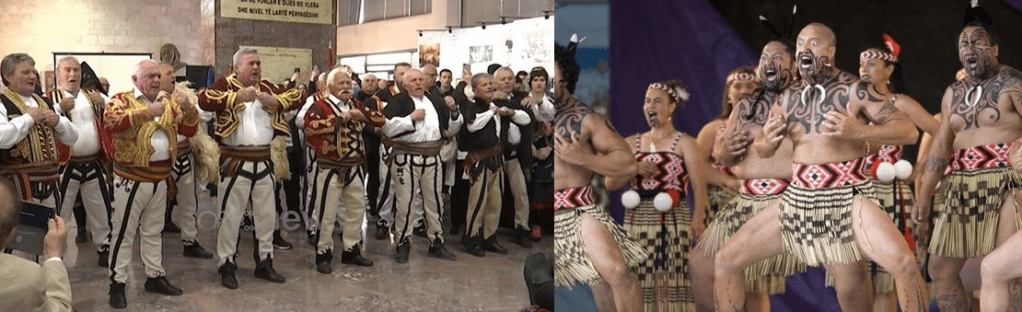
There are certain similarities between the “Haka ritual” of the Māori people and the 6000 years old northern Albanian tradition of “Gjama e Burravë” (Mens lamenting or Death Ritual).
Taken from Albanianpost.com
Last November, an asset of Albanian cultural anthropology was returned.
“The Men’s Mourning” honored a father and son, Pjetër and Jason Rushaj, who died as a result of the floods in Shkodër. They were escorted to their homes precisely according to the Albanian highland tradition. The men’s mourning is a tradition that is used by Albanian men – highlanders only for deceased men.
This funeral ritual in the region of the Upper Shkodër Highlands is so old that it also extends to the highlands – other northern Albanian regions in Albania, Kosovo and Labëria. The essence of this ritual is to let go of the pain, to let it go and leave the person, and also to respect the deceased.
In Hot, Grudë and Kojë, it was customary for men and women to mourn the deceased. That is, in the Highlands there were mourners (gjamtarë) and mourners. The person or people who express (cry out) wail (cry out) for the deceased in the Highlands are called wailors.
He would go wherever he received news of a death in the Highlands, free of charge, to mourn the deceased according to the custom in this region. The deceased man was mourned by both men and women, while if the deceased was a woman, only women mourned her.
The songs of mourning will also ask the deceased to rise from the dead, because everything he owned and everything that was dear to him calls for him/her to return to life.
At least ten men are needed to perform this rite. During the ritual, the men beat their chests and scratch their faces, repeating: “O wretched me for you, my son/nephew/friend.”
The Gjama served the unique purpose of expressing grief, but at the same time, spreading the bad news to neighboring regions so that others would come and visit the family of the deceased. This practice was strictly forbidden during the communist regime and was revived after 1990.
Haka
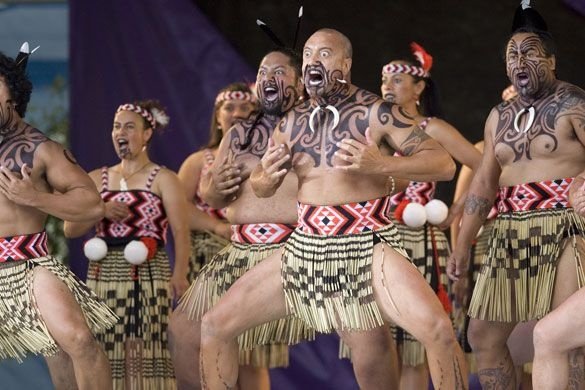
The Haka is iconic throughout the world and is an identifier for the indigenous people of New Zealand; the Māori. It is an important, iconic part of their history and traditions. Although it began as a war dance, it is now used for several aspects of New Zealand life, ranging from weddings to mourning.
The first hakas were created and performed by various Māori tribes as a war dance. It is an ancestral war cry and was performed on battlefields for two reasons. Firstly, it was done to intimidate their opponents; warriors would use aggressive facial expressions, such as bulging eyes and sticking out tongues.
They would shudder and cry in a frightening manner, while beating and waving their weapons. The second reason they did this was for their morale; they believed they were calling on the god of war to help them win the battle.
Over time, the haka evolved and began to be used for more than just battle. It became a way for communities to come together and was a symbol of community and strength.
This type of haka is called ngeri haka. Unlike peruperu, ngeri does not use weapons. Their purpose is different; they are performed simply to physiologically move the performers and spectators, rather than to cause fear.
This different purpose is reflected in the way they are performed. Their movements are freer, giving each participant the freedom to express themselves in their movements. Both men and women can perform a haka; there are special ones that are created just for women.
Reference
https://albanianpost.com/gjama-e-burrave-shqiptare-si-haka-neozelandeze/


 Balkan Academia