

Written by Ramiz Lushaj. Edited and translated by Petrit Latifi.
On the 70th anniversary of their murder by Serbo-Montenegrins in the Mema Mountains.
The history of the Kasemçukaj clan is well-known. Genetic lineage of the Prelvukaj clan, their own womb. From this noble lineage is the grandmother of Bruno Selimaj of Nokshiq. They called him Bjeshka, an Albanian name. She is the sister of the legends of bravery, Selman Faku Kasemçukaj. This warrior of Ethnic Albania is known five times: as Selman, as Kasemçukaj, as Prelvukaj, as Martinaj, as Plavë-Gucia.
A fact: the noble Jakup Jahelezi of Dragobia, over 90 years old, an emigrant to New York, singles out Selman Faku with the eloquent saying: “I have not seen braver boys in my life.”

Kasem Çukaj of the Trimni clan, according to the genealogical tree, was the fourth brother, along with Meta, Latif and Omer. Three of them were frontline participants in the Pan-Albanian and international War of Nokshiq (1879-1880). Kasem Çukaj himself had six sons: Buti, Salihi, Brahimi, Reku, Elku and Faku. Six Kreshniks. As in the Epic of the Kreshniks. Each one a story of glory written with mind and rifle, with sacrifices and blood.
Three of them: Brahimi, Buti and Salihi, are martyrs of the Albanian nation. Prof. dr. In September 1995, Zekeria Cana was in the village of Martinaj, in the tower of the over-century-old Sylë Prelvukaj, who had experienced the genocidal Serbian occupation of Plavë-Gucia from October 1912 to November 1913, a time known in history as the tragedy “Previsë Massacre”. He also tells the historian about one of Bruno Selimaj’s uncles: “Brahim Kasemi and two other men who refused to change their religion were shot on the spot. Their graves are above the village near the foundations of the old Catholic church”.
Another historian, the late R. Dedushaj, in his work “100 Years of War” testifies that the son of the Kasem Çukajs, Brahim – the third one himself, was killed by the Vasojevićs as a chauvinistic revenge against the bravery and bravery of the Prelvukajs in the defense of Plavë-Gucia in the years 1854-1880. The other two sons of Kasem Çukaj, Buti and Salihi, were shot by the Montenegrins in the Previše Massacre.
Their graves are not even known. Meanwhile, in Previsë, in this massacre that is still not fully explained and has not been condemned internationally, Arif A. Balidemaj, Hysen Delia, Mujë Gali, Bajram Haxhia were also shot by the Martinajs, and in Greben Nezir Cufi and Zekë Haxhia. There are others. That much we know. The Martinajs themselves can testify more.
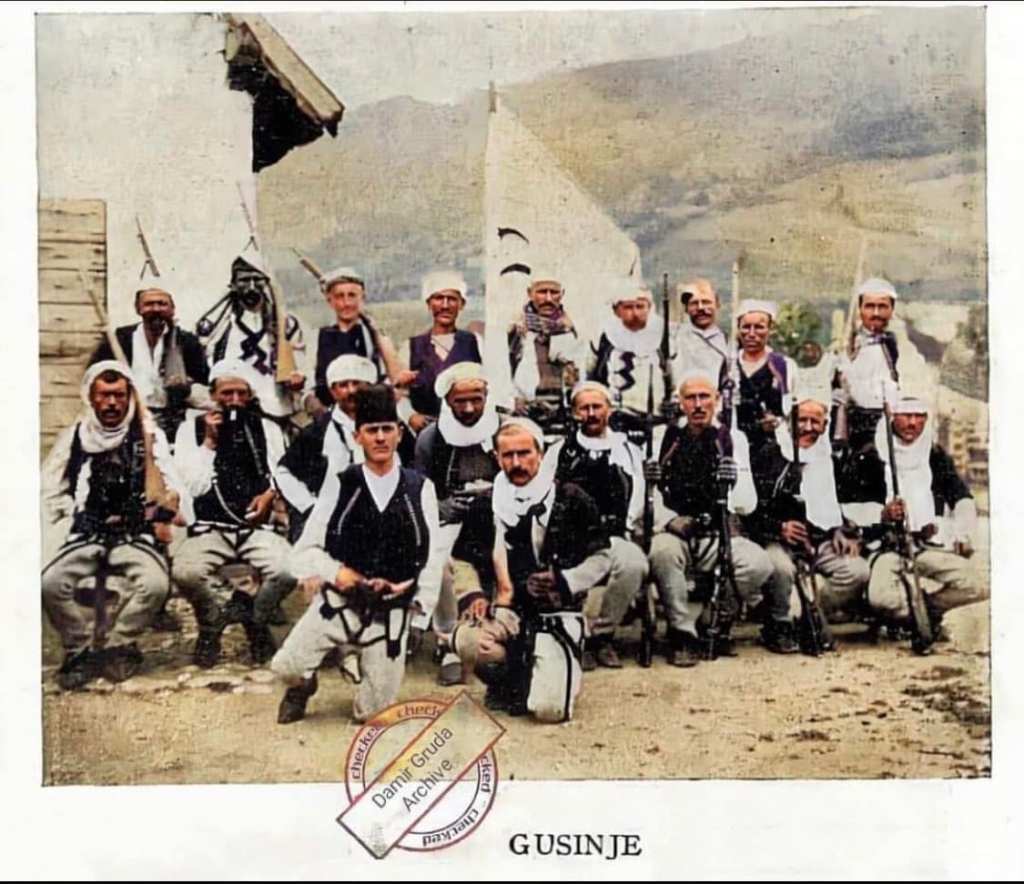
Documents on Kachak Albanians houses being burned down by the Montenegrin authorities in 1913
A telegram dated March 27, 1913, signed by the Governor of Peja, J. Plamenac, addressed to the Kralj (King) of Cetigne, directly to the Minister of the Interior Plamenac, informs him that: “Today in Martinaj 11 Kachak houses were set on fire” (Doc. no. 488). Historians list that the tower of the Kasemçukajs of Prelvukaj was also burned. The criminal of that blazing and bloody fire was Captain Vuksan Dragović, a member of the Military Court in Plavë-Gucia, newly conquered by the Kingdom of Montenegro, a kingdom – a former protectorate of the Russian Empire.
At that time, Selman Faku of the Kasemçukajs, otherwise: the brother of Bruno Selimaj’s grandmother, was only two years old. A woman there took him under her protection to the point of self-sacrifice. He escaped the control of the Serbian punishment and that very difficult life of the time of the Previsë Massacre, one of the largest and most tragic massacres in the history of the ancient and modern world. Perhaps this difficult situation and harsh circumstances in his growing years left him somewhat short-tempered.
Selman Faku Prelvukaj of Martinaj, a resident of Guci, a freedom fighter for Plavë-Guci, for Ethnic Albania, especially during World War II and in the first years of multiple communist rule in Montenegro (Avnjojist Yugoslavia) and in London Albania, was distinguished as a Fighter for the Albanian National Freedom.
He, Selman Faku of Martinaj, also had a peerless friend, Pulec Hima Ahmetaj of Vuthaj. Just as the double-headed eagle stands on the Albanian National Flag, so these two stood together in Plavë and Guci with the surrounding hills and mountains to the Gjakova Highlands (Tropojë), Malësi e Madhe, Shkodër, Deçan, etc. They also had an “Albanian Resistance Group Against the Serbs” (1941-1947).
Albanians from Lake Plavë to Lake Shkodër and from the Lim River to the Drin River, as well as newcomers and Serbian occupiers in the Alps, called it “Selman and Pulec’s Group” or “Pulec and Selman’s Group”.
These two were never separated in life during the years of their resistance. They shared Albanian national ideals. Moreover, they were also fellow countrymen, their wives were sisters.
They even died together: on the same day, in the same place. Even their graves remained next to each other on the Mema Mountain. Another historian of Plavë-Gucia, Sulejman B. Ahmeti, among other things, concludes: “These two brave men had the open road. It was very difficult to get ahead of them. The Serbian invaders were convinced that they were unstoppable.”
In these years In the entire Plav-Gucia region, various documentary sources state that some fighters also temporarily acted in nationalist groups. These had a double connection among themselves: by blood and by national ideal, such as the group of Rrustem Mulaj and Adem Shaban Gjonbalaj (the latter, Bruno Selimaj’s uncle on his mother’s side), of Prelë Kolë Shyti, of Haxhajve i Hoti of Plavë, of Shemso Ferri of Plavë, of Sali Ismail Nikoçi and Hasan Isuf Kukaj, of Man Zekë Qosaj and Ram Tole Hasangjekaj, of Imer Maliqi and Mustaf Haxhië, of Smajl and Haxhi Metë Martinaj, of Belo Hamëz Ahmetaj, which were persecuted with swords and rifles from all sides: both from Yugoslavia (Serbia and Montenegro), and from London-loyal Albania.
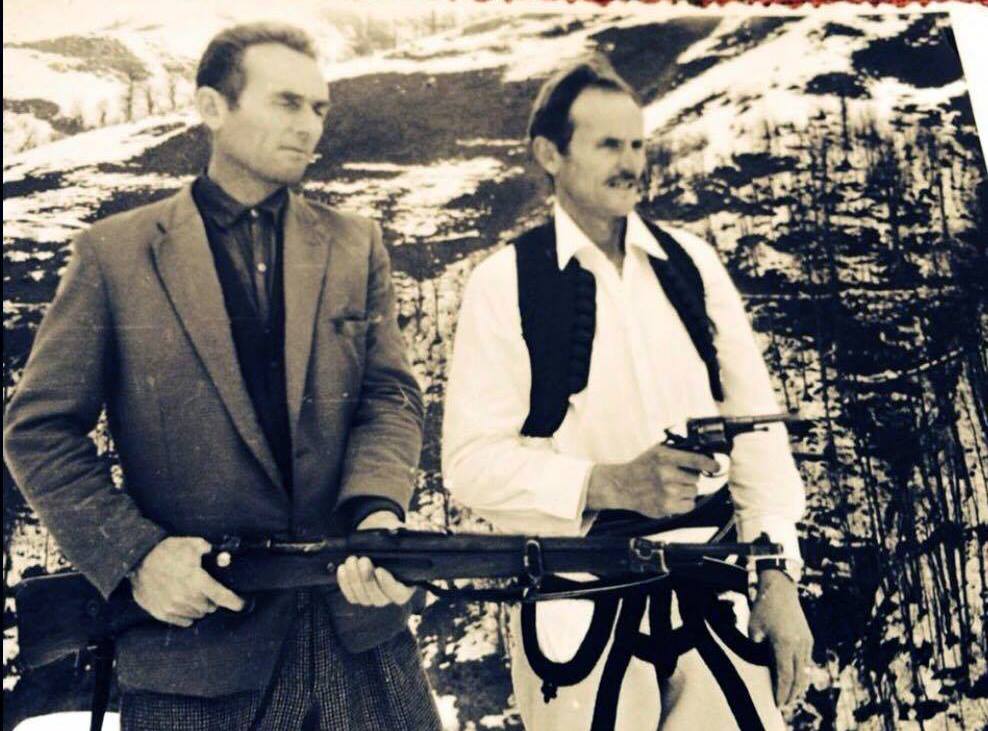
Selman Faku Prevlukaj is captured, handed over and escapes Yugoslav custody
The nationalist group of Selman and Pulec was very special, the most active of all, active and resistant to the limits of the legends of the time. Selman Faku Prelvukaj, brave of the mountains that grow brave, had killed in attempts and assassinations all those Albanians with anti-Albanian insults and acts, so after the savage Serbo-yugoslav reconquest by Tito’s Second Yugoslavia.
Having a hard time in an ongoing war with them, like many other blue-collar criminals, he rises and crosses the unjust border of 1913 and 1945 and enters London-loyal Albania, the People’s Republic of Enver, a system and a face turned towards Belgrade and Moscow of that time, two of the capitals from which the evils that have eternally come to the Albanian nation to this day.
Yugoslavia was begging for him everywhere. Somewhere Albania also caught up with him. They caught him red-handed, in the Shkodra district. They tied his hands, locked him in prison for several days. They handed him over to the Yugoslav side, according to a joint agreement between the communist governments of independent Albania and federalist Yugoslavia.
Selmani himself, about the official Albanian reality full of poisonous evils of that time with Albanian state disloyalty and partnerships with the Yugoslavs, expressed: “We were forced to seek refuge in our own country. Enver’s communists did not accept us, they called us traitors, reactionaries. They betrayed us. They tied us up and returned us to their Yugoslav brothers“.
The Albanian octopus security, also in touch with the Yugoslavs of Belgrade and Çetina and since 1946 with those of Titograd (Podgorica), do not forget any detail of the interactive cooperation. In the region Han of Hoti, as they handed over Selman, tied up and exhausted from the difficult prison, they entrusted him to the Yugoslav side: “Be careful! Don’t look at him so short-bodied because he is a very dangerous man…”.
They assigned a strong Serbian soldier to escort him across the mountains to Guci, who told his superiors and Albanian companions there: “Who, this one tied up and I with a rifle in my hand, if I had my arms, he wouldn’t be able to escape…”.
On the way to Podgorica, Selmani was and seemed to be very tired, so this accompanying soldier stopped his steps at a certain bridge with rushing water and was shooting at the mountain peaks. Selmani finds an opportunity and says to him: “Ah, you are brave! How can a man close his eyes when he is pointing his finger at a rifle?!” Word follows word. Selmani does not stop talking: “I will tell you as soon as you shoot the target. Hold your breath, close one eye, calm down…”
The tall soldier is momentarily confused. Selmani, with his sharp mind and eyes, quickly grabs him by the handcuffs and throws him down on the sand. He kills the soldier, who is lying on the ground. He takes his weapon. He runs away, guarding himself so tightly that he does not even see the birds.
He walks, his face covered with fur. He crosses the Albanian border for the second time that day. When he enters Hoti, his body takes on wings. A Hoti Albanian opens the door for him. There was hospitality, trust and manliness. They welcome him in Albanian, without fear of time. There he gains more strength and hope. They remove the handcuffs from his hands, which had left traces of his departure. They appreciate his national ideal and bravery. They keep him for about ten days as their best friend in their tower and, afterwards, her strong and loyal men accompany him to the region of Shtegu i Dhënve (translated: “Path of the Goats”.)
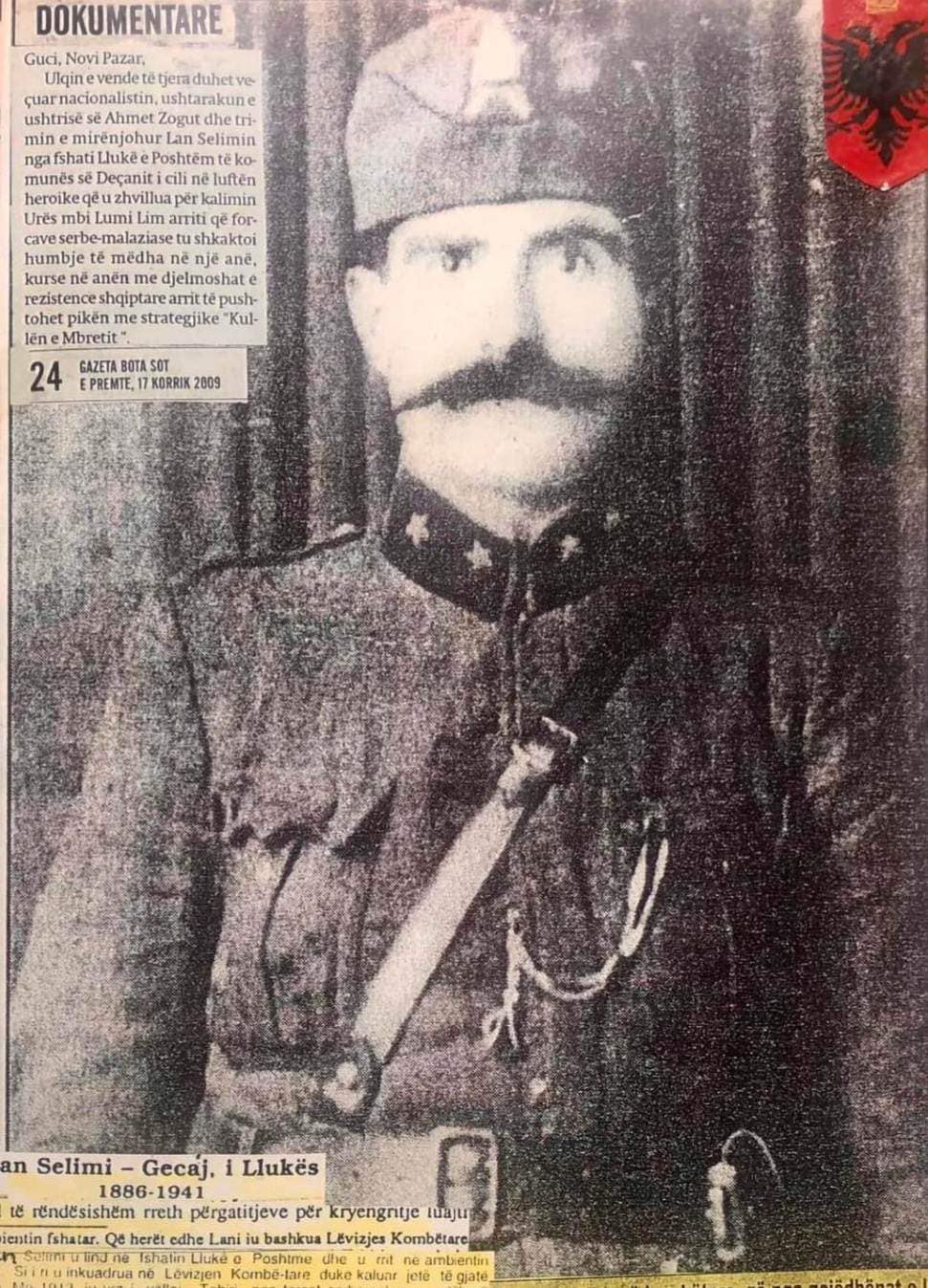
Selman Faku Prevlukaj joins his patriot group along Pulec Hima Ahmetaj, Zenel Mehmeti, Ibrahim Smajl Prevlukaj, Shaban Sadria Hasanaj of the Gjonbalajs, Kadri Salihi Ulaj of the Sirm village of the Vuthajs, Mehmet Mustafa Kukaj of the Vuthaj family, and two Rugova fighters.
The national fighter Selman Faku Prelvukaj from there goes straight to his region of Plavë-Gucia, straight to the mountains of freedom. Again with his group, with the “Albanian Resistance Group against the Serbs”. This group initially had over ten members: Pulec Hima Ahmetaj of the Vuthaj family; Zenel Mehmeti Ahmetaj of the Vuthaj family – an educated and experienced man with a mind and a rifle; Ibrahim Smajli Prelvukaj of the Martinaj family; Shaban Sadria Hasanaj of the Gjonbalaj brotherhood of the Vuthaj family; Kadri Salihi Ulaj of the Sirm village of the Vuthaj family; Mehmet Mustafa Kukaj of the Kukaj family of the Vuthaj family, two Rugova fighters, and others.
1946-1947 and the winter and Yugoslav forces intercepting
The signs of nature showed that the winter of that year 1946-47 was coming very harshly. The group of Selman and Pulec had to make themselves a guest in a life full of sacrifices, challenges, and even self-denial. They had found a completely safe place: above Jasenica, near Hoti of Plavë, right in Sjapicë of Haxhië, in a cave at the “Buni i Shtjerrave”.
Yugoslav regime massacred kaçak Albanian families
But one winter Another, more ferocious anti-Albanian was also coming to Plavë-Guci from Tito’s Yugoslav regime, from Belgrade itself in Serbia with Serbian Prime Minister Blagoje Nesković and from the two capitals of Montenegro, from the old Cetina of the throne and from the new Titograd with Montenegrin Prime Minister Blažo Jovanović. Any ethnic Albanian who was with the anti-Yugsoalv resistance and fought for national freedom in the mountains, considered a “kaçak”, “fugitive”, “traitor”, etc, the Yugoslav UDB tortured and massacred their families, both large and small.
Betrayal
The year 1947 had just begun. One of the relatives of the group, who had been fatally called to help prepare the guest house for that harsh winter, could no longer bear the inhuman tortures and, with a broken heart, betrayed to the enemies of the nation the “winter home” of the fighters for National Freedom, of Ethnic Albania. This trusted man broke their trust, told the Yugoslav secret service where the Selman and Pulec Group was sheltering.
The Yugoslav state stood up as if it were going to cross the border towards London Albania and not towards a cave at the “Buni i Shtjerrave” in Sjapicë, where it was said that there were only 14 fighters from Plavë-Gucia and the surrounding area. However, the number of those fighters is not so important as the fact that this time the cream of the glorious combat resistance in this ethno-historical Albanian region was being attacked, the last hearth of organized anti-Serbian resistance in the Alps from the Vermoshi and Valbona rivers to the Lim.
Yugoslav troops surround Selman Faku Prevlukaj and Pulec Hima Ahemtaj and the use of Albanian civilians as shields
The black word flashed on the white snow, it came out before the crack of rifles: They have surrounded Selman Faku of the Prelvukas and Pulec Hima of the Ahmetaj. The Yugoslav Security Forces – UDB, together with those of the police and the republican and federal army, were afraid of direct combat with the group of Selman and Pulec, so they went to their cave refuge at Buni i Shqerrave using civilian human bodies from Plavë-Gucia as shields.
They had mobilized them by force, with the violence of the time. There were men and women there with authority in the villages and the entire province and up to Malësia e Madhe and Rrafshin e Dukagjinit. Some of them even without close genetic blood ties to those surrounded in that cave. They had also brought from the family tree, relatives and friends of these national fighters in complete encirclement. Among them, at the forefront, was Bjeshka, Selman Faku’s sister and Bruno Selimaj’s grandmother.
She had her son, Ymer, and others with her. There were also members of Pulec Hima’s family. And others. In some documentary sources it is said that there were over 100 Plavë-Gucia civilians of different ages, old and young, men and women. Many of whom had been brought there as “hostages” for the besieged. An extremely large number. Somewhere, in a part of the siege, in the frontal part, where communication was also with the fighters in the cave, they were placed up to three rows of civilians.
They were pushed to approach the inn, the cave. From close by they were called to surrender, but there was resistance. No one wanted to fall into the hands of the enemy alive. The tense, bad, unpredictable situation lasted for a long time. Civilians were, in reality, “hostages”. If the besieged patriots would respond with war, then a great massacre would be committed on all those honest, innocent people, ready even for self-sacrifice.
Zenel Mehmeti Ahemtaj and others surrenders due to the pressure
The first to emerge from that cave is Zenel Mehmeti Ahmetaj of the Vuthaj family, who often led with his words and example. The Yugoslav troops told him that their resistance would bring about a bloody massacre. He dropped his weapon on the ground, telling the crowd: “No, no, better 10 dead than 100”. After him, everyone came out. At intervals. One after the other, a total number of 12 fighters.
The last to emerge from the cave were Selman Faku Prelvukaj and Pulec Hima Ahmetaj. They have pointed their rifles at each other’s chests, ready to commit suicide, having sworn to each other and in front of everyone that we will not surrender alive. Selman Faku is the first to greet them:
“You have won the Second World War, but we Albanians are fighting for our land… You knew we were in a cave. Why did you take our families and bring them here? Why didn’t you come to fight with us and see how the men are taken prisoner…“
The Anti-Albanian Mikail Bullotovi of Berane
They were pushed by the anti-Albanian, Mikail Bullotovi, a village headman in Berane, an Albanian, they called them there. Bullotovi had send words for the Albanians saying:
“Selman and Pulec, don’t kill each other, because you don’t need to. It was war“.
Then Selmani asked the Yugoslav troops and Albanian liaison at the cave:
“Is Bullatovic still in power as a commander in Berane. As long as he is there, I will not surrender alive, because I know that he will kill me for revenge. In the name of the Albanian people, I say to you: dont send me to my doom.”
The Albanians were seize and went into the mountains with three men. The Yugoslav soldier lied and said that Mikail Bullatovic was not a commander in Berane. Selmani believed him. He surrendered together with Pulec.
Yugoslav troops escorting the Albanian fighters
Immediately, the 14 Albanian National Freedom Fighters set off towards the city of Plava. They tied them up two by two. With dozens of gun barrels pointed at them. Firearms were fired into the air as a victory signal for their capture. In fact, they were more than prisoners of war.
Bullatovic appeared before him.
Selmani and Pulec looked at each other. “Do they have any way to escape?” They saw that they were as gullible as the “someone” who had told the UDB (Yugoslav secret service) their hiding place and now this Albanian liaison who did not tell them the truth about Bullatovic. They would have killed themselves and would not have surrendered alive to the cave at Buni i Shtjerrave.
Mikail Bullotovi appears before them and separates them in order to execute them without trial
“Separate those two“. Bullatovic told them. “Don’t take them down with the others“. The Serbs were eager to kill them. On the Mema mountain, over two hundred meters below the cave, they supported them against a large pine tree and opened fire on them. They shot them without trial.
Bullotovi claimed the Albanian fighters tried to escape
A political, barbaric, chauvinistic murder. A bio-political and ethnic hatred towards them, since they were and remained true, rare, legendary Albanians. The scoundrel Bullatovic invented a farce as if they were trying to escape and shot at them without warning. In fact, the truth is different: even today, after 70 years, whenever I mention these two names of Albanian glory to the Albanians, it instantly ruins their mood and they have already lost sleep.
The descendants of Pulac Hima Ahmetaj and Selman Faku Prevlukaj
Pulec Hima Ahmetaj of Vuthaj left heirs. I know one of his sons, Shemun, personally. He was an immigrant teacher in Elbasan. They are closely related to the three sons of my aunt, Dadës Razë, the sons of Sherif Dedushaj from Vuthaj, also immigrants to Elbasan. Once in the 80s, while we were walking with Shemuni and Avdyl Dedushaj, right there at the “Skampa” hotel, Shemuni stopped and shouted with all the strength of his soul: “Kosovo Republic”.
He held his hands together in the shape of an eagle, a symbol of national unity. This was not the first time, nor the last. He had in his blood the gene of the national martyr, Pulec Hima Ahmetaj. Selman Faku Prelvukaj, from the Kasemçukaj family, born in Martinaj and living in Guci, has left two children, but the gene of this national martyr also lives in all his grandchildren from the Selimaj and Nokshiqi families. One of them is Bruno Selimaj, a name of the Albanian time, a symbolic man for his contributions to the Albanian nation.
References
Rexhep Dedushaj. 100 Years of War. NY. 1999.
Zekeria Cana. The Genocide of Montenegro on the Albanian People 1912-1913” (Documents). IAP. Prishtina. 1997, p. 34.
Z. Cana. Ibid. p. 34.
Sulejman B. Ahmeti.: “Plava and Gucia – Events that should not be forgotten…”. Monograph. Tirana, 2002, p. 78.
S. B. Ahmetaj. Ibid. p. 81.
Ramiz Lushaj: Referime dhe nga Dosja ime “Plava e Gucia” (Dokumente arkivore, shënime, dorëshkrime, takime e biseda, etj.)


 Balkan Academia