

Written by Avni Azizi. Translated by Petrit Latifi.
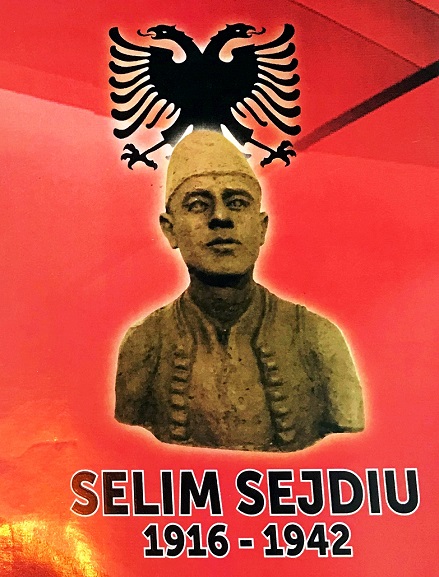
Viti, September 24, 2019: Organized by the Remnik Village Council of Viti, and at the initiative of family members and some activists from our diaspora, tomorrow, August 4, starting at 10, the unveiling of the bust of Selim Fetah Sejdiu and other martyrs killed and massacred in the mosque of the Remnik village of the Viti municipality in 1942 will take place.
Throughout the last century, but even earlier, the persistent efforts of the Albanians for freedom and unification of the lands continued. The secret conferences and treaties at the beginning of the last century, although they brought the fatalistic bad years, did not manage to erase from memory the revival of the Albanian body with all its limbs. The final war in the Balkans against the Ottoman Empire brought independence for only a part of the Albanian trunk.
Although divided and with their lands devoured, the Albanian uprisings and freedom struggles continued unabated. In every era of national history, the Albanian people became freedom fighters with their blood, being cruelly killed and massacred by the invaders.
After World War I, but even earlier, the colonization of Albanian lands, which began in 1877 with Serbian settlers from Serbia, continued. Hundreds of thousands of Albanians were chased from their ancestral lands, persecuted, killed and massacred, but the efforts never ceased. Even World War II found the Albanian people exhausted and enslaved by years of suffering.
While they, together with other peoples, united against the fascist bloc, their envious neighbors betrayed them behind their backs and awakened their earlier dreams of annexations, displacement and ethnic cleansing.
The Remnik massacre in 1942
The village of Remnik in the municipality of Viti is one of the oldest settlements in this locality. Likewise, in 1942, in this village, in the birthplace of the patriot and patriot Hasan Remnik, in this ancient and patriotic environment, the Serbo-Chetniks, furious with hatred, in cooperation with the army of the Bulgarian fascist invaders, had committed a massacre against the indigenous Albanian inhabitants of Remnik, killing and brutally massacring the inhabitants of this settlement.
The invaders, under the pretext of searching for weapons, had gathered the men of Remnik and, placing them in the village mosque, for three days in a row, handcuffed them and tortured 24 men of the village to death, and had shot some of them.
The invaders, wanting to terrorize the Albanian inhabitants, initially liquidated influential people, leaders and people connected and formed with national orientations. Among those who were shot was the mayor Selim Fetah Sejdiu, whom the patriots Rifat Berisha and Ramiz Cernica had appointed as the leader of the locality. It is worth mentioning that Selimi was the son of Fetah, and his father had been sent to the wars in Yemen in Southeast Asia and had not returned from there alive. Selimi, along with many of his peers, had been formed under the national spirit and ideals that every invader was the same and fighting them was a national duty.
The tragic days of the event that occurred in the village mosque, according to the accounts of people who remembered the event, at the moment of the shooting, Selimi had said to the executioners: “You can kill me, but you will never be able to kill Albania!” In addition to the mayor Selim Fetah Sejdiu, among those who were shot were: Daut Ibrahimi, Shaban Ibrahimi, Bajram Ibrahimi, Halil Selmani, and Ymer Syejmani, Bislim Rexhepi, Salih Salihu, Halit Boshnjaku, all of whom were shot between March 15 and 19, 1942, while the others were drowned and massacred under torture.
After this massacre of the invaders, Hasan Remnik with his comrades Halim Sejdiu and others, after breaking the siege and displacing the inhabitants of the village by passing them to the Italian zone, they opened a frontal war line against the Serbian and Bulgarian invaders and later compiled a strategic plan of revenge against all those who had participated in the massacre and murder of the men of the village.
According to Serbian sources and the memories of the residents themselves, Hasan Aliu during 1942 had liquidated over 15 Serbian oppressors, 12 of whom were among those who had participated in the massacre of men in the village mosque. Including the anti-Albanian and sworn executioner Slobodan Jovanović from Zhegra.
The Remnik massacre and many other murders and massacres against the Albanian population in their own lands in the Bulgarian occupation zone, as evidenced by numerous archival documents, were atrocities committed by the Bulgarian army and paramilitary formations with the objective of exterminating and removing Albanians from their lands. The division of Albanian lands into occupation zones during those years also had economic interests, where often, driven by these interests, conflicts between the occupiers emerged, such as those between the Italians and the Bulgarians.
Memory and honor for the martyrs
Years, decades and centuries pass and the memories of the martyrs remain always fresh in our historical memory. The generations that come, thanks to the sacrifice of the martyrs, breathe and live freely. The commemoration of the martyrs is an honor, obligation and responsibility that we can at least do for their sacrifice. The martyrs and martyrs of every time and historical period are those who, with their falls and their lives, donating for the land, we enjoy freedom today.
The memory and honor for them, besides being a duty and honor, should also become our national obligation. Thus, at the initiative of the residents, family members and some exiles from the village of Remnik, the erection of the tombstone in memory of the event and the murders committed by the invaders was organized. Thus, tomorrow, August 4, the unveiling of the bust of the then leader and mayor of the village, Selim Sejdiu, who, along with many other locals, was executed by the invaders.
Remnik remembers his sons who were cruelly killed.
Who for decades until today’s freedom were only in the hearts of the inhabitants and the nation, while from tomorrow in the center of the village they will be guarding the different generations who sacrificed for the motherland. When we connect the stories and memories of the sacrifices of all times, without a doubt not only are we honored but also the meaning of freedom seems to become more precious to us. Glory to all the martyrs and martyrs of the nation who sacrificed themselves in every period of national history. May the blood of every martyr and martyr never be forgotten!
Reference
https://pashtriku.org/avni-azizi-masakra-e-remnikut-me-1942/


 Balkan Academia