
Written by Petrit Latifi
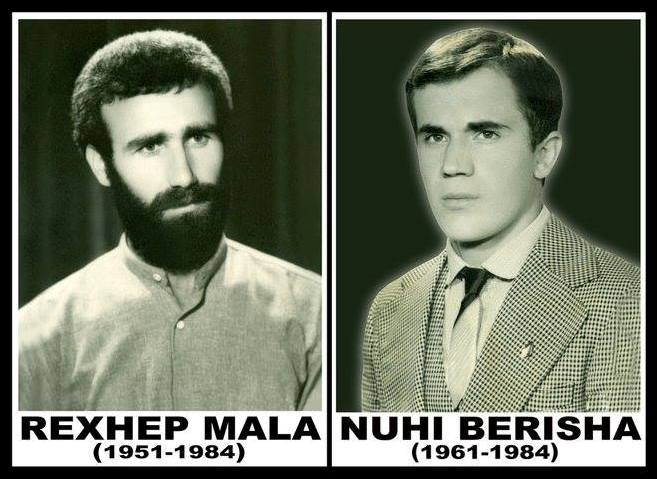
Rexhep Mala, patriot, symbol of Albanian national resistance, national hero from Hogosht, Dardana Municipality, was born on March 29, 1951 to his mother Fahrije and father Mehmeti, a family with average economic conditions but with a very rich patriotic and patriotic tradition. Rexhep Mala completed his primary and eighth grade school in Hogosht, then since his father Mehmeti moved to Gjilan, Rexhep Mala continued his high school in Gjilan. Both Rexhep Mala and his friend Nuhi Berisha fell heroically in 1984.
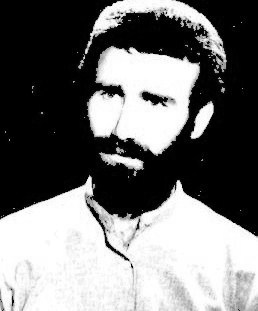
“The heart that sang out loud and inside itself, no one could stop its desire to sing… Even when I was in the cell, Rexhep Mala recounted, “there was not a day that I did not sing even though it was strictly forbidden. As soon as the prison guards heard my voice, they would come and interrupt me, but there was no shortage of punishments from the filthy bloodsuckers. As soon as they left, I would start again in a low voice and slowly an energy would come to me and I would raise my voice so high, to whom was I singing…?, to my people, to the heroes, to the martyrs who fell for Freedom, to the heroic resistance of my Albanian brothers and sisters.”
– From the fall of Rexhep Mala and Nuhi Berisha – during the clash with Serbian police forces, on the Hill of the Brave in Pristina, on the night between 11 and 12 January 1984, Rexhep Mala and Nuhi Berisha fell heroically. Originally from the Municipality of Gjilan, born in Kamenica, as students, on the initiative of Rexhep Mala and other collaborators, the ‘Student Committee within the Revolutionary Group’ was formed, which would serve the Albanian Liberation Movement as the first nucleus for the student spring movement of 1981.
Rexhep Mala and Nuhi Berisha tried to lay the foundations of an organization of the liberation movement, which operated continuously, and in 1973 they began their activity in publishing the newspaper \”Zëri i Kosovës\”.They had a clear vision for the future of Kosovo and the courage to act against the then regime. Rexhep and Nuhiu are considered two of the central figures of the resistance and efforts of the Albanian people of Kosovo for freedom and independence, and are valued for their bravery, high sacrifice and organizational skills.
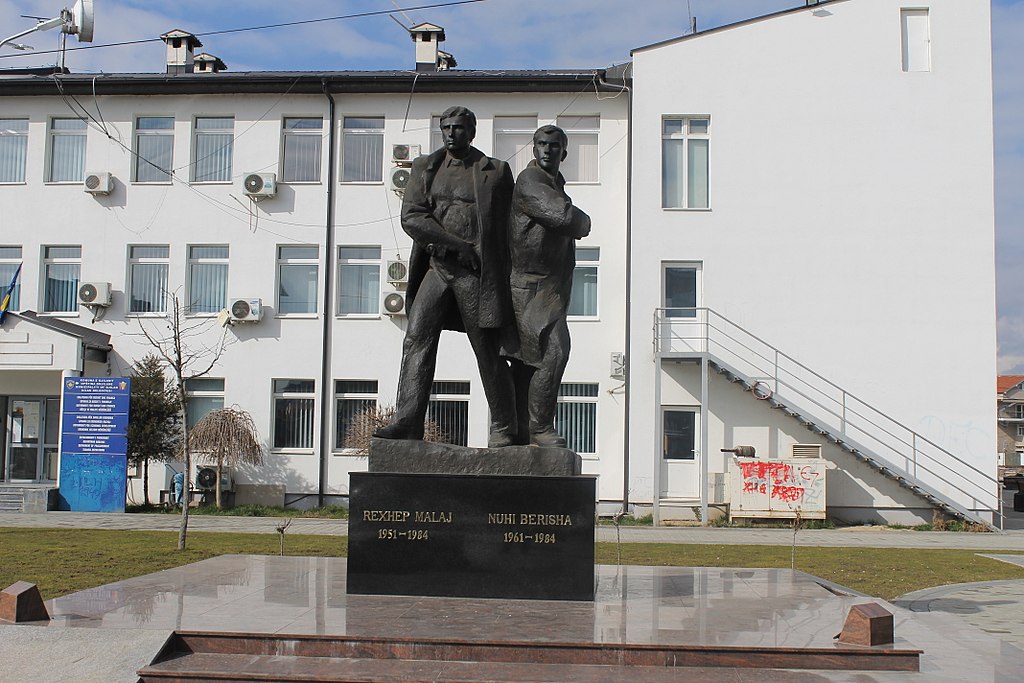
As a third-year student, he was among the first organizers in organizing the 1968 demonstrations. In the 1969/1970 school year, Rexhep Malaj was expelled from school, and he continued his high school education in Preševo, where he successfully graduated.
In the 1970/71 school year, he worked as a teacher in the village of Marec in Prishtina with great pleasure, but, eager for knowledge and to study, he stopped working and enrolled in the Faculty of Economics in Prishtina. He successfully completed his first year of studies. He was also illegal and after a break, he went to Albania, from where he quickly returned with the conviction that he had to act closely.
His journey, his coming and going to Albania cost him a prison sentence, which was punished by the Gjilan Court for Minor Offenses. He was imprisoned for a full 28 days. He was released from prison to spend some time outside the Yugoslav state (France, Germany, Italy and Switzerland), which Rexhep Mala never recognized as a state.
Sentenced to 9 years in prison
Wherever Rexhep was, wherever he went and with whoever he was in society, he only had his ideal for a free and independent Kosovo, but he was persecuted by the barbarians step by step, which is why as a member of the National Liberation Movement (LNÇ) in 1974, together with Adem Demaçi (Adem Demaçi’s Group) and many other members, he was arrested and after 9 months of investigation, he was sentenced to 9 years of severe imprisonment.
In the files of the Kosovo SPB, it is clearly stated that Rexhep Mala was among the most unbroken prisoners who had held the longest hunger strike, despite this, he managed to write the diary from prison “Memories from Prison” where he presents the very difficult life and the most inhuman medieval tortures of the UDB that they had used and exercised against him.
Although he was unyielding in his patriotic stances, Rexha was sent to many prisons in the former fascist Yugoslavia, such as in Pristina, Mitrovica, Zenica, Stip, Idrizovo, Prizren, Foca and Mostar. On May 23, 1983, after 8 years of suffering and abuse, he was released from the doors full of cruelty and unforgivable suffering, because he had spent most of his sentence alone in the cells of the aforementioned prisons, which could not break him or force him to be wise for the communist regime that he had never known in his life.
The Flame of January 1984
He came out of those dirty doors and found his homeland, Kosovo, right where he had left it before, after 8 years Rexhep Mala had no evidence that anything had changed, no… again enslaved, in which case Rexha never wanted that life with that captivity and with full energy he embarked again on the path towards the realization of his goals and ideal, he found his ideal friend Nuhi Berisha and they went underground again.
Although followed at every step, the UDB fell onto them but the brave men made a pact not to fall alive into the hands of the ghouls. In the neighborhood of the brave men of Pristina, in an unequal war but with songs and bursts of weapons on January 11/12, 1984, they fell heroically never to die.
Rexhep Mala and Nuhi Berisha stand out among the brightest figures of our national resistance and sacrifice. Today, collaborators, fellow fighters, fellow villagers and the whole of Kosovo speak with pride about the patriotic work of Rexhep Mala, although we see the name of Rexhep Mala on every flag with the double-headed eagle, we encounter it in many streets that proudly bear his name, we encounter it in many squares and educational centers, the city barracks in Gjilan proudly bear the name of the KLA core Rexhep Mala and Nuhi Berisha.
On January 11, 2008, the monograph “Rexhep Mala – Anteu of the Illegal Movement” by the author Selatin Novosella was promoted at the National University Library in Prishtina.
Nuhi Berisha
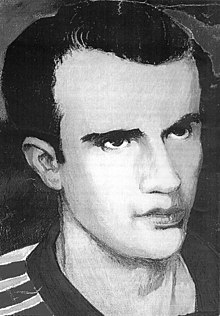
Nuhi Berisha was born on October 3, 1961 in Svirce, Dardana (formerly Kamenica). He completed primary school in his hometown, high school in Gjilan, and attended the Faculty of Law and Physical Education in Prishtina. He was an excellent student. Nuhi had a clear vision for the future of Kosovo and the courage to act against the then regime since the middle school days.
While as a student, on the initiative of Rexhep Mala and other collaborators, the Student Committee was formed within the Revolutionary Group, which would serve the Albanian Liberation Movement as the first nucleus for the student spring movement of 1981. Rexhep Mala and Nuhi Berisha tried to lay the foundations of an organization of the liberation movement, which operated continuously, and in 1973 they began their activity in publishing the newspaper “Zëri i Kosovës”.
Nuhi Berisha and Rexhep Mala fell heroically during the clash with Serbian police forces on the Hill of the Brave in Prishtina at midnight on January 11-12, 1984. The primary school in Tygjec today bears his name.
References
“Dëshmorët nuk vdesin kurrë” 2004 by author Ramadan S. Latifaj.
The Journey of a Giant, he also published a monograph, these works which are dedicated precisely to the hero Rexhep Mala. The monograph is called: Rexhep Mala, the unquenchable fire of war Archived March 8, 2015 at the Wayback Machine
http://indeksonline.net/?FaqeID=2&LajmID=81368
http://www.trepca.net/2004/04/040430_km_ne_vend_reagimit.htm Archived March 18, 2013 at the Wayback Machine
Zeri i Kosoves”the fall of Rexhep Mala and Nuhi Berisha”. Archived from the original on 6 March 2016. Retrieved 24 September 2019.


 Balkan Academia