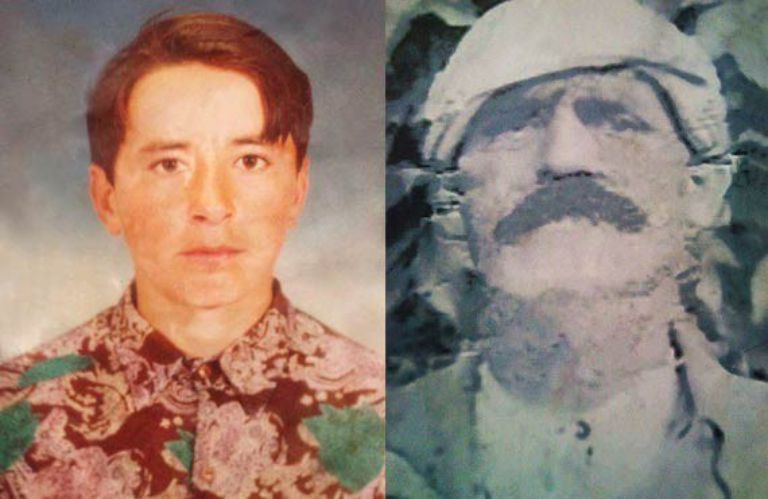

Authored by Ukshin Zajmi. Translated by Petrit Latifi.
In the Kosumi family of the village of Tygjec in Dardana (formerly Kamenica in Kosovo), the Behluli subfamily that descends from Rama and Zenami, patriotic feeling has never faded, but it has expanded more and more every day, reaching the point of sacrifice for the homeland. That this is so is proven by the continuity of actions over time. During World War II, all the inhabitants of this area were engaged in the defense of the Albanian lands defined in the Berlin Congress.
After the Battle of Veleglava, which took place in June 1944, the military leadership of the Kosovo border defense knew that the so-called partisan forces of the Serbian National Liberation Army were forced by Chetnik attacks to leave the territory of Jabllanica through Kosovo and return, as they said, back to the territory of Kopaonik.
However, it was known that these forces were passing through, devastating the country by killing and plundering, so the border was defended day and night. On July 26, 1944, in the early hours of the morning at the border, at Kika e Velegllava, numerous forces of Serbian soldiers were detected aiming to enter the territory of Kosovo.
According to the diary of Koca Popovic, the newly elected commander of the Main Staff of the National Liberation Army of Serbia, the crossing of this border was carried out by the 11th, 14th, 24th and 25th divisions of this army. In other words, about 8,000 soldiers.
The Albanian military forces commanded by Fuat Dibra and the volunteer forces commanded by local leaders and under the direction of Mulla Idriz Gjilani, detected the movements and with a cannon shot from the church on the border of Tygjec and Gmica, they announced the arrival of the occupying forces. The shots from the infantry weapons also began at the front.
Ahmet Fetah Kosumi was also in these fighting formations. His father Fetahu, hearing the sound of the shots of the weapons, decided to go to the front to see his son Ahmeti, but also to help in the defense. Upon reaching Laku i Zhujës, Fetahu enters the front and, fighting, pushes the enemy some 50 meters inside the border in Serbia.
There, his ammunition runs out and he asks his friends for bullets. When his friend, Duli of Januzit, throws him some bullets. He reaches out to get them and is discovered and shot by Serbian soldiers and in that place, in Laku of Zhujës, he dies. On the same day, in a place called Kroi i Lakut, the leader of this unit of border defenders, Lam Shahiqi, is also killed. It is understood that this war also ended in favor of the Albanian forces, with the so-called partisan forces retreating, which, according to Koça Popović, were 10 times larger than the Albanian forces.
According to the account of Shaban Rama, an eyewitness, the two-wheeled cart that carried Lam Shahiqi to his house, brought Fetahu’s body to Abaz Sijarina’s house, where the family cart came out and took him, and the next day, July 27, 1944, they buried him in the family cemetery in Tygjec. Otherwise, Fetahu was 43 years old and left behind his sons: Ahmeti, Ruhan and Lami, whose descendants now live in Prishtina.
From this family, after eight months, in March 1945, in Ferizaj at a place called Kërshllajat above the Kukaj mill, Mehmet of Bajram, grandson of Fetahu, was also killed. In March 1945, with the removal of Albanians from the main leadership of the partisan units of Kosovo, and with the aim of emptying it of men capable of defending their lands, an order was given to mobilize men from the age of 15 to 75, and to send them to the Srem Front and to that of the Adriatic coast.
In this mobilization, all the men of the Kosumi family were also taken: Ahmeti and Ruhani of Fetahu, Mehmet of Bajrami, Rrustemi of Behluli, Shabani of Mahmut and they were brought to Gjilan. Here, the village leader Demiri i Veseli asked the head of the reception committee, Giga i Lenkut, a Serb from Morocco, to return Mehmet to his home, as he was the only boy, but he refused, so Ahmeti returned from this group of men.
The men of Tygjeci, from Gjilan, traveled to Ferizaj, where they stayed for 12 days and during this time they worked on transporting the ammunition left over from the Germans.
It is interesting, says Shaban Rama, who was in this action, that we carried the grenade shells separately, and the grenades separately. One grenade weighed 42 kilograms. Two days before leaving Ferizaj for Prizren and then for Tivar and the Adriatic front, a group of about 30 people with ammunition in their hands sat down on the Kukaj mill to rest. Dropping the grenade on the ground, one exploded, injuring 22 people.
The seriously wounded here was Mehmet of Bajram, who was carried to the settlement, to the barracks in Sallahane-Hospital of Ferizaj by Rrustemi and Ruhani. I, says Shaban Rama, with another, took Ismajli of Halimi to take him to the settlement. In the meantime, several carts arrived and took the wounded.
From Ferizaj, the wounded were sent to hospitals. Mehmet Kosumi, Ismajl Kosumi and Zahir Korça were sent to the hospital in Mitrovica, where Mehmet Bajram Kosumi and Zahir Korça died, while Sejdi Bajram Kosumi and Zeqiri i Latifit-Pireva were sent to the hospital in Prizren. We were unable to learn the names of the other wounded.
Based on the data that the third echelon, to Tivar from Prizren, left on March 27, 1945, it can be said that the incident of injury in Ferizaj occurred on March 24 of that year, on which occasion 22 people were injured, of whom the two previously cited died. Mehmet is buried somewhere in Mitrovica, a grave that has never been made known to the family, and this family is extinct, since when he died, he was 21 years old and unmarried, while his father was a widower and old.
Otherwise, on the same day there was another grenade explosion, but it was in the Ferizaj barracks, in which case, as Shaban Rama says, a partisan superior was killed, while Sinan Ramë Krivenjeva from Stagova e Kaçanik was wounded, this was told to the author by Sinani himself.
This family also had a victim in the last war – Përparim Behlul Kosumi, 18 years old. Përparim and his family were expelled from their home on March 30, 1999, from Bled Street in Prishtina. Until April 19, they stayed in the Bullaj neighborhood of Mareci. There, Përparim reported to the Karadak Operational Zone Headquarters in Zllashë, but due to the lack of weapons, they told him to wait for the invitation, which he did not receive.
After leaving Bullaj, Përparim also experienced the ordeal of traveling along the road to Prishtina. After many vicissitudes, costing people their lives, and experiencing the injury of two sons-in-law, Ibrahim Makolli and Shaban Tasholli, Përparim was also separated from the convoy at Sabit Krasniqi’s house in Makoc, along with Fehmi Makolli and sheh Aziz Makolli on April 21.
The lifeless body of Përparim Behlul Kosumi was found in a mass grave in the Deep Grashtica Stream, at Mulliri i Arif during the exhumation that began on October 17, 1999, and after the autopsy, he was buried in the cemetery in the Hoxhaj neighborhood of Makoc.
The descendants of Behlul Ramë Kosumi’s family, within 55 years, from 1944 to 1999, for the defense of the Dardanian land, that is, Kosovo, gave three people: Fetah Behlul Kosumi on July 26, 1944 in Kikë, Gallap, Mehmet Bajram Kosumi on March 24, 1945 in Kërshllaja, Ferizaj, and Përparim Behlul Kosumi on April 21, 1999, in Grashticë, Prishtina./rajonipress/
References
1.Ali Sh. Berisha: Municipality of Llukar II, Pristina, 2000
2.Bislim Pireva: Centuries-old Serbian violence in Gallap, Pristina, 2010,
3.Institute for History of Kosovo: In the Hearth of Revolution, Pristina, 1981,
4.Shefik Shkodra: Lam Hasan Shahiqi, Pristina, 2014
5.KOČA POPOVIĆ: NOTES ON WAR (http://www.znaci.net/00001/29_6.htm)
https://rajonipress.com/sakrificat-e-familjes-kosumi-nga-tygjeci/
Storytellers:
1.Shaban Mahmut Rama, Gjilan, 2016
2.Muharrem Sejdi Kosumi, Koretin, 2016
3.Haqif Zahir Korça, Dardanë, 2016
4.Njazi Hajdari, Ferizaj,2016
5.Arsim Behlul Kosumi, Pristina, 2016
In the Photo:
1.Fetah Kosumi, 2.Kërshlajat Ferizaj, 3. Kosumi Progress

 Balkan Academia