
Written by Ismail Gashi Sllovia. Translated by Petrit Latifi
Lypjan, 13. 04. 2013 – Here, during the two offensives of 1998 and 1999, 167 civilians and 18 freedom fighters were killed, while 71 citizens and 23 KLA members were injured. The Serbian violence completely displaced the Albanian inhabitants of 42 villages, and partially displaced 21 others. The flames of Serbian fire engulfed 46 Albanian settlements in this region. The massacre and terror against Albanians were mainly led by local Serbs. The total material damages amount to 78,000,000 Euros.
Serbian violence against Albanians in general, and those of Kosovo in particular, has a long time spiral, a wide range of actions and specific forms of application, always adapting to the possible circumstances of implementation. In these evil times, Albanians experienced political, spiritual and material violence. All these forms of barbaric Serbian violence had as their object physical and spiritual repression, they had the suppression of the Albanian substance, national feelings and their spiritual and human values, with the only substantive goal, the expulsion and ethnic cleansing of Albanians from these lands.
With these laborious actions of genocidal apartheid, the Serbs aim to realize the goals foreseen in historical continuity in the projects prepared by politicians like Garašanin, the product of a bad scientific and historical morality, like Qubrillović, Andrić up to the spiritual inspirer of hatred of all who are not Serbs, the Memorandum of the Serbian Academy of Sciences at the end of the 20th century.
In short, in all times and levels, a very bad morality of hatred towards Albanians was built in Serbia. Morality that produced a bad mind, that every Albanian spiritual and material value must be destroyed. This evil was constantly escalated in the Serbian state and political systems and historical times and circumstances, but the most brutal and harsh expansion reached the last decade of the 20th century, especially in the summer and autumn of 1998, known as the infamous First Serbian Offensive, with international justification and permission as an action against KLA units, when Serbia, in the name of the war with KLA forces, violated in the most brutal form, not only human rights and freedoms, as the international subject had for a time, but Serbia violently violated the national and human rights of Albanians, the right to work, the right to language and national tradition, but also violated the elementary right, the right to life.
Serbia, on a barbaric scale and of the most brutal ugliness, killed the Albanian civilian population, burned dozens of Albanian villages and chased the Albanian civilian population from their homes, which in international politics was often heard only as an excess of competence. Simply, implied as some kind of Serbian military action with the blessing of the international.
But, the murderous Serbian barbarity, which later had the opportunity to know throughout the 78 days of NATO attacks, when the physical and spiritual existence of Albanians in Kosovo was endangered by violence and terror, when the Serbian machinery also received the spiritual blessing of the Serbian Orthodox Church for this. NATO’s military intervention stopped the rampage of this dinosaur and saved the Albanian national being in Kosovo from the danger of human and national catastrophe.
These modest lines of this article are only a small part of the reflection of this difficult Albanian situation limited only to the municipal area of Lypljan during, as we have become accustomed to calling it, the two Serbian offensives, the first in July – October 1998 and the second offensive in March – June 1999, when after many efforts of the political centers of decision to convince the criminal administration policy of the government, the Serbian army and police, to stop the violence and prevent the human catastrophe, now in alliance with the Kosovo Liberation Army to save this catastrophe, the holocaust and apartheid with the aim of ethnic cleansing of Kosovo, the North Atlantic NATO forces came and intervened militarily.
Even at this time, the blinded and short-sighted Serbian policy, in these reports and circumstances of time and events, still carried in its hot head the aspiration of the biological and substantial extinction of the Albanian being. An aspiration which it inherited from the past of historical memory, known for its distinctive features, as one of the negative national and state values of Serbian actions. Motivated by this past, they now thought that they could break even the strength of the North Atlantic Alliance and the KLA, and would finally realize the historical dream of the issue of ethnic cleansing in the “cradle and heart of Serbia” by the Albanians.
They created the extermination macro-project for the expulsion of Albanians from Kosovo known as “Horseback”, which they began to practically implement in those days, an anti-Albanian military-police and Serbian paramilitary project, according to the logic and morals of the sick Serbs, beyond any possibility of implementation, beyond any naturalness with the time and the international social and political circumstances, the planners of that they detailed this project and adapted it to the time and the specific circumstances in different areas of Kosovo.
But, with the general aim of carrying out a massacre and terrifying terror against the Albanian population, to instill fear in the Albanian masses as much as possible. With terrorist actions, murders, kidnappings, rapes, persecutions, mass burnings and primitive looting darker than the Middle Ages. The administrative area of the Lypljan region was no exception to the fate of the entire Kosovo.
In those days, the Serbian occupier in Magura, right at the junction of the road to Shala, had placed the inscription, “Nepriatelska Zona”, a hostile zone, with which he practically established the border, from the beginning of the parts controlled by the KLA and the areas of the plain where the Serbian occupier ruled.
Serbian violence, such as the massacres and atrocities of Likoshan, Qirez and the legendary Prekaz, from the history of Albanians with the sacrifice of March 5, 6 and 7, 1998 of the Jashari Family with the Legendary Commander of the KLA, despite giving a new positive direction to the internationalization of the Albanian issue, they created terror in the Albanian civilian population, such as the inhumane Serbian massacre that followed, on January 15, 1999, in Reçak, carried out before the eyes of international observers from the OSCE, who at that time were deployed as international verifiers in Kosovo, after the agreement of October 15, 1998, became the cause for the internationalization of Serbian violence against Kosovo Albanians, violence was now officialized, it was a tool of action of the state policy and administration of the occupying Serbian state in Kosovo, at this time many other barbaric Serbian actions against Albanians followed. Before the NATO offensive in the spring of 1999, international political actions explored forms and means for resolving the Kosovo issue.
On February 6, 1999, international politics culminated with the International Conference in Rambouillet, France, where at its opening, Mr. Chirac drew the attention of both delegations to the seriousness of this historic meeting: “there are rare moments when history is in the hands of only a few people.” The Rambouillet conference did not end on February 20, 1999, as planned; its proceedings continued until February 23, 1999.
The acceptance in principle of the Rambouillet document and the signing of this Agreement by the Albanian delegation will be carried out after obtaining the consent of all military, party and state entities in Kosovo. The officialization of this document and the solemn signing took place in Paris on March 15, 1999.
Regarding this document, even the Albanians had reserved opinions, in case this Agreement was signed by Serbia, if we had 12,000 Serbian soldiers in Kosovo, 3,000 to 4,000 police, the borders would be guarded by Serbia, while the Albanians would not be able to come closer than 5 km to the border. The customs would be controlled by KFOR and Serbia. Kosovo would be without the KPC, now the KSF and without half of the Albanian population. With the hands of all of us, we would sign unlimited slavery, without having the right to blame anyone else for this.
The municipal area of Lypljan, even at this time, was characterized by a distinctive percentage of Serbian population, compared to other areas of Kosovo, from which it experienced significant barbarity, such as in the first offensive from July to October 1998, which included 14 villages of this municipal area. In this offensive, three villages were completely burned down, Blinaja 120 houses, Baica e Kolshit 67 houses and Leletiqi 46 houses, these villages remained without Albanian inhabitants until June 1999, while Shala 127 houses, Resinoci /16/, Krojmir /5/, Magura /38/, Mirena /3/, Qylaga /8/ and Poturoci 2 electric mills suffered major damage from burning, destruction and Serbian looting.
The first offensive in the Lypjan region caused damage to 463 houses, two electric mills, three villages remained uninhabitable, in Magura the primary school “Jeronim De Rada”, now the nine-year school “Haradin Bajrami”, was completely looted and demolished, in which the damage amounted to 90,000 DM at the time. From these Lypjan settlements, the Serbian phalanx expelled over 25,000 Albanian citizens from their homes, out of 456,407 Albanians who were forcibly expelled during this offensive throughout Kosovo, of whom 71,575 fled outside Kosovo.
These figures belong to the 19 municipalities involved in the war, of which 273 villages were completely emptied. In the municipal area of Lypljan, a total of 33 Albanian civilians lost their lives in this offensive, of which 4 were declared martyrs, while 14 who fell in these areas were from other municipal areas, among whom there were also 3-month-old babies / Getoari / and 8-month-old / Bujari / both from Shala, while Emine Olluri / 29 / died in childbirth on 27.08.1998. In the Lypljan area, 24 Albanian civilians were arrested during the 1998 Serbian offensive, while 51 wounded citizens, those who have been reported to the KMDLNJ, are compared to this.
The second offensive, March-June 1999, is distinguished by the intensification and massive expansion of Serbian terror throughout Kosovo, including the entire region of Lypljan.
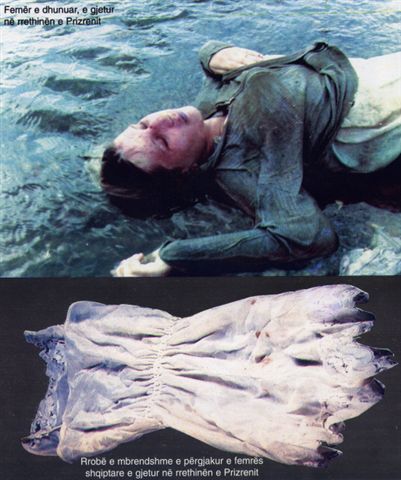
From, it is necessary to single out the terror of the Serbian massacres of the Albanian civilian population and the mass murders of 45 Albanian citizens and 12 wounded Albanian civilians, on April 15 and 16 in the village of Slovija. On April 17, in the village of Jeta e Re, the 68-year-old Xhevat Rexhepi was killed and burned inside his house. On April 18, 1999, in Ribar të Vogël, 25 Albanian civilians were killed and maimed and 7 others were injured.
Whereas, on April 19, in Hallaq të Vogël, 20 Albanian citizens were killed, the young Salih Fetahu/1964/, after the massacre was burned in his house. In Kroishte, 9 were killed, while in Ribar të Madh, 6 other Albanians were killed and massacred, as well as in Blinaje 8 and Miren 7 Albanian civilians. These barbaric actions were warned before the NATO bombing of the aggressive Serbian forces began.
These attacks warned of the danger to the Albanian population who would pay the price for the actions of NATO military aviation against the murderous Serbian forces. For this very purpose, on March 20 and 21, 1999, the Serbian military-police forces landed several train compositions with heavy weapons and murderous military and police units in Lypljan, international entities were leaving Kosovo, Serbia as if it had received a visa to kill Albanians, or as Mr. Clinton said, “Our hesitation is permission for Serbs to kill Albanians.”
Serbian officials warned the Albanian population of a counterattack against them, in response to the NATO attacks, the Serbian government declared a state of war, and Macedonia temporarily closed the border to Albanians. This system of military, police and paramilitary forces, assisted by the local Serbian leadership and population, was organized and deployed in central points of Serbian settlements and several other points in ethnic Albanian areas.
Military units with heavy weapons were deployed in Lypjan, at the Agricultural Cooperative, at the high school, at the facilities of the Ventilator Factory and the Paper Factory, at the Poultry Farm. They took positions in Magura, Blinaja and Kodër i Golesh. Military police forces were positioned with the intention of attacking also in the parts of Drenica e Epërme where the KLA was operating militarily, which at the same time had under its protection over 90 thousand inhabitants of the Albanian civilian population who had been persecuted by Serbian violence and had taken refuge in mountain gorges throughout the area of Drenica e Epërme.
Many Serbian military forces were deployed in Vrellë and Medvec near the Slatinë airport. Military weapons were also positioned in Grackë i Vjetër, many of which were later hit by NATO attacks. Military and police forces were everywhere in the ethnic Serb villages of Suhadoll, Lepinë, Skullan and Radevë, as well as in Dobrati, Gushtericë i Poshtme and e Epërme and in Livadxë. However, many military units with heavy weapons were also positioned in Slovije and Smallushë, where the Serbs turned the village of Slovije into a hotbed of more brutal acts during the bombing.
They even changed the name of the village itself to “Sërpska sella”. There was also a Serbian military unit in the Albanian village of Babush i Muhaxhirëve. Throughout the bombing, the Serbs changed this arrangement of military forces according to the opportunity, circumstances and thirst for revenge to attack Albanian settlements, moving them according to the appearance of danger from NATO attacks. From the first day of the NATO attacks, the Serbian forces warned of severe violence and unrestrained spiritual and physical torture.
From the beginning, the essence of the severity of the massacres known as the ugliness of sadness for barbarity was emphasized. To kill and torture even the closest neighbor, to massacre even children, women and the elderly, to plunder and burn every Albanian material value and to apply rape as the most primitive form and means of war and the most serious insult to human morality and to expel the mass of the people from their ethnic lands under pressure and by force, to trample and humiliate as much as possible and to break the dignity and pride of the Albanians in the most inhuman way.
Simply, to create morale and conviction that it is impossible for the Albanians to remain in these areas any longer. Precisely for this reason, in the days before the attacks began, the Albanians began to be displaced from their settlements that were considered most at risk. Meanwhile, two or three days before the start of the NATO offensives, in the town of Lypljan and villages with mixed populations, such as Magura, Suhadolli, Lepia, Radeva, Grackë e Vjetër, Slovia and Rufci i Ri, local Serbs began to provoke and threaten the lives of Albanians.
In Lypljan, groups of Serbs, aided and abetted by the military units that arrived in those days, by Sheshelian police and paramilitaries, Arkanists and members of the Red Berets, unbridled by hatred towards Albanians, broke into Albanian premises, robbed and shot all the time with guns, and even threw bombs. Due to this wave of threatening danger from Serbian violence, Albanians began to leave their homes. The day the attacks began, on March 24, 1999, on the Lypljan-Prishtina road in the village of Konjuh, in the afternoon, Ismet Asllani was killed/.
1955/, Logistics Commander in the 153rd Brigade of the ZOLL. On the night of the beginning of the NATO attacks, the center of the town of Lypljan, especially the social housing, was almost completely devoid of Albanians. There, until recently, when the fear of bombings pushed the Serbs to hide in flight, the unbridled screams of various Serbian groups, the hissing of weapons and murderous calls addressed to the Albanians resounded.
The Albanian population in this time of chaos was completely unoriented, no Albanian political entity or party, did not give in their programs any alternative version of where to go and how the population should act when the NATO bombings and the warned attacks of the Serbs against the Albanian population begin. Albanian entities, except for the KLA which was fighting against Serbian forces in parallel and was in defense of the civilian population which, constantly invited Albanians to join its ranks, to put themselves in defense of the troll and the people endangered by the Serbian aggressor, to help the civilian population left without food, shelter and health protection who had taken refuge in mountain gorges.
No other entity or political party came up with any alternative version for the people left in the fog, to leave Kosovo, to remain in their lands and homes or to join the military forces of the KLA, which did not stop the resistance for a moment, on the contrary, the KLA, the only one, constantly made mobilization calls for the population to join the resistance against Serbian violence.
On the first day, after the attacks of the night of March 24, the Albanian residents of the city of Lypjan, threatened by their Serbian neighbors, were expelled from their apartments and in some neighborhoods from private properties and houses in the city. On the other hand, the KLA in Upper Drenica, from the Llapushnik Gorge to Pjetështica, resisted the Serbian forces with weapons, and thus created and defended the free space for the Albanian civilian population to stay, where over 90,000 people were provided with more peaceful shelter in the gorges of the mountains of Berisha, Baica, Shala, Krojmir and Pjetërshtica.
Meanwhile, the villages of the Lypjan plain experienced unprecedented terror of Serbian violence which threatened with terror and massacre, murder, expulsion and large-scale looting by various Serbian formations. The Serbian attacks were not directed at the armed forces of the KLA in the Upper Drenica area, nor in the area of the Bjeshkët i Žegoci Mountains, but towards the civilian population towards the easiest combat and material benefits and the easiest achievement of the goal of pursuing the Albanians.
Until mid-April, the Serbian formations were mainly dedicated to quenching the thirst for material gain, theft and looting, while they issued counterattacks against NATO aircraft with anti-aircraft guns, which could not take their places out of fear, those Serbian anti-aircraft guns did not pose any threat to the NATO forces, because the Serbian anti-aircraft guns did not reach higher than herons. In the name of a security guarantee, the Serbian forces looted Albanian villages all day long, taking money, vehicles, agricultural tools and everything of value that was owned by Albanians.
In order to secure a greater material tribute, they threatened to search for certain people, isolated activists, especially members of the KLA, or broadcast that they were looking for its activists and superiors. Horde expeditions would come and raid certain houses. The first armed attack in this municipal area was carried out by local Serbs from Babush i Serbëve, soldiers, policemen and local Serbs fired grenades on March 28 at around 23:00 at the Albanian village of Babush i Muhaxhirëve and there they killed two and wounded three Albanian citizens who took off their black olives, until they managed to escape to Albania for treatment, and even the Serbian forces expelled the entire population of Babush from the village and most of Gadimje e Poshtme.
Days later, in front of the villagers in Bujan, they raided the house of the brothers Ramë and Shukri Buja, members of the KLA SHP and commander of the Nerodima Regional Directorate, and that same day in Banullë, in addition to several other houses, they raided the house of Fitim Selim, health coordinator in the Pashtriku Regional Directorate.
They abused his family members and arrested Dr. Fitim’s brother, Shkelqimin, 17 years old. On the other hand, by tricking the Albanians, they increased the amount of money demanded, for the sake of the safety of the Albanian population and their villages. They used all kinds of cunning tricks and deceptions and staged plans and promises to achieve financial benefits.
They lied and threatened, while abusing the population, putting them in an unfavorable position. They often put into open action the collaborators of narrow interests and Albanian collaborators. In Slovenia, they warned of the danger to local Serbs from KLA forces, and before committing the planned crimes, they staged a meeting for a Security Agreement, as they usually did in many other settings.
On April 14, 1999, the day before the attack, they requested a meeting for an agreement with the local Albanians with an officer of the Serbian army and with the Serbian leadership structures of the village, the officer, despite promises, as everywhere it was staged like this, did not come to the meeting on the morning of April 15. The “meeting” was a deception that the Serbian government and police structures had also served in the first offensives of 1998.
The circumstance when the Serbian police chief from Lypjani, Nikolla, had sought to establish contacts with the party entity, then with the leadership of the LDK, Nikolla made this attempt through several Albanian individuals to “ensure guarantees” for both parties by a bilateral interethnic agreement from the Serbian military and police forces and the KLA. Such an attempt had also been requested by the deputy mayor of the municipality of Perić, later distinguished for terrorist acts among the Albanian population.
On April 15, 1999, the fateful day for the Albanians of Slovenia, in the morning the Serbian army and police, despite the attempt of some Albanians from Akllap to talk to some Serbs in Gushterica to stop the Serbian shelling of the village of Akllap, on April 15, 1999, at 6:00 in the morning, surrounded and attacked this village, which they burned 85% of the houses, killed Ibush Gashi/70/ and completely expelled the population. At 1:40 p.m. they attacked Slovenia.
They killed and massacred 24 citizens, 16 bodies of the killed, the Serbs buried them in a place called Çuka, which on May 24 they exhumed again and under the threat of the police forced some Albanian citizens to rebury them in family graves. This mob forcibly expelled all Albanians from the village, looted what it found and took, burned down 93 Albanian houses and created space, so that the next day, April 16, in the Monastery Gorge, at the place called “Lugu i Demës”, or on Bartholomew’s night, when even nature was disturbed by the bad weather, with rain, wind and cold, 17 other Albanian civilians who had taken refuge there from the persecution of April 15, 1999, were executed.
Their bodies were buried by their surviving family members the next day, April 17, 1999. After the exhumation that the Serbs carried out on April 29, 1999, they were not found for a long time. The 17 bodies of those killed in Lugu i Demës were brought from Batajnica in Serbia, the open cemeteries in Slovenia are waiting for 5 years for the return of the missing bodies with the aim of erasing the crime. Later, from this village, an Albanian was strangled with wood, and three others died from the consequences of the war, the explosion of a mine in their house.
On April 15, 1999, paramilitary groups formed by local Serbs with Arkanist and Seshelist names, helped by the army and murderous police, in addition to Akllap, where they killed an Albanian citizen. On the same day, they also attacked Smallushë, burned over 40 houses and expelled the entire local Albanian population from their homes. On the same day, they attacked from all directions, from the side of Gjilan-Zhegoc, from the side of Ferizaj, Mirash and Rahovice and from the side of Prishtina, the entire villages of Zhegoc, Verbice, Tërbuvc, Slovije, Smallushë, Gllavićë and Marevc e Vogël were attacked, chasing the population of these villages and burning most of the houses.
While, the day before, they had attacked the mountain villages of Kishnapole and Sllakovci and after the heavy Serbian suffering in the confrontation with the KLA in the Battle of Zhegoci, in which the martyrs Paja and Albani also fell, the furious Serbian army vented its anger of hatred on the civilian population in the villages of the plain.
On April 16, the “game” of murders, beatings, looting and mass expulsion of the Albanian population in the villages still untouched by the wave of Serbian violence continued. In Tërbuvc, they killed the 18-year-old martyr Zylfije Gashi, then in the place called “Livadhet e Gjana” they killed the family of 4 members of the martyr Sahit Baftiu from Zhegovci.
They killed Plitkovic and killed an 80-year-old pilgrim, they killed and chased all the families of the village of Vrellë in Gadima and burned all the houses. This same fury of this Serbian expedition, from the beginning of the attack, burned down two houses in Gadima e Epërme, a village where many Albanians who had been previously expelled from their villages had taken refuge in those days.
On April 16, 1999, nearly 20,000 people were expelled from Gadimje Epërme in a column, which is said to have been the longest column during those days of horror, and under threatening Serbian police escort they were expelled to Albania. The spiral of Serbian violence, like the plague, also spread to the villages of the plain. On April 18, 1999, at 6:10 a.m., the military and police machinery of the inquisition expedition, assisted by local Serbs, attacked Ribari i Vogël.
This machinery, equipped with information, began its “murderous game”, massacred 25 Albanian citizens from the age of 7 to 90, according to witnesses, most of the dead were shot at close range. Of those killed, 19 were local citizens from Ribari i Vogël, while 6 others were from the Vuniqi family from the village of Vërshec, now Blinajë near Magura, who, since the first offensive in July-October 1998, had taken refuge with the Vishesell family in Ribar i Vogël. On the day of the crime, the Serbs killed the Vishesell family in 10 people.
Of the killed in Ribar i Vogël, 8 were women and 17 were men. From this macabre storm of attack, the rest of the population of Ribar retreated to the village of Zllakuqan, where they stayed for 12 days without food or medical assistance. While the village remained empty and was transformed into an arena of barbarity, looting and the destruction of Albanian material and spiritual values.
Ribar was burned to 40%, which was thought to make it impossible for those Albanians who escaped the murder to return and live. This kuçedër, that day, killed 25 citizens, men, women and young people, in the courtyards of houses in front of the family. The worst suffered the Vishesella families 10 killed and two wounded and the Gërxheliu family, as well as 6 members of the Vuniqs who were killed together with the Vishesellas with whom they had taken refuge from the threat of Serbian violence.
The next day, on April 19, the wave of mass killings and shootings continued in Hallaq të Vogël, where 20 civilians were killed. After the Serbian forces ordered all the residents to leave the village, some who did not leave immediately were killed in their homes, and two of them were even burned alive in a men’s room. Meanwhile, out of 40 men gathered in the middle of the village, 13 were selected for shooting, of whom 11 were shot in front of their parents, two others survived, Idriz Govori and Beqir Asllani, who had previously been terribly tortured, and Beqir’s hand and eye had been cut off with a knife during an inhuman torture.
During the line-up at the execution site, Muharrem Asllani was killed, while the Serb who had previously massacred me with a knife now gave the order to shoot me. Idrizi and Beqiri were wounded but escaped death. Beqir and Idriz were taken from the execution site and helped by Shpejtim and Bujar Shurdhiqi. I hid for three days, says Beqir, then they sent me to Krojmir, where I was treated in the KLA military hospital. While Idriz Govori recounts.
They shot me in front of the execution wall, in front of the uniforms and asked: Who are the two brothers who were arrested, then released those who were under 16 years old. Muharrem and Beqir Asllani were taken because they were businessmen. Muharrem was executed in front of us, he was killed by a Roma. Ramadan Hajrizi escaped, after promising money and the gold ornaments he had with him. They took his money and luxury car.
Of the 13 people who supported us against the wall, the first bullet hit Beqir Asllani, I slowly fell as if wounded, but I was not hit. The wounded Beqir Asllani survived. Ragip Jashari was hit in the head by a bullet. Then they checked with their guns who was still alive, when it was my turn, the policeman pulled the trigger, and the bullet! Luckily for me, there was no more ammunition.
I heard him clearly, when he said “I don’t have clothes”, I don’t have any more, and they left. I slowly got up, together with the wounded Beqir, and we entered the house together with the villagers who, after the execution, ordered the column of those being chased to return to the village and, under threat of violence, to bury the dead. We carried the bodies of those who had been killed to their homes.
Since they did not come out with the police order to the village lawn. We gathered 20 bodies, the local Ashkali came and opened the graves. The Serbian paramilitaries came again and asked the Ashkali. What are these people who are opening graves? Do they also have any dead? The Roma said no, they have no dead.
They sent us back to Lypjan. There, at the graves of the murdered, only the Roma and three Albanians remained. Where the tombstone is now, a mass grave was opened for the burial of all those killed in this Serbian barbarity. The reburial in individual and family graves was done later by order of the Serbs to lose the trace of the crime. Where the tombstone is now, so that the mass grave and historical memory will not be lost, which will never be forgotten.
Reference
https://pashtriku.org/ismail-gashi-sllovia-dhuna-serbe-ne-treven-e-lypjaniti/


 Balkan Academia