

Written by Petrit Latifi

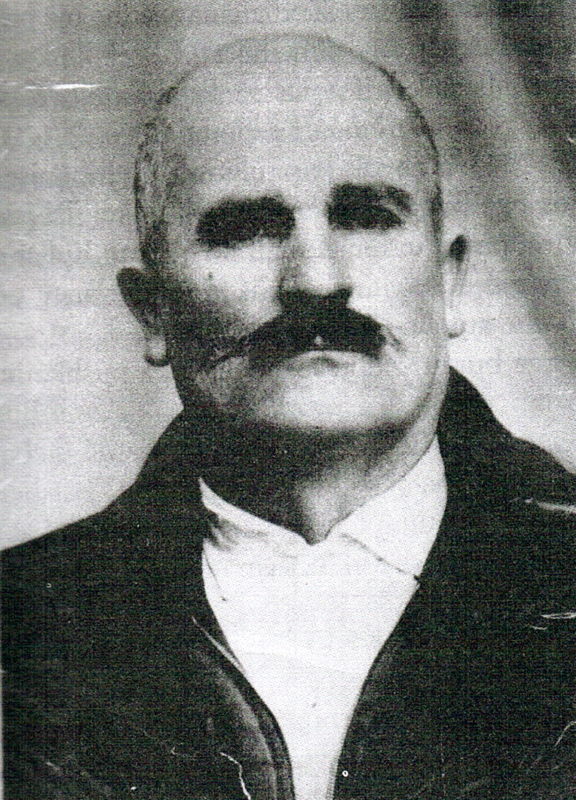
Ramë Binaku was born in 1876 in the village of Dashinoc in Deçan. He was one of four children born from the love of Bafte and Binak Hajdari.
His childhood was full of suffering, he did not grow up like other children in the warm embrace of his parents, but remained an orphan since at that time, the Turkish government had burned his house and his father together with me. He had imprisoned his uncle in Turkey where he died there.
He grew up facing more and more sacrifices while staying with his uncles in Montenegro. In the year 12 he will return to his birthplace where, with the membership of his family, he managed to build a house and start his life.
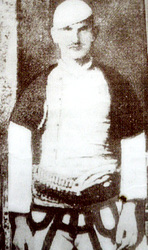
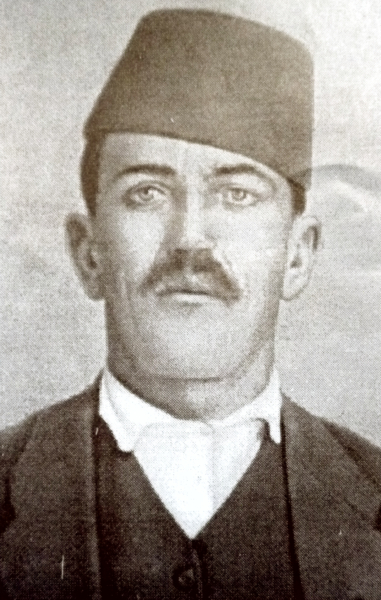
Raised in a patriotic and national spirit with the idea of liberating the homeland, in the year 15 he joined the Kacak detachments that fight for the liberation of the nation, he found himself in the Hazir Syla detachment.
Here begins the stage of thinking about himself and saving the homeland from the Turks, and seeking revenge for his father and uncle. From the first steps of his inclusion in the Kacak cheta, he shows his skills as a brave, courageous and patriotic warrior, successfully completing all the tasks assigned to him by the leader of the cheta. He participated in many wars and actions, showing himself to be a contrary, extraordinary brave, a passionate fighter with natural inclinations in knowing the art of war.
A few years later, he marries Zoje Hazira, the daughter of Hazir Syla, the leader of the chetas of Dushkaja and Malesia. During this time, he meets and associates with great warriors, patriots, ideologists, writers, and patriots of the national cause.
Since Ramë Binaku had the faith, high morals and ethics of an honest warrior in his personality, he quickly gained respect and trust among the warriors who operated and later were leaders of the Kachak detachments of Dushkajë and Dukagjini. In fact, the men of this area began to say that R. Binaku is a watch… or better said “The Clock of the Dushkajë Mountains”
So he dedicated fifty years of his life to the Kacak detachments in the war for the liberation of the homeland, being wherever the voice of the homeland called him. He left behind five heirs, two sons and three daughters. He died in his tower in 1963 and his remains rest in the cemetery of his birthplace, in the village of Dashinoc.
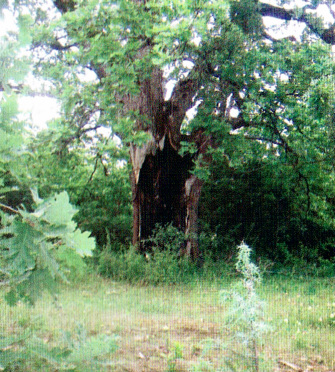


Varri i Ramë Binakut në Dashinoc (Grave of Ramë Binaku)
The village of Dashinoc
Dashinoc belongs to the Dushkaja region and is part of the Deçan municipality. Ramë Binaku’s name is closely related to the name Dashinoc and had a strong influence on the citizens of this area and the entire Dukagjini.
After the departure of the Turks in 1912, Dashinoc was occupied by the Serbo-Montenegrin hordes. After the outbreak of World War I from the end of 1918 to the end of 1920, Dashinoc was under the Austro-Hungarian occupation.
In Dashinoc grew up the man who stamped his name and that of his village. These two names seemed to help each other and found understanding through strong storms throughout history. Rama in this village and its mountains and coasts, found refuge but this place was often burned by his enemies. Dashinoc, therefore, was burned by: Turkey, Austria, Montenegro and again by Serbia.
After the formation of the Yugoslavia of Versailles, the arrival of Serbian and Montenegrin colonizers began, with the aim of changing the national structure and national assimilation of Albanians. All this was done according to Serbian scenarios to relocate Albanians to different countries of the world by committing genocide and burning down the homes and property of Albanians. At this time, Ramë Binaku’s house was also burned down.
Several culminating names that glorify Dashinoc have remained in history. Chronicles and very early testimonies prove that from the land of Ramë Binaku springs the Kroi i Dashinoc, where many well-known men of the national cause have drunk water from it, such as Hasan Prishtina, Isa Boletini, Bajram Curri, Azem e Shotë Galica, Ker Sadria, etc.
The Dashinoc oak is a centuries-old trunk that people have called the “Mrizi” of the men of Dushkaja. This shadow was often a meeting place for men and national patriots, and Lisi was a witness to their conversations and plans for actions and attacks against various invaders.
So Dashinoc is an early settlement that dates back to Illyrian-Dardan times. This is also evidenced by geological and historical data.
DEÇANI (Ulëza) and Dushkaja. Deçan is an ancient settlement whose name was once Ulëza. It lies near the mountain slopes that are connected to the Bjeshkët e Nëmura through the Gorge.
Deçan lies in the western part of Kosovo with a very favorable position because it lies along the Bjeshkët e Nëmura. On the north side it borders the mountains of Plavë and Gucise, while on the south it borders the Gjakova plain. On the west it borders the flow of the Erenik river, while on the east it borders the Peja plain. In the second kilometer, west of the town of Deçan, there is the Deçan Monastery, an Illyrian church that the Slavs, upon their arrival in the Balkans, transformed into a Serbian church.
Deçan is a municipality with a typical Albanian population, where 95% are Albanians and 5% are other minorities. Serbs and Montenegrins make up a very small percentage, somewhere around 2% and are colonizers who arrived during different periods of Yugoslavia. Today’s municipality of Deçan includes over 40 villages.
Dushkaja – is a hilly ethnographic region that lies between Lugut i Barani in the north, Drini i Bardhë in the east, the villages of Bec and Palabardh in the south and Irznić, Ratishë in the west. One of the many villages of Dushkaja is the village of Dashinoc and the surrounding villages.
After the imprisonment of his father and uncle, and after the burning of the house, Ramë Binaku’s life became even more difficult, and became almost impossible. So he, along with his mother and sister, were forced to take refuge with his uncle. While his brother, Hajdar Binaku, together with his father and mother go to their uncles in Gllogjan, Peja.
After a while of staying there, the two brothers return to their hometown, in Dashinoc, since their friends, acquaintances and well-wishers helped them build a house and start a new life. The difficulties of Ramë Binaku’s life did not end even after returning to their hometown. Considering the history and patriotic tradition of his family, he was aware that he would not have a peaceful life from opponents and various invaders.
Thus, at the age of 17, Rama, together with his brother, accompanied by their aunt, come into contact with Bajram Curri, leader of the Kaçake Çeta. Lulë Hajdarja – the aunt of the two brothers, a strong-willed woman, registers them in Bajram Curri’s Kaçake Çeta, precisely in the Hazir Sylë Çeta that operated in the Dukagjin Plain.
The Kaçake Brigades Movement
The Kaçake Movement as a national liberation movement, dates back to the 16th century against the Ottoman occupation. During the time of the Albanian League of Prizren 1818-1882, numerous groups of Albanian Kaçake brigades from Kosovo, Northern Albania, Macedonia and Montenegro entered the leadership of the League and thus became the Albanian people’s army.
The Kaçake Brigades took the full form of political-military organization, until 1882, when the Albanian League of Prizren was destroyed. This movement, in the form of an army, even after the Albanian League of Prizren, continued the war against the invaders of the Ottoman Empire.
This form of guerrilla warfare continued even after the declaration of the Independence of the Albanian State in 1912, even with much greater intensity and organization. The Kaçak Movement gained great importance, especially after 1918, when it fought for national and social rights against the Serbo-Montenegrin invaders.
This Movement also had a great impact on the Dukagjin Plain and especially in the surroundings of Gjakova, Peja and Deçan. The territory of the present-day municipality of Deçan, which includes Junik, a well-known nursery of the National Movement, Verrat e Llukës where meetings were held and the oath of allegiance of the Albanian insurgents was signed, as well as Dushkaja, which is the refuge of the Kaçak chetas, occupy a central place for resistance, actions and frequent wars against foreign invaders in all Albanian regions.
The Deçan region and its surroundings, which also includes several villages of Dushkaja, had many members of the Kaçak Movement who had the full support of the inhabitants of this area. The ideologists of this movement were:
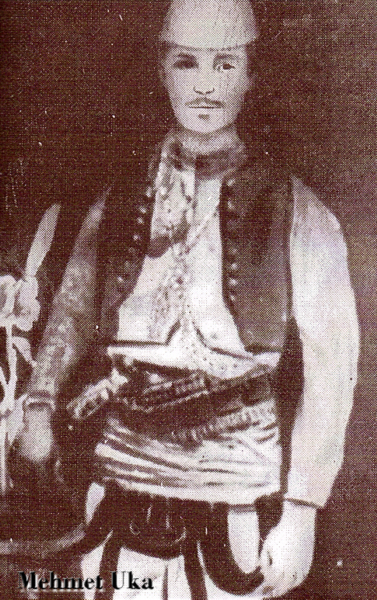
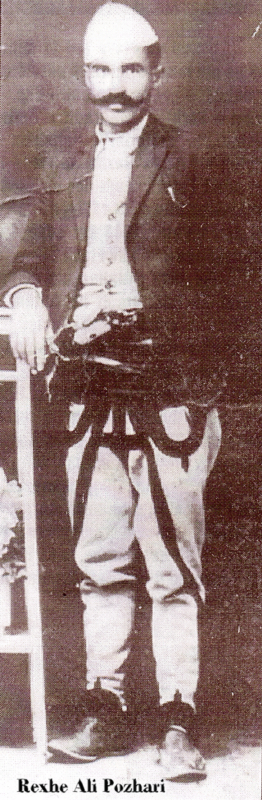
Hasan Prishtina, Bajram Curri, Isa Boletini, Sadik Ramë Gjurgjeviku, etc., while at the head of the Kachak chetas of Dukagjin were: Ramë Binaku, Isuf Musa, Rexhë Alia, Zhujë Avdyli, Lan Selimi, Nel Musa, Bekë Ademi, Mehmet Uka, Avdyl Selimi, Selim Rama, Halil Hamza, Hazir Alia, Selim Ukshini, Adem Rama, Kadri Curri, Mehmet Gjoni, etc.
The Kachak chetas of this area had their own political orientation – armed struggle against foreign invaders. This Movement also had its own program according to which the actions were oriented, drafted by the “National Defense of Kosovo” Committee. With the content of this program, the local Kachak were informed by Bajram Curri.
So, this movement took on large proportions, gaining the support of the population of this area to become the terror of the enemy.
Gallery





Reference
https://ramebinaku.weebly.com/historia.html


 Balkan Academia