
Published by Jovana Šaljić. Translated by Petrit Latifi
Abstract:
The paper presents the work of an elementary school for Albanian children opened in 1898 in the village of Sijarini, in the Vranje district, Jablanica district. The reasons for opening the school were not only educational, but also lay in the complex Serbian-Albanian relations in the Kosovo Vilayet, but also in the international obligations undertaken by Serbia towards its non-Orthodox population. The work of the school itself also reflected the unstable conditions that prevailed in these regions after the liberation.
ROYAL SERBIAN PRIMARY SCHOOL IN SIJARINA (for Albanian children)
The primary school in village Sijarina began operating in 1898. Its task was to educate the Albanian children. The reasons for setting up the school were various, but not solely educative. First and foremost, parallel to attaining independence in 1878 Serbia also assumed the international obligation stipulated by the Berlin Treaty to observe the minority rights of its proper non- orthodox population.
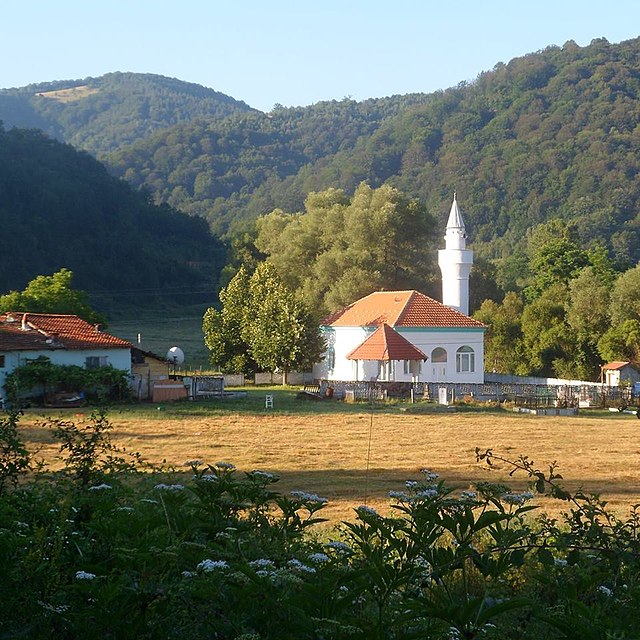
That affected, among others, the Albanian Muslim population of the Vranje district for whom a school building and a mosque were constructed in Sijarina in 1882 and donated by King Milan Obrenovic. On the other hand, Serbia faced the brigand armed attacks of its yesterday’s subjects, mostly Albanians, who, fleeing Serbia made homes in the Kosovo vilayet along the Serbian border.
This was another reason to build a mosque and a school so as to neutralize as best as possible the effect of the Albanian assaults among Albanian population which stayed on to live in Serbia. Third and probably most important reason was the complicated Serb-Albanian relations in the Kosovo vilayet and the terror that Albanians and their rulers imposed over the Serbian population.
In order to mitigate at least to some extent the consequences of terror and in the framework of national policy in Old Serbia and Macedonia of defending the Serbian population in the area, communication was established with the Albanian rulers in Kosovo. The opening of the school in Sijarina could accordingly be regarded as an element of rapprochement with the Albanians and their rulers.
Finally the Serbian rulers had a plan to strengthen the Serbian mind set among Albanian children and their parents through Serbian education system and to gradually assimilate them in Serbian society. This plan proved unrealistic, the school operated badly or not at all and the Albanian population made evident that it is not a fertile soil for spreading loyalty to the Serbian state.
Written by Jovana Šaljić.
References

 Balkan Academia