
Written by Ismet Azizi. Translated by Petrit Latifi
Presentation at the scientific conference of January 21, 2017, dedicated to the 72nd anniversary of the murder of Aqif Blyta and Ahmet Daci, held in Prishtina.
The wars of succession throughout our historical past were great both at the national level, as well as in terms of combat heroism, which brought to the fore numerous historical figures such as Aqif Blyta together with the Pazar War and the Rugovas in the defense of Pazar i Ri and its surroundings.
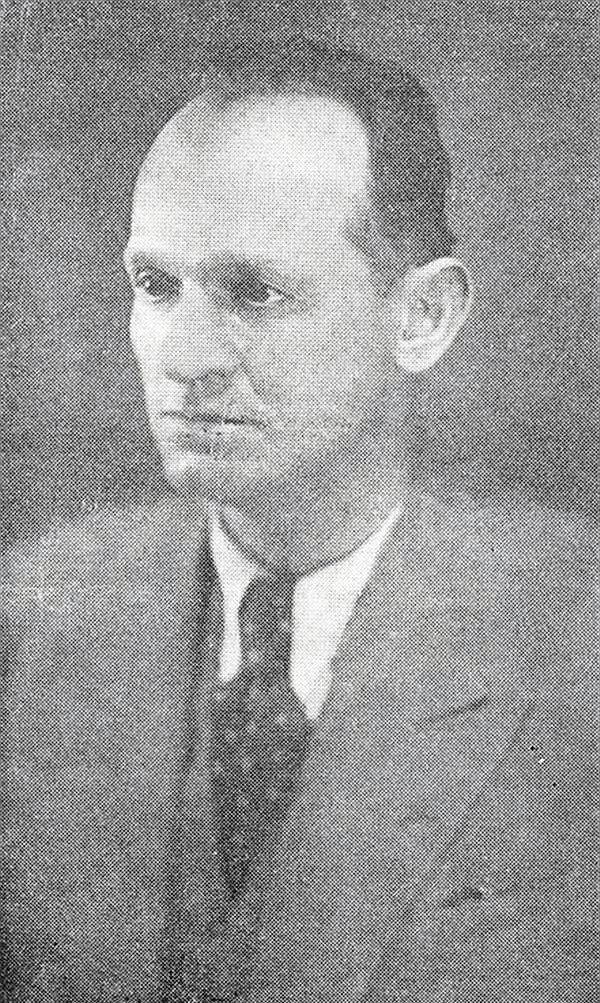
Aqif Blyta was born in Pazar i Ri in 1887. He was originally from Gjakova and descended from a family known for defending the National cause. He is one of the most famous leaders of the Sandzak since the 1920s. The determination, courage and wisdom of this brave, fearless man made Aqif Blyta always at the forefront of every movement for the liberation of the Albanian lands in these parts from the Slavic invaders.
In the 1928 elections, he was one of the candidates proposed to protect the interests of the people for the New Market and beyond. Aqif Blyta was known for his political and military stances, and the Slavic invaders arrested him at the entrance to Mitrovica, who sent him to the New Market prison, or in other words, the New Bazaar. He was kept in prison for a maximum of four months after the elections.
At this time, in addition to Aqif, many Albanian figures known for their defense of national interests were also imprisoned. Among the prisoners was one of Aqif’s closest associates, Fehrat Draga, who had been held under arrest for three years. These were the most difficult times the Albanian people experienced after these elections. Violence and terror did not stop.
All of this was done with the aim of pushing the Albanians to abandon their ethnic lands and emigrate to Turkey, which had already begun to happen due to the great suffering suffered by the Slavic-Carpathian invaders. As soon as Aqif Blyta was released from prison, he went to Skopje to meet with his Idealist associates to take action to stop the emigration of Albanians to Turkey.
After the meeting with friends, at the suggestion of Aqif Blyta, they wrote a letter to Mashar Bey which they sent to Istanbul and asked Mashar Bey to do something about the deportation of Albanians to Turkey and with his mediation to close the borders to Albanian immigrants, which was done.
In the 1931 elections, Aqif Blyta was again a candidate for deputy. Again, the Serbian government led by Krajl Aleksandar gave a vague constitution and held elections with open votes only to prevent Aqif Blyta from becoming a deputy. Although Aqif had not won the right to be a deputy in the Yugoslav parliament, to protect the interests of the Albanian people, Aqif Blyta’s authority had only increased among his fellow countrymen, not only in Pazar i Ni but everywhere in the Albanian territories. His word was decisive everywhere and for everyone.
The Serbian government, aware of the activities of this man of Penda and Pushka and afraid that in the next elections of 1933, he would win as a deputy, drafted a plan for his physical liquidation. On January 26 of this year, at night when he was entering his house, in front of the door, two unknown men attacked him from behind with axes, causing two wounds, one in the head and the other in the arm.
Although wounded, Aqif managed to get the axes and weapons they had and saved him from certain death. Aqif Blyta was sent to the hospital for treatment. Upon receiving the news, the people of Pazar-Tregu i Ri and the surrounding area rose up in demonstrations with thousands of people.
Also in 1938, Aqif Blyta ran for deputy in the Tutin region. Again the Serbs imprisoned him with the aim of interrupting his activity and not allowing his election as a deputy. On the day of the elections they released him with the help of Spaso and Fehrat Draga. His release was awaited by the people of that region with unprecedented joy. The next day Aqif Blyta was elected deputy for the second time in the Yugoslav parliament.
The determination of this distinguished man in the fight for the liberation of the Albanian lands, despite persecution, imprisonment and reprisals, did not for a moment weaken him, but on the contrary only tempered him and made him even stronger, who did not stop acting and fighting in defense of the national cause. Years passed and times had begun to change in favor of the Albanian people in general, and in particular in the Albanian lands that were occupied by the Slavic invaders.
The capitulation of Yugoslavia; that of Versailles on April 6, 1941, caused some Albanian regions to pass under German administration. Such a fate also befell Pazar i Ri along with Podujeva, Vushtrri, Mitrovica and other regions around them. The German government for the Albanians was more favorable than the Italian and Bulgarian ones, although they were in some ways occupiers, while on the other hand they were also liberators since the most unscrupulous occupiers, those Slavs, got rid of us, but unfortunately for a short time.
On April 21, 1941, a meeting was held in Mitrovica, which was called the Mitrovica Agreement, which was led by the German Colonel Friedrich Gregor Eberhart, commander of the 60th Infantry Division, and the commander Viktor Bart Colonel.
All the representatives of the areas that belonged to the German administration were invited to that meeting, and many other national figures from other Albanian areas also participated. Mitrovica was represented by Xhafer Deva, for Sjenica they were: Omer Gjini and Emin Qerkezi, for Vushtrri Jahja Haxhi Xhemajli, for Pazar të Ri Aqif Blyta and Ahmet Daci. For Prishtina the commander was Iljaz Agushi, for Llap Hoxhe Visoka, while for Drenice Isuf Gradica, and from Peja were the brothers: Sefedin and Xhevat Begolli and Pater and Pal Lorenci.
After the end of this meeting and the decisions made in it, which Aqif Blyta was waiting for with impatience, he immediately went to Pazar të Ri, Tutin, Sjenice and Tregovishte-Rozhaje and raised the Albanian National Flag. Then Aqif Blyta in Pazar të Ri set up the Albanian administration. In early August 1941, the Albanian government based in Mitrovica issued an order for the regulation and administration of Kosovo.
According to this order, Pazar i Ri was given the right to education and training in the Albanian language, which was under the permanent supervision and control of the German Regional Command. After these very important decisions for the Albanian people, who were then 95% Albanian, in Pazar i Ri. After all this, many Albanian leaders gathered in the New Bazaar, led by Xhafer Deva, Aqif Blyta, Mulla Jakup Kombi, Pajazit Boletini, Shaqir Zhubi, Xhemajli Konica and others, where they opened an Albanian school, which they named “Naim Frasheri” and changed the names of the streets to those of the most famous Albanian figures such as that of Skanderbeg – Gjergj Kastrioti, Isa Boletini, Bajram Curri and others.
After all these actions, and the main protagonist of these actions was Aqif Blyta, after a full six months, the German army withdrew on September 27, 1941, from the New Bazaar, leaving these areas under Albanian protection and administration.
After these aforementioned decisions, and after the withdrawal of German forces, the Serbs did not agree with these decisions, so they attacked the northern border of Kosovo where they burned down several houses in the villages of Ceraj, Kostove in Vlahise and in Bistrica.
Those Serbian attacks were led by criminals: Vana Drakanović, Žika Marković and Koste Pečanci. These attacks took place at the end of September 1941. The wave of these attacks was initially stopped by volunteer forces led by Islam Baruti, Pajazit Boletini, Ahmet Selaci, Mehmet Gradice, Ukshin Kovačica etc.
After these failures of the Serbian plans led by the Chetniks of Raška, they decided to attack, respectively occupy Pazar i Ri. Aqif Blyta, who was in charge of Pazar i Ri and the surrounding area and aware of the Serb-Slavic intentions, organized volunteer forces for defense. At first, about 1000 Albanian fighting men were put on defense. With this defense, Aqif Blyta showed the Slavic-Chetnik forces that Pazar i Ri is Albanian land that we will not give up alive.
Having known the appetites of the Slavic invaders for Albanian lands, and their war plans as indicated by Hysa Zotriti, a participant in the Pazar war, who indicated that Aqif received reliable information from the Serbs themselves, whom he paid with large amounts of money. Aqif Blyta does not stop there, he, together with Mulla Jakupi, Shaqir Zhubi, Bik Dreshi, Xhemajl Koniçanin, Ali Qilergjiqi and others who were in support of the Albanian wars for unification and recognized the Government of Tirana as their own power, for which they were included in its organizational structures and requested assistance from the Albanian Government and strengthened their volunteer units, which in case of war were part of the regular Albanian army.
From the field data we have learned that the volunteer units of those areas were led by Hyseni i Hukajve for Ugell, Xhemajl Konica for Konic, Iljaz Brezhanini for Brezat e Peshterit, Adem Qaush Terrtovci, Ali Qilergjiqi, Vellezerit Rifati and Isufi (…) for Pazar e Ri, Nazim Plojiqi for Llukar and Krushevo, Qamil Prashqeviqi for Sjenica. Adem Efendia and Bik Dreshi also operated with their own units, the latter having his own unit from before and being one of the most well-known fighters of the that side.
This organization of the Albanian side for defense pushed the Serbs to stop and seek talks with the Albanian side, for which they had agreed that the Albanian lands would not be attacked and that they would recognize the old borders as they called them, the Turkish-Serbian homeland, and that the New Market would remain as it was under Albanian leadership.
The Serbian side had apparently held these talks only for show and to gain time and to attack by surprise. So they did not delay much and attacked Vonica, a village near Pazar. There they burned many houses and killed several Albanians. While on the Dagopolama side, they burned and looted nine villages. After those attacks, Aqif Blyta was put in charge of the volunteer forces that had been formed earlier, where on October 15, 1941, the counterattacks began and after 24 hours of fighting, the Albanian volunteer forces had taken those territories back and planted the National Flag.
The Serbian side, which could not agree to the loss of those territories, or as they said for the salvation of the denationalized land of Sandzak, drafted a military plan for implementation in which they engaged Mashan Đurović, a meticulous executor of the orders of the Chetnik leader Drazha Mihajlović. One of the main dimensions of that plan was the massacre of the population of Drazha Mihajlović’s ideas (this is also confirmed by Serbian documents).
From the field data it appears that Mashan Djurovic was joined by Branko Raketiqi, Bozha Sharkoviqi from Rashka, Spasoje Niqiforoviqi from the New Bazaar area, Gruja Mortac, etc. for the implementation of this plan. The latter, as an intellectual, was appointed to implement the plans on the ground. It was these Chetnik forces that killed and massacred women, old people and children around the New Bazaar and now had the Bazaar as their target. The Albanian volunteer forces led by Aqif Blyta, Mulla Jakupi, Bik Dresi, Xhemajl Konica and others were put in defense of the Bazaar and did not allow such a thing.
After all this, finally the Serb Chetniks attacked again. On the night of November 3 and 4, Hyseni i Hukajve from Uglja was on guard with his unit. At dawn on November 4, Hyseni dictated the enemy forces that were approaching Pazar, for which he informed the defense forces, which upon receiving the news were positioned for defense. The battle had begun at the Stupca Church where the Chetnik forces encountered the Albanian defense forces, the latter led by Bik Dreshi, one of the most vocal fighters on that side facing the enemy.
According to eyewitnesses of the time, the day of November 4 was a day of dense fog so that they could not recognize each other and where they were. This had also happened to Bik Dreshi, who with his own forces had entered the enemy positions. Biku himself had escaped the enemy thanks to his discovery and knowledge of their language. During this conversation, although among the enemy, he told them in the conversation above that he was on their side.
Biku had also managed to inform his fellow soldiers that they had entered the enemy forces. This was a tough and unequal battle, with around 1,000 fighters on the Albanian side and 2,000 on the enemy side. Although the enemy side outnumbered them by two times, they suffered unprecedented losses, with only Bik Dreshi managing to kill less than 16 people, whose heads he had taken to show to his comrades.
In this battle, there were also new ones on the Albanian side, such as: Lieutenant Hysa Llakiqi, Avdullah Rozaja, Hysa Basha, Mehmet Hajdar Agiqi, Faik Koshuta, Jahë Jusuf Ramusoviqi, Hashim Kapetanoviqi, Alush Aga, a policeman named Murat and two others. Xhemë Plojiqi, who was wounded, was poisoned in the hospital by a Serbian doctor from Croatia known as Dr. Vladidiqi, who died in the hospital.
The Serbs who were pursued by the Albanian side had retreated from the border line but still had not accepted defeat. They again under the leadership of the aforementioned Chetniks organized themselves in much larger numbers to attack the New Bazaar. From Raška, Kragujevac, Užice, Čačak, Kraljevo and other areas, about 10,000 people had joined.
Reference


 Balkan Academia