
Written by Petrit Latifi
Summary: Jusuf Krnić (1812-1874 in Podgorica, Ottoman Empire), better known as Juso Mučin, as the people of Podgorica called him (after his father Muča), is certainly one of the most famous figures in old Podgorica in the 19th century, who left his mark on time, but also one of the most controversial. He has been written about but not nearly as much as the assassination attempt on him, the massacre that followed, the diplomatic crisis caused by the Podgorica massacre and the trial of those accused of it. Jusuf is most often mentioned in correlation with the famous “Jusovača”, a former penitentiary that today bears his name, although this figure was much more important for Podgorica in the 19th century than the construction or expansion of a prison for which he is remembered.
Jus Mučin Krnjić or Jusuf Beg was born in 1811 or 1812. He was married, but had no children. He had large estates in Podgorica and the surrounding area and a lot of livestock. Pero Ivanov Popović, whose rifle killed him, was his shepherd for a while. Juso was very brave, wounded several times.
Podgoica massacre of 1874 as an Ottoman reprisal
He became rich through trade. He was a food supplier for the army (livert) – procurer, supplier, deliverer. He died at the age of 63, while serving as police and military commander for Podgorica. The murder of Jusuf Beg Mučin Krnić had bloody consequences, as it brought Turkish revenge – the massacre of Montenegrins in Podgorica on October 7, 1874. This event received great publicity in both the domestic and foreign press and preceded the war of liberation from 1876 – 1878, that is – almost until 1880. During the Turkish occupation, Montenegrin patriots were imprisoned in Jusovača, a prison named after Jusuf.
After the Ottoman-Montenegrin hostilities, Albanians related to Jusuf Beg began fleeing. In fear and panic, they left the “deserted and empty” Jus’s palaces “which he had recently built, which were unique in their beauty and size”, but they did not look back on them for a long time. Only later did the son of Adži Barja (Haxhi Bajra) Jusuf’s nephew, send someone to live there. Duke Mašo Vrbica was appointed governor in Podgorica. After the departure of the Montenegrin army to Plav and Gusinje, Duke Marko Miljanov moved into Jus’s palaces and lived there for a long time, and then decided to live in Medun, in Kuč.

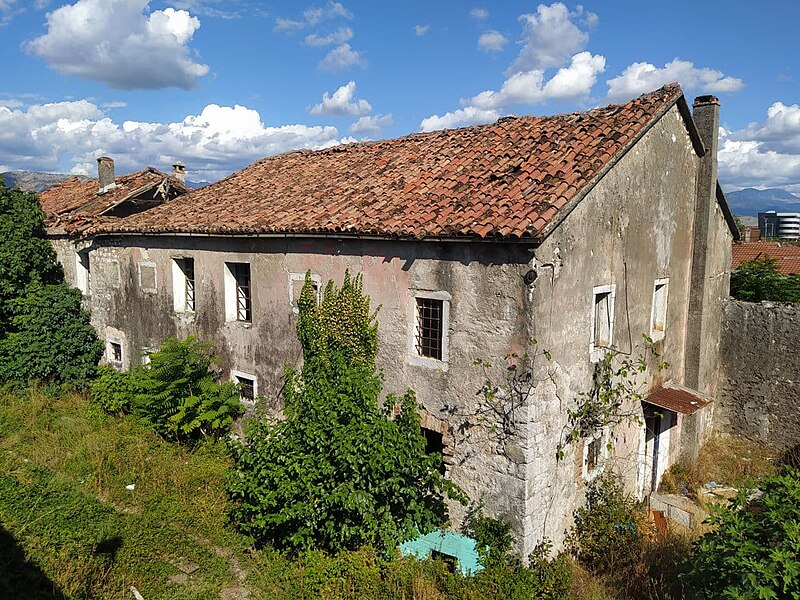
The prison of Jusovača
References


 Balkan Academia