

By Dr. Sc. Qazim Namani and Ma. sc. Emin Sallahu – Kosovo Institute for the Protection of Monuments, Prishtina. Translated by Petrit Latifi.
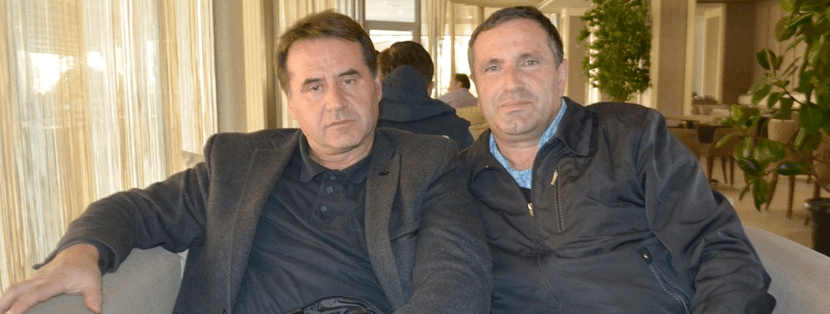

Photo 1. Sadri, Feti, Azize and Nexhmedin Krasniqi, killed in the village of Makoc.[75], Photo 2. Fetah Latifi, recounting how he had found the girl’s corpse with a wooden (hu) shaft pierced through her entire body, from her genitals to her mouth.[76]
After the end of the First World War, Kosovo again remained within the borders of the Serbo-Croatian-Slovenian Kingdom, which was formed on 01. December 1918. The Serbian army and gendarmerie, again began torturing and violence against the Albanian population.
Kosovo will be re-occupied during October 1918, by units of the Second Serbian Army accompanied by a division called Yugoslav. These units will be commanded mainly by senior French officers. In this regard, before entering the Albanian territories as occupiers, the Serbian military command addressed a proclamation to the Albanians on September 29, 1918, reminding them of the crimes that had been committed in 1915, inviting them to rise up in war against the Bulgarians, Germans and Austrians.
During November 1918, new reinforcements of the Serbian army will arrive in Kosovo in order to subdue the rebellious population, which did not agree with the occupation. The Serbian army, with propaganda for the establishment of power and control in December 1918, will include all the newly occupied Albanian territories.
From 1919 to 1921, the colonization of Albanian lands will be carried out by going through three phases, with different methods, but which had the same goal, the appropriation of most of the Albanian lands. Colonization by the Belgrade governors would be called the “population” of Kosovo.[1]
After the establishment of Serbian power in Kosovo in 1918, the weakening of the Albanian ethnic identity was also aided by the administrative-territorial division. After the organizational division into counties and districts in 1919, the military-territorial division was also carried out, which lasted until 1922, where according to the new division by decree law of the Kingdom of the Serbian and Albanian SSR, the Albanian territories were divided into several provinces, such as Mitrovica, Vushtrri and Drenica, which were included in the province of Raška, while the Dukagjini region was included in the province of Zeta.[2]
The “National Defense of Kosovo” Committee was founded on May 1, 1918, with headquarters in the city of Shkodra. The central council of the MKR Committee consisted of seven members, who elected the chairman. Kadri Prishtina was elected chairman of the committee. During the years 1918-1920, it was one of the most important political organizations in Albania. With the beginning of the Serbian massacres in Albanian settlements in 1918, the committee collected evidence from the field, about the killings and disappearances of 200,000 Albanians. Looking at the situation on the ground, the MKR Committee prepared a general program consisting of ten points in 1919, for an armed uprising in Kosovo.[3]
Based on archival documents, in order to carry out the program of reconquering Albanian lands, the Serbian government together with Serbian Orthodox clergy sent forged documents to the Peace Conference in Versailles, just as they sent documents to the London Conference in 1912. The Serbian government together with the church drafted a document signed by all the Albanian Catholic leaders of the Shkodra Highlands, signed as representatives of tribes and families, allegedly wishing to join the Kingdom of SKS, the original document published by Hakif Bajrami is: DASIP. B, Dos “Versaj i Albanci 1919-1920”, secret file 0.4.[4] The same deceptions in Versailles were also made for the population of Dibra, where the document written in French, with the names of Albanian supplicants written in the Arabic alphabet, written by a hoxha, where it is written that the population of that area expresses the desire for those Albanian regions to be part of the Kingdom of the Serbs.[5]
The Serbian ideologues, the genocide they committed against other neighboring peoples, acted with various methods to convince the Serbian people that their “enemies” were at a lower racial and cultural level, and that Serbia was performing a civilizing role towards them, by making propaganda supposedly with the historical right to conquer the other peoples of our Peninsula.[6]
The Belgrade government was clear that the re-occupation of Kosovo would open up a mountain of problems, and among the most important would be the idea of the possible unification of Kosovo with Albania. Serbia decided to suppress by force these national goals, which were legitimate in their nature.
On 07.03.1919, the Albanian delegation in Paris proposed a memorandum for the development of a plebiscite in the regions with Albanian population under the control of the USA.[7]
A mixed Anglo-American commission was sent to verify on the ground the atrocities committed by the Serbian army. The commission’s report contained shocking facts about a real terrorism against the Albanian population in Kosovo, since the number of people killed exceeded 30,000[8], innocent ethnic Albanians, written by B. Bobev. Stefan Karastoyanov writes that: It should be clarified that B. Bobev took these data from volume XII of the materials of the Paris Peace Conference. The chairman of the mixed commission, Lieutenant Colonel Sherman Miles, was undoubtedly an observer side. and for this reason the data of this commission are of great value to every researcher.[9]
According to the writings of Karastojanov, who mentions Belov who has provided data that between the two world wars the settlement of Serbs and Montenegrins as colonists in Albanian lands, cannot be doubted, because through the so-called agrarian reform, about 14,000 Serbian families received approximately 200,000 ha of arable land.[10]
Regarding the colonization of Albanian lands, Milovan Obradovici has provided very detailed notes on the families, the area and the villages colonized, he has also used statistics from the time when the colonization was carried out with the help of the Serbian army and gendarmerie.[11]
The Kingdom of Serbs, Croats and Slovenes, made a request that all opponents of the government surrender. However, even after the deadlines set for surrender, there were smugglers who did not surrender. “The first Kaçaks did not surrender despite the internment of their families. This measure of combating the Kaçaks did not bring the desired results. Thus, the fight against them was included in armed actions to implement the colonization program, the Kaçaks were called illegal irredentists: the properties of the illegals were confiscated, entire families were interned in special camps.
The land, which, according to the previous provisions for the preparation of the agrarian reform (paragraph 9) and the decree on the partial expropriation of land dated 12. 11. 1920, was mainly separated from private ownership, and the lands that the owners had abandoned.[12]
According to statistics kept in the Technical Department of the Main Agrarian Commission in Skopje, by 01 January 1928, lands of 225,397 ha were restricted for colonization purposes and only 111,602 ha were cleared, while the rest remained almost entirely in dispute. We note that among the confiscated lands was also the property of the dead. Nikolla Pashiqi had colonized about 3,000 hectares near the Mausoleum of Sultan Murat in Kosovo.[13] During the first phase of colonization, from 1918-1921, Nikolla Pashiqi had colonized another 3,000 hectares, Albanian properties around the Gracanica monastery, including the archaeological site around the ancient city of Ulpiana.
The organized colonization of Kosovo and other Albanian areas was intensified by the decree-law of 24 September 1920, which applied only to the southern areas. The commissions of the agrarian reform bodies expropriated 10,000 properties of Albanians, considered as their kaçaks and jataks, and the lands of those Albanians, who were forcibly abandoned due to pressure from the Serbian gendarmerie.[14]
In the regions of Montenegro, all the work of the agrarian commission was supervised by General Veshović, known for the massacres committed in Dukagjin, who with his military forces was concentrated in the border area with Albania, for reasons of national security, but also for the protection of the Orthodox monasteries in Deçan and Pejë, where the properties around these objects of worship were intended to become pure Serbian areas.[15]
All the radical leaders, among them Nikola Pashiqi and King Alexander Karađorđević, were owners of large properties in Kosovo and Macedonia, and this was one of the reasons for preventing the implementation of the agrarian reform in the southern regions.[16]
Serbian atrocities
From Serbian literature we understand how the Serbian army subjugated the Albanians and this can be seen from the description of Dragisha Vasic, who knew Northern Albania well as a reservist sent in 1920, on a military campaign to conquer Albanian lands. Vasic writes that the villages we passed through were deserted, because, a few days ago, they had been burned by our troops, after we had first destroyed them with artillery, and only a few houses were smoking, which showed that there were still people in them. These are the houses of our trusted people who were spared by our army.[17]
With the decree-law no. 2119, dated 12.02. 1920, the Ministry of Agrarian Reform of the Serbian-Croatian-Slovenian Kingdom was established in Belgrade. Within the framework of this ministry, two sections were formed, the general one and the agrarian one.[18]
The Kaçak bands operating in Kosovo, in the autumn of 1919 and the spring of 1920, fought against the first wave of colonization by Slavs who were forcibly settled in Albanian homes and lands. The established Slavic government acted by means of violence to expel Albanians from their ethnic lands, and appointed an extraordinary commissar to govern by rifle, fire and terror during the process of colonization of Albanian lands.[19]
The Kingdom of the Serbian Orthodox Church, as extraordinary commissar for the colonization of Albanian lands, had appointed Mihajlo Cerovic, with headquarters in Mitrovica. The duty and activity of the commissar was to compile lists of large Albanian families from Skopje, Pristina, Peja, Tetovo, and Prizren, and these lists were approved by the commissar.
After the commissar signed the 3rd Army Headquarters, which had its headquarters in the city of Skopje, issued notices of persecution for these families. Gendarmerie-military forces were organized against these families and undertook frontal actions, supposedly disarming them. Based on an official document of the time, the author of this work has published a list of 190 names from the Prizren District, of persons known to their families. All of these were displaced during the years 1919-1922, to Turkey, Bulgaria and Albania.[20]
Serbian cimes by Radovan Radovic
At the beginning of 1919 in Kosovo, the uprising against the Serbian occupation began. For a very short time, approximately 10,000 insurgents, led by the Kosovo National Defense Committee, would mobilize in the mountains on the war fronts. In the Llapi and Galab regions alone, over 2,000 insurgents would operate. The Serbian army led by Radovan Radovic bombed 14 villages in Llapi, completely destroying the village of Prapashtica and leaving thousands dead.[21]
But against every right of the Albanian population, the diplomacy of the French state would stand out at the conference held in Versailles. Since the Albanian population of Continental Albania was in revolt, in order to localize the violence with a diplomatic background, the “Neutral Zone of Junik” would be established on October 9, 1920.
In these difficult circumstances, to the good fortune of our nation, on December 17, 1920 Albania was accepted as a member of the League of Nations with headquarters in Geneva.
The diplomatic security of Albanians and Kosovo would be affected by the Agreement signed with Italy on August 2, 1920, for the withdrawal of Italian forces from Vlora, and the acceptance of Albania’s independence.
From August 20, 1920, immediately after the cessation of disputes between Italy and Albania, the Albanian government faced a major problem, namely the conflict with Serbia.
The Serbian army, since 1918, had occupied the territory belonging to Albania recognized in the Treaty of London of 1913. Serbia had violated the border in the vicinity of Shkodra, also in that of Dibra, and other areas in Northern and Northeastern Albania. However, in both the Shkodra and Dibra districts, they were very successfully repelled by the population. The Serbian army moved into the interior of Albania every day.
The Albanian government had no role in this situation, but the resistance against the Serbian army was made by the poor population of the border belt. The population of the villages of Dibra finally drove the Serbian soldiers back to the border of 1913, and even drove the Serbian soldiers away as far as the city of Dibra. The Albanians did not attempt to occupy this city, although no Serbs live there, due to the fact that it was assigned to Serbia by the London Conference of 1913, and for fear of some undesirable international complication.
However, this was not the plan of the Serbs, who returned with a large army, crossed the Albanian borders near Dibra and devastated 142 Albanian villages, massacring the unfortunate population of women, children and old people who were unable to flee with the rest of the inhabitants of the devastated region. (This has been confirmed by the Serbian press.) After completing this massacre, which is beyond description, the Serbs marched towards the Albanian capital and attempted to threaten the Albanian government. Thanks to the patriotic efforts displayed by the entire Albanian people, the advance of the Serbs towards the Albanian capital was prevented.
Immediately after this event the Albanian government entered into negotiations with the Serbian government. However, the talks did not lead to any result, because the Serbs did not want to evacuate the territory they had recently occupied, and thus a stalemate arose in Serbian-Albanian relations. The Albanian government has recently sent an official note to Belgrade demanding the evacuation of the strip of Albanian territory which since the ceasefire has been under Serbian occupation, announcing that in the event that Serbia does not comply with this request, the matter will be submitted to the League of Nations, of which both sides are members. The Albanian government has also declared its intention to send a delegation to Belgrade, with the aim of resolving the issues in dispute between the two countries.
According to the newspaper “Hak” and “Pravda”, during January 1921 alone, in the village of Keqekollë, 490 Albanians were killed by the regular Serbian army, in the village of Prapashticë 1020 innocent Albanians were killed, in Sharban over 34 houses were burned, about 30 inhabitants were killed, most of them children, women and the elderly and three-month-old babies were burned in fires.[22]
Serbian atrocities in Albanian vllages
In addition to these villages, during this year massacres and murders were also committed in other Albanian villages and towns that remained within the borders of the MSKS such as: Prishtina, Istog, Rahovec, Pollatë, Brainë, Orllan, Repë, Nishec, Gërdoc, Lepajë, Beguncë, Koshutovë, Kërpimehë, Braboniq, Lubozhdë, Rusinoc, NekocPrugoc, Pejë, Hajkobilë, Lubeniq, Kotor, Ucë, Padalishtë, Leqinë, Jabllanicë and Madhe, Sharban, Bellopoja, Decan, Isniq, Vitak, Strofc, Orrobërd, Kodra e Cërkolezit, Kovraga, Kërrnina, and many other Albanian settlements in present-day Montenegro and Macedonia.[23]
Atrocities in Đurgjevik të Madh and other regions
With the suppression of the Albanian uprising in 1919, the Serbian army in the Rahavec district alone committed serious crimes in the villages: In Đurgjevik të Madh, 9 men were killed, 42 houses were burned, and all their property was looted. In Đurgjevik të Vogël, 3 men were killed and the entire village was burned. In Jashanicë, 16 men were killed, and the villages of Gllarevë, Përcevë, Sverkë të Gashit, and Volljakë were looted and burned. In the village of Ćupevë, the entire village with men, women, and children was shot, and the entire village was burned. In Domanek, 48 men were shot, in Turjaka 5 men, in the village of Zatriq 27 men and a woman with children were bayoneted, in Drenoc 3 men were killed, in the Vushtrri area 45 men.[24]
As can be seen, the killing and colonization of Albanian lands was carried out with special projects and laws in all Albanian villages and settlements that had remained under Serbian rule. The year 1921 was a turbulent period for Albania, with six changes of government and internal conflicts and wars with its neighbors.
With the imperialist peace agreements (it is thought of in the Peace of Versailles of 1919), after the war about half of the Albanian people remained under the power of the Serbian big bourgeoisie, against which it exercises enslaving oppression both in Kosovo and in Macedonia. In addition, the Serbian bourgeoisie aspired to occupy northern Albania, through the “Albanian chetas” organized by Yugoslavia
This argument was strengthened when Albania, as a sovereign state, accepted the protection of national minorities within its borders. This orientation created political and diplomatic capital for Albania, to once again take care of Continental Albania (the Albanians remaining outside the internationally recognized borders).
The Albanians were now more aware and more determined than ever not to accept any kind of foreign power.[25] The first Albanians to take up arms were those in the Vushtrri region, drawing a border on the Sitnica River between Serbia and Albania. Then the uprising against the Serbian army would expand to Rugova, Plav, Gusi and especially Llap, becoming internationalized in the press throughout Europe.
The National Kaçak Defense Committee of Kosovo, in addition to its combat activities, also worked to raise the political awareness of the people, so that they would not abandon their lands, oppose the colonization of Albanian lands and denounce collaborators of the government. The chetas, according to the instructions of the committee, held political rallies with the aim of coordinating actions in the field. One such rally, at the suggestion of the committee, was held on July 16 and 17, 1920, near the village of Murgullë in Llap. The chetas of Llap, Drenica, Dukagjini, Rrafsh i Kosova, Shala, and Karadak participated in this rally.[26]
A significant number of French officers, plus Russian mercenary officers who had escaped from Russia, remained or came to the rebellious Kosovo as mercenaries. These were also joined by Russian and Belarusian mercenaries who had been expelled from there. This layer of officers will behave with executioner methods towards Rugova, Plav and Gucia; After a while these mercenary forces will be transferred as professional killers to Drenica and Llap to suppress any Albanian national feeling.
They received instructions from Serbian officers, while professionally this force was capable of committing crimes without any hesitation, because as observers there were also some high-ranking French officers).
Regarding this, the international factor, especially in Europe dominated by France, will embolden the Serbian dynasty to use the most barbaric methods in Kosovo in order to create the reality of Toplica in 1878, which means the criterion of creating the land that remained deserted and then through the colonization of the Slavs and the migration of the Albanians to Anatolia, a new reality will be created, for which the Powers will not react no matter what happens. Despite this, the phenomenon will be criticized by all means by the Comintern press and those with leftist ideology throughout Europe.[27]
The reactions of Mitahat Frashëri, the reactions of Fan Noli, the reactions of the Kosovo Committee in French did not affect the stopping of the Serbian massacres against the defenseless Albanian population.
The ethnic cleansing of Ottoman Muslims 1821-1922) by the author Justin McCarthy, which brings horrifying data especially during the years 1912-1922, arguing an ethnic catastrophe, has mainly to do with the fate of the Albanians who were occupied by Serbia, Montenegro and Greece. The English opinion was satisfied only with the information that thousands of Kosovo Albanians were forced by Serbian state terror to be stationed on the streets of Bulgaria and in the Edirne plain. Most are dying of typhus and other infectious diseases, but no one from the League of Nations or the Red Cross is concerned about this popular tragedy of the people of the former Vilayet of Kosovo and Vilayet of Manastir. [28]
After the end of World War I, under pressure from the gendarmerie and the Serbian army, to implement the plans of government for the colonization of Albanian lands, during 1919 alone, 23,508 Albanians were forced to move to Anatolia, in 1920 8,536 were moved, while in 1921 24,532 Albanians were moved.[29] Similarly, the forced expulsion of Albanians in equally high numbers to Turkey continued until the end of the sixties of the 20th century, with the exception of the years 1941-1944.
According to the population census conducted in 1921 by the Kingdom of the Serbs, during that year a total of 439,000 inhabitants lived within the current borders of Kosovo, of whom about 359,000 were Albanians, concluding that this figure was significantly higher before the occupation of Albanian lands in 1912.[30]
At the end of December 1920 and the beginning of January 1921, military operations began in the villages of Llapi and Gallapi, where the most serious crimes were committed in the village of Prapashticë, on January 11, 1921, under the command of Major Radovan Radojević.[31] After the end of World War I, Albania began to establish effective authority over the entire area, the official Albanian territory, but there were obstacles due to the actions of the leaders of Miredita.
The Albanians considered it impossible “that we were coming as invaders to subjugate them”, and were convinced that “we would go out against the Turkish army, which they also hated”. Prenk Bib Doda, the elder of the Mirdita tribe, commander of 4000 armed men, let our first platoon pass in peace, only with the agreement that we would assure and give our word of honor that we had no intention of invading Albania.[32]
The agreement with the Serbs and the opposition of official Tirana and since it was ready for any help to enter into relations with the Serbs created an adversary among the Albanians. These were the mistakes of Prenk Bib Doda, the Catholic leader (Captain) of the Mirdita tribe, who was killed in 1919 near the Lezha swamps. His position was taken by Mark Gjoni, a relative of his.
The Kingdom of Serbs, Croats and Slovenes, with experience in implementing projects for the conquest of Albanian lands since the 19th century, in August 1919 established a special Albanian section in the policies of the Ministry of Foreign Affairs, which was under the direct authority of the president. This section was in the fourth department of the state, where it was headed by Tihomir Popovici, while the “field work” was entrusted to the royal representative in Cetinje. Lubomir Nešić, delegate of the foreign ministry in Shkodra, Nikola Jovanović, vice-consul in Dibër and the chief in the Prizren district Todorović. [33]
Based on the views of Nikola Pašić, the then Prime Minister and Minister of Foreign Affairs of the Kingdom of MSKS, the creation of the Republic of Mirdita was of strategic interest for his policies.
The President of the Prizren District, Mr. Todorovic, in a “long report” dated 12 August, In 1920, he described a meeting with Zef Ndoçi, a representative of Mirdita, who stated: “Mirdita is against the policy of the government in Tirana, and can never be in alliance with Durrës and Tirana.[34]
In the spring of 1921, the first armed conflicts began between the Mirdita people and the government forces of Tirana, which had serious consequences for both sides.
The Mirdita people held negotiations in Prizren between Captain Marka Gjoni and Ljubomir Neshiqi, representatives of the government of the Kingdom of MSKS. In the agreement, they signed a seven-article contract, which provided for the creation of an Albanian Republic with the name “Albanian State in Northern Albania”. Belgrade would be represented abroad, while the military units of the Kingdom of SHS would be on its territory, with priority in the exploitation of ores and the construction of railways. The contract was written in a copy with 18 signatures, seals or fingerprints. [35]
Mark Gjoni in Prizren, received support from the Kingdom of the Serbian Empire, for weapons, money, and above all from the White Russian Army of Wrangel, who were at his service to realize the plans for the independence of the Mirdita people from Tirana and other Albanian regions..
Ljubomir Nešić was not satisfied with what was achieved, since the government in Tirana was allowed to consolidate by the powers of the time.
After the negotiations in Prizren, Mark Gjoni in early July 1921 went secretly and stayed in Belgrade, where he met with Nikola Pashiqi to discuss the details and did not prepare the foundations of a new state. According to Nikola Pashiqi, the support of the Republic of Mirdita as an autonomous unit under the control of the Kingdom of the Serbian Empire, was a serious blow to Muslim Albania under the control of Italy.[36]
The creation of the Republic of Mirdita would in practice be a protectorate of the Kingdom of SKS. The subsequent financial agreement of 1921 meant that the Kingdom of SKS would provide two thousand gendarmes per month with a salary of “three napoleons each”, for the bodies of the “central administration”, 600 napoleons while for the schools ??100, which would amount to “only 7300 napoleons a month.[37]
Nikola Pašić’s support for the establishment of the Republic of Mirdita was part of a general policy towards demarcation with Albania that was supposed to secure a more favorable position for the Kingdom of the Serbs.
After his stay in Belgrade, Marko Gjoni went to Prizren on 17 July 1921. He declared the independence of the Republic of Mirdita and in his capacity as its president. At the end of October, the military forces of the Kingdom of the Serbs occupied Orosh.[38]
The Conference of the Great Powers in Paris, and representatives from Italy, Great Britain, France and Japan, and the League of Nations on 9 November 1921, adopted a decision recognizing the Albanian borders from 1913, with changes in favor of the Kingdom of the Serbs.[39]
Against Albania, the Kingdom of the Slovak Republic and Greece acted together, the representatives of these two states tried without arguments to annul the decisions of the London conference on the borders of Albania, and for this issue not to be examined by the Council of the League of Nations, but by the conference of ambassadors in Paris. In June 1921, in the Council of the League of Nations, the Albanian issue was taken on the agenda for consideration of arguments.[40]
The admission of Albania to the League of Nations, in December 1920, and the decision of the Conference of Ambassadors, of 9 November 1921 for Albania, were two international acts which served to strengthen the international position of the Albanian state.[41]
On December 9, the International Boundary Commission, based on the commitment of the Kosovo Committee, formed the neutral zone of Junik, with nine villages, which were governed by local bodies, without the influence of Tirana and Belgrade, so this area became the nursery of the national liberation movement of Kosovo.[42]
Jusuf Buxhovi writes that this area, from a legal point of view, was with a local self-government, of a tribal nature, with an eldership, under the supervision of a bajraktari.[43]
The 3rd Serbian Army, will order the command of the border zone, based in Prizren, to find some pretext to enter Junik. Since March 1921, Ahmet Zogu, will turn against the Kosovar leaders, who positioned themselves against him during January and February of that year. In early January 1922, the government of Xhafer Ypi created the state high court for the disarmament of the population on the border with the Kingdom of the Serbs.[44]
On January 27, the Albanian army commanded by Prenk Jaku entered the Junik area; after a small resistance, the Kaçaks left Junik.[45] Upon entering Junik, the Kaçaks were routed; some crossed into Albanian territory, some into deep mountainous areas, while the chetas of Azem Bejta and Mehmet Konjuhi returned to Drenica and Llap, where they had their supporters. [46]
The Royal Army of the Serbian Army authorized the Chetnik forces, led by Milić Kërstić and Dimitrije Bracevič (both reservist colonels), with gendarmerie and artillery, on 17-19 June 1922, to enter Junik.[47] If we analyze it, the establishment of this neutral zone, in that period of government crises, and the offensive of the Serbian army within the area of the borders foreseen by the London Conference, was not at all necessary for the following reasons:
The Kaçaks were concentrated in a small area, creating space for the Serbian military forces to burn entire villages and kill Albanians, without any resistance. This area was governed according to tribal tradition, which very soon also showed divisions within the Kaçaks. As a neutral zone towards both Albania and Serbia, it had no chance of surviving long without being attacked by the armies of both states, as it did when it was destroyed and the Kachaks were forced to leave.
The Mirdita problem remained open until the end of November 1921, when Albanian government troops commanded by Ahmet Zogu entered Orosh without incident and established the authority of the Albanian state in Mirdita. On 28 November 1921, the Albanian government decreed a general amnesty.[48]
During 1921, Serbian army attacks supported by artillery, on a large scale, aided by Vargel’s Belgrader bands, undertook a campaign of killing Albanians and burning their villages. Taking stock of the massacres in Dibër and its surroundings during the years 1912-1921, 203 villages were burned, 1698 innocent citizens were killed. Of these, 260 were children and 285 were women.[49]
Another measure of discrimination against Albanians was the confiscation of the Kocak family’s property, this was done with the aim of relocating the Albanian population to Turkey. Among the most severe punitive measures was the internment of the Kocak family’s family members outside the territory of Kosovo. After the proclamation of the amnesty law of 1921, to which a small number of Kocak families responded, the Belgrade government will begin implementing measures against the disobedient, internment in the Niš prison. Entire families from all regions of Kosovo were interned in the Niš camp[50].
Reprisals were also carried out in villages if the Kaçaks were helping, or if the war with the Kaçaks was only fought in their area. All the property of illegal families was confiscated and sometimes their houses were burned. The villages where resistance emerged were occupied by the joint action of the army and the gendarmerie, with the addition of artillery.
Larger riots were also recorded, such as the “Llapi riots” (1920), which was brutally suppressed in the village of Prapashtica, writes Dimitrije Bogdsanovic[51] From this author’s writing, although he tries to justify the action and terror against the innocent Albanian population, supposedly this was done to create order and fight against the Kocaks, here he admits that the action to kill the civilian population and burn the villages in 1921 was carried out by the regular army of the army equipped with artillery and the gendarmerie of the Serbo-Croatian and Slovene Kingdom.
After this massacre, propaganda was spread among the people through religious clerics that the crimes and burning of Albanian villages were committed by the “Rrëfia” (paramilitary groups outside the institutional organization of the army and gendarmerie), an expression intended to absolve the Serbian army and gendarmerie of responsibility. We find this word in casual conversations with the elderly of these villages but also in the writings of Albanian scholars who have written about the crimes of the MSKS army, which were committed by the regular army of the Belgrade government.
This topic is well covered in the book Masakra ne Prapashticë dhe Keqekollë written by Ramadan N. Ibrahimit, 1996[52], reprinted 2011[53], then in the book “Monografia e fshatit Prapashticë”[54], published by the same author in 2008, in Ali Berisha’s book “Gallapi i Prishtina III 1912-1941”[55]
In the village of Prapashticë, municipality of Prishtina, after the village was burned, 22 families of settlers were brought to the properties of some Albanian owners who had survived. The seven-year efforts of the Albanians from this village, seeking their rights in all instances of the legal bodies of the Kingdom of the Serbian Orthodox Church, did not yield any results. Eventually, they were forced to become tenants or wage laborers.[56]
Armed fighters who opposed the re-occupation by Serbia began to be called Kocak by the Serbs. In order to denationalize the Albanian population, the Serbs sent a division of soldiers to Kosovo. During the months of January 1921 and until August, a campaign of terror against the Albanian population continued. In all Albanian territories, killings, violence, disarmament and displacement of Albanians began.[57]
The Kosovo Committee, headed by Kadri Prishtina, assessing the critical situation on the ground, gave instructions that the chetas should not engage in frontal warfare with the gendarmerie and the Serbian army, which numbered thousands of mobilized soldiers, but should operate in small, mobile formations, to carry out surprise actions against the Serbian army.
In the world opinion, the committee reported and denied with arguments about the actions of the Serbian army and the crimes it committed against the civilian population. In a protest organized by the Committee, it was said that in the districts of Pristina, the Serbian army burned hundreds of villages, slaughtering 4,800 infants, women and the elderly, with the aim of colonizing Albanian lands.[58]
The government of the former Kingdom of the Serbian SSR applied various forms of genocide against the Albanian population. The Serbian program for genocide against the Albanians dated 16.04. 1920 was meticulously implemented by Toma Popovici, Punisha Raciqi, Bozhidar Paunoviqi, Milic Krsta and many other criminals active in the Serbian gendarmerie and army.[59]
In these difficult circumstances for the Albanian population, the Serbs distributed missionaries and embezzled money to as many political leaders of the districts as possible, taking advantage of the tribal and religious organization of the Albanians. The captain of Mirdita, Marka Gjoni, also fell prey to these Russian-Serbian policies, led by Nikolla Pashiqi. Kadri Prishtina, in a letter he sent to Aqif Elbasani, criticized the shameful behavior of some members of the government, and the Italian-Serbian rivalry, which encouraged them to put themselves in their service. During this period, the government used Preng Cali to disrupt the peace of the country.[60]
The gendarmerie commanded by Bozhidar Paunovici, on January 6, 2021, began the killings of the Albanian population in the village of Karaqë, Zagorje, Vushtrri, then the massacres continued in Segashë, Popovë, Majacë, Bellopoje, Gërdocë, Tërnavë, Sharban, Koliqë, Keqekollë and Prapashticë. Killings of Albanians during this expedition were also carried out in several other villages. During the march of this military expedition, Albanians were also killed in Ballaban, Nishec, Orllan, Kalaticë, etc. In all these villages many children and elderly people were killed, but the largest massacre during that year took place in the villages of Keqekollë and Prapashticë.[61]
On 10 January 1921, they reached Keqekollë and Prapashticë. Upon reaching Keqekollë, they massacred the family of Mulla Adem. In Prapashticë, the Serbian army invited all males over the age of 15 to a meeting at the village mosque. They were ordered to each village fathers brought some small cattle with them to bring food to the Serbian army.
In the village of Prapashtica, more than 1,000 inhabitants were killed, burned and massacred, many entire families were burned, many others disappeared without a trace and some escaped wounded. For a long time, leaving no relatives and having no one to take care of the graves of the killed, very few know the graves of their relatives. From some families, only those who had not been with their families on the critical night survived, that is, those who had been visiting their relatives in other villages that night.[62]
Nazim Gafurri, a well-known Albanian personality who lived in Pristina, in those years was elected representative of the Albanians of the Pristina district in the parliament of the Kingdom of Serbs, Croats and Slovenes. Nazim collects information from the field, sells part of his property, and goes to Skopje, to notify the media and government institutions in Belgrade, and the League of Nations, via telegram.
Nazim also informs the Committee for the Liberation of Kosovo about this tragedy. The data collected from the field, about the massacres in Albanian villages, were first published in the newspaper “Hak”, which was published by Xhemjeti. Several Serbian and foreign newspapers have also written about this case. These Serbian crimes against Albanians were also mentioned in several parliaments of European countries.
After Nazim Gafurri’s commitment to internationalize Serbian crimes against the Albanian population, the Serbian services organize their servants to insult Nazim, isolate him, and bypass him. The Serbian services encouraged children to insult Nazim even when he was walking on the street, the children threw tomatoes, eggs, and stones at him with the sole purpose of making Nazim react to them, so that the government would take action against him. The Serbs, seeing Nazim as a danger to their government, as usual paid an Albanian to kill Nazim Gafurri.
As can be seen, the Prapashtica massacre is one of the largest massacres planned by the army of the Kingdom of Serbs, Croats, and Slovenes, against an unprotected population, where in just one day they managed to massacre children, women, and the elderly simply because they were Albanians.[63]
Nazim Gafurri was a representative from the Pristina district in the Royal Parliament in Belgrade, sold his property and went to Skopje, reacting via telegram to Belgrade and informing the media through the newspaper “Hak”, an organ of Xhemjet. On 16.02, the newspapers “Pravda” and “Radnicke Novine” wrote about these massacres, then “Besa Shqyptare” in Shkodër. ‘Dajti” in Tirana, etc.
He collected data from the field to inform the Committee for the National Defense of Kosovo and the League of Nations.[64] “La Jeune République” published, on Sunday, September 25, 1921, on the third page, the Swiss writer’s account of Serbian crimes against Albanians. The state terror against Albanians was spreading like news throughout Europe, through the social democratic press which was alarming: “So far, over 90 villages have been burned, while the population has been massacred.[65]
Following this, the documents emphasize that entire villages are being burned in Kosovo, people are being killed en masse. The entire Serbian government, the left-wing press wrote, has turned on the Albanians.[66]
From 1922, the Serbian magazine “Ilustrovani List” brought photographs and descriptions of the form of execution of Albanian fighters! The shooting of the group led by Faik Saidi, from the Prilep district in Macedonia.[67] It should be understood that these news were few, because in the Albanian villages, near the Morava and Vardar rivers, the crimes were terrible and much greater, which will never be discovered.
International opinion had the argument about how the Serbian occupying power was behaving towards Albanians, in general, but they took some action to stop them.
The state terror against Albanians was spreading like news all over Europe, through the social democratic press which was alarming: So far over 90 villages have been burned, while the population has been massacred, wrote the press of the time.[68]
Tom Mrijaj, about the plans of the Serbian government between the two world wars, to displace and colonize Albanian lands, quotes the statement of the drafter of one of these projects, Vasa Cubrilovic, who wrote that: “The Albanians are impossible to break, only through gradual colonization….The only way and the only means for this is the brute force of an organized state power, in which we are always above them”.[69]
After displacing the ethnic territories and killing the Albanian population, the Kingdom of Serbs, Croats and Slovenes, colonized the lands of Albanians with Serbs and Montenegrins. The Head of the Albanian delegation at the Peace Conference, held in Paris on 29.04.2021, also reacted to these massacres committed against Albanians.[70] These crimes were also discussed in the British Parliament, where Albrey Herbert mentioned the Serbian massacres against Albanians when two battalions commanded by a major massacred the villages of Shala, Llpof Galab, mentioning the villages of Prapashtica and Keqekolla. In 1922, the villagers of Prapashtica who had survived also reacted to the massacre carried out by the Serbian army and the colonization of their lands.[71]
Prapashtica, burned six times within 87 years of the 20th century, with over 1500 inhabitants killed and massacred by Serbian military forces, remains today among the most burned Albanian settlements, and with the largest number of victims during the 20th century.
In this village, the inhabitants were bayoneted, burned alive, some disappeared without a trace and we have never learned about their fate. Among the touching cases of survival of the inhabitants of Prapashtica and Keqekolla, which have been told by the survivors, is undoubtedly the little baby Selim Salihu, who had remained alive amidst the snow and frost of that winter.
According to the accounts, when the massacre of the civilian population begins, Selmi’s mother, with the small baby in the cradle, and two other women from Veli Salihu’s family, leave their house and try to flee the village. Without even leaving 200 m from their houses, the Serbian army begins to shoot at them. The other two women are killed on the spot while Selmi’s mother remains seriously wounded.
Wounded like this, she falls to the ground near a rock almost covered in snow. With her hand, she removes as much snow as she can from the rock, turning the cradle, with the small baby, placing the “Kaptell” (a semicircle used to rock babies) of the cradle on the rock, so that the baby’s face does not come into contact with the snow. After a few moments, Selmi’s mother also dies.
Selmi is left alone in the middle of the snow. A day later, some Montenegrin Serbs from the Medvedja region had crossed the border and entered Prapaštica with the intention of looting and stealing everything of value they could find. The Serbs had also taken some women with them.
Based on the accounts that later emerged from the Serbs themselves participating in this looting expedition, it is said that as soon as they approached those corpses, they heard the wailing and crying of little Selim. The Serbs ordered one of them and a Serbian woman to approach the baby and see if it was a girl or a boy. The Serb who went to the baby was instructed that if it was a girl, they should take the baby with them, and if it was a boy, they should kill him with a bullet.
When the Serbian woman comes forward and sees the baby in that condition and the three Albanian women killed near the cradle, she says that it is a boy, the Serb turns his rifle and fires a bullet outside the cradle, but does not kill Selim because he sees that he would die anyway.[72]
After this Serbian expedition passes, some Albanian kaçaks pass by these corpses. The kaçaks come across the corpses and the cradle resting on stones. The kaçaks take the cradle and go down to an abandoned house in the village of Keqekollë. As soon as they enter that house, they light a fire in the middle of the house. When they light the fire, they put a cezve with water and sugar to warm it.
One of the kaçaks takes the cezve and, using his finger, begins to wet Selim’s wet lips. After a few moments, Selim begins to move his tongue and lips to suck the syrup through the kaçak’s finger. Selim, after warming up and drinking the syrup, begins to wake up. The kaçaks begin to undress Selim, but according to the stories, his tender skin on some parts of his body remained on Selim’s clothes. After warming Selim, they wrap him up again in his clothes, and leave him alone, near the fire in that house.
The kaçaks, after leaving the baby in that state, go out to the village of Koliq, and tell the story. Selami’s uncle, Veliu, had been in Koliq, who ran to find Selim. Veliu takes Selim and sends him to the village of Koliq. Selim stays in Koliq, about 3 months, then returns to his hometown, grows up with great suffering, but creates a family, and today his descendants live.[73]
About these massacres, the memory of the inhabitants and the survivors remained various and very touching stories that were published by many historians: Adem Ajvazi, writes that in the village of Prapashtica, in the family of a Musa, an 8-year-old girl had survived who, at the moment when the massacres began in her family, had fallen under a spell, and had remained there for 7 hours, until the Serbian army had left.[74]
Another touching case, which was discovered later after World War II, was a girl of about 15 years old in the village of Keqekollë. The girl had been very beautiful, tall, with blue eyes, when the Serbian army massacred her family in 1921, the leader of the Serbian army separated her from the family in order to take her with him. Many years passed and her fate was unknown. In the sixties of the 20th century, some merchants from Llapi go to buy plums in the villages of Kushumli, and shoot at her family. But as evening approaches and they do not manage to pick all the plums, they offer the Albanians to sleep one night in their house.
in their to continue work the next day. Meanwhile, that woman takes the opportunity to talk to the plum buyers, telling them about the case, how the Serbian soldier had taken her as a wife. The woman had begged them not to discuss this topic with her son, since he did not know this and out of pride for his father, and the hatred he had for the Albanians, would kill him even though he had a mother.
The woman ordered the plum buyers to go to the village of Keqekollë, to her birthplace, to see if the pear tree where she had played as a child in the yards, near the well, still exists, and when they come next time, to inform her about the appearance of the plot where she was born and spent her childhood. This story proves that the barbaric hordes of the Serbian army in 1921, had taken young women and girls with them, whose fate and experiences we will never learn.
That the survival of Albanians in today’s border region with Serbia, but also for those who remained under Serbian rule in 1878, was very difficult is also demonstrated by the case of Azize Namanir-Krasniqi (1916) born in the village of Prapashticë. Azize was 4 years old in 1921 when the Serbian army killed her father.
Azize’s mother with 3 small children managed to escape and take refuge deep in the mountains of the village of Marec. Azize grew up orphaned and with much suffering in life. She married Sadri Krasniqi (1916) in the village of Makoc. Exactly 80 years later, in April 1999, the Serbian army killed Aziza in her house, along with her husband Sadriu, brother-in-law Fetiu (1921), and after killing them, they burned the bodies along with the house, leaving Nexhmedin (1958), Fetiu’s son, who took care of the sick elderly, also killed.
Regarding the violence and terror that the Serbian army exercised from 1878-1999 against the Albanian population in the Pristina highlands, we cannot fail to mention one case, which I, together with my colleague Emin Sallahu, recorded during the reconnaissance of the terrain in the village of Koliq, municipality of Pristina, by the brothers Fetah and Gani Latifi in the “Qoku” neighborhood.
Fetahu recounts that during the last war in the mountains, he came across the corpse of a young Albanian girl, whom the Serbian army, after having raped her, had pierced with a wooden stick (hu), from her genitals to her mouth! He recounted with emotion and sadness how he had removed the stick and buried that young girl. This was one of the many cases that presents the cruelty and barbarity of the Serbian military and paramilitary police forces, which did not spare age, gender or category of people (disabled) of the Albanian population.
In this article, we offered only a few of the thousands of cases of Albanian victims who were killed and massacred by the Serbian army, so that the reader can experience in his own feelings, regret and pain for innocent victims.
All historical periods explain to us that the Serbs for two centuries practiced genocide according to the platforms programmed in cooperation of the Serbian government and the Orthodox Church, in most cases instigated and supported by Russia. The Serbs have now formed a genetically based mentality, for the extermination of the Albanian population, with the most barbaric and inhuman methods, since they were never punished for the crimes committed, but on the contrary found support and protection from many powerful European countries.
Main article
Literature and sources:
- Marenglen Verli: Kosovo in the function of history, studies, analyses, documents and 231 illustrations, Volume 2, “Botimpex”, Tirana, 2003
- Lush Culaj, Programs, Regulations and Organization of the Committee “National Defense of Kosovo: Pristina Albanological Institute, Historical Sciences Series 25-1995, Pristina, 1997
- Hakif Bajrami: “Antimemorandum”, Serbian Clerical Fascism, Again on the Offensive for Further Genocide in Kosovo, Reaction to the Memorandum of the Serbian Orthodox Church (SOC), “Shkrola” Printing House, Pristina, 2004
- Anton Panchev: Ideological Basis of the Genocidal Policy of the Serbian State,”, Scientific Conference, 7 and 8 pill 2022, Serbian Genocide against Albanians during the 19th-20th Centuries, “Ali Hadri” Institute of History Prishtina, 2024
- Stefan Karastojanov: Kosovo a geopolitical analysis, “Serembe”, Skopje, 2007
- Spasoje Gjakovic: “Conflict in Kosovo”, “Narodna knjiga”, Belgrade, 1984
- Jusuf Buxhovi: “Kosovo 1912-1945”, “Jalifat Publishing”- Houston, “Faik Konica”, Prishtina, 2015
- Milovan Obradovic: Agrarian reform and colonization in Kosovo, 1918-1941, Shtypshkronja “Progres”, S. Gjorgjevic, Mitrovica, Prishtina, 1981
- Branko Horvat: The Kosovo Question, “Globus” Zagreb, 1988
- Jusuf Osmani: Colonization, agrarian reform and the displacement of Albanians from Kosovo 1918-
1941- Document to colonization, Volume I, Printing House, Dukagjini Peja, 2016
- Liman Rushiti: Kosovo Archive YearXXVII-XXVIII, year 2002, expulsion of Albanians from the Prizren Region 1919-1922, Prishtina, 2002, Prishtina
- Stephen Schwartz, “Kosovo – The Origin of a War”, Reprint in Albanian, “Rrokullia”, Prishtina 2006
- Rrustem R. Berisha: Serbo-Montenegrin Genocide and the Occupation of Albanian Lands 1800-1999, volume II, Printing House “Grafical House- Faik Konica”, Prishtina, 2019
- Liman Rushiti: Crime-genocide against Albanians in 1912-1915 in the Function of Ethnic Cleansing and Its Continuation in 1918-1921. Kosovo Academy of Sciences and Arts, symposium held on 20-21 January 1994, Prishtina 1995
- Ramiz Abdyli: The expropriation of the peasantry and the Serbo-Montenegrin colonization of ethnic Albanian lands 1912-1841, Kosovo Academy of Sciences and Arts, symposium held on 20-21 January 1994, Prishtina 1995
- Adem Ajvazi; Massacres and crimes of Serbs, Montenegrins and others in Albanian lands 1912-1944, volume I, Printing House, Lumëbardhi, Prizren, 2023
- Bogumil Hrabak, Dragoslav Jankovic, “Serbia 1918, Sedma Sila”, Belgrade, 1968
- Hakif Bajrami: “Antimemorandum”, Serbian clerical fascism, again on the offensive for further genocide in Kosovo, reaction to the memorandum of the Serbian Orthodox Church (SOC), Printing House “Shkrola”, Prishtina
- Marenglen Verli: Drastic reduction of the Albanian population in Kosovo and other areas during the years 1912-1921, Scientific Conference, 7 and 8 pill 2022, Serbian genocide against Albanians during the 19th-20th centuries, Institute of History “Ali Hadri” Prishtina, 2024
- Armend Mehmeti; Crimes of Serbian forces in Kosovo between the two world wars 1918-1941, Scientific Conference, 7 and 8 pill 2022, Serbian Genocide against Albanians during the 19th-20th centuries, Institute of History “Ali Hadri” Prishtina, 2024, p. 126, M. Ndreca: 87 years of terror and state genocide… p. 53
- Xheladin Shala, Intervention of the Kingdom of the Serbian Orthodox Church, in the case of the “Republic of Goodwill”, and the circumstances during the intervention in 1921, Institute of Albanology of Prishtina, series of historical sciences, X-1980, Prishtina, 1981
- Academy of Sciences of Albania: History of the Albanian People III, Toena Publications, Tirana, 2007, p. 204
- Liman Rushiti, Kosovo Archives Yearbook 39-40, Committee for the National Defense of Kosovo and the Kaca Movement, Prishtina, 2008
- Jusuf Buxhovi: “Kosovo 1912-1945”, “Jalifat Publishing”- Houston, “Faik Konica”, Prishtina, 2015
- Sali Kadria: The forced displacement of the population of Dibra by the Yugoslav army in 1920-1921, Consequences for Albanians and Albania, Scientific Conference, 7 and 8 May 2022,
Serbian Genocide against Albanians during the 19th-20th centuries, “Ali Hadri” Institute of History, Prishtina, 2024
Fetah Latifi, village of Koliq, municipality of Pristina
Adem Bunguri: Serbian crimes in Dibra during 1912-1921, Scientific Conference, 7 and 8 May 2022, Genocide Serbs against Albanians during the 19th-20th centuries, Institute of History “Ali Hadri” Prishtina, 2024
Milovan Obradovic: Agrarian Reform and Colonization in Kosovo (1918-1941), “Progress- S. Gjorgjevica”- Kosovska Mitrovica, 1981
Ramadan N. Ibrahimi: Massacre in Prapashtica and Keqekollë, January 2021, printing house, “Blend”, Prishtina, 1996
Ramadan N. Ibrahimi: Massacre in Prapashtica and Keqekollë, January 2021, Gallapi, Prishtina, 2011
Ajvaz Abazi, Qazim Namani, Ismail Ismaili, Ramadan N, Ibrahimi; Prapashtica Monograph, Prishtina, 2008,
Ali Sh. Berisha- Arben Berisha, Gallapi i Prishtina III, 1912-1941, “Printing Press”- Prishtina 2009
Marenglen Verli, Agrarian Reform Colonizing in Kosovo 1918- 1941, Academy of Sciences of the Republic of Albania, Publishing Company “Iliria” Bonn-Tirana, 1991
Eqber Skëndi; Hoxhë Kadriu (Kadri Prishtina), Publishing Company “Rilindja”, Prishtina 1992
Hakif Bajrami: The Migration of Albanians to Turkey during the Years 1912-1941, Academy of Sciences and Arts of Kosovo, symposium held on 20-21 January 1994, Prishtina 1995
Pal Doci: Hoxhë Kadri Prishtina life and work, “Art Grafik”, “Shtypur Geer”, Tirana, 2005
Qazim Namani: Massacres and Crimes of Serbs, Montenegrins and Others in Albanian Lands 1912-1944, Prizren 2023
Tom Mrijaj: The Chauvinist Plan of the Serbian Government in the Period Between the Two World Wars for the Colonization of Kosovo during the Years 1918-1941, Volume I, Printing House, Lumëbardhi, Prizren, 2023
Izber Hoti: The printing of time in the social and political circumstances in Pristina, with the surroundings between the two world wars, Journal of the Institute of History “Kosovo”, 1988, no.17, p. 806
Ali Sh.Berisha: Municipality of Llukar, – Monograph II – Serbian Massacres in the Municipality of Llukar, Pristina, 2000
Liman Rushiti, The Kaçake Movement in Kosovo (1918-1928): Institute of History, Pristina 1981
Srbija i Albanci, II, p. 49; Treça Internacionala, third book
InforCulture.info, December 21, 2022
htina, interviewed 03. 05. 2013
[1] Jusuf Buxhovi: “Kosovo 1912-1945”, “Jalifat Publishing”-Houston, “Faik Konica”- Prishtina, 2015, p. 220
[2] Marenglen Verli: Kosovo in the function of history, studies, analyses, documents and 231 illustrations, Volume Two, “Botimpex”, Tirana, 2003, p. 216
[3] Lush Culaj, Programs, Regulations and Organization of the Committee “National Defense of Kosovo: The Albanological Institute of Prishtina, Historical Sciences Series 25-1995, Prishtina, 1997, pp. 161-178
[4] Hakif Bajrami: “Antimemorandum”, Serbian Clerical Fascism, Again on the Offensive for Further Genocide in
Kosovo, Reaction to the Memorandum of the Serbian Orthodox Church (SOC), “Shkrola” Printing House, Prishtina, 2004,
p. 44
[5] Ibid., p. 44
[6] Anton Panchev: The Ideological Basis of the Genocidal Policy of the Serbian State,” Scientific Conference, 7th and 8th pil
2022, Serbian Genocide against Albanians during the 19th-20th Centuries, “Ali Hadri” Institute of History, Prishtina, 2024,
p.27
[7] Stefan Karastojanov: Kosovo a geopolitical analysis, “Serembe”, Skopje, 2007, p. 131
[8] Ibid., p. 131
[9] Ibid., p. 131
[10] Ibid., p. 140
[11] Milovan Obradovic: Agrarian Reform and Colonization in Kosovo (1918-1941), “Progress- S. Djorgjevica”-
Kosovska Mitrovica, 1981
[12] Spasoje Djakovic: “Conflict in Kosovo”, “Narodna knjiga”, Belgrade, 1984, p. 18
[13] Ibid., p. 19
[14] Ramiz Abdyli: The Expropriation of the Peasantry and the Serbo-Montenegrin Colonization of Ethnic Albanian Lands 1912-1841.
Kosovo Academy of Sciences and Arts, symposium held on 20-21 January 1994, Prishtina 1995, p. 120
[15] Jusuf Buxhovi: “Kosovo 1912-1945”, “Jalifat Publishing”- Houston, “Faik Konica”, Prishtina, 2015, p. 2018-
2019
[16] Milovan Obradovic: Agrarian Reform and Colonization in Kosovo, 1918-1941, Shtypshkronja “Progres”, S.
Gjorgjevic, Mitrovica, Prishtina, 1981, p. 67: For us Albanians it is important to know that the ancestors of
Nikola Pashiqi were of Albanian-Vlach origin from the vicinity of Tetovo, while the origin of the Serbian royal family
was of Albanian origin of the Kelmend tribe.
[17] Branko Horvat: Kosovska Pitanje, “Globus” Zagreb, 1988, pp. 38-39
[18] Jusuf Osmani: Colonization, agrarian reform and the displacement of Albanians from Kosovo 1918-1941- Documents
colonization, Volume I, Printing House, Dukagjini Peja, 2016, pp. 50
[19] Liman Rushiti: Year of the Kosovo Archives, XXVII-XXVIII, year 2002, the expulsion of Albanians from the Prizren Region
1919-1922, Prishtina, 2002, Prishtina, pp. 312
[20] Ibid., p. 312
[21] Stephen Schwartz, “Kosovo – The Origin of a War”, Reprint in Albanian, “Rrokullia” Prishtina 2006. Pg, 76
[22] Rrustem R. Berisha: The Serbo-Montenegrin Genocide and the Invasion of Albanian Territories 1800-1999, Volume II,
“Graphical House- Faik Konica” Printing House, Prishtina, 2019, p.183
[23] Ibid., p. 183-215
[24] Liman Rushiti: The Crime-Genocide Against Albanians in 1912-1915 in Function of Ethnic Cleansing and Its Continuation
in 1918-1921. Kosovo Academy of Sciences and Arts, symposium held on 20-21 January 1994,
Prishtina 1995, p. 93
[25] Bogumil Hrabak, Dragoslav Jankovic, “Srbija 1918, Sedma Sila”, Belgrade, 1968 p. 183
[26] Liman Rushiti, Yearbook of the Kosovo Archives 39-40, Committee for the National Defense of Kosovo and
the Kosovo Movement, Prishtina, 2008, p. 414
[27] Srbija i Albanci, II, p. 49; Treça Internacionala, book three
[28] London Archives: Public Record Office, FO 371-8712-6846; KMKK and the “Desire” Association of Sofia in 1924,
Reaction to the League of Nations and the International Red Cross
[29] Hakif Bajrami: “Antimemorandum”, Serbian Clerical Fascism, Again on the Offensive for Further Genocide in
Kosovo, Reaction to the Memorandum of the Serbian Orthodox Church (SOC), “Shkrola” Printing House, Prishtina, 2004,
p.46
[30] Marenglen Verli: The Drastic Reduction of the Albanian Population in Kosovo and Other Areas during the Years 1912-1921,
Scientific Conference, 7 and 8 May 2022, Serbian Genocide against Albanians during the 19th-20th Centuries, “Ali Hadri” Institute of History, Prishtina, 2024, p.93
[31] Armend Mehmeti; Crimes of Serbian forces in Kosovo between the two world wars 1918-1941, Scientific Conference, 7 and 8 May 2022, Serbian Genocide against Albanians during the 19th-20th centuries, “Ali
Hadri” Institute of History, Prishtina, 2024, p. 126, M. Ndreca: 87, years of terror and state genocide… p. 53
[32] Branko Horvat: Kosovska Pitanje, “Globus” Zagreb, 1988, p.36
[34] Ibid,
[35] Ibid
[36] Ibid
[37] Ibid
[38] Ibid
[39] Ibid
[40] Xheladin Shala, The Intervention of the Kingdom of the Serbian SSR, in the Issue of the “Republic of Mirdita”, and the Circumstances During
the Intervention in 1921, Albanological Institute of Prishtina, Historical Sciences Series, X-1980, Prishtina, 1981,
p. 154
[41] Albanian Academy of Sciences: History of the Albanian People III, Toena Publishing, Tirana, 2007, p. 204
[42] Liman Rushiti, Yearbook of the Kosovo Archives
pp. 39-40, Committee for the National Defense of Kosovo and
the Kosovo Movement, Prishtina, 2008, p. 413
[43] Jusuf Buxhovi: “Kosovo 1912-1945”, “Jalifat Publishing”- Houston, “Faik Konica”, Prishtina, 2015, p. 1999
[44] Ibid., p.200
[45] Ibid., p.203
[46] Ibid., p.205
[47] Ibid., p.201
[48] Sali Kadria: The forced displacement of the population of Dibra by the Yugoslav army in 1920-1921, Consequences for
Albanians and Albania, Scientific Conference, 7 and 8 May 2022, Serbian Genocide against Albanians during
the 19th-20th centuries, “Ali Hadri” Institute of History, Prishtina, 2024, p. 152
[49]Adem Bunguri: Serbian Crimes in Dibër during the Years 1912-1921, Scientific Conference, 7 and 8 pill 2022, Genocide
Serbs against Albanians during the 19th-20th Centuries, Institute of History “Ali Hadri” Prishtina, 2024, p. 109
[50] Ibid., p. 223
[52] Ramadan N. Ibrahimi: Massacre in Prapashtica and Keqekollë, January 2021, “Blend” Printing House, Prishtina
[53] Ramadan N. Ibrahimi: Massacre in Prapashtica and Keqekollë, January 2021, Gallapi, Prishtina 2011
[54] Ajvaz Abazi, Qazim Namani, Ismail Ismaili, Ramadan N, Ibrahimi; Prapashtica Monograph, Prishtina, 2008, p.52
[55] Ali Sh. Berisha- Arben Berisha, Gallapi I Prishtina III, 1912-1941, “Printing Press”- Prishtina 2009, pp. 114-195
[56] Marenglen Verli, Agrarian Reform Colonizing in Kosovo 1918-1941, Academy of Sciences of the Republic of
Albania, Publishing Company “Iliria” Bonn-Tirana, 1991, pp. 54
[57] Eqber Skëndi; Hoxhë Kadriu (Kadri Prishtina), Publishing Company “Rilindja”, Prishtina 1992, pp. 133
[58] Ibid., pp. 134
[59] Hakif Bajrami: The Migration of Albanians to Turkey during the Years 1912-1941, Academy of Sciences and Arts of
Kosovo, symposium held on 20-21 January 1994, Prishtina 1995, p. 145
[60] Pal Doci: Hoxhë Kadri Prishtina life and work, “Art Grafik”, “Shtypur Geer”, Tirana, 2005, p. 62
[61] Qazim Namani: Massacres and Crimes of Serbs, Montenegrins and Others in Albanian Lands 1912-1944, Prizren 2023,
Pg.89
[62] Ibid., p.92
[63] Ibid., p, 95
[64] Ramadan N. Ibrahimi: Massacres in Prapashticë and Keqekollë, January 2021, Prishtina 2011, p. 49
[65] Radniçke Novine”, 20 VI 1920; Comite unis des Albanais irredents, Les droits de l` Albanie a ses frontieres
naturel, Apel aux Natons du Monde Civilise, Valone, 1921, p. 1-75
[66] “R. Novine”: Slozno po Aranutima, 3 X 1920
[67] InforCulture.info, December 21, 2022
[68] Radniçke Novine”, 20 VI 1920; Comite unis des Albanais irredents, Les droits de l` Albanie a ses frontieres
naturel, Apel aux Natons du Monde Civilise, Wallonia, 1921, p. 1-75
[69] Tom Mrijaj: The chauvinistic plan of the Serbian government in the period between the two world wars for the colonization of Kosovo
during the years 1918-1941, Volume I, Printing House, Lumëbardhi, Prizren, 2023, p
[70] Izber Hoti: The printing of time in the social and political circumstances in Prishtina, with the environment between the two world wars
, Journal of the Institute of History “Kosovo”, 1988, no. 17, p. 806
[71] Ramadan N. Ibrahimi: The massacre in Papashticë and Keqekollë, January 2021, Prishtina 2011, p. 53
[72] Qazim Namani: Massacres and Crimes of Serbs, Montenegrins and Others in Albanian Lands 1912-1944, Prizren 2023,
p. 93
[73] Ibid. p. 94
[74] Adem Ajvazi; Massacres and Crimes of Serbs, Montenegrins and Others in Albanian Lands 1912-1944, volume I,
Printing House, Lumëbardhi, Prizren, 2023, p. 202
[75] Photo: Ali Sh.Berisha: Municipality of Llukar,-Monograph II-Serbian Massacres in Municipality of Llukar, p. 96.Prishtinë 2000
[76] Photographed by Emin Sallahu, 2013


 Balkan Academia