
Authored by Miroslav Cosovic. Translation by Petrit Latifi.
“Peter I was not a traitor, because you can only betray your own countrymen, since he did not consider himself a Serb in the ethnic and national sense, it is not possible for him to be a traitor, you can only betray your own people, and he did not betray the Serbs even as allies, because he did not promise them anything. This was overlooked by the romantics Luburić and Perović , because before World War II, there was a widespread myth about Montenegrins as part of the Serbs.“

Metropolitan of Montenegro and the Littoral, Amfilohije, said on January 9 in Mojkovac that ” Saint Peter of Cetinje had a plan to create the Serbian Empire and there was talk of him being the king of Dalmatia, that Dubrovnik and the entire region would be in the Serbian Empire and that this would be the basis for the restoration of Dušan’s Empire .”
This is the umpteenth time that a Serbian metropolitan has mentioned the 1807 plan to create a Slavic-Serbian Empire, thereby trying to show that Peter I was a “true” Serb who advocated for a Greater Serbia. What is the truth about that? There is no truth to it.
Serbian historian Jovan Milićević writes about this: “… at the beginning of 1807, immediately after the outbreak of the Russian-Turkish war, the bishop addressed the commander-in-chief of the Danube Army, General Mikhelson , through Archimandrite Simeon Ivković , with a plan-proposal for the restoration of the Slavic-Serbian empire, which he would forward to Emperor Alexander .
According to this plan, Podgorica, Spuž, Žabljak (Albanian regions – my annotation) Boka Kotorska, Herzegovina, Dubrovnik and Dalmatia would be annexed to Montenegro, and the aforementioned empire would be formed from that entire territory. The title of Serbian emperor would be taken by the Russian emperor, and there would also be a ‘president’ who would have to be a native Russian.
His assistant would be the Metropolitan of Cetinje with the title of Russian prince. The capital of the empire would be Dubrovnik. In addition to the Metropolitan of Cetinje, the state would have three more bishops: Dalmatian, Kotor and Herzegovina; seminaries would be opened in Zadar, Trebinje and Kotor. ” (Jovan Milićević, The Idea of Rebuilding the Serbian State , History of the Serbian People , V-1, Belgrade, 1994, pp. 170-171)
All that Milićević wrote on the Internet was also published by the Greater Serbian website www.njegos.org , whose official title is “Serbian Land of Montenegro – History of Montenegro on the Internet”. That website also quoted a historiographical work that states: ” However, this suggestion by Metropolitan Peter I did not meet with approval in St. Petersburg. ” ( http://njegos.org/petrovics/slavserb.htm )
(Aside from the fact that, given that the plan calls for the unification of Dalmatia, Herzegovina and Montenegro, that empire should be called the “Empire of the Vlachs/Morlacs”! In historical sources, there are thousands and thousands of mentions of the Vlachs (Venetian – Morlaci) in that very region! And the capital of that imagined state is called the city of St. Blaise. Let me note that the term Slavo-Serbs is not an ethnic term, but that is a separate story.)
This alleged plan of Peter I has been used many times on the internet, on forums and social networks as a weapon by amateur propagandists of the Serbification of Montenegro.
After reviewing various facts regarding this plan and if we understand the actions and political profile of Peter I, I am completely certain that he is not the author of the plan, but that someone wrote the plan on his behalf, probably Ivković . I attach evidence for this position:
The plan was handed over to the Russians by a proven fraudster: So, who was Simeon Ivković , the person who handed over this plan? We learn this from the article “On the Ciborium with the Patriarch” (Politikin zabavnik, March 1, 2013, issue 3186):
” After a little more than five years of conflict and mutual accusations between Bogunović and Zelić , the Krupa archimandrite and vicar general gained a new enemy – Simeon Ivković . It is written about him that he came to Dalmatia in 1796 and deceived the prominent people there into electing him as bishop, although they did not know his lineage or where he was ordained as an archimandrite. The petition to the authorities to confirm Ivković as the Dalmatian bishop was signed by Zelić himself , but this did not prevent him from later giving him a bad name with constant accusations that it was unclear how he came to church ranks . Thus, Ivković will never become the Dalmatian bishop, he will even be expelled from Dalmatia to Boka .” (link: http://politikin-zabavnik.rs/pz/tekstovi/na-cibuku-s )
According to this, an impostor mediated between Peter I and the Russians! Let me note that the journalist of Politika’s zabavnik only recounted in the article what he read in the autobiography of Gerasim Zelić (1752 – 1828), archimandrite of the Krupa Monastery and episcopal vicar in Boka. Although its title is frivolous – zabavnik, top scholars such as the Byzantine scholar Radivoj Radić also write for that newspaper. You can see what Zelić himself says about Ivković, at the link: http://oi57.tinypic.com/9lir0o.jpg (Life of Gerasim Zelić, SKZ, Belgrade, 1898.)
There is no original plan written by the hand of Peter I: Sreten Zeković writes about this plan of Peter I : “ Montenegrin cultural heritage does not possess the original for Peter I’s project on the creation of a wider state and national community in the Balkans, which, although there is no original, is often referred to as the creation of a ‘Slavo-Serbian state’ and a ‘Slavo-Serbian empire’. The originals of the bishop’s letters have not been found, but their content and terminology are learned indirectly, through the papers of other intermediaries related to the bishop’s project. . . So, Stevan Ivković , Simeon Ivković and Budbergov are the intermediaries who interpret the letters and intentions of Peter I. Only they and their papers appear in the literature, but nowhere are the original letters of the Bishop of Montenegro themselves. Why all this, if the original Bishop’s letters already existed and were handed over to Russian diplomacy? ” ( Sreten Zeković , Returning to the Sources – the Imperative of Montenegrin Historiography, www.montenegrina.net )
Secondly, Peter I did not want to help the First Serbian Uprising! Karađorđe and the leaders of the First Serbian Uprising several times begged Peter I to help them militarily and to join the First Serbian Uprising, for example, in April 1806 they sent him a letter from Smederevo, where they say:
” …therefore we pray and beseech you… to come to our aid with an army as soon as possible and to strike Bosnia from the rear from there, so that we may raise up everything that is crowned with an honorable cross, so that Bosnia and Herzegovina may rise up to be the common people of all Serbs, liberated, and that we may defeat Bosnia, which is unfaithful to us and our emperor, and that we may live together and at the same time as God commands us, who has poured us into one Serbian roof and enlightened us with one piety; so that we may live and be one brothers, one body, one heart and one soul and loving fellow citizens… “
And they say in the letter that the most important institutions of Serbia are pursuing the same policy to this day: ” This is our thought and desire, from which we will never deviate. ” ( Radoš Ljušić , Ustanička Srbija (1804-1815), Narodna knjiga , Belgrade, 2004, pages 62 and 63)
In the same Ljušić book, another letter from Karađorđe and the rebels, dated March 30, 1809, is shown: ” We have established an agreement with all the surrounding people and with Jeban in the present former truce we have sufficiently and completely completed it, and as we attack the enemy and cross our previous border, so they will all rise up against the Turks with great force and will want to be in harmony with us. For this reason, we recommend to you that you also show love mercifully to the Christian race and attack the enemies and advance towards us, and arouse all the Christian brothers and all of us unanimously attack the unbaptized enemy from all sides, so that the all-merciful savior may have mercy on us to exterminate the accursed Agaryan force from our ancestral state. And we are working in the name of God to get to the Tara River as soon as possible and there somehow to meet you. For this reason, you also hurry as much as you can.” it is possible and push your brave knights… ” (same book, pages 64 and 65)
Since he did not consider Montenegrins to be part of the Serbian nation, Peter I did not join the First Serbian Uprising. There is evidence that he ordered some northern Montenegrin tribes to meet with Karađorđe’s army, in order to, as the folk proverb says, “take Karađorđe off his neck”.
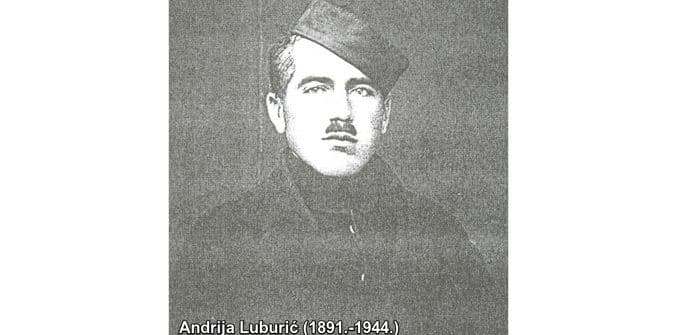
In a Serbian book, Peter I was called a traitor 75 years ago: In Belgrade, in 1940, Serbs Andrija Luburić and Špiro Perović published the book “The Origin and History of the Petrović Dynasty “. In the book, they analyzed Peter I’s actions towards the Karađorđe (Albanian Kelmendi – my annotation) uprising and called him a traitor!
They write: ” The Turks have him to thank for not losing all of their Serbian lands during the Karađorđe uprising. Here we will talk a little more about the traitorous work of Bishop Peter and his work in favor of the Turks. ” (page 199)
Peter I was not a Serbian
Peter I was not a traitor, because you can only betray your own countrymen, since he did not consider himself a Serb in the ethnic and national sense, it is not possible for him to be a traitor, you can only betray your own people, and he did not betray the Serbs even as allies, because he did not promise them anything. This was overlooked by the romantics Luburić and Perović , because before World War II, there was a widespread myth about Montenegrins as part of the Serbs.
In the same book by Luburić and Perović , on page 211, a letter from Drobnjak from June 1804 is shown. The Drobnjaks beg Peter I to join the Serbian uprising: ” … the Turks slaughter us more in a year than we would have died if we had attacked the city. Get up, sir, for God’s sake, because it is better for us to live one day in freedom (and die), than to suffer so much torment and temptation, both from the infidels and from our brothers. . . Don’t you see what the Šijaci did? They took the entire Belgrade pashaluk and now they attacked the Bosnian pashaluk and took the Zvornik district, and surrounded Zvornik. . . Me now, me never! For God’s sake, here’s the chance, there’s no one yet! ” (the same book, this part is available at www.montenegrina.net under the title “Peter I Petrović Njegoš did not want to come to the aid of Karađorđe in the First Serbian Uprising”)
The book by Luburić and Perović has been completely silenced and forgotten, although the authors provide many sources and their claims are very well-founded.
In our country, a very well-known Greater Serbian historian Radoš Ljušić stated about the cooperation between Peter I and Karađorđe a few years ago: ” It should be emphasized that during the First Serbian Uprising, no matter how correct these relations were, there was no special and significant cooperation .” (documentary show Montenegro and Serbia , RTCG, author Snežana Nikčević)
In 1825, the Greeks also unsuccessfully asked the Montenegrins for a detachment of soldiers to help them. A Greek named Mavrokordat , on behalf of the Greek government, sent two letters to the Montenegrins in October 1825, one to Bishop Peter I.
Both letters ask the Montenegrins and the bishop to send a detachment of Montenegrins to fight against the Turks. A damaged copy of the letter is still in the archives of the State Museum in Cetinje. Andrija Lainović quoted the response of Peter I to the Greeks, who elegantly refused them, writing them back after 6 months:
” 1) Montenegrins are self-willed and no one could force them to go to foreign countries; 2) Since they marry very young, there would not be 300 unmarried young men in all of Montenegro who could leave their homes; 3) Because they are not used to going beyond their borders, and having no peace with the Turks anywhere, they should not leave their places between Bosnia and Albania .” (Andrija Lainović, Some new data on the relations between Montenegro and Greece in the 19th century , Historical records, book XI, volume 1-2. 1955. pages 388 and 389)
Peter I also prevented a domestic uprising. Namely, probably under the influence of the Greek uprising, the Christians of Zeta, Podgorica and Spuž wanted to rise up against the Turks with arms and called on Bishop Peter I for help . He replied to them on October 1, 1825. It would be a shame to single out anything from the entirety of his reply, so I recommend to readers a link to this, in my opinion, the most sensible letter of Saint Peter of Cetinje : http://i61.tinypic.com/21b3yg9.jpg
He succeeded in his plan and saved the lives of Christians who lived in the occupied lowland areas on the border with Old Montenegro.
The only real plan of Peter I for the expansion of the state: Peter I annexed some tribes that were under Turkish rule, tore them away from the Turks and also, he went to sea in October 1813, Montenegro and Boka Bay were united into one state 201 years ago! That was what he wanted and succeeded for a short time as a real politician. However, that state did not last long, because the great powers did not approve it.
On Analitika I already wrote about the unification of Montenegro and Boka Bay in the article entitled “Why was 200 years of unification of Montenegro and Boka Bay kept quiet?” which was published on December 13, 2013. Peter I led a real policy, step by step, he knew that going to the sea was necessary for Montenegrins, so that they could continue to prosper. He knew that it was a thousand times more important for him to unite Montenegro and Boka Bay than to deal with megalomaniac ideas.
Peter I was actually an opponent of the Slavic-Serbian plans. Bogumil Hrabak , a Serbian academic of Slovak origin, wrote this about the relationship between Russian Major Đuro Vojinović and Peter I. He is talking about the events of October 1797:“ The Metropolitan, by the way, was wary of Vojinović and his ‘Slavo-Serbian’ plans, which did not fit with his own. ” ( Bogumil Hrabak, Grbalj from the collapse of the Venetian Republic to the temporary unification of Boka Kotorska and Montenegro (1797-1714) , collection Grbalj through the ages , Grbalj and Novi Sad 2005, page 249)

If he was wary of Slavo-Serbian plans in 1797, why would he change his mind 10 years later?
The only goal of Peter I was to save lives in futile battles: It is easy for us to understand that Peter I’s main goal was to save the lives of members of his people, for which there is much more evidence, which I do not have space to present here, and which is why the Montenegrin people considered him sacred even during his lifetime.
If, as Amphilochius says , Peter I was a supporter of the Serbian Empire, why didn’t he cooperate with Karađorđe , why didn’t he fight the Turks with him? Is this how a supporter of Greater Serbia acts?
Peter I was a very sober statesman and man. He knew exactly what his options were. He only went to war when he was forced to – if the Turks attacked him, or if the Russian Tsar, whom he generally considered his patron, asked him to do so.
I repeat again, my position is that this plan from 1807 was not his work. We can think that he was persuaded by someone, that he had to agree to such a plan, but, essentially, this plan from 1807 is not his. Whoever thinks that this science fiction plan from 1807, just as Karađorđe is begging him to join his uprising, was made by Peter I and in this way was prepared to spend at least 2/3 of the military-able Montenegrins, either knows nothing about Peter I , or is politically passionate like Bishop Amfilohije.
Metropolitan Amfilohije tells a fairy tale story about how Peter I – Saint Peter of Cetinje – was for the Serbian Empire because he was for the Serbian Empire, because that story fits perfectly into the Serbianization of Montenegrins. Amfilohije Radović went to the Dubrovnik battlefield to encourage Montenegrins, Peter I never encouraged Montenegrins to fight for Serbian interests.
When an ordinary person hears Amfilohije say that Peter I was for the Serbian Empire, he immediately (if he believes him) thinks that this is just part of the centuries-old aspiration of Montenegrins for the Serbian Empire.
To summarize – there is neither an original nor a copy of the Slavo-Serbian Plan from 1807 – written by the hand of Peter I.
The plan was handed over to the Russians by an impostor in the name of Peter I.
Furthermore, as propagated by Amfilohije, he predicts the creation of a Serbian Empire without Serbia, without the Šumadija Serbs?!! Is there any logic in that? For years, Peter I avoided using Montenegrins for the First Serbian Uprising in every way, and he made every effort to keep Montenegrins from dying for the sake of creating a Serbian state.
Peter I refused to help the Greeks in their uprising, he did not give them a single detachment.
He even rejected Orthodox Christians from the Zeta-Bjelopavlić plain when they were about to rise up against the Turks.
Moreover, we have a document presented by Serbian academic Hrabak in which it is said that he was wary of Slavic-Serbian plans.
So, the story that Peter I was in favor of the Serbian Empire is a mere fabrication.
Reference
https://www.portalanalitika.me/clanak/173194–sveti-petar-cetinjski-nije-bio-za-srpsko-carstvo


 Balkan Academia