
Written by Luan-Asllan Dibrani. Translation by Petrit Latifi.

Albanians imprisoned in this prison in 1913 in the Albanian resistance to protect their lands from the great powers and the Slavs
Niš Prison in Serbia, one of the most notorious in Europe for Albanians and other persecuted groups! Niš Prison in Serbia has a horrific history for Albanians and others who have suffered there, especially during various periods of war and ethnic tensions in the Balkans.
Over the past decades, this prison has been a symbol of the brutal treatment and torture of Albanian prisoners and others who were considered dangerous or undesirable by the regime. Yes, Niš Prison in Serbia has a fraught and painful history, especially for Albanians and other groups who have suffered there during various historical periods in the Balkans.
During the time of the communist regime and other periods of ethnic tension, this prison became known for torture, mistreatment and harsh conditions, the purpose of which was to suppress any dissenting voice or that was considered a threat to the regime.
For many Albanians, Niš Prison carries bitter memories of family separations and traumatic experiences that are passed down from generation to generation. This period reflects a bitter reality of life under repression and inhuman treatment that symbolizes the continuing obstacles to peace and mutual respect in the region.
Following the events of the spring of 1981 in Kosovo, a period in which large-scale student protests demanding equal rights and improved political status erupted, many Albanian intellectuals, students, and activists were arrested and sent to various prisons in Yugoslavia. Niš Prison in Serbia became one of the main centers where Albanian political prisoners were held, including prominent figures of the freedom and equality movement.
Yes, the events of 1981 mark a difficult period and filled with repression against Albanians in Kosovo and abroad. After mass protests by Albanian students in Pristina and other cities in Kosovo in the spring of that year, the Yugoslav regime responded with widespread violence, arrests, and repressive measures against those demanding greater rights and autonomy for Kosovo. The demonstrations began as demands for improved living conditions and the right to education in the Albanian language, but later evolved into demands for Kosovo’s status as a republic within Yugoslavia.
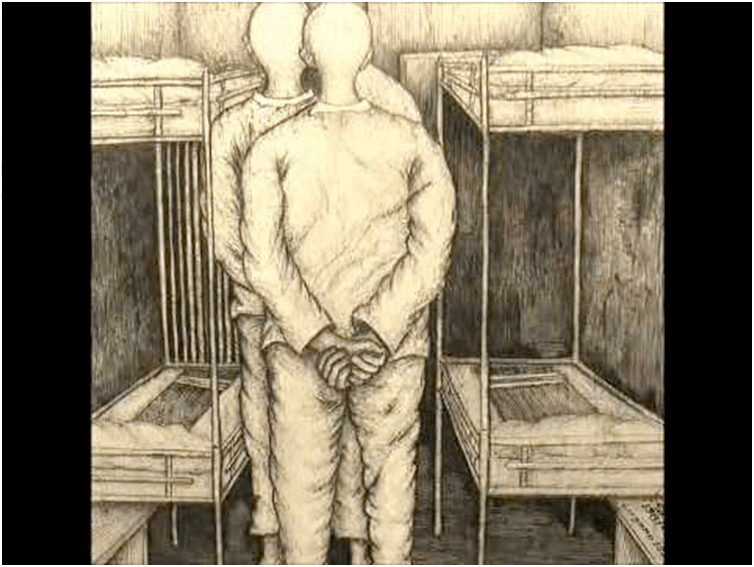
Work by Syle Mujaj motive from us former political prisoners in this notorious prison.
During the former Yugoslavia, and especially during the years of Slobodan Milošević’s rule, many Kosovo Albanians, accused of political activity or opposition to the Serbian state, were imprisoned and mistreated in this institution. There is ample evidence of violence, torture, and appalling conditions in this prison, making it one of the most notorious places in Europe for Albanians and other persecuted groups, resulting in the deaths of a number of former political prisoners.
Yes, even during the 1970s, Niš Prison in Serbia was a site of many conflicts and violent clashes between Albanian prisoners and prison authorities.
During this period, many Albanian prisoners resisted harsh treatment and attempts to force them into submission, which often escalated into conflicts with guards and prison officials. Violence and abuse were common, and it is reported that during that period there were killed and wounded on both sides. “Serbian guards often used extreme violence to control Albanian prisoners, while some of the prisoners made attempts to defend themselves or protest”.
This period has left deep consequences and painful memories for Albanians who suffered in Yugoslav prisons and in Niš in particular. Memories of these events have influenced the formation of Albanians’ attitudes and feelings towards that regime, making this period a dark chapter in Albanian-Serbian relations from which they later passed into more powerful confrontations until the formation of the KLA at the outbreak of war against the former Yugoslavia (Serbia).
The regime responded with harsh measures, imprisoning thousands of Albanians and using torture and psychological violence to force prisoners to surrender or admit guilt for activities “against the state”. In Niš Prison and other notorious prisons in Serbia, Albanians faced inhumane treatment, including torture, prolonged solitary confinement, lack of food, and appalling sanitary conditions.
The regime responded with harsh measures, imprisoning thousands of Albanians and using torture and psychological violence to force prisoners to surrender or plead guilty to “anti-state” activities.
From 1981 onwards, mass imprisonment and harsh punishments became common practice to suppress any form of resistance by Kosovo Albanians. The regime also persecuted political activists and intellectuals, branding them “irredentists” or “separatists,” and sentencing them to long years in prison. In many cases, Albanian prisoners did not have proper access to legal protection, and court proceedings were often rigged.
More evidence of these events can be found in these state institutions.
Personal Accounts – Former prisoners and their families have often published accounts and memoirs that include important details and names of their fellow sufferers.
Historical Archives – State archives in Kosovo and Albania, as well as those in the former Yugoslavia, may contain important documents.
Human Rights Organizations – Organizations such as the Humanitarian Law Center in Serbia and Kosovo have documented human rights and may have lists of political prisoners.
Books and Monographs – Books by well-known authors that have researched the history of Yugoslav repression of Albanians, as well as memoirs written by former prisoners.
Reference


 Balkan Academia