

Authored by Petrit Latifi
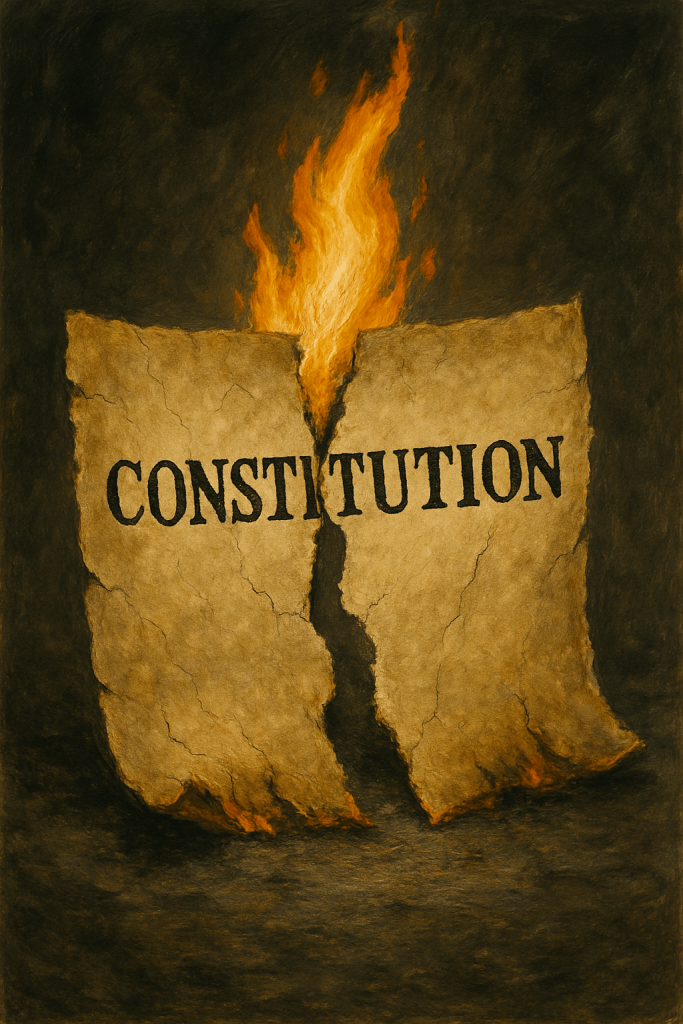
In the book “Die Schlafwandler Wie Europa in den Ersten Weltkrieg zog” by Christopher Clark we can read how Serbia violated its own constitution in newly invaded and annexed territories. Serbia violated Constituion of 1903 (Articles 24, 25 and 22) and Article 13, which abolished death penalty for political crimes. Many atrocities committed against Albanians were ignored by Serbian authorities. Clark writes:
“For many in the newly conquered territories, Serbian rule brought harassment and oppression. Freedom of association, assembly, and the press, guaranteed under the Serbian Constitution of 1903 (Articles 24, 25, and 22), were not introduced in the new territories, nor was Article 13, which abolished the death penalty for political crimes. The inhabitants of the new territories were denied the right to vote and stand for election.
In other words, the conquered territories initially acquired the character of a colony. The government justified these decisions by arguing that the cultural level of the new territories was so low that granting these freedoms would endanger the country’s existence. In reality, the primary goal was to keep non-Serbs, who formed the majority in many regions, out of national politics. Opposition newspapers such as Radičke Novine and Pravda were also quick to point out that the new Serbs had actually had more political rights under the Turks than under Serbian administration… “
Serbian war crimes in 1913
“In October and November 1913, the British vice-consuls in Skopje and Monastir reported systematic intimidation, arbitrary arrests, beatings, rape, the burning of villages, and massacres by the Serbs in the annexed territories. 136 It is already abundantly clear, reported Vice-Consul Greig from Monastir, that Muslims under Serbian rule can expect nothing but regular massacres, certain exploitation, and ultimate ruin.
Eleven days later, he submitted another report, warning that the Bulgarian, and especially Muslim, populations in the districts of Perlepe, Krčevo, and Kruševo were in danger of being wiped out because of the extremely frequent and barbaric massacres and looting to which they were subjected by Serbian bands.
By the end of the month, looting, murder, and other atrocities by bands of Serbian irregulars and those allied with them had created conditions bordering on anarchy. 138 Albanians and other Muslims, Bulgarians, Vlachs, and Jews, the Vice-Consul reported in December, were terrified by the prospect of dependence on a penniless state that seemed inclined to deprive every community of its means of subsistence on a scale unknown even in the darkest days of the Turkish regime.
From Bitola in the south, near the Greek border, the British Vice-Consul reported that the old administrators had been replaced by a new cohort of corrupt Serbian ex-propagandists, led by 1) an ex-barber, spy, and Serbian agent […] and 2) a local Serbomaniac of indefinable profession named Maxim. Nothing, according to Greig, could play better into the hands of Serbia’s enemies than the reign of terror of this clique…”
Serbian atrocities in 1913 according to consulates
“Austrian hostility to Belgrade’s triumphs was compounded from the autumn of 1913 onwards by bad news from the territories conquered by Serbian troops. Reports of atrocities against the local population began to arrive from the Austrian Consul General Jehlitschka in Skopje in October 1913.
One reported the destruction of ten small villages, whose entire populations were killed. First, the men were forced out of the village and shot in droves; Then the houses were set on fire, and when the women and children fled the flames, they were bayoneted. Generally, according to the Consul General, the officers took over the shooting of the men, while the murder of the women and children was left to the ordinary soldiers.
Another source described the behavior of Serbian soldiers after the occupation of Gostivar, a city in a region where an Albanian uprising against the Serbian invaders had broken out. Around 300 Muslims from Gostivar, who had taken no part in the uprising at all, were arrested and led out of the city at night in groups of 20 to 30 men, where they were beaten to death with rifle butts and stabbed with bayonets (gunshots would have awakened the sleeping inhabitants of the city).
They were then thrown into a huge open grave that had been dug specifically for this purpose. These were not acts of spontaneous brutality, concluded Jehlitschka, but an elimination or extermination operation carried out in cold blood and systematically, apparently under higher orders.
Such reports, which, as shown, coincided with those of British representatives in the region, inevitably affected the mood and attitude of the political leadership in Vienna. In May 1914, the Serbian envoy in Vienna reported to Jovanović that even the French ambassador had complained to him about the behavior of the Serbs in the new provinces..”
Reference
Christopher Clark. Die Schlafwandler Wie Europa in den Ersten Weltkrieg zog, 2013.


 Balkan Academia