
Authored by Petrit Latifi
In 1912 and 1913, Serbian newspapers like “Ral” and “Radnicke Novine” published articles on horrific atrocities committed by the Serb troops against the Albanians in the conqured Albanian lands.
“And already on October 12, less than a month after the start of the war operations, the newspaper openly accused, bringing the following in the “Ral” column:
“The Serbian army has so far mainly had conflicts with the Amauts, who, due to their often expressed drive for independence and a free life, feel that the ‘partition of Turkey’ will be carried out over their backs.
So they are desperately fighting against those who wanted to overthrow their previous master with their help, and then establish their rule on their corpses. As they put up tough resistance, although they do not have enough weapons or ammunition, and almost no cannon, a barbaric mood prevails in military circles to satirize them most energetically”. The truth is slowly coming to light.
On October 26, “Radničke novine” already has more information and reacts bitterly in a short article “Jedna mrlja”, stating the following: Terrible scenes are being committed in the conquered areas. This does not reach the public, because the army is a dictator and does what it wants, it does not allow any right to discuss things and events.
But the Albanian population feels through its backs, outside the ranks, the terrible blows of unarmed lumpen gangs, who have rebelled even from the Supreme Command and are ruthlessly satisfying their bloodthirsty and plundering instincts.
This must have caused a revolt among those who took them under their protection, and therefore all these islanded and criminal types, who played their role brilliantly according to the intentions of those whose word is decisive on the battlefield, were disarmed in Skopje. ” But, unfortunately, not all of them are disarmed and they never will be…”
The article “Shame Spreads” in the issue of November 6 of the same year reads:
“The European press is beginning to write about the atrocities of the war, which left a German correspondent with the impression of a massacre, and about the barbarities being committed. Up until now, it has generally had a bad opinion of the Serbs. Now it is presenting new material presenting to the world the crimes of the committees and even the army against the Arnauts, crimes that could and should have been suppressed.
The “Daily Chronicle” describes in detail what was not done against them. And no matter how convinced we were that in war there could be nothing but cruelty and the most horrible and disgusting scenes of depraved and bestial types, we have also become convinced in another way that all consideration for a large number of people in the conquered areas was trampled on, that a shame was committed that could cost us a lot.”
And so the truth about the horrors committed by the army in the occupied areas was slowly revealed. And this truth completely denies the “liberation” mission of the Serbian army, which King Petar I Karadordevic spoke about so pathetically in his war proclamation to the Serbian people, published on September 17, 1912, which states:
“The latest events have once again put on the agenda the resolution of the fate of the Balkan Peninsula, and with it the fate of Old Serbia, that glorious but sad mother of our Kingdom, where the historical core of the Serbian state of the old kings and emperors is, where the famous Nemanjic capitals are: Novi Pazar’s Ras, Pristina, Skopje, Prizren.
It has come to the point that no one in European Turkey was satisfied with the situation there. It has fed up with Serbs and Bulgarians and Greeks and Albanians. Therefore, in the name of God, I have ordered My heroic army to go to the holy battle for freedom. My army will find, in addition to Christians, also Albanians, Christians and Muslims. with whom our people have lived together for thirteen hundred years, usually sharing with them happiness and misfortune.
We bring them all freedom, brotherhood, equality in everything with the Serbs. Our Serbia and the lama will bring the desired peace and progress, as it brought the region to the liberated in 1877/8: free, progressive, conscious, satisfied citizens live in them. We have to establish that life on the banks of the Lab, Sitnica. Ibar, Drim. Vardar.”
Even other opposition civic press in Serbia wrote about it. For example, in the then daily newspaper “Borba”, whose header only reads “political, economic and literary paper”, in the unsigned article “We and the Albanians” in the issue of May 10, 1912 (meaning before the start of the war), the author says:
“In our relations with the Albanians we make gross mistakes, which we regret terribly later. The biggest mistake was made immediately after our wars of liberation, when we expelled thousands of Albanians from the liberated regions.
Instead of keeping them in their homes, instilling in them sympathy and trust, winning them over and binding them to ourselves, instead of finally warming them with the rays of our freedom, domesticating them with our culture and providing them with material support and morally elevating them, instead of binding them to the lap of the earth in their new homeland, we forcibly expel them.
These Albanians, who were supposed to be our fellow citizens, who were supposed to be the link between us and their tribesmen in the Kosovo vilayet, they become our blood enemies.”
In a fierce clash with the Ljumljan Arnauts… In his article “Massacre in Ljumljan”, Tucović states, horrified, that 500 women, children, and the elderly were killed in two hours…
The article continues: “But besides these, we have priests who, as leaders of volunteers (they themselves gathered them) and often, like ordinary soldiers in the companies of other leaders, raised the banner of liberation high and rushed like true lions into fierce battle. This is how our clergy understand their duty and how they perform it. This is how our church has educated the Serbian people and how it instructs them.” Did any of those hundred divisional and regimental priests stand up against the crimes against the Albanian population, as Tucović, a reserve officer of the same army, did on that same battlefield? There is not a trace of this in the church press. Tucović wrote about the Chetniks or the Komitas with the deepest disgust. “
Role of the Serbian Orthodox church in denying Serbian atrocities
“Now a new and more beautiful history of the Serbian tribe is being created. Dušan’s empire is being restored. This is a holy fight. This is a just war. God will help us. God is with us. Death to the godless barbarians”.”
The disastrous effect of such and similar calls by certain priests is best shown by the continuation of that worker’s letter about the suffering of Turkish refugees:
“Then they are caught by the committee, who are like beasts of the heathen, and torture them with terrible torments. One holds a rifle and a knife on it, the other stabs the Turk with a knife, the latter stabs him with a knife and throws him away, and the other pushes him onto the knife again; so they throw knives at him ten or twenty times, until he dies. It’s horrible to watch… What kind of hearts are in these people – I don’t know”.
The editorial staff of the newspaper “Radničke novine” adds at the end of the article: “And what are those poor women guilty of, what are their children, those little innocent, beautiful angels? Speak up and answer – oh you, mothers! Speak up and judge the war, which is crushing husbands, brothers, sweethearts, sisters and children!”
The Serbian Orthodox Church press of that time did not mention such cases, so in the double issue of January-February 1913, the “Vesnik Srpske Crkve” proudly stated:
“Let us also mention this. For the evil that the Turks did to us, we repay them with as much good as possible.”
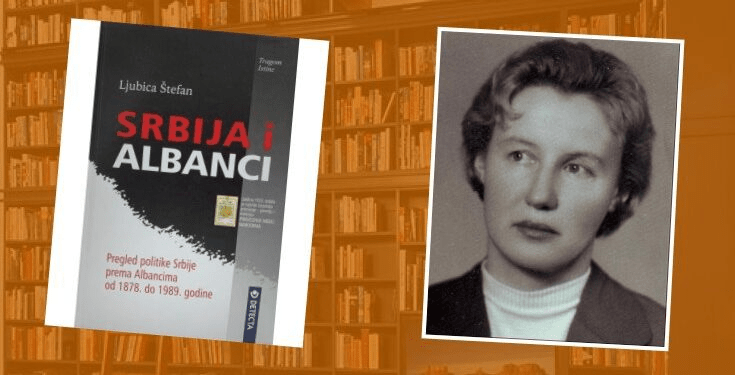
Reference


 Balkan Academia