
Petrit Latifi
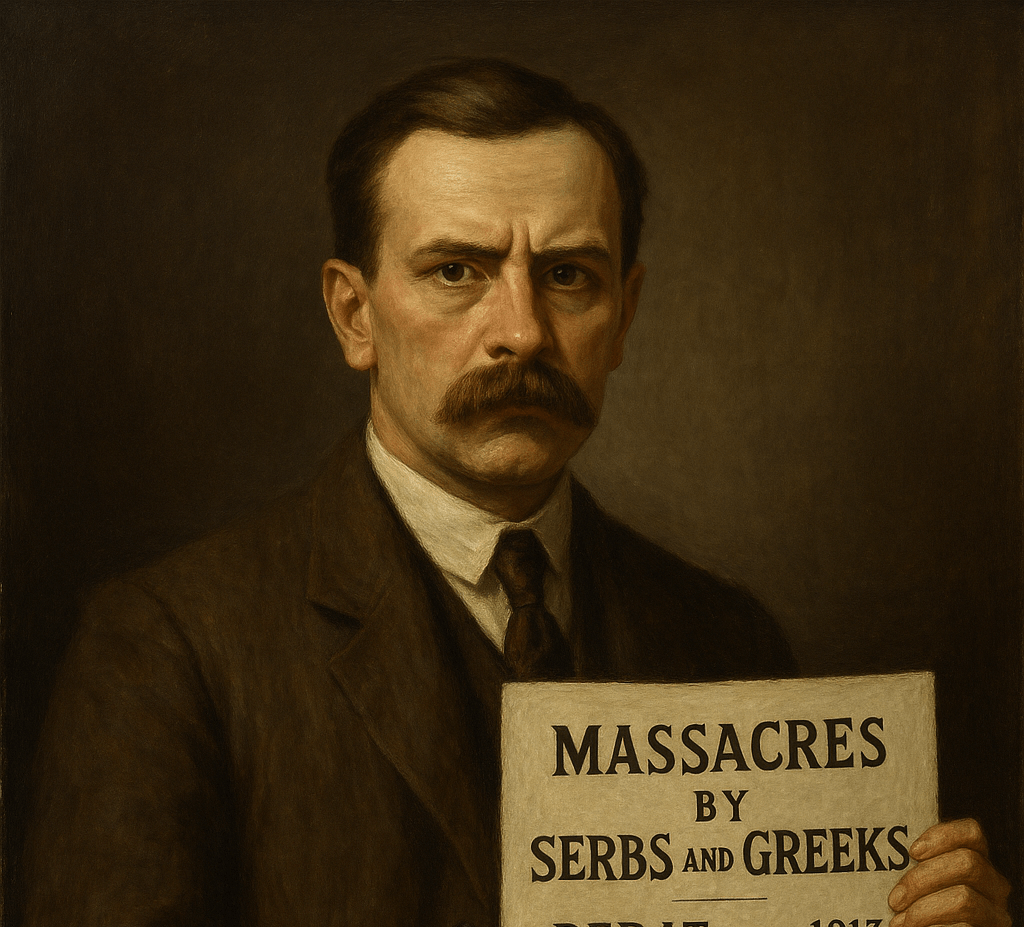
In the book “Ben Kendim A Record Of Eastern Travels” by Herbert Aubrey, he writes that there were several Albanian officials at the headquarters of Ismail Qemali that wanted to present lists of massacres committed by Serbs and Greeks against Albaninas. On page 264 we read:
“We went to the Konak, the seat of government, where Ismail Kemal presided. “ There are many people who want to see you,” he said. ” We can talk later.” Then the deputations began to arrive, with lists of atrocities committed by the Serbs in the north and by the Greeks in the south. Hassan Bey Prishtina was the first, and after him came a crowd of citizens from Argyrocastro.”1
Indiscriminate massacres by the Serbs in unarmed Albania
“Outside, in the blazing sunlight large crowd stood and applauded continually ; inside, a series of depressing conversations went on. Meymed Bey, Minister for War, arrived. He spoke of the urgent need of help for the refugees, and with bitterness of the way in which the country (Albania) was being treated. He said he would not speak of his own losses, which were irrelevant, but his property, representing a very large sum, had been taken at Kalkandilen.”
“He told stories of indiscriminate massacre by the Serbs in unarmed Albania. The Serbs had invited him to return and to govern Djakova and Prisrend, but he had refused their offer, preferring his loss. The cheers went on and I felt sick — knowing that nothing could or would be done.”2
The Albanian Committee tried to inform the British public of these atrocities
“However, in his memoirs, Herbert did not criticise the British press either: The Albanian Committee did not have to complain of the way in which it was treated by the Government or the Press. Those pre-War days were Christian, and the howling cannibals of 1919 had not yet been loosed upon the suffering world.”3
“In spite of the intrigues of the Great Powers, the world was not too bad a place, and the Albanians, in England at any rate, received a fair hearing through the Albanian Committee, which tried to be, if not impartial, as moderate as possible. Very little was known about Albania.”
Unarmed Albanians of the south were murdered by Greeks in 1913
“The general impression was that the Albanians were another branch of the Armenian family, and indeed, as far as massacres were concerned, this was most understandable, for the unarmed, pastoral Albanians of the South were massacred by the Greeks in 1913, while the Albanians of the North-West received the same treatment at the hands of the Serbs.”4

References


 Balkan Academia