
Petrit Latifi
Information taken from “Albanian Kingdom, Commune of the First Class Sdreckë No. 254 Sdreckë, on 29. VII. 1944 P. T. Prefecture Prizerend”
“Regarding your order no. 1063, dated 17. VII. 1943, we have the honor to inform you that with the detailed investigations we carried out in the region of this municipality during the rule of Yugoslavia against the Albanian element, the following massacres were committed:
In 1923, the deceased Qazim Xhemaliu from the village of Gorniselle was murdered. The murder took place under the following circumstances: The victim had gone to visit his wife in the village of Drajçiç of this municipality to his tribe, named Bajram Ademi. They went there at night and took him and escorted him to the Bogoshovc neighborhood of the village of Sdreckë and precisely at the “PESOK” place they massacred him, while he was tied hand and foot.
Names of the murderers
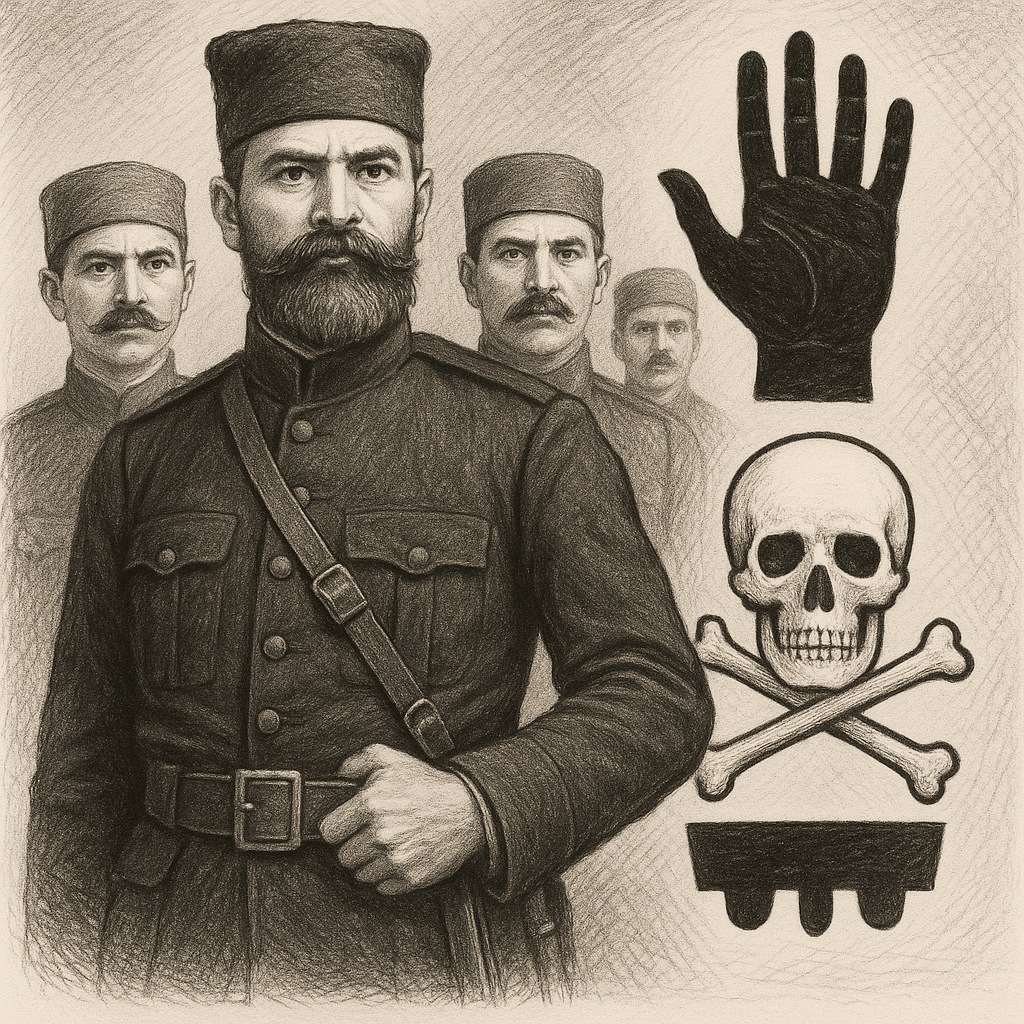
“The murderers are the ones named Kersto Mandushi from the village of Sdreckë and Gjorgje Vučkovići from the village of Gornišelle, together with three Serbian gendarmes. The reason for the murder stems from the fact that the Chetnik society had established a headquarters in Sdreckë, which at that time was headed by the aforementioned Kersto Mandushi.
It is said that for the murder of this village of Sdreckë, the Chetnik society paid a sum of money that it handed over to the gendarmes who had participated in the massacre of the victim. The victim was an Albanian idealist and for this reason he was killed.”
References
Mayor of the Municipality, Sejdi Sejdorati d. v. Certified by the Chief Secretary of the Prefecture Niko Lafe Prizren, on 31. X. 1944 (AQSH, Fund 410, Year 1944, File 58, sheet 6)
Murders of 1912 in Reçan
Source: Albanian Kingdom, Municipality of Llokovica No. 147 Llokovica, on 7-9-1943 P. T. Prefecture of Prizerend
“Reply to order no. 1063, dated 17. 7. 1943
“We have the honor to inform you that, in the investigations conducted to date on the Slavic barbarities against Albanians, we have established that in 1912, in the village of Reçan in this municipality, the Serbian military army, led by civilians Kersto Mandushi, who is still alive today, Jovan Gaxhes and the Velikin family, all from the village of Sterckë, forcibly took one Bajram Haxhi Hajdari from the village of Reçan and took him between the streets of Lubinjë and Streckë, where they cut off his lips, nose, pulled out his fingernails, then gouged out his eyes, and finally cut him with knives and scattered his flesh here and there. His death lasted 24 hours from torture. The reason for his strangulation was because he was a brave and handsome man.
In that year again the military forces, having been instructed by the aforementioned Strecka, in the village of Reçan they committed barbarities, taking people and setting them on fire and committing several robberies of money, forcing them to pay or they would kill them.
The tortured persons are: Haxhi Rashit 10 Turkish liras of gold, Mustafa Arsllani 25 liras, Haxhi Hajdar 10 liras. All these persons, after the tortures they inflicted on them, were forced to hand over the aforementioned money, in addition to the robbery they committed in the shops and houses, taking women’s rings and earrings, prayer rugs and other expensive items. Even today in the house of Kerst Mandushi there is still a lamp that was robbed by him from Zeqir Sylejman from Reçan.
There are also some minor barbarities, but they are old and without facts, but those that we described above are true, since the participants in these barbarities are still alive today in the municipality of Strecka.
Reference: Mayor, Fadil Xhabija d. v. Verified, Chief Secretary of the Prefecture Niko Lafe, Prizren, on 31. X. 1944 ( AQSH, Fund 410, Year 1944, File 58, sheet 7)
Shocking evidence of Slavic barbarism and plunder against the Albanian population between 1929 to 1930
“In the Central State Archive, file 58 of 1944, reports continue to be published that municipal leaders send to the prefectures to which they administratively belong, through which Serbian massacres against the Albanian population in the years 1912 to 1930 are published. Part of this publication is also the report on the behavior of Serbian authorities against Albanians during the time of their rule in the region of the municipality of Beci.
In the first fateful days that the Serbs and Montenegrins landed in these places, they seemed gentle, polite and as if they knew what the Government of Justice meant. But as the old saying goes “The wolf changes its fur but never forgets its habit”, so the invaders of Kosovo did not go far without giving a different color to their rule. First of all, the Yugoslavs demanded the surrender of weapons and any land related to war equipment.
The local Albanians, after much animal suffering without any mercy or humanity, made the surrender that was requested. Even today, when they remember this action, they are amazed. Although every weapon and ammunition was surrendered, the Yugoslav gendarmerie was never enough, it demanded new ones in large quantities, using every means of barbarity that history can remember.
After some time, the united government under the name “Yugoslavia” organized a group of volunteers with 2000-3000 Serbs and Montenegrins and under the command of Major Sav Lazar began to make the Albanians change their religion until then and believe in their Orthodoxy. Sava was from Cetina. For this act, Sava beat, spat on, cursed, killed, burned, fled and what not to do to the Albanians of this region, but in vain because his goal was not achieved.
Often, hundreds and hundreds of Albanian men were tied to fences of yards, so that not even their feet touched the ground, using wood and whips, they were doused with cold water in the winter just so that they would not accept to change their faith.
On the contrary, based on a clear conscience that they acted contrary to what was ordered by the Slavs (that there is no lower law or morality in the world), pushing, contempt, curses and beatings were common even from the lowest of the Slavs towards the Albanians, no matter how known for their loyalty and generosity they were.
When it was seen that the conquered Albanians were wasting everything and that they had nothing left to give them except the land, they remembered to keep this as their own. Thus, in 1929-1930, they brought out their cruel and cruel agrarianism and began to draw borders between lands inherited from their ancestors, at the same time impoverishing and wretching all the local Albanians.
They made the fields, meadows, pastures, forests, pastures and every valuable land alien to the owners until then. The Albanians began to become so impoverished that even daily bread was barely secured, and from this they began to make chips of the snow on their lands. The products were divided according to what they themselves valued before being collected.
The wood became a possession for the Albanians and these, driven by necessary needs, were forced to clear the forests and, after clearing the land of roots and stones, they had the right to take a part of the stumps that they dug up from the ground and used for burning. The agrarian did not immediately inform them, but it appeared time and time again and always burdening the tired Albanians and increasing the areas of sequestration until it came to occupying the yards of the houses up to the doorstep.
The Serbian and Montenegrin colonists invited the Albanians and especially the Muslims that their country is Turkey and it would be better to go there in time than to be exterminated by the Government, which according to the appearances was not surprising. They raised their heads and took off with their brutal acts against us.
Montenegrin criminal Bulatovic
Once upon a time, there was a Montenegrin policeman in the municipality of Janos, named Bulatovic, and he had a habit of going to every meeting where Albanians were present and, as he entered the room, he would put his long bayonet on the tip of his rifle and forcefully stick it into the ceiling of the room, and no one would touch it until Bulatovic wanted to leave.
Often, the gendarmerie patrols of that time would enter the house and single out with their fingers all those Albanian boys who were known for their personal abilities and intelligence, and as soon as they left the village, in the first stream or hole they found, our boys would be shot on the spot and thrown into the hole or stream wherever the invaders wanted.
Even in the army barracks, Serbian officers would often call up Albanian soldiers by list and, after tying them up, would kill them with machine guns in the most vile and treacherous ways that can be practiced by evil races of people.”
Source: (AQSH, Fund 410, Year 1944, File 58, pages 8-9)
Report on the killings and burnings caused by Serbs and Montenegrins in 1922
In this year, a man named “Milic Kërrsta”, a Serbian guard from Istog i Peja, takes over the security of these places, and forms a band of 200-300 Serbian and Montenegrin civilian volunteers and begins to violate the whole of Kosovo. Milic Kërrsta, as it is shown, had set the goal of carrying out such a strict repression in Kosovo that after his departure from here there would be no Albanian left in these places.
First, in this region, he went to the village of Jabllanicë where he found the mayor of the municipality of Cermjan, the late Osman Jahja Aga from the village of Rashkoc, together with a policeman of his named Ibrahim Kokalla from Cermjan. After a loud shout, without the slightest reason, Milic Kërrsta ordered his volunteers to use their rifles against every Albanian seen in that village.
The locals, saddened by the well-known barbarian, began to flee, but being without weapons or other means of coping, the following people were caught and shot:
Osman Jahja Aga, mayor, 40 years old, from the village of Rashkoc; Ibrahim Kokalla, municipal policeman, 35 years old, from the village of Cermjan.
From the village of Jabllanicë Qerim Binaku, 16 years old; Syl Islami, 50 years old; Hajdar Islami, 60 years old; Haxhi Bajrami, 40 years old; Hysen Bajrami, 34 years old; Hashi Neziri, 38 years old; Hazir Hasani, 30 years old; Zenun Neziri, 30 years old; Ramadan Ademi, 50 years old; Hasan Shabani, 90 years old; Musli Mustafa, 70 years old, drowned by Rrehmë; Bajram Rama, 30 years old; Jonuz Rama, 25 years old; Ali Rexha, 60 years old; Selman Myrto, 25 years old; Cuf Kadrija, 18 years old; Sadik Myrto, 18 years old; Ram Hamza, 30 years old; Hasan Kasemi, 70 years old; Selman Kosumi, 50 years old; Sadik Hasani, 30 years old; Syl Hasani, 20 years old; Bek Tahiri, 22 years old; Beqir Hasani, 12 years old; Avdyl Zeneli, 50 years old; Isuf Zeneli, 30 years old; Qemal Qeli, 40 years old; Sadik Shotani, 70 years old, burned in the fire; Zejnija of Sadik Rama, 29 years old; Ram Ahmeti, 28 years old; Fasli Muslija, 40 years old; Maliq Muhagjiri, 40 years old; Jahja Qarkagjija, 30 years old; Haxhi Helshani, 60 years old; Rexhep Muhagjiri, 40 years old; Rexhep Muhagjiri’s son, 10 years old; Zef Zeqiri, 30 years old; Niman Zeqiri, 20 years old; Selim Bajrami, 20 years old; Ram Selimi, 20 years old; Ram Sefa, 20 years old; Sadik Koka, 40 years old; Kamer Syla, 40 years old; Mustafa Xhema, 40 years old; Mehmet Alija, 35 years old; Haxhi Bajrami, 30 years old; Selim Kajtazi, 20 years old; Zeq Halili, 30 years old; Hasan Rexha, 50 years old.
Source: (AQSH, Fondi 410, Year 1944, File 58, sheet 10)
List of persons treacherously killed by the Slavs in the Suhareka Sub-prefecture:
Ram Bllaca, from the village of Bllaca, was killed by the Yugoslav state in 1927. The perpetrators of the murder were the Kostic family of Prizren and the Nacalnik family of Suhareka. Isa Ademi and Fasli Baftija, from the village of Greqevc, on 9. IV. 1912, were killed in an ambush by the Slavs.
Halil Velija and Sefer Emini, from the village of Nishnueri, on 9. IV. 192, were killed in an ambush by the Slavs.
Osman Syla, Halit Syla, Ramadan Baftjari, Shaban Syla, from the village of Vranic, were stabbed to death in 1912. Bajrma Fasllina, from the village of Maqitava, was stabbed in Prizren with Osman Syla in 1912.
Xhel Iljazi, from the village of Maqitava, was stabbed in 1919, saying that he was holding Albanian committees.
Rrustem Osmani, in 1920, Xhelë Esati, in 1925, Rrustem Azemi, in 1921, all three from the village of Mushtisht, were killed without any reason. Musli Dema, from the village of Vraniq, in 1935, was killed without any reason. Rexh Abazi, from the village of Maqitava, was killed at night in 1935.
Xhem Destanin, from the village of Delloc, a forest ranger, was killed in 1924, saying he had killed the Albanians. Sejdi Ram Bajraktari, from Suhareka, in 1920 and 1927, was hunted by the Slavs for Albanian reasons. Sadik Mehmeti, from the village of Peçan, in 1927 and 1929, imprisoned and suffered other things for Albanian reasons.
The unit is confirmed by The Archivist of the Sub-Prefecture of Suhareka
Perlat Mema d. v. Suhareka, on 8. IX. 1944
Confirmed The Chief Secretary of the Prefecture
Niko Lafe Prizren, on 31. X. 1944
Source: (AQSH, Fund 410, Year 1944, File 58, sheet 5)
Robbery through taxes
Part of the Slavic speculations and abuses against the Albanian population was also robbery through fabricated taxes, and their increase in cases of non-payment. These taxes, of course heavy, were forced to be paid by the Albanian taxpayers, in kind, by taking their livestock, but also their belongings and furniture, even their homes.
The following report by the mayor of the municipality of Junik for the prefecture of Prizren, reveals the “scheme” of Slavic robberies against the Albanian population.
For the non-payment of money, at this time the relevant officials prepared this plan:
They would come and ask for money at the most inconvenient time and would not want any delay in paying the tax, so they would take whatever livestock they could find, food for livestock, household clothes and especially the dowries of newly married brides. The Montenegrin colonizers signed a contract with the official, so when the goods were put up for sale, no Albanian dared to approach and buy the goods that were being sold, but those who were pre-determined would buy them for a tenth of the price.
They would give the officials a certain amount of money and then take them home with them. Whenever the poor Albanian came with money, he would go to the one who had bought the goods, who would sell them to him for ten times more than he had bought them for. In this way, the dinar set for tax became ten and the tax increased daily. It happened that a person was once asked for three hundred dinars and then when he arrived, they gave him three thousand dinars. In order to be able to get a deadline, they had to give money, bribes, to those people that the tax collectors kept with them. Therefore, it is understood that the person who was lucky enough to be with them, even if he was a black man, benefited a lot.
The so-called Zyber Rama, because he had a lot to pay and there was no other way to pay, took the following things: 22 carts of hay, two boxes of women’s and men’s clothes worth 2,300 dinars. The acting officer was the tax collector Milena Popoic. Haxh Zyber took a pen and a cow for 1,300 dinars.
Meanwhile, no one has escaped without being subjected to such violence, just as no one has escaped without being beaten in the most cruel way, so we will not go into further descriptions.
Among the worst and most cruel officials who aimed to exterminate the Albanian race are: Muj Kapiteni, who was the mayor of the municipality and a separate book would be needed to describe his evil deeds; the post commander, Pjetër Pjetrovići, who in order to fine people well would say that they had weapons, so he fined them with considerable amounts of money; and Mihal Boškovići.
At the time of the destruction of Serbia, the following were killed in the matches held by the Montenegrins:
Uk Lushi from the Beriše neighborhood of the Junik village and Shaban Paleshi, and Sadik Jusufi and Mehmet Sahiti from the Gacaferr neighborhood, Muharrem Sadiku from the Qok neighborhood were wounded.
This is a brief report of the Slavic barbarities committed during the above-mentioned period in the region of this municipality.
We add that it is the hundredth part of those barbarities, but that it was completely impossible to describe all the facts in general.
Mayor of Junik
Jah Salihi d.v.
Prizren, on 31. X. 1944 Certified
Chief Secretary of the Prefecture
Niko Lafe
Source: (AQSH, Fund 410, Year 1944, File 58, sheet 4)
Slavic atrocities in Deçan and Suhareka, and the robberies in Junik
Shocking evidence of the barbarities and inhumane robberies of the Slavs against the Albanian population. The barbarities in the municipality of Deçan, by the Slavic elements, are both unknown and unprecedented and impossible to describe.
Thus begins a report of the municipality of Deçan addressed to the sub-prefecture of Gjakova in 1943. Below the same report described the Slavic atrocities in the years 1912-1913, among which there were no shortage of robberies and murders that according to the report “have been common for Slavic monsters…”, it is further stated in the same report..
Source: Albanian State, Municipality of Class I Deçan, No. 355/2 ex 43 Deçan, on 5. II. 1944 P. T. N/PREFECTURE OF GJAKOVA. Gjegje of no. 1467/IV, dated 31. XII. 1943
The barbarities that the Slavic element has committed in the region of this municipality, during the time that cruelty has ruled this country, are unknown and so unprecedented that it is impossible to describe. Robberies and murders have been commonplace for Slavic conspirators. Among the robberies, the church of Deçan occupies the first place, which, when it set its sights on Albanian wealth, also took it, so its action has always been to the detriment of Albanians.
In 1912, the Montenegrin captain, who from the atrocities he committed received the name Sav Batarja, for no reason gathered more than a thousand people in the village of Carabreg to frighten them and make them drink. After the beating began, the names Isa Qorri, Ali Shabani, Hasan Mula, Hysen Feta, Mal Loshi, Zymber Loshi, Elez Hasani, Ibish Halili, Dak Arifi, Zek Hyseni, dared to ask the reason for this massacre, but they all hid them, terrifying the people.
Those who hid before were forced to open their own graves. On this same day, accused of having escorted an Albanian, Dik Zeka was taken from Carabregu and was hid by the Montenegrins, an hour before entering Gjakova. Sadik Mehmeti from Carabregu and Azem Beqiri were also taken and hid. These were done by the Montenegrin captain Dushan Vukovic.
These murders were done in a most barbaric manner, especially the latter in front of women and children. In 1912, just because they were Albanians with their national feelings, they were killed by Captain Miliq Krsta, Him Ahmet Ibërhasaj and Rexhë Nak Dobruna from Deçan. In the same year, in the Deçan Mountains, the Montenegrins Raza and Nuh Ramas with their two-year-old daughter Imer Aliu with his mother, Sofë, as well as Timen and Taf Gjykokë with his son, Ram Tafë, and his brother, all from Deçan. There was not even the slightest cause or mistake in this crime. Here, a Plavnjak was killed and the two are Taf Avdyli and Ram Dostani.
In the year 1913, the Montenegrin Arseni Qyrki from Bellopoje took without any reason and killed Mr. Ram Gjonin from Carabreg. Then Savo Lazar, helped by Captain Filip Babovic, indulged in looting to the point that some were taken alive.
These same men took and rounded up the village of Drenoc without cause, killed and tortured the people in a completely heartless manner, then the so-called Dem Tahiri, Sali Mustafa and Brahim Mustafa, having beaten them, put them in front of the village of Carabreg, threw them into cold water and left them there all night. From these tortures, the aforementioned died.
In 1922, while returning home, the so-called Mus Brahim Aliçaj, from Carabreg i Ulët, was killed by the Montenegrins for no reason. His body was also cruelly mutilated, deformed in such a way that not even his family could identify him until recently.
The behavior of the colonists towards the Albanian inhabitants
From the beginning of this paper we have mentioned and stigmatized the predatory acts of the leaders of the church of Deçan, which, insatiable in plundering the fields and meadows of the Albanians as well as their own crops, has made life difficult and provoked the impoverishment of this people with such actions.
Any Albanian who had the courage to complain to the local authorities received nothing but threats from the mayor, Jovan Shabani, and a slap in the face from the post commander, the Yugoslav gendarme Sim Çuka. Therefore, they had to resign themselves to fate. The colonists, not content with the lands that the agrarian reforms had given them, have plundered the best lands of the Albanians, exploiting them until they were driven out.
In this case, the suffering of the village of Drenoc deserves to be noted, where inhuman means were used by the colonists. In this case, the most significant role was played by Dushan Vukovic, a pensioner at the time, an influential man and devoid of any human feelings, in the name of the Albanians.
In the event of the defeat, when Yugoslavia capitulated in April 1941, a man named Beqir Ibishi was killed for no reason, at his own door in Drenoc. In Carabreg e Epërm, they tied up Uk Isuf, Çel Shabani and Fasli Shabani and began to stab them with bayonets, until a fire brigade arrived in the place under the command of Mr. Zeqir Xhykoka, which brigade saved the lives of the three mentioned persons.
In the village of Drenoc, they took, beat, tortured, tied up and tried to without a single ounce of mercy Sali Hajdari from that village.
In the village of Carabreg i Epër, for no reason at all, they killed the 16-year-old son of Mulla Ademi from that village.
That’s enough because if we were to describe the atrocities and horrors that this people suffered during their captivity under the Serbo-Montenegrin yoke, there would not be enough volumes.
Mayor of the Municipality of Deçan
Prizren, on 31. X. 1944 Attested
Chief Secretary of the Prefecture
Niko Lafe
Source: (AQSH, Fund 410, Year 1944, File 58, sheet 3)
Murders, burnings and looting during the time of the destruction of Yugoslavia
The Yugoslavs, as it is known, wanted to cross the borders of Albania and when they encountered strong ambushes by Albanian volunteers there they were forced to turn back. When they fell into this region for the second time, they found the situation different.
The colonists were being displaced and their entire state was being destroyed.
Then they decided to shoot every Albanian they met and on this occasion, while passing through the village of Marmull, they killed the following people:
Gjertgj Marku, 53 years old; Marka Gjini, 50 years old; Nikoll Ndreca, 40 years old; Uk Ndreca, 30 years old; Prek Paloka, 30 years old; Hil Nikolla, 55 years old; Ndrec Bardheci, 56 years old; Ndue Preka, 45 years old; Zef Ndou, 18 years old; Ndrec Shehri, 70 years old; Pjetër Mhilli, 32 years old, Ded Jaku, 14 years old.
This same army, on the same day, as they carried out their cruel actions in Marmulle, went up to Berdosan and there killed the following:
Prend Biba, 90 years old; Bib Prendi, 40 years old; Gjok Prendi, 20 years old; Marka Preka, 30 years old.
As in Berdosan, the army also went to Bec. In Bec, part of the people left and part stayed with vain hopes and unfortunately fell victim to their traitorous hand:
Sadik Maxhuni, 90 years old, after they had eaten his bread, in the end, at the end, he was shot in front of his house; Mus Tahiri, 80 years old; Musa’s son, 12 years old; Bajram Avdyli, 17 years old; Halil Isufi, 24 years old; Bajram Kamberi, 45 years old; Çel Binaku, 70 years old; Man Halili’s mother with two young women with small children, of whom one was breastfeeding and for two days and two nights the child had been sucking its mother’s breast; Ymer Zymeri with his wife, Rrahman Jeta, 30 years old; Mhill Uka, 28 years old; Çak Ibrahimi, 20 years old.
Source: (AQSH, Fondi 410, Year 1944, File 58, sheet 11)
Report on the arson caused by the Serbs at the time of their destruction
In the village of Bec:
The following persons were burned and robbed of their goods and blood and a considerable amount of money in Albanian francs, as follows:
Uk Myrta 10,000, Çel Shabani 12,000, Rexhep Sejdia 10,000, Ali Rama 9,000, Shaban Hajdari 7,000, Metush Sadrija 8,000, Hajdar Alija 7,000, Dervish Bajrushi 10,000, Syl Sadiku 9,000, Isuf Musa 10,000, Syl Smajli 6,000, Zeq Isufi 9,000, Mus Zeneli 12,000, Zef Gjoni 9,000, Aslan Hajdari 9,000, Mhill Ndou 8,000, Rustem Alija 9,000, Çel Deda, 8,000, Bajram Avdyli 9,000, Palush Marku 10,000, Demush Shabani 10,000, Man Halili 10,000, Pal Qerimi 9,000, Pjetër Uka 8,000, Ali Ferizi 7,000, Rrust Tafa 8,000, Ali Binaku 7,000, Sokol Tahiri 8,000, Ndue Cafa 9,000.
In the village of Zhdrelle:
Man Alija 14,000, Çun Kola 14,000, Zog Sokoli 14,000, Pjetër Deda 3,000, Ndue Cufa 4,000, Pjetër Uka 2,000, Hysen Leka, 9,000. All these barbarities occurred on 13. IV. 1941 under the command of Mhill Vukotić who was the chief organizer of that army.
In the village of Janosh:
Vuksan Đuković from Andrijevica caused the burning of houses and the taking of goods in considerable quantities of the following persons:
Myftar Dema 12,000 Fr., Mic Sokoli 10,000 Fr., Mehmet Ndout 11,000 Fr., Binak Qerimi 9,000 Fr., Gjon Hysen 10,000 Fr., Tahir Smajli 8,000 Fr., Preç Marku 9,000 Fr., Kokerr Ndou 9,000 Fr.
Syl Uka was seriously injured by the volunteer gang of Vuksan Gojkovci. Syl Rexhepi was killed by this gang. Nikë Çuni burned the house and took the goods with him, approximately 10,000 Albanian francs in damage.
In the village of Radonić:
Sadri Bajrami was killed by Sim Davidović, a gendarmerie captain from Old Serbia (the exact place is unknown). Bajram Mehmeti was killed by Milić Kërsta’s squad in 1922. Milić Kërsta burned Radonić with all its wealth, causing damage to the entire village worth approximately 10,000,000 Albanian francs. The damage caused by the Serbs in these places is very difficult to summarize, as it would require a long time and extraordinary and measured surveillance.
In the village of Skivjan:
They brought two arrested people from Palabardh and killed them there, then they searched and set them up with the intention of shooting them, but some of them fled and the rest were locked up in their homes.
Certified:
Chief Secretary of the Prefecture
Niko Lafe
Prizren, 2. XI. 1944
Source: (AQSH, Fund 410, Year 1944, File 58, sheet 12)
The barbarities of the Slavs that they have committed against the Albanian element in the lands ruled by them since 1912 and that are today annexed to our Kingdom.
- In 1912, Emin Latifi from Prizren, “Mustafa Lita” Street, No. 28, was killed by the so-called Dushan Fishiqi and Andreja Fishiqi from Prizren, “Haxhi Ymeri” Street, No. 7. The murder was committed in this way: the brave men, having been helped by the Serbian Chetniks, in the evening hours, caught the aforementioned on the way to his house and took him to the place of Kuriçeshme (outside the city) and caused his murder by gouging out his eyes while he was still alive, then cutting off his nose and ears, finally stabbing him with bayonets and playing with him until he died.
- In 1913, Shaip Hezeri from Prizren, “Kosova” Street, was killed by a certain Petro Puzhiç from Prizren, “Kosova” Street No. 35, in this way: the brave man, being helped by Serbian Chetniks, in the evening hours they took the aforementioned from his own house and took him outside the city to a place called Vneshta and caused his death by gouging out his eyes while he was still alive, then cutting off his nose and ears, and finally stabbing him with bayonets until his soul left him.
- In 1928, Asllan Shabani from Prizren, “Ismail Qemali” Street No. 38, was killed by a certain Dragi Stanojevic from Prizren, “Doktor Shaflaj” Street No. 14, in this way: the brave man, being helped by Serbian Chetniks, and these, dressed and disguised in the uniform of the gendarmerie, in the evening hours, took the aforementioned from his house and took him outside the city to Vneshtë and caused his death by stabbing and dismembering him with bayonets.
- In 1912, Rexhep Ahmeti from Prizren, “Qafa e Duhles” Street, No. 9, was killed by the so-called Nikolla Frankos from Prizren, “Dr. Shuflaj” Street, No. 36. The murder was carried out in this way: the brave man, being helped by Serbian Chetniks, in the evening hours, took the aforementioned from his house and took him to a place called Tuzus (Vneshtë) and caused his death by cutting off his head and then dismembering his body with bayonets.
- In 1940, Xhezair Rizau from Prizren, Workers’ Street, No. 36, was killed by the so-called Trajko Dimkiqi, from the village of Zeqisht, Mamushë commune, Rahovec sub-prefecture, Prizren Prefecture. The murder was committed in this way: The aforementioned, coming from Rahovec to Prizren, was ambushed by the brave men together with his friends and tied him up. At that very place, they cut off his head.
- In 1912, Zylfikar Ramadani from Prizren, Kasem Beg Street, No. 30, was killed by the so-called Ilko Ugari and Andreja Fisic, both from Prizren. They committed the crime in this way: The brave men, helped by the help, took the aforementioned from his own house and took him to a field outside the city, to a place called Jeni Mejteb, and caused the murder.
The first time and for the first time they gouged out his eyes and then cut off his nose and ears and then they stabbed him and cut him with bayonets until the next day, when the imam took the body to leave it, he could not take it in his hands and leave it because it had been cut into pieces. The funeral was buried without being washed. - In 1917, Isa Karadaklija from Prizren, “Atë Shtjefen Gjeçovi” street, was killed by the so-called Dušan Savić. He carried out the murder in this way: The brave man, being helped by the Serbian Chetniks, had him at the place where he was in March, and without waiting or remembering, they tied him up and killed him. The brave man Dušan, that same day, pushed the Serbian gendarmes to close the shops and wherever they found an Albanian on the streets, they arrested him and imprisoned him, working him to the utmost.
Police Commissioner
Baki Shaqiri
Certified
Chief Secretary of the Prefecture
Niko Lafe
Prizren, on 31. X. 1944
Source: (AQSH, Fund 410, Year 1944, File 58, sheet 13)
The grandson of Sylejman Vokshi tells about the resistance to the Serbs of Beqir Regja and his supporters. Shocking evidence of the barbarisms and robberies of the Slavs against the Albanian population
“Through a letter that Beqir Vokshi, the grandson of Sulejman Vokshi, addressed to the highest leaders of the Albanian Kingdom, it is learned about the resistance that Beqir Regja and his supporters made for about a week to the Serbian massacres in Bajraun e Gashi, in the villages of Kersnina, Perlimtare, Ballapoja, Perdalishta Tyçep, Belica, etc.
In the report of Beqir Vokshi, it is learned that the efforts were bloody, where there was also considerable damage in the ranks of Serbian soldiers.
Beqir Regja’s mountain expedition and the fight in Podgor
Excerpts from the letter that Beqir Vokshi, the nephew of Sylejman Vokshi, from Gjakova, sends to Hoxha Kadri Prishtina, the Chairman of the Kosovo National Defense Committee.
Beqir Regja of Podgor, a bajrak of Gashi, from the village of Kersninë, as chairman of Perlimtarë in Rakosh, should have served until now and fulfilled all the duties that were assigned to him, in terms of officialdom, after the lawsuit that some spies, especially Serbs, filed against him, saying that he was hosting Azem Galica of the Albanian committee, he was summoned to court in Mitrovica and was able to win the trial. On 29. 2. 1920, he returned to Istok to become the Sub-Prefect of the country, to whom he had been summoned for court matters.
The sub-prefect of the country ordered Beqir Regja to go there as soon as possible, just as he had done before, and he made him know that he was obliged to quickly collect his weapons and unite the Albanian boys to lead them to war.
Beqir Regja, on 1. 3. 1920, early in the morning, went to his village of Kersnina, from where he was going to Perlimtare, but when he approached his village, he encountered Serbian soldiers, who had secretly surrounded the village. When the Serbian soldiers saw Beqir Regja, they started fighting. Then Beqir Regja had to resist them, and in this way the war began, which continued with great severity all day.
This war was very fierce and the Albanians with a glorious attitude have driven back captives and valuables from their village and pushed the enemy. On this day the Serbs have fired more than 600 cannons against the Albanians and in the evening the Albanians of this Bajrak, after they have run out of cartridges, have been forced to retreat to the high mountains near their families.
In this way the Serbs were able to burn the village of Kersnina, 20 houses, and even tore them apart and burned the houses of the Ali Demaj brothers, in Ballapoja, and burned many houses in the village of Perdalishta.
Beqir Regja with Albanians from Bajrak of Gashi, when they saw that the Albanian villages were covered in smoke and flames, attacked the village of Tyçep where they burned 50 houses of the local Serbs and burned 16 Serbian houses in the village of Belica.
The Serbs with a strong army have taken strategic places and the Albanians are in the high mountains with prisoners and valuables, and from 1. 2. 1920 to 8. 2. 1920 the war is continuing and the cannon and rifle are not approaching at any hour. For this reason they have left their homes and fled through the high mountains to these villages: Kersnina and Ballapoja, Istok, Veriç, Shelmenica, Padalishta and Suhagerlla, Rudniku, Shushica, Ufça and many other villages whose names we do not know.
The fire and flames have been burning those miserable regions for 10 days now, where no hour can stop this fire, which is visible from our places. After the words we spoke, it is understood that Shoshica, Ufça and many other villages have also been burned.
On this day that the war began, two men, two women and a girl from the village of Kersnina were left dead. Given that the siege of these regions is strong and no one can approach there, Musë Feka went through the high mountains to the place of the war, who has returned this week and we will send you full explanations about these wars.
Because it seems that this spring unknown wars have been revived in Kosovo and with the behavior that the Albanians have with this dispute among themselves, the whole miserable Kosovo will burn. Please give me explanations on general issues. I ask you to tell me whether you will let the Albanians give up their weapons and go to war? Please answer the questions I have to you now and then and not not answer me as before.
The Pariah of Reka and especially the leaders of Vokshi, Mr. Elez Dema, Hasan Bajrami, Sadik Haziri and Hamëz Sefa and all the people of this country send you our heartfelt greetings.
With respect
B. Vokshi”
Source: (AQSH, Fund 446, Year 1920, File 54, sheet 7)
On Slavic barbarisms in Albanian elements in the former Yugoslav regime
“In 1913, Kost Vojvoda’s volunteers, in defense of their property from being looted, killed the following people from the village of Beleg: Isuf Rama, Selman Shabani, Ibish Selmani, Zyber Binaku and Sokol Binaku. On the occasion of their murder, their property and livestock were looted.
In 1920, Ali Bajrami and Hasan Ymeri were killed in the Prilep mountains. They were also taken by Kost Vojvoda’s volunteers to inform the Albanian committees and, after they had not found them, they killed those who had taken them to accompany them.
In 1913, Hajdar Tahiri, Azem Tahiri and Syl Zeqa were killed in the village of Gramaçel, because they had killed a Serb from the Albanian committee. For this reason, the Serbs organized to pursue the armed Albanian groups had killed the three mentioned.
In 1929, Rexh Ali Pozhari, from the village of Pozhar, was killed by a man named Sheh Boshnjaku, who had been paid by the Serbian authorities to kill all those men of the N/Prefecture of Gjakova, whom they suspected of having connections with the old Albanians.
In 1915, Can Meta and Shyt Kadrija from the village of Prokolluk were killed by Kost Vojvoda’s volunteers, who had gone to the mountains with them to plunder the cattle. To protect their livestock from being robbed, Can Meta and Shyt Kadrija were killed and their livestock was also robbed.
In 1927, the Serbian authorities issued an order for all fugitives to surrender and be pardoned. On this occasion, Idriz Beka and Sadik Arifi from the village of Ratishë e Ultë were surrendered as fugitives. When they surrendered, the Serbian gendarmes took them to Gjakova and on the way, the robbers tried to escape, and killed both of them.
In 1920, the volunteer army of Milić Krsta, who went out to the villages for relief, under the name of Jurish Vojvoda, had gone to the village of Maznik and Bajagi, as they were dressed in the komitas, had killed those people who had been with them Hasan Smajli, Dek Syla, as well as a woman, Cyme of Sejdi Hasani.
In 1932, in the municipality of Irznić there had been a certain Gaja Dragovići, the mayor of the municipality, who had done great injustice among the Albanians. A certain Ali Haxhija, also from the village of Irznić, had come out and organized the people of the municipality to complain to the higher Serbian authorities against the actions of the aforementioned Gaja. Ay, seeing that the people loved Ali Haxhi and thinking that he was taking his place, since at that time the mayors were elected by the people, had organized an armed band of Montenegrins and had ambushed him at the head of the village of Irznic and had wounded him.
Regarding the agrarian reform, more than two parts of the region of the municipality had been in the hands of Montenegrin colonists, so they always had the intention of removing the Albanians from Kosovo, but unfortunately they asked to leave themselves.”
Mayor Dem A. Pozhari d. v.
Attested by the Chief Secretary of the Prefecture
Niko Lafe Prizren, on 30. X. 1944
Source: (AQSH, Fund 410, Year 1944, File 58, sheet 15)
It was the year 1912 when the regular Serbian armies were heading towards the Albanian lands, which were prepared to defend with blood by a small minority of mountaineer chetas. A minority of men fled with their families in unknown directions, to save their women and children from the barbaric well, while the others remained in the country. The war had begun.
The Albanian chetas stood like giants in the ambushes they had set up, but the enemy forces were coming at them more and more. Meanwhile, our men, who were running out of ammunition, were forced to leave that precious land.
“It was not enough for the Serbo-Montenegrin encroachment on Albanian land, but there was also the terror of being shot at in villages and families. The houses burned with all their wealth are useless to mention, since they would never end, but we are marking the martyrs of the Banja municipality region, who left us with an oath to keep a word, which is: TO A FRIEND FORGIVE THE HEART, TO AN ENEMY THE CENTURY PEN.
The martyrs are these:
Banja, year 1912: Liman Sahit, Hajrullah Rexhep, Hasan Isufi, Asllan Islami, Bislim Shaban, Beqir Shaban, Hasan Hajdari, Haxhi Behrani, Ali Mehmeti, Sadik Alija, Hysejn Hamza, Musli Hamza, Jashar Hasani, Xhylije Jashar, Shaqir Ibrahimi, Beqir Ibrahimi, Hajredin Demiri, Hamza Haliti, Sejdi Rrustemi, Islam Rrustemi, Zizë Fejzullah Beqiri, Zenel Muslija. The following were wounded during the fighting: Isuf Mehmeti, Rexhep Jashari and Elez Xhemjeli.
Senik, year 1912: Beqir Rexhepi, Adem Saliti, Ymer Alija.
Bellanica, year 1912: Beqir Abdullahi, Qelebi Abdullahi, Shaqir Abdullahi, Islam Shahsivari, Halit Mustafa, Aslan Sahiti, Riza Mehmeti, Selman Baftjari, Sali Fejza, Sadri Zeqa, Halit Rexha, Osman Murseli, Selman Sul, Zulfa Mustafa, Shaban Alija, Ibrahim Velija, Feta Ademi, Hysen Shama, Riza Veseli, Hasan Azemi, Asllan Shasivari, Dem Zenuni, Shaqir Aredulla, Bahte Aredulla, Halil Mustafa, Xhemal Harulla, Emin Xhema, Asllan Sahiti, Hysen Destani, Sejdi Feka, Xhemail Ibrahimi, Hamdi Iljaz, Latif Bajrami. The following were wounded: Beqir Salihi, Ymer Hasani, Hoxha Lladrofci.
In 1912: Ramadan Delija, Dem Bajrami, Rahmon Limoni.
In 1937: Jetullah Salih, Xheladin Jetullah, Behlul Bala, Sali i Xhemos.
Lladrovic, in 1912: Ibrahim Sinani, Shaban Sinani, Shaqir Sadrija, Jetullah Sali, Nuredin Shabani, Xheladin Emini, Friz Meta, Rexhep Sela, Abaz Ahmeti, Marsel Zema, Musli Jakupi.
Weekly, in 1912: Sul Delija, Sadri Demiri, Musli Arifi, Liman Sahiti.
Banja, in 1912: Ali Tahiri, Rahmon Hajdini, Bajram Beqiri, Bajram Sylejmani, Ahmet Rahmoni, Emin Ibrahimi, Qerim Zeneli, Halim Mustafa, Hysejn Murseli, Elmaz Hasani, Shaqir Limani, Sefer Limani, Demish Limanbi, Bahti Shali Ferizi, Pajazit Reshepi, Hasan Halite, Osman Zeqiri.
Guncat, in 1912: Sali Uka, Lah Hoxha, Qekin Syla.”
P. Deputy Mayor Rexhep Banja (signature not sung). Certified by the Chief Secretary of the Prefecture Niko Lafe Prizren, on 3. X1. 1944
Source: (AQSH, Fund 410, Year 1944, File 58, sheet 16
FILE: Shocking evidence of Slavic barbarism and plunder against the Albanian population
“The denunciation of Serbian massacres, at the beginning of the last century, was not only made by Albanians, or the local leaders of their administrative units. Even the periodical of the time, “aligned” on the side of the denunciators of the Slavic-Montenegrin massacres.
Fighting near Gjakova
In Podrime, near Gjakova, in Bajrak t’Asterzubit (one of the most famous Bajrak for men), last week there was a fierce battle that lasted four days and nights.
The people of Podrimas, unable to endure the atrocities of the Serbs any longer, who, in addition to trying to Serbify them by force, raped women and children, rose up together with the men who were coming from the desert and, having no weapons, seized swords, maces and sticks. Without rifles, they were joined by about sixty men with rifles who were in the mountains.
The Serbs, although they had five cannons and were in four battalions, were unable to quell that uprising, which ended in blood with the arrival of five Montenegrin battalions with four cannons, which attacked ours in the back.
The people, driven away by the enemy’s anger, fled to the borders of Albania, but only 860 of them escaped. A majority drowned in the Dri while fleeing. The Serbs were not only condemned to burn the houses of the rebels, but also those of the captured flag. At least 1,800 houses were burned. Neither mouth nor pen can express the heartless cases of cruelty! Let us stop the diplomacy of the International Court!”
Source: (Gazeta “Taraboshi”, April 6-7, 1914)
In Malcia of Peja, and also in Đorđevića, the Montenegrins, after seeing a rebel coming out of their houses, when they could not see him, were driven by their own cruel feelings to set fire to the house, inside which they burned sixteen slaves alive, mostly women and children. This cruel incident happened ten days ago. The house belonged to a certain Ahmet Brahimi who lost his life with his entire family.
Source: (Gazeta “Taraboshi”, 22-23 April 1914)
“Without any reason, 180 brave men, a few days ago, were slaughtered and mercilessly slaughtered by the Montenegrin Government in Ponashec, Malësia e Gjakova. Four large houses in this village were burned down while their goods and blood were plundered. Three hundred and fifty women and small children, as if they were not wanted, were thrown out of the border into the Gjakova Highlands, which is near Albania, where they are dying from the cold and the water.
These are happening now in these days when Montenegro with its brave consuls are begging for friendship with Albania so that their goods can go freely to Montenegro, where the people are suffering because of the war. It is a great shame that in this century, in the middle of Europe, people are being slaughtered and cut up in this way. What do the English liberals and French citizens have to say about their Slavic friends?”
Source: (The newspaper “Besa Shqyptare”, April 17, 1915)
“A few days ago, members of the Cetina ruling party sued Sadik Rama of Ponashec for being a mausoleum leader. Seeing himself in danger and the danger of the inn, Sadik Rama gave him the weapons he had bought. For this reason, Sadik Rama fled on his own and went to Albanian soil.
The Montenegrins occupied his house and his belongings and took them with them. When they heard that the house was in ruins, Sadik Rama set out with some friends to take a chisel with which to break open the wall of the house and take them inside to shoot at the guards who had fallen asleep.
For this incident, the barbaric and unreasonable government ordered Veshovic to besiege Ponashec and half of Morina at night, and every day all the men over 10 years old were tried to be killed. The rest of the women and children were forcibly taken from their homes, leaving their belongings and belongings in Albania.
Source: (Gazeta “Besa Shqyptare”, 29 April 1915, news that was supposed to be published on 27 April 1915)
As people come these days to Albanian places that are not Serbian, we learn about the evils that the Albanian people are suffering, about which we have written many times. Albanians are not only robbed, imprisoned, dishonored by Serbian officials, killed without any fault, but the Serbian Government wants to accuse the outside world that, in these events that it calls Albanian uprisings, some proud (first note by V. H.) of free Albania have a hand.
Source: (Gazeta “Besa Shqyptare”, 3 June 1915)
In the village of Ponashec in Reka s Gjakova, the Montenegrins have killed and mutilated 116 people, among whom were also women and children. Many of these innocents were brutally slaughtered. The Montenegrins, having finished this vandalism, drove the remaining families beyond the border. This village contains 36 houses. Let those who claim to fight for the freedom of nations, support those who mercilessly kill innocent people, hear these atrocities.
Source: (Gazeta “Populli”, April 14, 1915)
On the 11th of this month, the Serbian Government ordered that our people be taken alive. In a village near Gjilan, 1,400 cows, goats and sheep were collected without any evidence of their owners. The poor Albanians of Kosovo are suffering from the plundering of the Serbian Government.
Source: (Gazeta “Populli”, May 30, 1915)
We are informed that the Serbian Government, just as it had previously killed eight bajraktars, who were accused of having had an agreement with a bey of Kosovo, has now also begun to imprison some innocent Albanians because they had had relations with Hasan bey Vuçitern. In this way, they have also imprisoned Muharrem Effendi, Hasan Beg’s cousin.
These events are not surprising since the Serbs are accustomed to barbaric acts. They imprison one because he is an Albanian, another to rob him even more than in the time of Hamit (Sultan Hamit, note by V. H.). I know that the Serbian rule does not want to know more about our writings, but you. I am writing these notes so that they will remain as memories for tomorrow and so that the Albanians of Albania will not be free to say that they are slaves and exiles.
Source: (Gazeta “Populli”, May 30, 1915)
“According to reliable news that we are receiving from Peja, the people there are suffering under a cruel and predatory rule. There is no security of life. People go about their lives without being asked or informed. Those who have their meals in Peja and the surrounding areas are being fined and robbed of 5,000 to 500,000 crowns.
The Albanian leadership is different in the houses where the Serbs have put them, there is a guard at the door and they are not allowed to speak to anyone. In the region of Rugova, which is located between Peja and Plav, the Serbs have brought three thousand soldiers and everything that this army needs to live they have given to the people of Rugova. And so the people there are starving for bread. It is known that the people of Rugova are so poor that they feed on logs of wood that they sell in the bazaar of Peja…”.
Source: (Gazeta “Populli”, 10 February 1919)
According to accurate news that arrived in Shkodra yesterday, the Serbian and Montenegrin committees, after
Atrocities in Gjurgjevik
“Thus, according to the author, in the village of Gjurgjevik i madh, “Feriz Zeqiri, Hasan Hajzizi and 7 other men were killed, 42 houses were burned, all household goods were looted, countless Turkish liras were taken, sheep, goats, cows, bollica, other horses, 6500 pieces, wheat, barley, other corn, 45000 quintals. In the village of Gjorgjevik i malo, Demir Alija, Zek Abdullahi, Feik Abdullahi were killed and the entire village was burned. Sheep, goats, cows, other horses, 6000 pieces were looted; wheat, barley, corn, and other crops, 2000 quintals.
In the village of Jashanic, Latif Bajraktari was killed with 15 other friends, 60 houses were burned, 4600 quintals of wheat, barley, other corn, as well as sheep, goats, cows, other horses were taken. 4300 pieces were stolen”. In the village of Siqenë, the same thing happened: three wealthy men were killed (Bajram Haxhija, Nurat Mehmeti with his son, Mehmet Sadrija) and their houses and 16 other houses were burned, all their property was stolen.
The Serbs also committed such barbaric crimes against the village of Gllarënë, where 41 houses were burned, in Perçevë 21 houses were burned, in the village of Shperka e Gashi 60 houses were burned, in Volljak 15 houses were burned, and all the property in this village was stolen.
“In the village of Qypevë the entire village was burned and the men were tied up and tied up together, they were machine-gunned, the women and children were put in the fire and burned to death, only one boy survived who is still in Albania today”.
Here too, all the property was stolen. “The number of the rich who left the village is unknown, as no one was left alive to count the amount they lost.” In the village of Damas, Rrahman Syla was killed with 5 men from his household, “42 other men were tied up with ropes and shot with a machine gun; 7 houses were burned and all their wealth was looted. In the village of Turjak, Ismail Qeba was killed with a brother, three of his friends who happened to be guests were also killed, Ram Musa Ponorci’s son Halil Rama and two other friends, the entire village was looted.
In the village of Zatriç, Jak Besa was killed with 26 men who were shot with bayonets, as well as a woman with all of Ahmet Ali’s children. The entire village was looted.” Describing the Serbian massacres against the Albanian spirit in Kosovo, Zek Musa emphasizes the fact that all these villages “that I noted above” are in the region of the Sub-prefecture of Rahovec, the Prefecture of Prizren”.
On this occasion, he adds the fact that in the village of Drenofc three men were killed and household goods were looted, while in the villages of Vrajak, Postosli, Patok, Kosnik, Petkovic, Llabicevo, clothes, other goods were looted while the men and children fled into the forests for fear of the cannon, escaping only with their lives. Likewise, in the village of Mrasur 2 men, two young boys, two girls and two women were killed, “whom they had taken as hostages at the house of Shaban Mrasor, they also took 100 Turkish liras and burned their houses with all their belongings”.
Source: Baki Ymeri, Bukuresht (Bucharest).
List of Serbian crimes:
“According to researcher Shaban Braha, during the years 1946-1999, a series of measures were implemented, which led to the implementation of a policy that was not simply denigrating and oppressive towards Albanians, but which turned into pure genocide.
Here are some directions of the Serbian genocide in Kosovo during this period:
- Cultural genocide (national symbols and figures were denied).
- Internments in infamous camps deep in Yugoslavia.
- Arrests and bestial torture in interrogation centers and prisons (1/2 of the prisoners were Albanians of Yugoslavia).
- Incitement of fratricide in Albanian environments.
- Massive and continuous raids.
- Drastic measures to disarm Albanians.
- Recruitment and violent compromises by the UDB.
- Violence against guerrillas.
- Brutality and violence against the families of the guerrilla movement.
- Mysterious liquidations of patriotic elements.
- Inhuman torture in prisons and in the investigation, in militia posts and everywhere, spreading the phenomenon of madness.
- Liquidations and murders of Kosovo boys in military units.
- Agentic and moral compromises of Albanian women.
- Massive dismissals from work.
- Monopolization of the administration in the hands of Serbs.
- Forcible expulsion of 380,000 Albanians to Turkey.
- Arbitrary expropriations of Albanians.
- Massacre of over 20,000 Albanians.
- Forcible deportation of over 800,000 Albanians from Kosovo.
- Violent national and religious transformations on an unprecedented scale.
- Mass executions of women, children, the elderly, and the sick.
- Causing dozens of mass graves.
- Mass burning of houses, property, barns, and agricultural products.
- Robbery of property, money, furniture, jewelry, and livestock.
The plan to exterminate Albanians was drawn up in 1939 by the Serbian Nobel Prize-winning writer, Ivo Andrić.”


 Balkan Academia