
Petrit Latifi
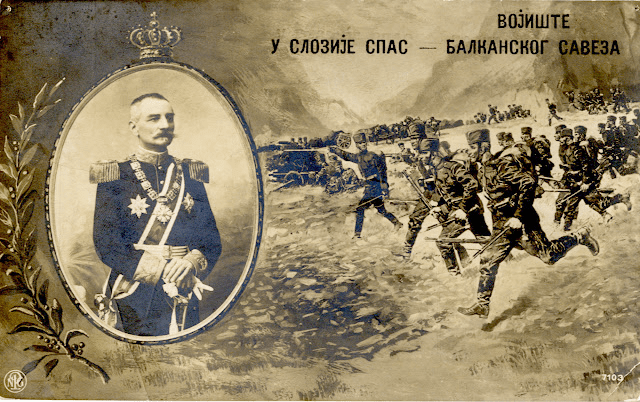
Generally speaking, there is a view among Eastern Europe, particularly among the Slavic speaking nations, that Pan-Slavism is something that unites all Slavic nations under one banner. Serbian Orthodox propaganda, following the Russian propaganda, has sold this dangerous ideology – and Pan-Slavism is not “beneficial” to the Slavic nations nor to Europe or the Balkans.
The origins of Pan-Slavism
Serbian Pan-Slavism began in 1843 with the Polish prince Czartoryski
“The Polish Prince Czartoryski will continue toward the same harmful spirit, and in 1843 he will prepare aspecial memorandum titled “Advices to be followed by Serbia”. During the development of this plan, which in the long terms will be devastating for Albanians, Czartoryski was also informed by renowned Polish poet Adam Mickiewicz, who during 1841 as professor of Slavic literature in “College de France”, held a number of lectures on Serbia and Serbian folklore, where of course myth on Kosovo will occupy an essential place. This marks a period when foreigners started to justifo Serbian territorial claims against lands inhabited by Albanians.”

Polish immigrants and Hotel Lambert
“In the same spirit, Czartoryski, a Polish nationalist, in his capacity as a Minister of Foreign Affairs of the Russian Empire, had drafted a secret memorandum where besides the German federation, he had planned the establishment of independent Poland, which would include largest part of Prussia, and the Ottoman Empire would not be impeded for now but will be forced to accept Tsarist Russia as the protector of Slavs.
The Treaty of Bucharest of 1812, signed between the Russia and the Ottoman Empire, was the first step towards the implementation of this plan that contained autonomy for Serbs. This was the first time in modern period where this act was included within an international agreement.
The Polish prince, who that period (1803-1804) was a Minister of Foreign Affairs of Tsarist Russia, was briefed on the issue of Serbs by the Orthodox bishop of Herzegovina, Arsenije Gagovic, whereas the Serb Archbishop from Austria, Stevan Stratimirovic, submitted a memoran-dum to Russian minister requiring the establishment of a Serb kingdom proposing at the same time a Russian prince as a king of Serbia.
Czartoryski acted in such a pan-slavist spirit and until the Polish Uprising of 1830 he advised all Slav people to be guided and supported only by Russian Empire, but after this period he begun to make a propaganda against the Russian influence.
The aim of Polish patriots consisted in the use of the “Eastern problem” as a way to implement an independent Poland. In fact they reached a conclusion that the Russian Empire and Austria were planning the division of the European part of the Ottoman Empire, in the same way they did with Poland in the past.
In this case Polish immigrants planned creation of a great state of South Slavs, with Serbia as a core of this state, and that the foreign policy of this state will be based on France and Great Britain. Thus, in Balkans was planned the collapse of three empires, Austria, Russian, and Ottoman, and from the ruins of those empires to emerge new states like Poland, Czechoslovakia and Great Serbia. This objective could not be achieved otherwise then through a disastrous war, and final product of such plans was the First World War.”
The disaster of Pan-Slavism
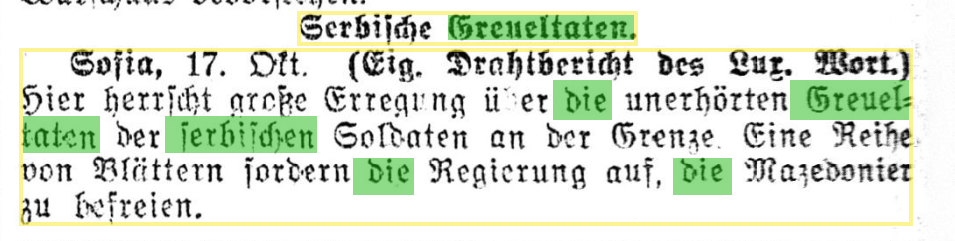
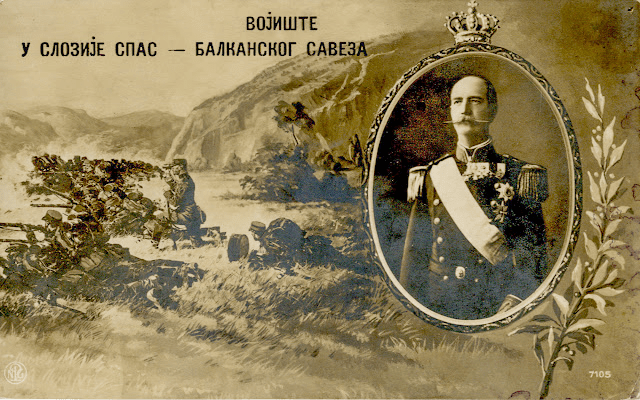
Despite talk of uniting the Slavic world, Pan-Slavism enabled the chauvinist regime of Belgrade and Cetinje to commit many atrocities against other Slavs – Macedonians, Bosniaks and even Croatians through out the 20th century. Not to mention the disaster for the Albanians who saw their territories chopped up by Serbia and Montenegro.
During the Balkan War, Russian and even Czech mercenaries joined the Serbian troops who participated on large scale atrocities.
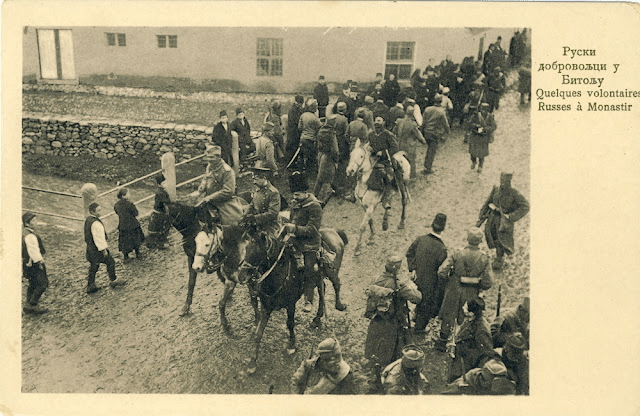
Russian mercenary volunteers in Bitola in 1912.
Pan-Slavism in Croatia
The Serbian Chetnik units were notorious for committing appalling atrocities against Catholic Croatians simply because they would not accept Serbian Orthodoxism. There is much to read on Serbian war crimes in Croatia, who would kill other Slavs just because of Orthodox fanaticism.
Pan-Slavism in Macedonia
The same can be stated on the Pan-Slavist ideology in Macedonia where Serbian troops would commit many atrocities on Macedonians who refused to declare themselves as Serbs.
Pan-Slavism against Albanians in the 18th century led by Dragiše T. Mijuškević
“The hatred of the Slavic peoples for the Albanian population had its origins in the formation of the group of Pan-Slavic movements in Western Europe at the end of the 18th century and the beginning of the 19th century. This movement also drafted Pan-Slavic projects for the Balkans. One of the young Serbs who had established connections with the young Polish, Russian, Slovak, Austrian and North German was Dragiše T. Mijuškević who in 1829 wrote about Albania and the Albanians with hatred. He described the Albanians as savage Muslims and prone to plunder.”1
“The Pan-Slavic alliance had as a platform the occupation of Albanian territories in order to make it impossible to realize the demands of the Albanians. In the circumstances created, the Slavic alliance found Kosovo almost unprotected by the Ottoman Empire.”2
Pan-Slavism in 1839
“The reforms of the Tanzimat in 1839 and the division of the Albanian population on religious grounds, at that time, were for Russia to realize the Pan-Slavic plans for the formation of Slavic states in the Albanian lands.”3
Why is Pan-Slavism a disaster for Slavic nations?
The simple answer is that Pan-Slavism is just a neologism for Russian Imperialism. Russian Orthodox Imperialism has led to invasions of both Poland (ironic) and also to the Holodomor catastrophe in Ukraine, who to this today are fighting against Russians. Pan-Slavism does not seek to unite Slavic nations but to subdue them into the Russian expansionist empire.
Countries affected by Pan-Slavism
Poland – partitions (1772, 1793, 1795), uprisings (1830, 1863), Russification policies
Ukraine – suppression of Ukrainian language and culture, Holodomor (1932–1933), annexation of Crimea (2014)
Belarus – Russification, suppression of national identity
The Baltic States (Estonia, Latvia, Lithuania) – Tsarist expansion, Soviet occupation (1940–1991)
Finland – annexed as a Grand Duchy (1809), Russification, Winter War (1939–1940)
Czechia and Slovakia – Pan-Slavic rhetoric used to influence Slavic populations under Habsburg rule
Serbia and Montenegro – Russian Pan-Slavic propaganda and military support to undermine the Ottoman Empire
Bulgaria – military aid from Russia during the War of Independence (1877–1878), but later Russian dominance
Romania and Moldova – Russian expansion into Bessarabia (1812), political pressure
The Caucasus (Georgia, Armenia, Azerbaijan) – Russian imperial conquests in the 19th century
Central Asia (Kazakhstan, Kyrgyzstan, Uzbekistan, etc.) – imperial conquests in the 19th century, later Soviet repression
Key events related to Pan-Slavism and Russian Imperialism
1815–1848: Early Pan-Slavism – intellectual movements promoting Slavic unity, particularly in Bohemia and the Balkans, with Russia showing both interest and suspicion.
1848: Slavic Congress in Prague – aimed to unite Slavic peoples against German and Hungarian dominance; Russia kept a cautious eye.
1853–1856: Crimean War – Russia’s attempt to expand its influence over the Ottoman Empire; opposed by Western powers.
1863: January Uprising in Poland – brutally suppressed by Tsarist Russia, accompanied by harsh Russification.
1877–1878: Russo-Turkish War – Russia intervenes to support Balkan Slavs (Bulgarians, Serbs) against the Ottomans; the war results in the Treaty of San Stefano and Congress of Berlin (1878).
1905–1907: Russian Revolution – partially a response to imperial overreach and internal oppression.
1914–1918: World War I – Russia claims to defend Slavs (e.g. Serbia), but also seeks imperial gains; Pan-Slavism becomes entangled with imperial ambitions.
1920: Polish-Soviet War – Poland defends itself against Soviet expansionism.
1939–1940: Winter War – Soviet invasion of Finland.
1940–1941: Soviet annexations of the Baltic States – using the Molotov-Ribbentrop Pact as justification.
1944–1991: Soviet domination of Eastern Europe – including Poland, Czechoslovakia, Bulgaria, Romania, and the Baltics under a Soviet sphere of influence.
2014: Annexation of Crimea – modern example of Russian imperial ambition framed by “protection of Russian speakers” narrative.
2022: Full-scale invasion of Ukraine – modern imperial aggression justified with pseudo-historical Pan-Slavic and Russkiy Mir (Russian World) rhetoric.
Pan-Slavism thinkers and promoters
- Pavel Jozef Šafárik (Slovak historian and philologist) – early proponent of Slavic cultural unity.
- František Palacký (Czech historian) – emphasized a common Slavic heritage.
- Mikhail Pogodin (Russian historian) – Pan-Slavist who supported Tsarist expansion.
- Nikolay Danilevsky – author of “Russia and Europe”, argued for Russia as leader of the Slavs.
- Konstantin Leontiev – conservative Pan-Slavist, promoted autocracy and Orthodox values.
Russian Imperial Figures
- Catherine the Great – expanded Russia into Poland, Crimea, and the Caucasus.
- Nicholas I – autocrat, opposed liberalism, promoted Pan-Slavism and repression.
- Alexander II – expansionist in Central Asia and the Caucasus.
- Stalin – used Soviet imperial control over Eastern Europe post-WWII.
- Vladimir Putin – modern champion of Russian nationalism, blending Pan-Slavic themes with the “Russian World” (Russkiy Mir) concept.
References


 Balkan Academia