

Petrit Latifi
Gjeto Çoku was twice a hero: a hero of Albania’s independence from Turkey and at the same time a hero of Catholicism. But both of these were extinguished on Tuesday, October 7, 1913, when at 3:00 PM while walking on the Lezha bridge, the prefect was shot with a rifle by the gendarme and his subordinate, Prengë Kolë Brunga, leaving him dead on the spot.
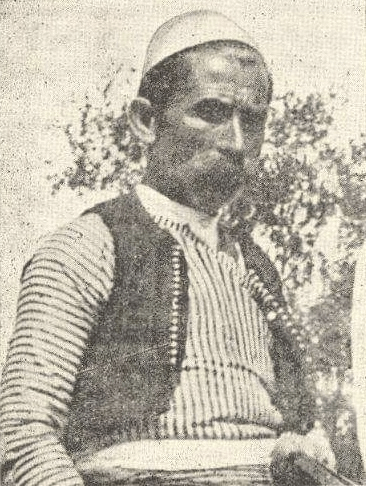
The man who had declared independence from Turkey in Lezha, whom the internationals appointed Prefect of Lezha, after the evacuation of Shkodra from foreign armies, became a victim of the rules of the Kanun. And to think that he was killed by a person who was hired as a gendarme with the intervention of Prengë Bibë Doda. Gjeto Çoku thus became the first Albanian killed in the line of duty in the history of the Albanian state.
Crime Scene
Prengë Kolë Brunga was a gendarme in Shëngjin who felt insulted by an order from prefect Gjeto Çoku to take away his weapon. Brunga’s superiors had reported to the prefect that he had violated the rules as a gendarme, so taking away his service weapon was a measure based on the prefecture’s rules. But this was not the case for the gendarme.
Offended by this decision, with the rifle he was supposed to hand over, he awaited the prefect as he was crossing the Lezha bridge, anger and insult had come together, as, as soon as he appeared, he shot and killed him. The first to report this serious event, while the Albanian state was still in turmoil, was the poet and writer Gjergj Fishta. In the magazine “Hylli i Dritës” he writes:
“On October 7th, a great danger found the Government of Lezha, Malësia e Madhe and, so to speak, the whole of Albania; because on this day Gjeto Çoku, the head of the Government of Lezha, was treacherously killed by a certain Prengë Gjakova, a Mirditas, who came out late in Gjakova and wrote, finally, in the gendarmerie of Lezha”.
But the scene of the murder is brought in detail in his memoirs by his contemporary Sejfi Vllamasi.
“A certain Prengë Kolë Brunga from Blinisht i Mirdita begs Prengë Pasha to find him a job. The latter sends this Gjeto Çoku with a letter of recommendation, who appoints him as a gendarme in Shëngjin, but the gendarme has committed a crime and for this his rifle is taken away as punishment. This person calls himself ashamed and under the influence of habit, to wash away the shame that was done to him, kills the prefect Gjeto Çoku on the bridge of Lezha.”
Lezha and Gjeto Çoku
Edith Duram may be the only foreign visitor who describes the situation in the city of Lezha during the time when Gjeto Çoku was prefect. It is like a rare jewel to have the atmosphere of those days documented.
“June 15, 1913. We went on horseback to Lezha, passing through the villages burned by the Serbs. There we found the Albanian flag flying over the Lezha bridge, as well as the Albanian guard. The city was completely lifeless and the inn was in ruins. The city was patrolled by Dede Coku’s men. The order was perfect. I heard stories about the Serbs who had treated the prisoners cruelly.”
But the murder caused a lot of commotion, not only in Lezha, but throughout Albania, and even abroad. Gjergj Fishta portrayed with poetic notes the first Albanian to be martyred after the establishment of the state.
“Gjeto Çoku was a good Christian, a true patriot, and a just and brave man. Without ever needing anyone, he never saw the axe or sickle in vain, he was the bread of the whole century (bread of the whole century – meaning: he was hospitable; many people ate bread in his house, note of the editorial staff of the magazine Hylli i Dritës); and he was neither sold nor given to anyone, whether to be slaughtered or to pave the way for armies; but, contented (satisfied) with that piece and piece, in which God had placed him, the honor of religion, the name of the Fatherland, and the friend of all good people.”

Burial and blood feud
Gjeto Çoku was buried the day after the murder in Shenkoll and his grave is still there. Ndre Mjeda and Gjergj Fishta were the Albanian personalities who honored him at the ceremony. But the honor was even greater when the Albanologists Franc Baron Nopcsa and Edith Durham also participated. The anger of the Çoku family had reached its peak with the murder of Gheto.
Since the reason had been the Kanun, they also relied on the Kanun, when they remembered that the perpetrator, Prengë Kolë Brunga, had been appointed gendarme by Gheto, after the suggestion and influence of Prengë Bibë Dodë. So the family charged him with the murder. Events took a different course, when six years later the son of the prefect of Lezha killed the deputy prime minister of the government, Prengë Bibë Dodë. Sejfi Vllamasi explains the version, reason and moment of the blood feud as follows:
“Later, Gjeto Çoku’s family blamed Prengë Pasha for this murder, because he had recommended this man to them. On March 22, 1919, Prengë Pasha, deputy head of Turhan Pasha’s government in Durrës, was killed by Gjeto Çoku’s son, Prek Gjeto Çoku, while he was crossing the Mat River with the Englishman Eden.
When the car was shot at from the ambush, Pasha stood up and shouted: Let them kill me, but don’t shoot at foreigners because it is against our custom. Pasha was killed and Consul Eden was wounded in the arm.”
Thus, for a rifle taken away for a gendarme’s fault, two people were killed. More precisely, two of the first statesmen of the Albanian state. Gjeto Çoku, prefect, and Prengë Bibë Doda, deputy prime minister. There was a time when murder in Albania was carried out so easily and without reason, which would accompany this country to our days.
Reference

 Balkan Academia