
Petrit Latifi
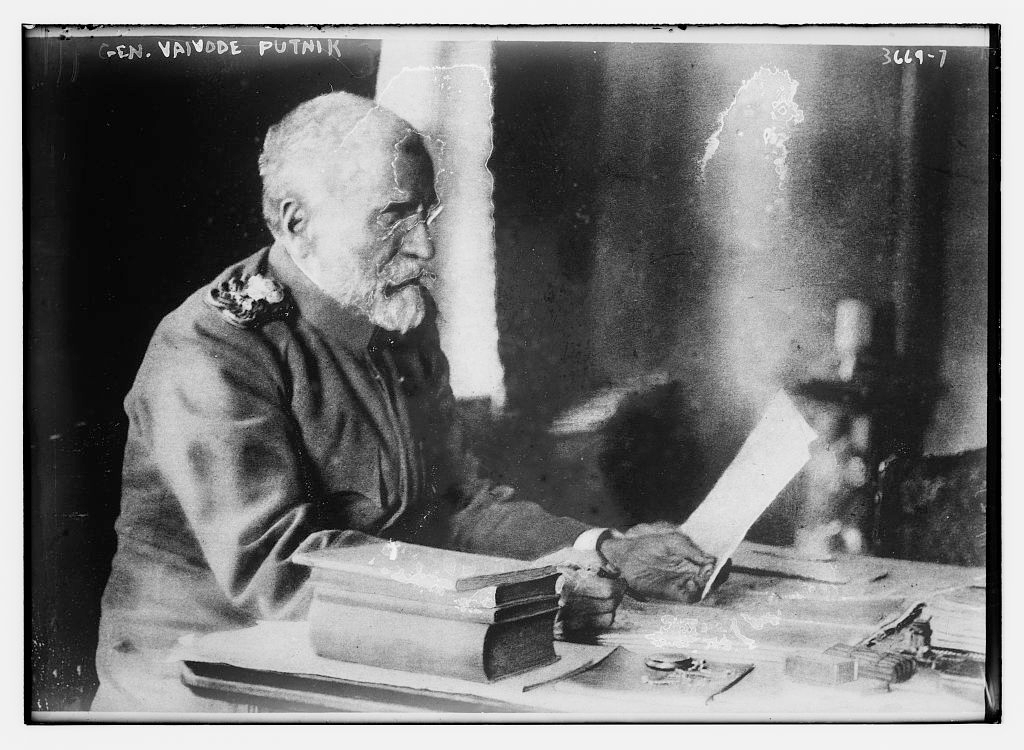
In 1917, Serbian general Radomir Putnik (born 1847) died from disease. The same year, the “Innsbrucker Nachrichten” published a revealing article about Putniks life and his war crimes. The Serb general, having been a staunch proponent of Greater Serbia, was responsible for the massacre of thousands of Albanians during the Balkan War. At the end of his life, he could barely speak and he shaked when moving and coughed convulsively.

Cited from the article:
“The Death of the Serbian Chief of the General Staff Putnik.
“If only he doesn’t die! He has no right to die before the final triumph!” This is how the reporters in the Serbian army often heard the Serbian officers speak during the war. “He was the Chief of the General Staff, was the soul of the Serbian army, was Voivode Putnik. This man was a symbol for the Serbs. In him, as it were, their dream was embodied, which saw the small Serbia of 2.5 million inhabitants grow into a Greater Serbia comprising 12 million people.
It was this dream that Putnik lived for, for which he sacrificed himself, and now he sees the dream curdled, his life’s work shattered, and dies, a long-broken man, in Nice, in a foreign land, while his fatherland has disappeared from the European map until further notice. This is the life tragedy of Voivode Butnik
He may have been alive at the time of his death in the second half of the 1860s. He was born in southern Serbia and a soldier all his life. He received his military training in St. Petersburg and France. After his return home, he became a general staff officer and not long after, reorganizer of the Serbian army.
He was tirelessly occupied with improving his country’s military preparation; he introduced the French cannons and the Mauser rifle into the Serbian army, and he was repeatedly seen at German maneuvers, which he followed with great attention. His fluency in five languages was an advantage on such study trips abroad. Otherwise, Putnik, who was a modest and unpretentious man, kept himself out of the public eye as long as peace reigned, and in Europe his name was unknown to wider circles.
Then came the crisis, the First Balfan War, and now Putnik saw his day dawn. Everything seemed to be going according to his wishes. The campaign against the Turks was a success; he also managed to gain control of his Bulgarian allies, and now all that remained was the first, the main enemy, to be defeated: Austro-Hungary
When the World War broke out, Putnik’s health was already severely deteriorated. His headquarters was for a long time in Kragujevac, in a shabby, whitewashed farmhouse whose furnishings consisted of a table, a couple of chairs, and a telephone. And a bed piled high with pillows. The old man could barely sit. He lay on the daybed, bent over with pain, while he commanded the campaign.
Only rarely did he receive visitors, and when he did, of necessity, one could see that his gait was unsteady, his movements shaky; he was barely able to speak, and occasionally convulsive coughing fits shook his body. Only his sharp, dark gray eyes seemed still alive in the old man’s already half-dead face. His willpower, however, mocked his frailty; And Putnik’s prestige in the Serbian army was so great that he could even carry out measures that ran counter to the will of the entire offensive army and the king.
When our first attack failed, he could perhaps have dreamed that he was now closer to the fulfillment of his wildest hope. But retaliation came; Serbia collapsed, and with it the life’s dream and life’s work of Voivode Putnik.”
Radomir Putniks massaces of Albanians
“To resolve the ethnographic question, during the First Balkan War, he had not hesitated for a moment to have the native Albanians massacred in the conquered Albanian cities, thus transforming an Albanian city into a Serbian one in the twinkling of an eye. But on his deathbed fell the gigantic shadow of the mountains of corpses that his fatherland had been forced to sacrifice to the dream of Greater Serbia.”
Serbian:
Godine 1917, srpski general Radomir Putnik (rođen 1847) umro je od bolesti. Iste godine, „Insbruker Nahrihten“ objavio je otkrivajući članak o Putnikovom životu i njegovim ratnim zločinima. Srpski general, kao vatreni zagovornik Velike Srbije, bio je odgovoran za masakr hiljada Albanaca tokom Balkanskog rata. Pred kraj života, jedva je mogao da govori, tresao se pri kretanju i grčevito je kašljao.
Цитирано из чланка:
„Смрт српског начелника Генералштаба Путника.
„Само да не умре! Нема право да умре пре коначног тријумфа!“ Тако су новинари у српској војсци често чули српске официре како говоре током рата. „Он је био начелник Генералштаба, био је душа српске војске, био је војвода Путник. Овај човек је био симбол за Србе. У њему је, такорећи, отелотворен њихов сан, који је видео како мала Србија од 2,5 милиона становника прераста у Велику Србију од 12 милиона људи.
Управо је за тај сан Путник живео, за који се жртвовао, а сада види како се сан згрушава, како се његово животно дело разбија, и умире, давно сломљен човек, у Ници, у страној земљи, док је његова отаџбина нестала са европске мапе до даљњег. Ово је животна трагедија војводе Бутника.
Можда је био жив у време своје смрти у другој половини 1860-их. Рођен је у јужној Србији и целог живота је био војник. Војну обуку је стекао у Санкт Петербургу и Француској. По повратку кући, постао је генералштабни официр, а недуго затим и реорганизатор српске војске.
Неуморно се бавио побољшањем војне припреме своје земље; увео је француске топове и пушку Маузер у српску војску, а више пута је виђен на немачким маневрима, које је пратио са великом пажњом. Његово течно познавање пет језика била је предност на таквим студијским путовањима у иностранство. Иначе, Путник, који је био скроман и непретенциозан човек, држао се подаље од очију јавности све док је владао мир, а у Европи његово име је било непознато ширим круговима.
Затим је дошла криза, Први балфански рат, и сада је Путник угледао свој дан. Чинило се да све иде по његовим жељама. Кампања против Турака је била успешна; успео је и да стекне контролу над својим бугарским савезницима, и сада је остао само први, главни непријатељ, који ће бити поражен: Аустроугарска.
Када је избио Светски рат, Путниково здравље је већ било озбиљно нарушено. Његов штаб је дуго био у Крагујевцу, у трошној, окреченој сеоској кући чији се намештај састојао од стола, неколико столица и телефона. И кревета претрпаног јастуцима. Старац је једва могао да седи. Лежао је на каучу, погрбљен од бола, док је командовао кампањом.
Само ретко је примао посетиоце, а када би то урадио, из потребе се могло видети да му је ход несигуран, покрети дрхтави; једва је могао да говори, а повремено су му грчевити напади кашља тресли тело. Само су му оштре, тамносиве очи изгледале још увек живе на старчевом већ полумртвом лицу. Његова снага воље, међутим, ругала се његовој крхкости; а Путников углед у српској војсци био је толики да је могао чак и да спроводи мере које су биле супротне вољи целе офанзивне војске и краља.
Када је наш први напад пропао, можда је могао да сања да је сада ближи испуњењу своје најлуђе наде. Али одмазда је стигла; Србија се срушила, а са њом и животни сан и животно дело војводе Путника.”
Радомир Путников масакр над Албанцима
„Да би решио етнографско питање, током Првог балканског рата, није ни тренутка оклевао да масакрира староседеоце Албанце у освојеним албанским градовима, чиме је албански град претворио у српски у трен ока. Али на његовој самртној постељи пала је гигантска сенка планина лешева које је његова отаџбина била приморана да жртвује сну о Великој Србији.“
References
Photos taken from Wikipedia.

 Balkan Academia