
Petrit Latifi
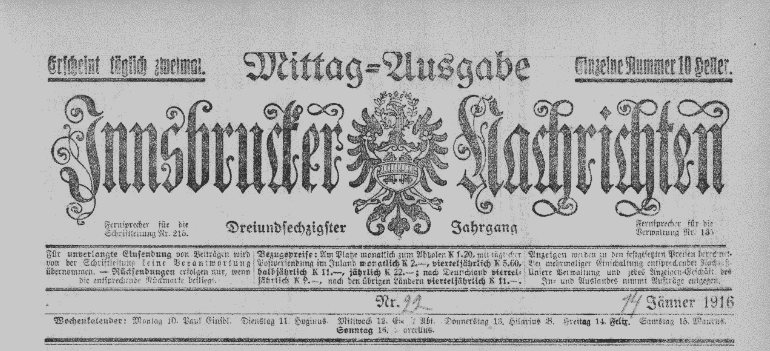
In 1916, the “Innsbrucker Nachrichten” published an article on the history of the mountain of Lovcen near Cattaro. In 1851, the Montenegrins under Njegosh defended the mountain of Lovcen against the Austrian forces. The Montenegrins lost, and had to pay half a million in coins. This left the Montenegrins bitter. The mountain of Lovcen passed to the Austrians up to an altitude of 640 meters.
Cited from article:
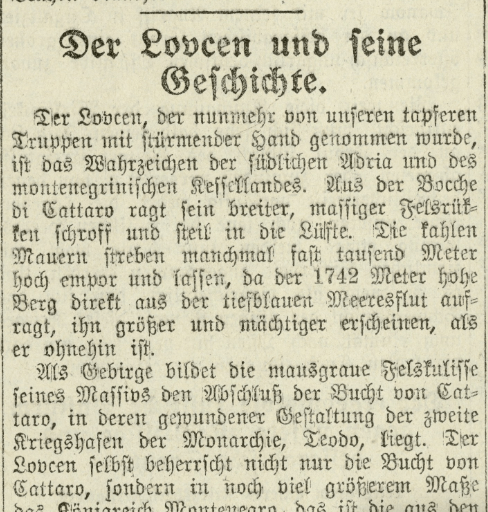
“In 1851, as we learn from the “N. W. Tgbl.”, there was a fight for the first time over Lovcen between Austria and the Montenegrins. The incident ended in a settlement. For half a million guilders in convention coins, the grazing rights on the sea side of Lovcen Mountain were bought from the tribes living around Lovcen, especially the Njegusi. At that time, Lovcen passed into the possession of Austria up to an altitude of 640 meters above sea level. Bishop Peter II. Petrovic, under whose reign this happened, allegedly did not agree with this.”
The Montenegrins were forced to built a road between Cattaro
“When the government proposed to him several years later that the road from Cattaro on the Lovcen to Cetinje be built at their own expense, he brusquely replied: “I will never give my consent to a road being built into the heart of Montenegro that would only serve the enemy.” But economic conditions forced his successor, the first secular prince Danilo I, to have the road to Cetinje built. It became indispensable because the Montenegrins were only able to obtain supplies from Cattaro in the battles against the Turks. Bishop Peter II himself probably recognized this.”
Reference

 Balkan Academia