
Petrit Latifi

Abstract
The paper entitled: “Serbian Massacres in Kosovo 1998-1999 – according to museum material evidence” deals with the subject of Serbian crimes in Kosovo, namely it will focus on the massacres committed by the Serbian occupying forces against Albanian civilians, not sparing even the most sensitive categories of the people, such as children, the elderly and women.
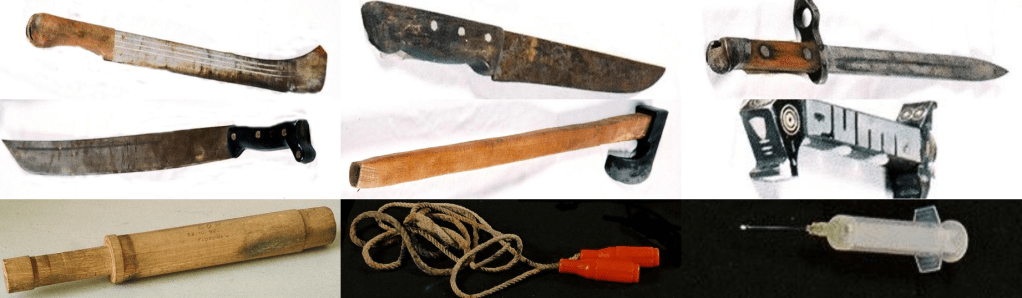
Our paper will focus mainly on the narration of shocking events through museum material evidence, such as: spears, knives, axes, syringes, ropes, barbed wire, underwear of raped women, and the use of all shells of different calibers of Serbian artillery. So, these are some of the authentic material sources, which were used by the Serbian army and police forces, to massacre the innocent population of Kosovo in the most brutal way, for the sole reason that they were Albanians.
A considerable part of the material evidence that refers to the last war in Kosovo, including the Serbian massacres against the Albanian civilian population, is mainly collected and preserved in the museums of Kosovo, with special emphasis on the National Museum of Kosovo. Therefore, we have approached this scientific and professional work from a museum perspective, with the aim of reflecting as much detail as possible this chapter, as painful as it is proud.
Keywords: Massacres, Kosovo, Museum, evidence, crimes, material sources, war, Albanian, civilians, Serbian military forces, etc.
The Albanian people in general and that of Kosovo in particular, throughout history never stopped their efforts for national liberation. During this long journey, full of great sacrifices, many generations and different categories of our people made valuable contributions. In the 40s of the 19th century, Serbian leaders began to think about expansionist plans for the expansion of Serbia, which had their origins even earlier.
On this basis, they also began to build the infamous platform of “Nacertania”, which was implemented in 1844, led by the ideologist of this elaboration, Ilia Garašani, around whom all political leaders would gather, but also those religious ones who were put at the service of this ideology, supported also by conservative Serbian circles. This plan had put the Albanians in the main target who, in fact, suffered violence, historical injustice, displacement and colonization of their lands accompanied by an unprecedented genocide up to attempts for their complete extermination.
The radical turn that favored Serbia was the “Peace of Saint Stephen” and the fragile situation created with the weakening of the Ottoman Empire, when the large displacements of Albanians from their lands began, accompanied by violence and monstrous crimes against them, which never stopped until the last war in 1999.
The use of the most draconian methods such as; continuous state violence and colonization of lands made life miserable for Albanians and ultimately forced them to be displaced, assimilated or killed without trial by Serbian paramilitary phalanxes that acted freely with the permission of state structures.
So, the incitement of the most banal interethnic excesses was done with the specific purpose of having an alibi for the terror that would be exercised against the entire population of an entire region. Unable to face the Albanian resistance, the Serbian army, police and paramilitaries vented all their cruelty against the innocent Albanian civilian population, against women and children, the elderly and adults.
In this massacre, there was no more monstrous method that was not used solely to exterminate the autochthonous Albanian population forever.
The murders and mass massacres caused by the Serbian state apparatus in Kosovo are numerous, all over Kosovo. In relation to this topic, our focus mainly falls on the narration of shocking events through museum material evidence, such as: spears, knives, axes, syringes, ropes, barbed wire, underwear of raped women, and even the use of all the shells of different calibers of Serbian artillery.
So, these are some of the authentic material sources, which were used by the Serbian army and police forces, to massacre the innocent population of Kosovo in the most brutal way, for the sole reason, just because they were Albanians.
A considerable part of the material evidence that refers to the last war in Kosovo, including the Serbian massacres against the Albanian civilian population, which are mainly collected and preserved in the museums of Kosovo, with special emphasis on the National Museum of Kosovo, are the most real evidence that can be seen and touched with your hands, which served the Serbian fascist occupier to commit crimes and massacres in Kosovo during the years 1998-1999.
The material museum evidence mentioned above, I argue to us on another dark side of the coin, where through their use, Serbian criminals have dismembered the bodies of Albanian civilians, cutting off their ears, noses, hands, feet, eyes, genitals, heads, and even removing the most vital organs of the human body such as lungs, kidneys, hearts, etc.
The use of these morbid methods by the Serbian state apparatus, in an organized manner, attempted to instill fear in the Albanian civilian population, in order to subjugate them and force them to give up their cause for freedom and independence. Also, the genocidal Serbian occupying power claimed to desecrate the cultural and national identity, by destroying some of the cultural and historical heritage objects.
From this material evidence we possess; two short swords found in the Arbana neighborhood of Prizren; a knife found in the village of Vërmicë in Prizren; a knife found in the village of Celinë, Rahovec; two swords found in the village of Dresnik, Peja; an axe found in the village of Marec, Prishtina; a knife handle with Russian inscriptions found in the village of Bellacerkë (Fortesë) in Rahovec; a wooden stick found in the Ferronikeli factory in Drenas; a bloody rope and a syringe found in the village of Duhël, Shtime; a traditional Albanian bread basket desecrated and damaged with Serbian nationalist inscriptions, found in the village of Bellacerkë (Fortesë) in Rahovec, a bloody white plis with Serbian nationalist inscriptions (the writing of four “S”), found in Fushë Kosovë; several dozen shell casings of various calibers used by Serbian military and police artillery forces against the Albanian civilian population found in all municipalities of Kosovo where there was war; as well as several pairs of underwear of Albanian women sexually raped by paramilitaries and soldiers of the Serbian forces.
Two short swords: found in the apartment of the criminal Gadaf Demaj from the Arbanë neighborhood of Prizren, educated in Belgrade, Serbia, who was a long-time collaborator of the UDB. He participated in many massacres committed by paramilitaries and regular Serbian military police units in the Prizren region and throughout Kosovo. So according to eyewitness sources, it is said that this criminal known in these parts by the nickname “Gadafi” with these cold weapons massacred many Albanian civilians.
The criminal in question managed to escape the war and after the capitulation of Serbia he fled to Serbia, where he lives to this day. In order to shed light and substantiate the crimes committed during the war by this criminal, information was provided to the National Museum of Kosovo by Enver Rexha, a former political activist of the LKÇK, on 18.02.2001.
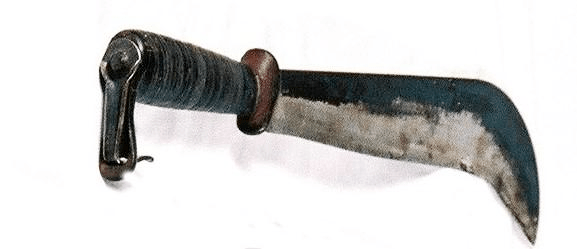

Fig.1. Two short swords found in the Arbana neighborhood of Prizren
Knife: found on the body of an unidentified Albanian civilian woman, in early November 1999, in a place called Vërmicë, a village located between the Albanian-Albanian border, Kosovo-Albania. According to the authentic accounts of witness Xhemshit Krasniqi, who says that Serbian forces killed many Albanian civilians in many places along the border line with Albania, including the case in question.
He further states that: “wherever we have managed to see the murders and massacres committed against Albanian civilians, we have encountered a lot of material evidence, mainly cold weapons. Aware of the value and argumentative importance of the knife, I took it from the scene to testify to the case”. Meanwhile, on June 16, 2001, he donated this exhibit as evidence to the Kosovo Museum.

Fig.2. Knife found in the village of Vërmicë, Prizren
Military knife: found in the village of Celinë, respectively in the Hasanaj neighborhood of Rahovec on March 25, 1999. According to the accounts of witness Sadik Hasani, it is proven that the knife was used by paramilitaries and soldiers of the Serbian forces to kill and massacre Albanian civilians of this village. So, precisely in March 1999, 81 villagers of all ages were massacred.
The witness also emphasizes that the Serbian forces, in addition to killing Albanian civilians, then massacred them by cutting off various body organs, such as: noses, tongues, eyes, heads, hands, feet, and finally taking out all their internal organs, so that in many cases it was impossible to identify your family member. To kill people easily, they usually used firearms, while then they cut and chopped their corpses into the most barbaric shapes possible with cold weapons, just to scare the Albanians and make them suffer as much as possible.
According to witness Sadik Hasani, at the time when the villagers of the village of Celinë were killed, five close members of his family were among them. After the end of the war with the good intentions of contributing to the clarification of Serbian crimes, material evidence including handed over the sword to the Kosovo Museum, as the most competent institution for the preservation and presentation of war crimes on December 10, 2000.

Fig.3. Knife found in the village of Celinë, Rahovec
Two swords: found in the house of a Serb in the village of Dresnik, Klina municipality, in October 1999. According to data obtained by Halit Sahitaj, it is said that the swords were used by Serbian paramilitary and military forces to commit massacres against Albanian civilians in the Peja region.
According to him, the bloody swords are the most authentic and concrete evidence in which the traces of the crime are clearly visible, which the Serbian forces used as the most monstrous methods to show once again that their hatred towards Albanians is pathological and well organized by the state apparatus since the second half of the 19th century, and continuously manifested until the end of the 20th century.
We are saying this because to use such weapons in war to cut and dismember innocent victims, one must be very corrupt in spirit, to the extent of cannibalism or be a mad savage, even more so in this century when the consciousness of man and the civilized world in general had reached a different level, while the mentality of the Serbian occupier had remained below the medieval level.
Both swords were brought to the Museum of Kosovo on December 6, 1999, as evidence to argue the Serbian genocide against Albanians and to inform and educate the younger generations about what happened in Kosovo during the 1998-1999 war.
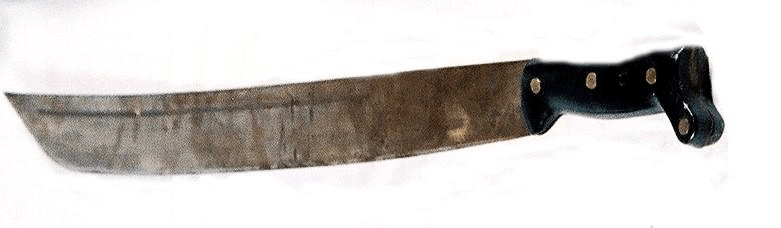

Fig.4. Two swords found in the village of Dresnik in Klina
Axe found in the village of Marec in the municipality of Prishtina, with which the Albanian Faik Vitia was massacred by Serbian police forces in April 1999. According to the data of his close cousin, Behxhet Vitia, who says that the Serbian forces, in addition to being armed and organized in advance with cold weapons, also when they entered the houses of Albanian villages, they killed and massacred them with their work tools, whether agricultural or household, such as axes, sickles, scythes, saws, etc.
And in this specific case, Faik Vitia was massacred with our axes that the villagers mainly used for family needs, namely for cutting trees in the forest or at home. After the end of the war, this exhibit was brought to the museum by Behxhet Vitia, who served as material evidence to present Serbian crimes to the local and especially international public through thematic exhibitions in the museum.
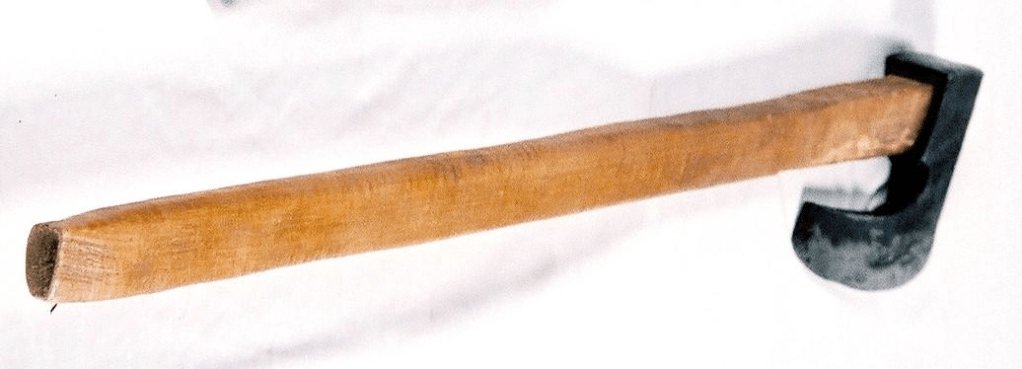
Fig. 5. Axe found in the village of Marec, Prishtina
Knife handle with Russian inscriptions called “DUMA”: found in the house of Avdurrahman Kelmendi’s family in the village of Fortesë, Rahovec. According to his account, on April 24, 1999, Serbian and Russian paramilitary forces, who came voluntarily and as mercenaries from Russia, were stationed in his house from where they sexually raped, killed and massacred many Albanians, among them Nadie Spau from Rahovec, Shaipi with his son from the village of Brestoc, Rahovec and many others.
These crimes are also evidenced by numerous material evidence, including the knife with Russian inscriptions, used by Russian paramilitaries against Albanian civilians, many of whom had participated in the Kosovo war of 1998-1999, as part of Serbian forces. The knife handle is concrete evidence that clearly speaks of the participation and commission of crimes in Kosovo.
It is important to emphasize the fact that, during this time, in the village of Bellacerk (Fortress) of Rahovec, dozens of Albanians from this village were killed and massacred by Serbian and Russian paramilitary forces. The knife handle bearing the Russian name “Duma”, after the war on January 13, 2001, was donated to the Kosovo Museum as historical material evidence to argue the participation and massacres also caused by Russian paramilitaries.

Fig.6. Knife handle with Russian inscriptions found in the village of Bellacerka (Fortesë) in Rahovec
Wooden stick: found in the Ferronikeli factory in Drenas, as a result of research conducted by scientific and professional collaborators of the history sector at the Museum of Kosovo, during the months of November-December 1999, during which, along with many other material evidence, this wooden stick was also found. According to eyewitness accounts obtained from the Albanian community living near this location, they recounted the events that had occurred during the war in this town.
Among other things, they told us what the wooden stick was used for by the Serbian forces. The wooden bat, or as it is popularly known as the “baseball bat,” was used by Serbian forces for mass group and individual beatings of all Albanians who were violently rounded up in the city and gathered at the Ferronikeli factory in Drenas, exactly where the main Serbian forces were stationed.
As a result of the brutal beatings, many Albanian civilians died, while a small number of them remained for always disabled. The brutality went so high that the Serbian criminals, in addition to killing them, then mutilated and alienated their corpses by changing their clothes before burying them en masse. The exhibit in question is an integral part of the war collections, which serve as historical evidence to argue the crimes of Serbian forces against Albanian civilians.
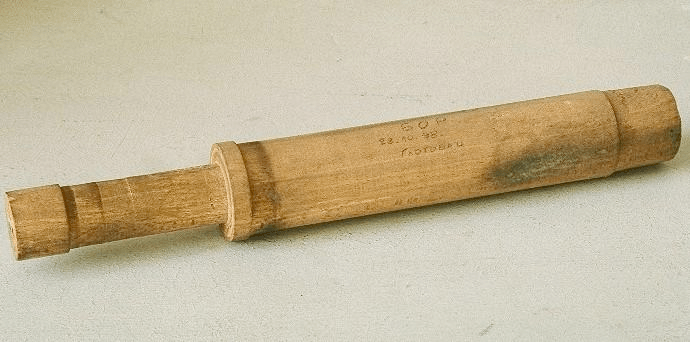
Fig.7. Wooden stick found in the Ferronikeli factory in Drenas
Bloody rope: found in the village of Duhël in Shtime, on July 10, 1999. According to sources received from the Pashtrik Operational Zone, the information sector, under the leadership of superior Halil Çadraku, who confirms that all this material evidence, including the rope in question, was used by Serbian paramilitary and military forces to commit violence and murder against the Albanian civilian population, not sparing even the most vulnerable categories, which were children, women, the elderly and the disabled.
As for the rope, on which traces of the crime are clearly visible, it was used specifically to strangle civilians to death. So, the Serbian barbarians did not leave any method or different means that they did not use to rape and kill Albanians in the most bestial forms. The selection of murders using ropes, barbed wire and other objects was well thought out by the Serbian criminals.
They did this with the claims that the Albanians during the murder process should suffer as much as possible, to scare them into abandoning their homeland and for Kosovo to be populated with Serbian population. The exhibit in question was donated to the Museum of Kosovo as historical evidence on December 9, 1999.

Fig.8. Bloody rope found in the village of Duhel, Shtime
Syringe: According to sources received from the Pashtrik Operational Zone, the Directorate for Information, under the leadership of the KLA superior Halil Çadraku, the syringe was found in the village of Duhel, Shtime on July 10, 1999. According to him, the syringes were used by Serbian paramilitary and military units to drug them so that their actions would be as unbridled and more serious as possible in the execution of crimes committed against Albanian civilians.
This form was mainly applied by Serbian paramilitary units that the Serbian state had organized and mobilized criminals from Serbian prisons, criminals with experience from the wars fought in Croatia and Bosnia and Herzegovina, as well as criminals coming from the criminal world in Serbia and abroad. In other words, all these criminal groups, using drugs and other narcotic substances, tried to eliminate the feeling of spiritual pain and under its influence to rape, kill and massacre the Albanian population of Kosovo.
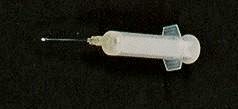
Fig.9. Syringe, found in the village of Duhël in Shtime
Albanian traditional breadboard: damaged and desecrated with Serbian and Russian nationalist inscriptions, found in the house of Avdurrahman Kelmendi’s family in the village of Bellacerkë (Fortesë) in Rahovec. According to his account, on April 24, 1999, Serbian and Russian paramilitary forces who came voluntarily and as mercenaries from Russia, were stationed in his house from where they killed and massacred dozens of Albanian civilians of this village. The numerous testimonies and available materials confirm serious criminal facts, including the breadboard with Serbian and Russian Cyrillic signs.
As Avdurrahman Kelmendi testifies, the breadboard was initially used for normal eating purposes. After they had consumed alcohol, the board was misused for mockery, showing disregard for the ethno-cultural heritage of the Albanians. They wrote nationalist symbols, graphics of naked female figures and finally, they performed shameful acts, even performing physiological needs on it.
Such acts against the Albanian culture and historical heritage have occurred in all municipalities of Kosovo, which also testifies to cultural crimes or as it is known in international terminology, culturocide.
It is important to emphasize the fact that the breadboard with all its characteristic appearance that reflects Serbian and Russian barbarism, in July 1999, after the entry of NATO into Kosovo, was used as evidence against the settlement of the Russians in Rahovec, in addition to many other crimes committed in this region. Meanwhile, on January 13, 2001, the bread sofra was donated to the Museum of Kosovo, as historical material evidence to prove the cultural crimes in Kosovo.

Fig.10. Traditional Albanian bread sofra desecrated and damaged with Serbian nationalist inscriptions, found in the village of Bellacerkë (Fortesë) in Rahovec
The white, bloody shirt with Serbian nationalist inscriptions (the writing of the four “Ss”), of Shefki Halil Dedinca from the village of Lajthishtë (Leshkoshiq), found in his apartment in Bresje, Fushë Kosovë. According to the accounts of Naim Buelnica, Shefki had disappeared during the war in Kosovo by Serbian paramilitary forces on March 7, 1999, and has not yet been found.
Such cases where in the killing of Albanian civilians with white plis on their heads were numerous, this is due to the fact that the Serbian forces were prevented from any cultural and national symbol related to Albanians, so even in the case of the white plis of Shefki Dedinca, four Ss were written, to show their chauvinistic ambition for a greater Serbia. After the end of the war, this relic was brought to the museum by Naim Buelnica, who served as material evidence to present Serbian crimes.

Fig.11. White plis covered in blood with Serbian nationalist inscriptions
(writing of four “Ss”), found in Fushë Kosovë
Dozens of shell casings of various calibers used by Serbian military and police forces against the Albanian civilian population in Kosovo, found as a result of research conducted by scientific and professional collaborators of the history sector at the Museum of Kosovo during the years 2000-2015.
According to eyewitness accounts obtained from the Albanian community living near these locations, they recounted the events that had occurred during the war in their settlements. They, among other things, told us what the various shells of Serbian artillery were used for and by whom.
According to them, in each military base where the Serbian army operated in Kosovo, heavy artillery was used in order to bombard from afar the settlements where the Albanian civilian population had gathered and taken shelter; in fields, mountains, gorges, villages and even cities. As a result of these shells, thousands of Albanian civilians were killed and maimed throughout Kosovo.
The number of deaths from Serbian artillery came mainly from the size of the shells and their volume in the firing. The shells of the aforementioned shells of all calibers, from the smallest to the largest, are factual evidence that reflects the Serbian crimes in Kosovo on a genocidal scale.
The various shell casings, now turned into museum exhibits, within the National Museum of Kosovo, are an integral part of the collections of the 1998-1999 war, which serve as historical facts to argue the crimes of Serbian forces against Albanian civilians.

Fig.12. Dozens of shell casings of various calibers used by Serbian military and police artillery forces against the Albanian civilian population found in all municipalities of Kosovo where there was a war in 1998-1999
Within the framework of Serbian crimes against Kosovo Albanians, a very sensitive segment that occurred in Kosovo during the 1998-1999 war was the rape of an Albanian woman. According to international law and the Statute of the Hague Tribunal, rapes are criminal offenses that are classified as crimes against humanity. Therefore, the terrorist power of Serbia, led by the criminal Milosevic, did not spare even the massive rapes of Albanian women in Kosovo.
20,000 Albanian women were raped
These forms of actions by Serbian criminals were aimed at the political, psychological, moral and spiritual discrediting of Albanians in general and women in particular. Based on information from the field obtained from various witnesses and victims, it turns out that there are more than twenty thousand (20,000) Albanian women raped during the last war in Kosovo. For this dimension of the crimes, we have several photographs, and three pairs of underwear of raped women found in the village of Duhel between the municipalities of Shtime and Suhareka.
Underwear of sexually raped Albanian women:
According to sources received from the Pashtrik Operational Zone, the Directorate for Information, the underwear of sexually raped Albanian women were found in the village of Duhël in Shtime, which borders the municipality of Suhareka, on July 10, 1999. According to the data, the women’s underwear is authentic evidence that proves that during the war in Kosovo, the Serbian army and police sexually raped Albanian civilian women.
In order to shed light and substantiate the sexual crimes committed by Serbian criminals, it was donated to the Kosovo Museum as museum material evidence by Halil Çadraku, former senior KLA commander in the Pashtrik Operational Zone, on February 9, 1999.
Fig.13. Underwear of Albanian women sexually raped
by Serbian military and police forces 1998-1999
Conclusions
The material developed above brings us to the conclusion that the work is a serious attempt to accurately reflect the struggle of the Albanian people for freedom and independence. In order to achieve this cause, it was required to sacrifice many citizens of Kosovo over the years, focusing on the crimes committed on a genocidal scale caused by the Serbian criminal occupying forces, such as; destruction, burning, murders, deportations, rapes, and going to the extreme where even the most sensitive categories of our people were killed and massacred, such as children, women, the elderly and the disabled.
Also, below we present a general summary of the murders, massacres, rapes, deportations, missing and missing patrias, which are listed as follows:
-The number of civilian Albanians killed by Serbian forces in Kosovo is: 9. 525
-The number of martyrs under the organization of the KLA war is: 2. 800
-The number of Albanians missing during the war and missing to this day is about 1. 600
-So the total number of Albanians killed during the war in Kosovo, reaches the figure of about 14.000
-More than 800.000 Kosovo Albanians were forcibly expelled from their homeland.
-The number of municipalities, villages, houses damaged and burned by Serbian forces during the war
in Kosovo 1998-1999, are: 29 municipalities, 100 villages, 99. 362 houses.
-The number of damaged educational, cultural, health and public service facilities are:
Educational and training facilities 534, number of health facilities 240, number of cultural (heritage) facilities, 869, number of public service facilities 407.
Thus, thanks to the resistance of the Albanian people of Kosovo over the years, the KLA war and the NATO intervention led by the USA, made it possible for the more than 100-year-old Serbian crimes and massacres against the Albanians of Kosovo to be stopped and Kosovo to move on in its historical course.
Sources and Literature:
Archives of the National Museum of Kosovo, Pristina
Albanian Academy of Sciences-Institute of History, “History of the Albanian People II”, Toena Publications, Tirana, 2002
PhD. Besnik Rraci & Dr. Sadik Krasniqi, “The Patriotic Activity of the Hero Sali Çekaj”, Publisher, National Museum of Kosovo, Prishtina, 2022
Nysret Pllana, “The Terror of Invading Serbia on Albanians 1844-1999”, Prishtina, 2001
Mikel Ndreca, “87 YEARS, State Terror and Genocide (1912-1999)”, Prishtina, 2001
Mr. Sadik V. Krasniqi, “The War for the Liberation of Kosovo (1997-1999)”, Prishtina, 2009
Luljeta Selimi, “Shocking Confessions (Women Raped During the War in Kosovo)”, Prishtina, 2003
Mr. Tefik Morina “Historical Mosaic”, Prishtina, 2011
Catalog of the thematic exhibition entitled: “Kosovo Drama”, officially opened on June 12, 2000, in the premises of the Museum of Kosovo in Prishtina.
Newspaper “Koha Ditore”, June, 1999, Prishtina
Museum collection of evidence of war crimes in the MCR
Field work reports, during research research in collecting material evidence of the war between the years 2000-2015, History Department, Museum of Kosovo, Prishtina.
Working report, “List of material evidence of the war 1998/99”, History Department at the Museum of Kosovo, Prishtina.
Oral statement of Enver Rexha, Prizren.
Oral statement of Xhemshit Krasniqi, Prizren
Oral statement of Sadik Hasani, Celinë-Rahovec.
Oral statement of Halit Sahitaj, Çifllak-Rahovec
Oral statement of Behxhet Vitia, Marec-Prishtinë
Oral statement of Avdurrahman Kelmendi, Bellacerka (Fortress), Rahovec
Oral statement of Halil Çadraku, Prizren
Oral statement of Naim Buelnica, Fushë Kosovë
Original article
https://gazetadielli.com/masakrat-serbe-ne-kosove-1998-1999-sipas-deshmive-materiale-muzeore/

 Balkan Academia