
Author: Dr. Nikola Loka. Translation: Petrit Latifi
The Russo-Turkish War (1876-1877) was a serious event for the Ottoman Empire. The main objective of the Russian army was the occupation of the city of Plevna. On December 10, 1877, after a six-month resistance, the Ottomans surrendered. At this time, the Serbian army marched and occupied 6 cities, increasing the Serbian territory (Grbić, 2007:15).
Serbia, Montenegro and Romania had entered the war against Turkey. The Serbian army carried out combat operations in the sector of Nis, Pirot, Prokuplje, Leskovci and Vranje, with the aim of territorial expansion at the expense of the Albanians. In the Sanjak of Nish, the population in the villages was Albanian, while in the cities it was mixed with Turks and Serbs.
Engaged in a war on several fronts, Turkish forces were not resisting Serbian forces who were carrying out ethnic cleansing of the occupied territories. Serbia wanted to put the Ottoman Empire before the fact, by conquering and clearing with war the territories they claimed to receive with the peace treaty that would follow the Turkish defeat.
While the regular Turkish army was retreating in an almost organized manner, the Albanians themselves fought and hit the Serbian army, wherever they could. In the war of 1877-1878, the main force against Serbia consisted of Albanians, who came mainly from Kosovo and Macedonia.
The Albanian forces had 72 units with 550 men each
They were organized into 72 units, with 550 men each (Jagodić, 1998). The local Albanians from the districts of Prokuplë, Kurshumli and Leskoci were not organized in military formations, but fought independently. Divided into small groups, they defended each village and each house, protecting its own threshold. This was the reason why their villages were “cleansed” so thoroughly (Jagodić, 1998).

The Albanian attack in Dragachevo
Fighting broke out on December 15, 1877, following a Russian request for Serbia to enter the conflict. The invading Serbian forces everywhere encountered armed Albanian groups. On December 19, 1877, the Albanian self-defense forces encountered a Serbian company, commanded by Captain Millan Stojanovic and Lieutenant Sima Petrovic. The Serbs were attacked in Dragachevo by a small unit of 30-40 Albanians.
The Albanian attack in Kastra against the Serbian forces
The fighting lasted more than half an hour. On January 11, 1878, a battle took place in Kastra between a unit of Albanians and Serbian soldiers. The Albanians were reinforced with 200 fighters, who received Aleksinci’s battalion. Another 100 Albanians came to help, who attacked the Serbs only with jatagans and they immediately started to retreat.
The Serbs sent in support the second battalion of Aleksinci, who stopped the disorganized Albanians, who repeated their attack with knives, and both of these battalions began a rapid and irregular retreat. Behind them was the field battery of Qiriqi, which on that occasion attacked the ranks of the Albanians with grenades, while the Serbian soldiers quickly retreated, since the artillery battery, due to the intermittent terrain, could no longer stay there, as it could be taken prisoner.
The Battle of Kosanica
In those battles, 12 soldiers were killed, 19 wounded and 2 missing from the Serbian side. The next day, on January 17, around 9:30 in the morning, two battalions: of Levak and of Temik with the artillery battery were placed on the edge of Kosanica. When they approached the designated point, they were attacked by the Albanians, who were hiding in the woods on fragile ground.
A long war took place there. The Serbs attacked with all their might to destroy and drive them away, but the Albanians, mad with their habits, attacked with jatagans from all sides, which caused the Serbs to retreat with continuous fighting.
Albanian forces reached Vilikë
The Albanians, after passing to the vicinity of the village of Vilikë, stopped the war and returned to their places, which was also done by the soldiers of Jagodina, who had occupied the position the night before. In this conflict, 13 were killed, 57 were wounded and 49 Serbian soldiers disappeared (Koha Jonë, February 21, 2018).
Serbian forces encounter Albanian refugees
During the further advance towards Kurshumli, the Serbian troops encountered the Albanian refugees, who were scattered throughout the adjacent mountains. While retreating, they resisted the Serbs and refused to surrender (Hadži-Vasiljević, 1905:653). In the battles of December 11, 12, 22, 25, 26 and 31, 1877 in Kurshumli, the Serbs had a total of 130 killed and 136 wounded (Koha Jonë, February 21, 2018).
The Albanian clash with the Serbs in Kurshumli
Kurshumlia was captured in the first days of January 1878 by the united Albanian forces of Prizren, Podrimë and Luma, but due to the lack of artillery, they had to face a new attack from the enemy, who must have had 30 cannons on that line. The clash with the Serbs in Kurshumli was unfortunate for the Albanians.
On the Serbian side, three and then six infantry battalions were initially engaged, along with cavalry and artillery, against five Bajraks from Podrimja, about 2,500 men, who took the fight with momentum, but after a short resistance they retreated with about 40 dead and wounded men (Čeku, 2022:181).
Battle of Kurshumli
The Albanian refugees had reached the southern slopes of Kopaonik. Meanwhile, the Turkish forces tried to break into the valley of Toplica, to send help to the besieged Nish, so the area around Kurshumli turned into a battlefield. In the battles fought on January 11, 16, 19 and 22, 1878, the Serbs had 216 killed and 785 wounded in the Morava army.
So the losses were 346 soldiers killed and 921 soldiers and officers wounded, losses that swallowed Samakova and Kurshumlia. In those battles, mostly, Çaçak’s army stood, which lost 300 of its men (Koha Jonë, February 21, 2018).
After surrounding Nish, the Serbs sent a part of the forces to the South Morava valley, towards Leskoci. The Muslims left the city as soon as they heard that the army was approaching. They went south, towards Vranje and Skopje (Kanic, 1986:238). A large part of the escaped Albanians were forced to stay in the mountains.
They expected the Serbs to be expelled from their villages, but Nishi was captured by the Serbs and the Turks retreated, so the refugees could not return to their homes (Jagodić, 1998). The Muslims of Nish did not resist the Serbian army, but only retreated together with the regular Turkish troops (Jagodić, 1998).
After the occupation of Nish, the Serbian troops were divided into two groups. The first was to advance to the southwest, in the valleys of Toplica, Kosanica, Pusta Reka and Jabllanica (tributaries of the South Morava), while the second was to go south, down the valley of the South Morava, to conquer Vranje and then return to the west. Their common task was to infiltrate Kosovo. Both directions passed through the regions inhabited by Albanians (Jagodić, 1998).
The army’s progress in the southwest was very slow, due to the hilly terrain and constant fighting with the local Albanians, who had sheltered their families in the neighboring Radan and Majdan mountains and then returned to defend their villages. Faced with strong resistance, the Serbs were forced to conquer the Albanian settlements one by one.
Due to a fierce resistance, the Albanian villages remained completely empty. The refugees were slowly retreating to Kosovo, across the Golak mountain. They eventually reached the region of Pristina, which turned out to be their final destination (Hadži-Vasiljević, 1905:659).
The army operating in the southern direction had to penetrate from the side of two canyons: Gërdelica (between Vranje and Leskovci) and Veternica (southwest of Gërdelica). After the battles for Gërdelica and in front of Vranje, the Serbs took this city.
The Albanians defended the Veternica canyon, while their families took refuge in the Golak mountain. The local Serbs also took part in the fighting, who showed great hostility towards the Albanians, burning their houses, looting and chasing them. The Albanians on the right bank of Morava, in the region called Masurice, did not resist and remained in their villages (Jagodić, 1998).
The rapid penetration of the army and units of Serbian volunteers into the lands inhabited by Albanians, which reached Graçanica and Lipjan, was stopped after the armistice agreement between the representatives of the Russian and Ottoman armies, which was signed in Edirne on January 31, 1878 (Stojanćević, 1977:115).
After the war ended, the Congress of Berlin recognized those territorial gains and the lands became part of the Kingdom of Serbia, known as Novi Krajevi/Novi oblasti or the new provinces. The main cities of the acquired territories were: Nishi, Piroti,
Vranja, Leskoci, Prokuplja and Kurshumlia. The so-called new areas were given the last legal form by a special law, in the form of the counties: Nish, Vranje, Pirot and Toplicë (Svirčević, 2007:111).
Serbian ethnic cleansing of Albanians
In the territories they occupied, the Serbs carried out ethnic cleansing. Almost all Muslims, with the exception of some Roma, were expelled from the Morava Valley region, where there were hundreds of Albanian villages, as well as a significant percentage of the Albanian population in the cities of Prokuple, Leskovc and Vranje (Malkolm, 2001: 237).
After losing their lands, the Albanians addressed the Sultan through a telegram. They demanded that he clarify “if the government sought to protect the people from the enemy, or if it had sold that territory”. In Pristina, the debates reached very serious statements between the governor Refat Pasha and the leaders of the Albanians.
The Albanians spoke of “treason on the part of the government bodies” and Rifat Pasha had to allow the representatives of the Albanians to inspect the stocks of weapons and ammunition, to convince them that there were no Martins or other rifles with rear feed. (Čeku, 2022:183).
The Albanian resistance had been sometimes organized and sometimes spontaneous, but not supported by the Ottoman forces, which had signed the capitulation and were ready to give up Albanian territories, on the condition that they keep their territories, mainly Istanbul. The Treaty of Saint Stephen is the Turkish capitulation, the biggest consequences of which fell on the Albanian territories.
The Albanians did not agree with the results of the war in the sandjak of Nis. In mid-February 1878, the Serbian government notified foreign diplomatic missions about the problems the Albanians were causing south of the border. Belgrade, by exaggerating the details of events of this type, tried to present this issue as dangerous even though the border was almost decided.
Information from the Ministry of Foreign Affairs of the Government of Serbia indicated that “a significant number of Albanian forces had crossed the border, penetrating towards Kopaonik”. According to Belgrade, “the Albanians had caused great damage with their destructive attacks”. This was the reason that the Serbian army had made available 6 battalions, which were committed to follow these armed Albanians from the territory of Serbia (Čeku, 2022: 189).
The removal of Albanians from their lands in the sandjak of Nish caused them to concentrate mainly along the demarcation line, which they often crossed, causing conflicts with the Serbian border guards. Such skirmishes became quite frequent in April and May 1878.
After the Congress of Berlin, the situation in the border area was still tense. In June 1879, the Albanians also attacked the city of Kurshumli. The Serbian government protested near the High Gate, but its complaints remained unanswered (Kanic, 1986:334-335).
After the expulsion of the Albanians, Serbia had sent teams to populate that part of the acquired territory with colonists, before the Congress of Berlin was held. The teams for the formation of municipalities and the registrars, among other things, wrote: “Here all the villages were Albanian, now they are deserted, burned and ruined, that’s why municipalities cannot be formed”.
However, despite this, official Serbia hastily started colonizing those settlements with the Slavic element, brought from different countries such as: Serbia, Montenegro, Bosnia, etc. On this occasion, the Serbian government and the new Serbo-Slavic settlers looted all the property of the Albanians.

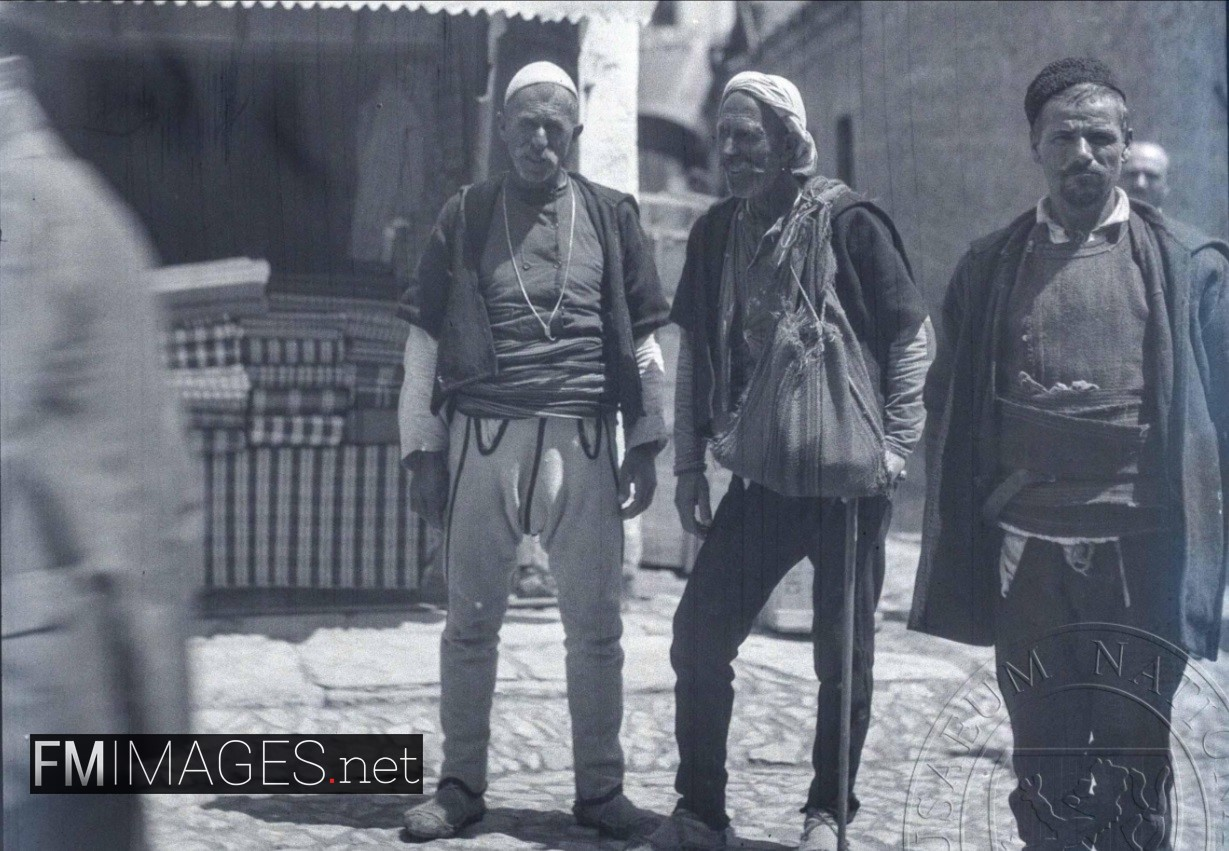
Albanians of Nish, 1891. Source: FM Images Albania.
Literature
Czech, Ethem. Albanians, 1830-1908) “Artini” publications, Pristina 2022.
The rare testimony, Serbian author’s book in 1877: How we expelled and killed the Albanians from Nish, Our Time, February 21, 2018.
Grbić, Meho. Bosnia and Herzegovina 1878 – 1945 Islam, War and Politics, (Lund University, 2007),
Hadži-Vasiljević, Jovan. “The movement of Arnaut during the Serbian-Turkish wars of 1876 and 1877/1878” Ratnik, 59, 1905, p. 659.
Jagodić, Miloš. The Emigration of Muslims from the New Serbian Regions 1877/1878, Balkanologie, Vol. II, n° 2, 1998, https://journals.openedition.org/balkanologie/256
Kanic, Felix. Serbia, country and population II, Belgrade, 1986.
Malcolm, Noel. Kosovo, a short history, Daily Time and Book House, 2001.
Stojancevic, Vladimir. “The mission of General Milojko Leṥjanin in San Stefano before the conclusion of the Russian-Turkish Treaty of 1878. Godine, Belgrade City Yearbook, Book XXIV, 1977.
Svirčević,Miroslav. The Establishment of Serbian Local Government in the Counties of Niš, Vranje, Toplica and Pirot Subsequent to the Serbo-Turkish Wars of 1876–1878, Balcanica XXXVII, Serbian Academy of Science and Arts, 2007.
Vasiljević, Jovan Hadži. “The movement of Arnaut during the Serbian-Turkish wars of 1876 and 1877/1878” Ratnik, 59, 1905.
Original article

