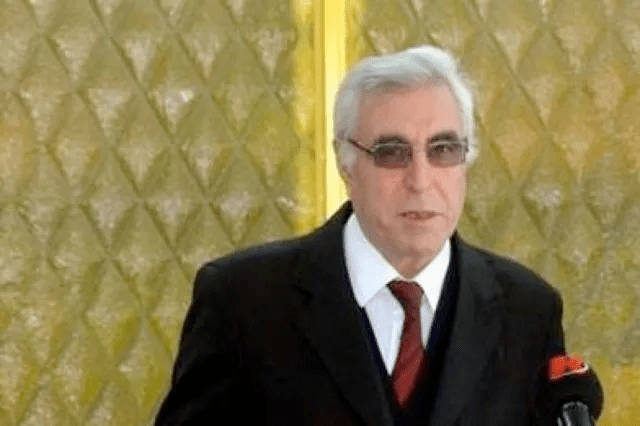

Petrit Latifi.
According to Albanian author Xhelal Zejneli, the Serbian government owes the Albanian nation of Kosovo 22 billion euros in war reparations. The following is taken from Zejnelis article from 2011.
“During the 1999 war in Kosovo, Serbia committed crimes. Although 22 years have passed since then, many questions have remained unanswered to this day.
The Serbian army, police, paramilitary units or phalanges:
– committed murder;
– killed civilians;
– killed children;
– killed helpless people;
– executed civilians;
– committed rape;
– expelled the civilian population from their homes;
– created mass graves;
– burned corpses;
– threw corpses into the river;
– lost track of the victims;
– burned houses;
– destroyed the property of the civilian population;
– destroyed other assets of Kosovo.
According to international law, the above-mentioned killings are considered and defined as war crimes, or crimes against humanity.
According to the Humanitarian Law Center, presented in the “Kosovo Book of Remembrance” (LKK), during the 1999 war, 10,812 Albanians were killed or disappeared. The above figure was derived from the analysis of 31,600 documents from various sources. The data also comes from statements by victims and witnesses of war crimes.
During the Kosovo war, the Serbian army, police and paramilitaries killed 1,133 Albanian children.
The number of Albanian civilians killed by the army, police and Serbian paramilitary units by municipality:
in Gjakova – 1,022 people; in Skenderaj – 984 people; in Glogovec – 804 people; in Rahovec – 724 people; in Peja – 561 people; in Pristina – 466 people; in Prizren – 464 people; in Vushtrri – 451 people; in Suhareka – 434 people; in Mitrovica 417 people.
Despite this recorded number of people killed by Serbian security forces, 21 years after the end of the Kosovo war, 1227 Albanian civilians are considered missing and nothing is known about them.
A report by the UN Refugee Agency (UNHCR) states that 862,979 refugees left Kosovo between March 23 and June 9, 1999. An OSCE report states that 863,000 civilians were expelled from Kosovo between March and June 1999. Amnesty International points out that by the end of the war in Kosovo in June 1999, more than half of Kosovo’s civilian population was living in refugee camps in Albania and Macedonia.
The International Committee of the Red Cross and the Kosovo government’s Commission on Missing Persons, based on requests from their families, have recorded 6,057 cases of missing persons. These persons are recorded as missing. The tragedy of most of them has been solved, but for 1,647 persons, nothing is known to this day.
The Kosovo authorities, as well as international non-governmental organizations, report that about 80% of the persons who disappeared during the war were men aged 18 to 40. The rest are aged 41 to 60. It should be added that there have also been cases of abductions and disappearances of persons over 60 years of age.
4,300 dead Albanians in Serbian mass graves
After the end of the war, a large number of mass graves were discovered in Kosovo and Serbia. The documents of the Hague Tribunal show that in the indictments against those accused of war crimes committed by the Serbian side, 529 mass graves have been identified since March 2000. Most of them are in Kosovo. The bodies of 4,300 killed people were found in these graves.
Mass graves
After the Kosovo war, several mass graves were discovered in Serbia. According to Belgrade sources, there are seven mass graves in Serbia. The bodies of Albanians who were killed in Kosovo were found in them. The largest mass grave was discovered in Batajnica near Belgrade. The mortal remains of about 930 Albanians were discovered in this polygon of Serbian special units.
According to UNIMK data from 2001, 744 mortal remains of murdered Albanians were discovered in the Batajnica mass grave. That same year, 61 mortal remains of Albanians were found in the Petrovo Selo mass grave in eastern Serbia. In 2001, a mass grave with 84 bodies was discovered in Lake Peručac. In 2013, the mortal remains of 52 people were found in Rudnica, located near the Kosovo-Serbia border crossing in Jarina.
In 2020, a mass grave was discovered in Kiževak near Raška with the mortal remains of 17 people believed to be Kosovo Albanians. As can be seen, the Kiževak mass grave was discovered 21 years after the end of the war.
There is no doubt that the Serbian authorities had information about the locations of the mass graves, but they have been deliberately silent about it. There has been a lack of political will to make mass graves public. Every aggressor throughout history has concealed crimes committed against the civilian population of the attacked and occupied country.
The director of the HLC, Natash, also speaks about the murders, kidnappings and disappearances of civilians in Kosovo from June 15, 1999 to the end of December 2000.
Sexual violence by Serbian forces in 1999
During the 1999 war in Kosovo, it is estimated that there were around 20,000 victims of sexual violence committed by the army, police and Serbian phalanxes against Albanian women. The former president of Kosovo, Atifete Jahjaga, also spoke about this before the US Congress.
To this day, no one has responded to the rapes committed in Kosovo by the Serbian occupiers. By 2018, 1,050 women had submitted a request to verify the status of a person who had been sexually assaulted during the war in Kosovo. This included abuse or sexual violence committed within the period from 27.02.1998 to 20.06.1999.
Data on sexual violence in Kosovo committed in the aforementioned period is provided by the Commission for the Recognition and Verification of the Status of Violators, established by the government and which officially began its work in February 2018. The Center for the Rehabilitation of Torture Victims also operates. Many cases of sexual violence have previously been handled by non-governmental organizations.
Destruction of civilian property
The destruction of civilian property by Yugoslav, or Serbian, forces in 1999 is also noted in a post-war report by Human Rights Watch. Citing a UNHCR survey from November 1999, this organization reports that about 40% of residential homes in Kosovo were severely damaged or completely destroyed.
Out of a total of 237,842 homes, 45,768 were severely damaged, while 46,414 were destroyed. The Serbs also damaged schools and religious buildings. According to the damage assessment carried out by the United Nations, out of 649 schools in Kosovo, more than a fifth were severely damaged and more than 60 percent were completely destroyed.
The European Union was responsible for Pillar IV, which dealt with reconstruction and economic development. After the war, within the framework of the UNMIK mission, for a period of three years, to rebuild war-torn Kosovo, it had estimated a cost of at least 4 billion dollars. The issue of compensation for war damages should be an important part of the dialogue that resumed in 2020. In this dialogue, the issue of missing persons should also be discussed insistently.
Damages cost up to 22 billion euros
According to studies by Kosovo economic experts, Serbia caused Kosovo damages during the war in the amount of about 22 billion euros. This includes damages caused to the public sector, the private sector, and the pension fund. Citizens’ deposits, etc. were also included.
During the war, great damage was also caused to the private sector. Belgrade, Washington and Berlin should know that private property is inviolable and protected by the Convention on Human Rights and Freedoms. Washington, Berlin and London should also be aware of the above.
There is no normalization of relations with Serbia, no good neighborliness with it, until Belgrade resolves the issue of the missing, apologizes for the murders and executions, repents and apologizes for the children killed and executed, pays war damages or war reparations. There is no normalization of relations, nor an open Balkans until Serbia recognizes Kosovo’s sovereignty, territorial integrity and independence. There is no good neighborliness with Serbia, until Belgrade puts an end to its clerical-fascist policy.”
Reference
https://gazetadielli.com/kosova-dhe-permasat-tronditese-te-krimeve-serbe/

 Balkan Academia