
Author: Petrit Latifi. Published by Qazim Namani. Original book by Selami Pulaha.
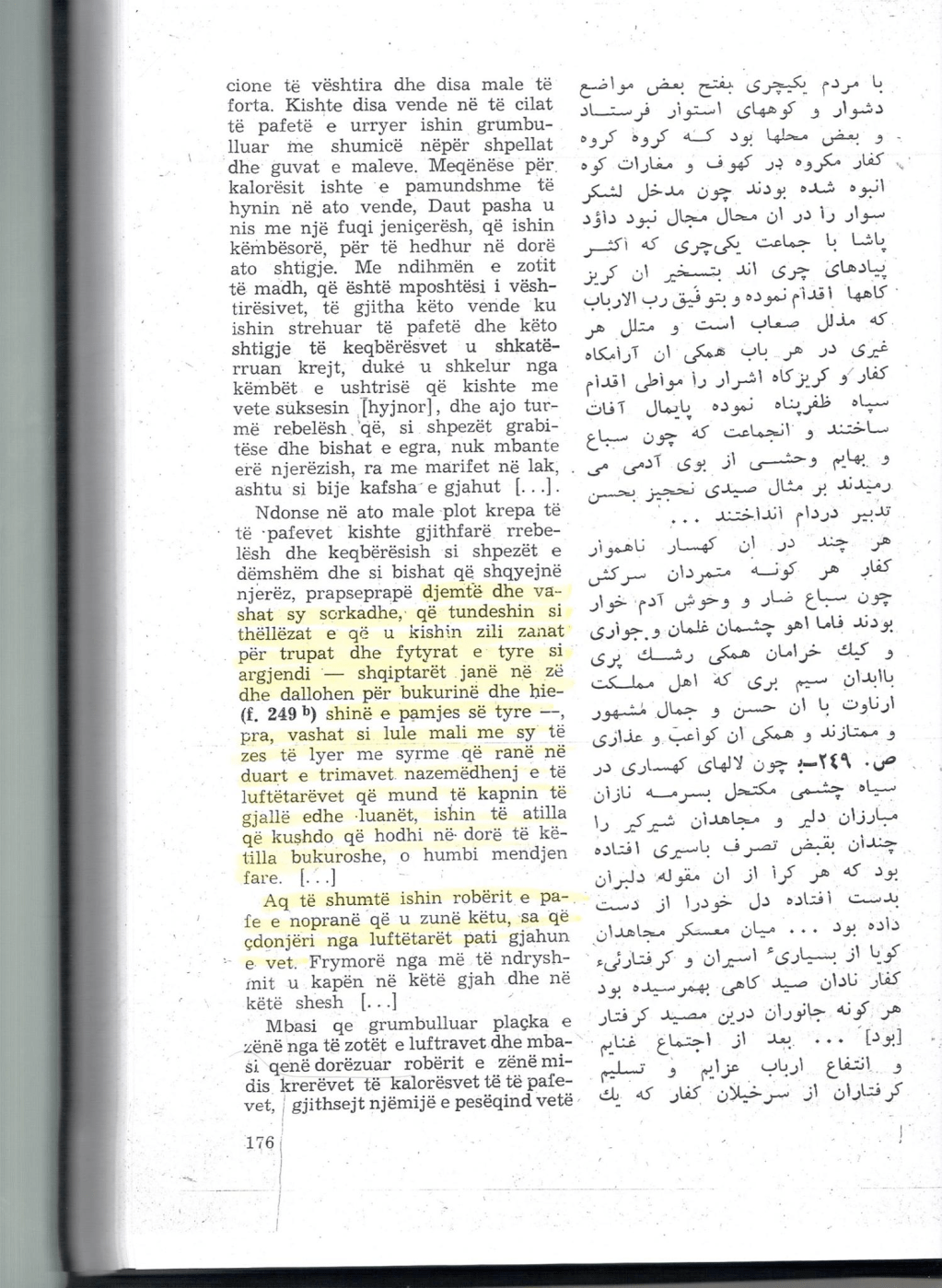
In this book titled “Burimet osmane te shekullit 15 per pushtimin e tokave shqiptare”, (“Ottoman sources of the 15th century during the invasion of Albanian lands)”, translated by Selami Pulaha in 1968, and published by historian Qazim Namani, we can read of Turkish atrocities against Albanians in the pages 176-177. The author, an Ottoman chronicler, writes with hatred against the Albanians of the time.
Albanians captured before the Sultan
“[…] of the prominent infidels, all of whom were brought bound on the day of their appearance before the sultan. Without waiting, in the midst of that crowd, the soldiers saw the son of the ruler of the Albanians bound. Although this was known, since they were already established in their infidelity and in their hostile attitude, not one of the captives wanted to show it.”
Albanians in chains
“He himself did not appear for fear that he was the son of the ruler. [Therefore] due to their stubbornness and disrespect for the royal order, the necessary order and the decree of inevitable fate were issued that all these ominous infidels as well as that renegade son of that infidel should be executed, by binding their necks loaded with shackles and wrapped in chains with the iron of a hardened palladium.”
Booty from the Albanian villages
“As for the beautiful women and boys, and the captured and plundered booty, the soldiers set aside the royal fifth and the remainder of these infidels and kept it for themselves as a tribute fixed for them. As winter was approaching and the prosperous herald of autumn was warning of the attack of the swift army of winter, it was deemed necessary that the victorious banners should be turned towards the seat of the caliphate. […]
Albanian “infidels” in caves
“… difficult places and some strong mountains. There were some places where the hated infidels were gathered in large numbers in the caves and crevices of the mountains. Since it was impossible for the cavalry to enter those places, Daut Pasha set out with a force of Janissaries, who were on foot, to seize those paths.”
All refugee places were destroyed
“With the help of the great God, who is the conqueror of difficulties, all these places where the infidels had taken refuge and these paths of the evildoers were completely destroyed, being trampled under the feet of the army that had [divine] success with it, and that crowd of rebels who, like birds of prey and wild beasts, did not smell of men, fell by cunning into the snare, just as a game animal falls […].
“Albanians are famous and distinguished for the beauty and charm”
“Although in those mountains full of infidels crevices there were all kinds of rebels and evildoers like harmful birds and beasts that tear people apart, still the boys and girls with red eyes, who fluttered like partridges and whose bodies and faces were envied by the fairies like silver, Albanians are famous and distinguished for the beauty and charm of their appearance, that is, the girls like mountain flowers with black eyes painted with mascara who fell into the hands of brave men and warriors who could capture even lions alive, were such that whoever got their hands on such beauties, or lost their minds altogether. […]
… So many were the infidel and pagan captives who were captured here, that each of the warriors had his own prey. Spiritualists of the most diverse kinds were captured in this hunt and in this square […] After the spoils taken from the warlords had been collected and the captives taken had been handed over to the heads of the infidel knights, a total of one thousand five hundred people.”

 Balkan Academia