
Petrit Latifi
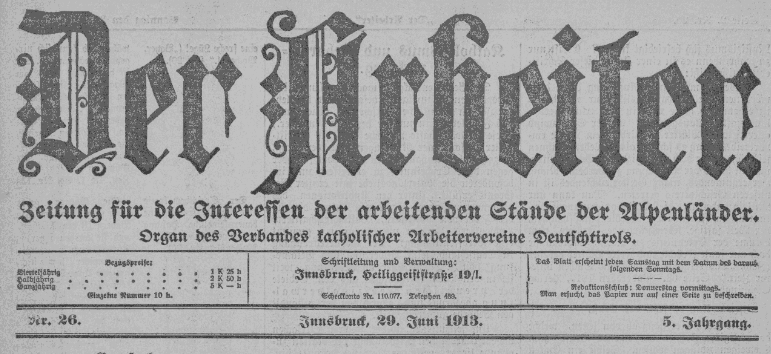
In 1913, the “Der Arbeiter” paper published an interesting article on the Albanian military troops serving abroad in Europe. The author calls the Albanians “The Swiss of the Balkans” and refutes the claim that Albanian troopers were undisciplined, unteachable and uncontrollable.

“The Swiss of the Balkans.
As is well known, German and Swiss mercenaries and guards regiments formed the core of the French and Dutch armies for centuries, and there was hardly a battlefield in the 18th century from which the blows of Swiss troops had not been struck.
What Switzerland and the Swiss were in the Middle Ages, Albania and the Albanians are in the Balkans. Just as the rugged Alpine landscape of both countries has many things in common, the two mountain peoples are also related in their spirit of peace and bravery; no wonder that the Albanians, too, were often recruited as soldiers in earlier times.
During the Napoleonic campaigns of Anjang in the 19th century, many foreign troops were enlisted in England’s service, including two fine battalions of Arnauts, a force whose usefulness in mountain warfare was hardly surpassed. They had originally been formed under Russian flags from the Ionian Islands; then taken into English pay, they were assigned to Lord William Bentina’s army, participated in many expeditions, and always performed well.
After the peace, they were dismissed; no one wanted the Arnauts to enter the service of the Ionian Free State, as their original purpose would have been. England feared this warlike military force, which might possibly sympathize with the population, and wanted to be sure of its rule over the Ionian Islands.
At Capodistria’s suggestion, the Russian government endeavored to secure the entry of Albanian troops into the service of the King of Naples. It was remembered that recruited troops under the name of Macedonian regiments had long formed the best part of the Neapolitan army, and that Emperor Charles V, in particular, had defeated the revolt of the Sicilian barons with the help of these regiments.
Thus, a suitable career could now be opened to the Albanian mountaineers and their desire for military activity abroad. However, the proposal was rejected by the Neapolitan government, presumably under the influence of England and Austria.
The above facts teach us that the claim of Albanian, or rather anti-Austrian, politicians that the Albanians were unteachable and undisciplined was refuted a hundred years ago by the attitude of the Arnaut battalions in English service.
We are just as happy about this as we are about the fact that the Balkan War brought freedom to the Albanians and that these “Swiss” of the southeast, or, as they have also been called, these “Tyroleans of the Balkans,” no longer need to fight for a foreign cause, as they did under the Hamidian regime, but only for their own vital interests”.
Reference

 Balkan Academia