
Petrit Latifi
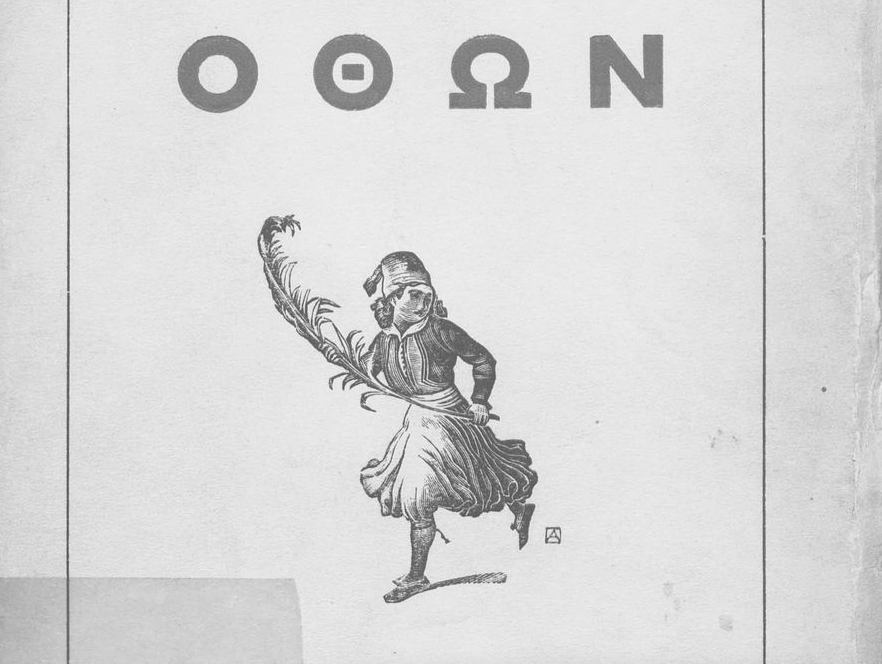
“When King Otto of Greece arrived in Greece in 1833, he could barely hear anyone speaking Greek, so he asked: ‘Where are the Greeks in Athens?’ His courtiers looked at each other and replied: ‘There are no Greeks, but do not worry because this Albanian population will always be loyal to your monarchy”. This according to Zaharias Papantoniou, in his book “King Otto”, Dimitrakou Publishing House, Athens, 1934, p.
This quote, placed in a real historical context, reinforces some often-silent truths of official history: when Otto landed in Greece (officially in 1832), the country had been devastated by the war for independence (1821–1829), and the city of Athens, still undeveloped and largely uninhabited, was inhabited mainly by Arvanites, Orthodox Albanians who had been settled in Greece since the Middle Ages.
The Greek language was not yet dominant in cities like Athens, while the Albanian element not only had a pronounced linguistic and cultural presence, but also constituted the main fighting force that supported the formation of the modern Greek state. These data, although often overlooked by national narratives, are also confirmed by other historical and documentary sources.
Papantoniou, with his characteristically critical and sharp style, places this reality at the center of his historical irony, showing a clash between the “European” expectations of the Bavarian king and the multi-ethnic and linguistic reality of the newly formed Greece. Furthermore, the statement about the “loyalty of the Albanian population” to the monarchy is a clear allusion to the role of the Arvanites in maintaining internal stability and their contribution to the establishment of the state.
This perspective reminds us that the construction of national identities is not a simple and linear process, but often a careful selection of collective memory and the erasure of elements that do not fit the official narrative. Works such as Papantoniou’s offer a rare opportunity to read between the lines of history, and to rediscover the traces of communities that have significantly influenced it, but that have often remained in the shadows.
Zaharias Papantoniou’s “King Otto”, published in 1934 by the Dimitrakou Publishing House in Athens, represents one of the most unique attempts to describe with irony, but also with a critical eye, the beginnings of the modern Greek state under the rule of King Otto of Bavaria. Among the many episodes that shed light on the political and social aspects of that time, a short but extremely significant fragment serves as a starting point for reflecting on the ethnic and linguistic structure of Athens at the beginning of the 19th century:
Footnotes
1.Zaharias Papantoniou, King Otto, Dimitrakou Publishing House, Athens, 1934, p.
See Aravantinos, Chronographia tou Vasileiou tis Ipeirou, Ioannina, 1856; also: John Petropoulos, Politics and Statecraft in the Kingdom of Greece, Princeton University Press, 1968.
Fitchett, J.E.S., The Greeks and the Idea of Nationalism, Cambridge, 1979; also: Nicholas Doumanis, Before the Nation: Muslim-Christian Coexistence and Its Destruction in Late-Ottoman Anatolia, Oxford University Press, 2013.

 Balkan Academia