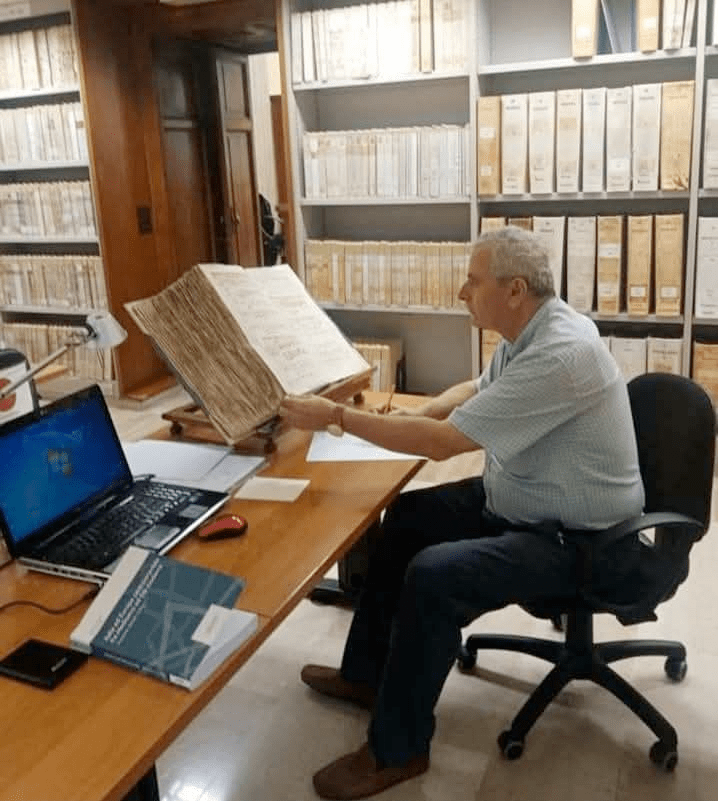

Written by Dr. Mark Palnikaj. Translation Petrit Latifi
Introduction
A few days ago, I read a post on social media written with inter-ethnic, and indirectly, religious hate tendencies.
I feel it is my duty to present a historical overview of the relations among the tribes Nikaj, Mërtur, Krasniqe, Gash, Bytyç, and Berishë.
Through my studies—primarily focused on the Nikaj and Mërtur regions, in the best archives of Albania and several other countries—I have examined thousands of historical documents (mostly in foreign languages), which clearly shed light on these relationships.
I will begin this clarification from the year 1500 onward.
1500–1650: Religious Unity and Peace
- Up to 1650, all these tribes were of the Roman Catholic faith.
- There were no religious wars and no tribal conflicts where one banner fought against another.
1650–1700: Forced Conversions and Ottoman Repression
- After 1650, some villages in Has and later some families in Bytyç converted to Islam.
- The main reason was severe violence by the Ottoman occupiers, who forced their religion, culture, and customs on the local population.
Population Records of 1671
- According to the census by Shtjefën Gaspri (preserved for 350 years in the Propaganda Fide archive, and published bilingually by me in 2020 in Tirana):
- 581 Catholic households
- 4045 Catholic inhabitants
- No Muslim or other religious families
The War of 1689
- Austrian forces led by General Pikolomini, supported by Bishop Pjetër Bogdani, fought the Ottomans.
- Around 20,000 Albanians joined—Catholic, Orthodox, and Muslim alike—fighting as Albanians, not divided by faith.
- After a cholera outbreak (possibly spread by Ottomans as a biological weapon, though unproven), the coalition lost.
- The Ottoman reprisals were brutal: massacres of civilians, including women, children, and the elderly. Many survivors fled to Croatia, Austria, and Transylvania, never to return.
1700–1830: Migrations, Conversions, and Coexistence
- Tribes Gash and Krasniqe suffered forced displacements to the Llap region of Kosovo.
- Some families survived in Luzhë and through the Kolmekshaj clan, who accepted partial conversion to Islam in exchange for staying in their lands.
- By 1830, mixed faith communities existed—families often had both churches and mosques, with interfaith marriages common.
- Property transfers gradually expanded the Kolmekshaj settlements.
1760–1800s: Church Records and Inter-Tribal Ties
- Church registers (births, marriages, deaths) survive from:
- 1760 – Shala Church
- 1818 – Nikaj Church
- These records meticulously note origins, family lineage, and intermarriage between tribes.
- Evidence shows extensive kinship ties: marriages, godparenthood, and friendships across Gash, Krasniqe, Shalë, Shosh, Nikaj, and Mërtur.
- Over four centuries, no large-scale tribal wars occurred among these six tribes—only isolated disputes, sometimes even within the same tribe.
1912–1920: From Ottoman to Serbian Occupation
- After Albanian independence, Serbian forces replaced the Ottomans in Kosovo.
- Between 1914–1920, they carried out genocide and forced displacements in Rugova, Peja, Gjakova, Gash, and Krasniqe.
- Refugees fled to Pukë and Shkodër, where they were received hospitably by Nikaj, Mërtur, Thaç, Berishë, and Malzi populations.
- While isolated dishonorable acts occurred, they were condemned as individual misconduct, not tribal policy.
1920–1944: National Struggles and Local Governance
- Under the Albanian state, Nikaj and Mërtur remained connected to the Highlands of Gjakova, due to economic, geographic, and kinship ties.
- Gjakova’s market was closer and more affordable than Shkodër.
- Agricultural poverty forced migration: many Nikaj and Mërtur families moved into Kosovo and neighboring regions, where they integrated with other tribes.
1944–1990: Education, Administration, and Social Mobility
- From these two tribes alone, 730 individuals completed higher education by 1990.
- 43 became engineers (mechanical, electrical, civil, geological, forestry, chemistry).
- 42 studied medicine, pharmacy, or dentistry.
- Many studied abroad in Europe.
- A large number held leadership roles in local administration, economy, and the Party apparatus—something not equally true for Catholic tribes of Shala and Shosh (under Shkodër jurisdiction).
Social Integration
- Over 500 Nikaj-Mërtur families relocated to various villages (Dojan, Gri, Cerrnicë, Llugaj, Bukovë, Nimaj, etc.) between 1945–1990.
- Local populations welcomed them, showing generosity and tolerance—no landowner expelled or harmed newcomers, despite land tensions.
1990–Present: Memory, Identity, and Misconceptions
- Since the political changes of the 1990s, some individuals have spread claims that Nikaj and Mërtur were oppressed by the Muslim-majority tribes (Krasniqe, Gash, Bytyç, Berishë).
- Others propose that Nikaj and Mërtur should separate administratively from Kukës Prefecture and join Shkodër.
Clarifications
- Historically (1500–today), Nikaj and Mërtur have always been part of the Highlands of Gjakova, except for brief periods of administrative reorganization (e.g., under Bushatllinjtë, Austrian occupation, or during Zog’s regime).
- Economic, cultural, and kinship ties bound them to Gjakova more than Shkodër.
- Religious differences never erased marriage alliances, kinship ties, and shared celebrations (St. Nicholas, St. Stephen, Our Lady of Mërtur).
Conclusion
- For five centuries, despite religious changes and external pressures, the tribes of Nikaj, Mërtur, Krasniqe, Gash, Bytyç, and Berishë maintained peaceful, cooperative, and kinship-based relations.
- Archival records confirm there was no history of inter-tribal wars—only sporadic disputes.
- These relations should serve as a model of coexistence for Albanians in Albania, Kosovo, and North Macedonia.
Thank you,
Dr. Mark Palnikaj
Tirana, August 28, 2025

 Balkan Academia