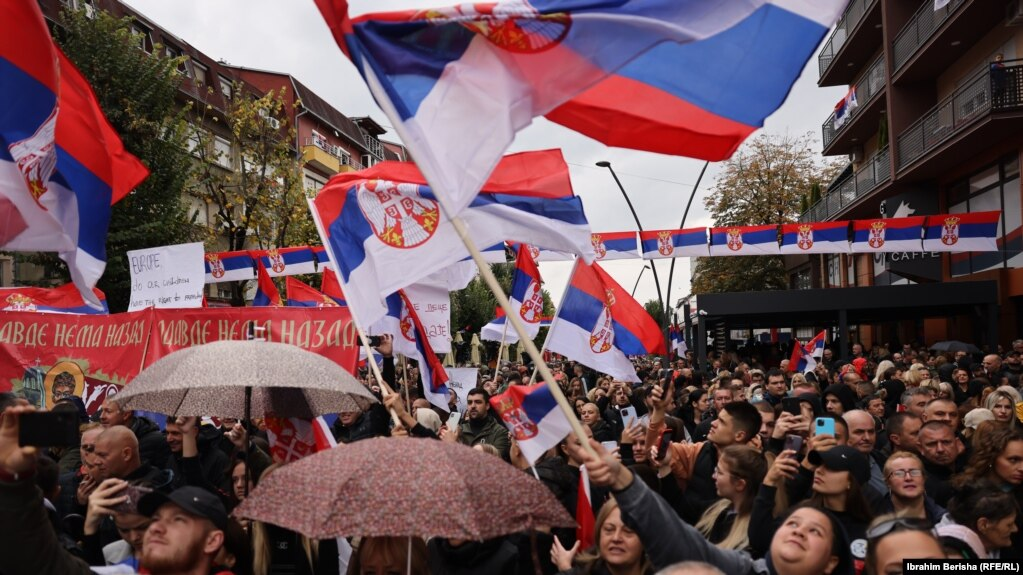

Albanophobia, or anti-Albanian sentiment, is widespread in Serbia. Hatred of Albanians is most often associated with the Serbian-Albanian conflict. Even today, all Serbian portals, newspapers and televisions speak ill of Albanians. They use the word “Šiptar”. It is a racist-terrorist word that means that Albanians are a bad race for Serbs.
Albanophobia is reflected in negative stereotypes and prejudices, as well as in discrimination against members of the Albanian people. Albanophobia can take the form of racism, if it is linked to the belief that Albanians belong to an inferior race.[1][2] According to some, anti-Albanian sentiment is also reflected in the use of the term Šiptar (sq. Shqiptarë), the Slavicized form of the Albanian ethnonym, which, in addition to its negative connotation in the Serbian language, is also considered an offensive word.[3][4]
Throughout history, many Serbian intellectuals have proposed various anti-Albanian projects, including Jovan Cvijić, Vaso Čubrilović, Ivo Andrić, and others.[5] Serbian writer and analyst Mirko Đorđević says: “Hundreds of memoranda have been made, plans for the solution of the Kosovo issue. When you look through this solution, whether communist, state or church, you will notice that all these plans were to solve the Kosovo issue in such a way that there would be no Albanians there.”[6]
History
Principality of Serbia
Vladan Đorđević, a Serbian statesman, considered Albanians an inferior race.[7][8][9]
The beginnings of anti-Albanian propaganda in Serbia date back to the late 19th century and are related to the territorial claims of the Serbian state to the Albanian-inhabited territories of the Ottoman Empire.[7] After the Serbo-Ottoman War and the territorial expansion of the Principality of Serbia in 1878, the Albanians were forcibly expelled from the newly conquered territories (mainly from the Toplica District, once populated by Albanians) and the burning of Albanian villages and neighborhoods.[10]
Although many prominent Serbs of the time opposed the expulsion of the Albanian population,[11] the head of the Serbian government Milan Piroćanac said: “if we leave them here, they will cause us problems”.[12]
Kingdom of Serbia
Jovan Cvijić, a Serbian academic, defended the Kingdom of Serbia’s access to the sea through the territories of the Ottoman Empire inhabited by Albanians, through present-day Albania.
Kingdom of Yugoslavia
Vaso Čubrilović, a Serbian academic, elaborated on the expulsion of the Albanians.
SFRY Period
After the Informbureau resolution in 1948, Albanians in Yugoslavia were treated as hostile elements and spies of Enver Hoxha’s Albania.[13] Aleksandar Ranković, the head of the Yugoslav state security, was particularly harsh towards Albanians.[13][14]
Contemporary Period
From the 1990s, thanks to the propaganda of the Milošević regime, Albanians became the greatest “enemy” of Serbs.[3][8] The Serbian Orthodox Church has also contributed to the spread of Albanophobia.[15] Writing about Albanians, church authors mainly emphasize their crimes, describing them as rapists and abusers.[16][17][18][19]
A 1998 public opinion poll in Serbia showed that a third of respondents were in favor of a violent solution to the “Albanian problem”, 16% of respondents were in favor of “cleansing” the Albanians, “isolating” them in a large concentration camp or “destroying them with an atomic bomb”, the remaining 17% proposed forcible expulsion.[20] During 1998 and 1999, the Serbian government carried out a campaign of ethnic cleansing of Albanians from Kosovo, known as Operation “Horseshoe”.
Professor of history at the Faculty of Philosophy in Belgrade, Olivera Milosavljević, says that today’s Serbian intellectuals mainly write about Albanians according to the stereotype that Albanians have an “innate” hatred of Serbs, which according to them is a product of the dominant “characteristics” of Albanians, “primitivism” and “banditry”.[8]
Dobrica Ćosić, a Serbian academic and former president of the RSJ, has, according to some interpretations, called Albanians “the moral filth of the Balkans”.
Also carriers of hatred against Albanians in Serbia are various extremist associations and fan groups. Extreme hatred against Albanians is openly displayed in the stands of football stadiums and at rallies of pro-fascist organizations, such as the Patriotic Movement Fytyra, through slogans:
“Ubij, zakolji da Šiptar ne postoji” (sg. Kill and massacre, so that there are no Albanians), “Srbija Srbima, Šiptarima sekira” (sg. Serbia to Serbs, axe to Albanians) and similar ones.[21][22] As well as “Ubij Šiptara” (Kill the Albanian) and “Ubij Hrvata da Šiptar nema brata” (Kill the Croat, so that the Albanian has no brothers)[23].
Even today, you can find Serbs hating on Albanians in songs, videos and social networks. These are usually full fo hateful comments with historical lies, with false and racist propaganda. In Italy, there were pages that talked about Serbian hatred of Albanians.[24][25]
But some of the Serbian ultra-nationalists went to the point of declaring Albanians – or at least the northern part of them – “brainwashed Serbs”, despite the fact that Serbs came to the Balkans millennia after Albanians lived there.[26]
References
- ”Albanci u regionu”. Albanci u regionu.
- ”Širi se akcija protiv govora mržnje i diskriminacije”. Širi se akcija protiv govora mržnje i diskriminacije.
- ”Vladimir Arsenijević, Naše crnje”. Vladimir Arsenijević, Naše crnje.
- Jovan Ćirilov, Albanac ili Šiptar”. Jovan Ćirilov, Albanac ili Šiptar.
- Isterivanje Albanaca i kolonizacija Kosova V (Institut za istoriju Kosova, Priština)”. Isterivanje Albanaca i kolonizacija Kosova V (Institut za istoriju Kosova, Priština).
- ”Zašto se u crkvi šapuće, II epizoda”. Zašto se u crkvi šapuće, II epizoda.
- ^ Olivera Milosavljević: Stereotipi srpskih intelektualaca 20. veka o „nama“ i „drugima“
- Akademik Ćosić među repatim Albancima
- ”Vaso Čubrilović: Manjinski problem u novoj Jugoslaviji”. Vaso Čubrilović: Manjinski problem u novoj Jugoslaviji.
- ”Isterivanje Albanaca i kolonizacija Kosova I (Istorijski institut u Prištini)”. Isterivanje Albanaca i kolonizacija Kosova I (Istorijski institut u Prištini).
- ”Isterivanje Albanaca i kolonizacija Kosova III (Institut za istoriju Kosova, Priština)”. Isterivanje Albanaca i kolonizacija Kosova III (Institut za istoriju Kosova, Priština).
- ”Bora Ćosić, Albanci i ja”. Bora Ćosić, Albanci i ja.
- Decenijsko šiptarko nasilje i zulum
- Četvrt veka golgote kosovskih Srba
- Napadi na srpske svetinje i pravoslavne vernike na Kosovu
- Govor mržnje: Quo vadis, Srbijo?
- https://www.eastjournal.net/archives/93172=.
- https://www.notiziegeopolitiche.net/serbia-in-corso-campagna-mediatica-anti-albanese-odio-etnico-sui-principali-giornali/.


 Balkan Academia