

The German newspaper “Figaro” published in 1860 a satirical article ridiculing Serbias political dependence and inner instability, stating that local lords were often changed, and the military was not independent. The article also states that the Serbian population was pressured to pay Ottoman taxes. This may reflect the actual reality of Serbia at the time, seen from European newspapers in the 1860s, which may challenge to the modern day narrative that Serbia was an independent strong kingdom.
Caricature
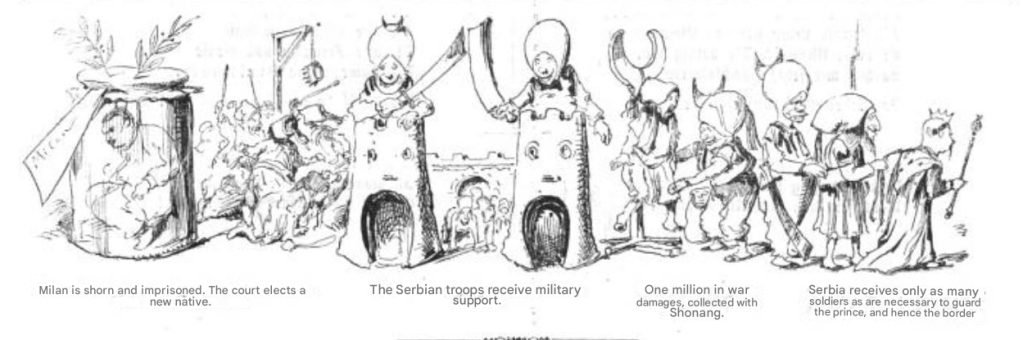
Message
Deposed and preserved leadership – Prince Milan Obrenović is ridiculed as “pickled” and stored away, symbolizing Serbia’s unstable monarchy and the disposability of its rulers.
Ottoman domination and exploitation – Serbian unrest is shown to result only in stronger Ottoman garrisons and the forced extraction of heavy war indemnities.
A powerless army – Serbia is allowed only as much military strength as needed to guard its prince, ridiculing the idea of national defense and underlining the country’s political impotence.
From left to right:
“Milan is shorn and imprisoned. The court elects a new native.”
“The Serbian troops receive military support.”
“One million in war damages, collected with Shonang.”
“Serbia receives only as many soldiers as are necessary to guard the prince, and hence the border.”
Another article in the volume mentions that Prince Milan was depressed when Viennese correspondents did not want to work for him

“Telegram from the theater of war in Belgrade, July 14. Prince Milan has made the most brilliant offers to several correspondents from Viennese newspapers staying here, in order to persuade them to join the Serbian General Staff, as they always know how to work out in their newspapers exactly how the Serbian-Montenegrin military force should proceed against Turkey. Unfortunately, they have refused, as they say they do not want to plunge Germany into any embarrassments and must also reserve their strategic insight for their fatherland just in case. Prince Milan is very depressed about this.”
Reference

 Balkan Academia