
by Lulzim Osmanaj. Translation Petrit Latifi
”Amalthea, or “maltheia”, can be translated as “mountain fairy” from the union of the words “mael” – meaning mountain – and “dea” or “thea” – meaning goddess.
Thus, Amalthea emerges as the “mountain goddess”, a figure who embodies the connection between nature, the divine and the protection of new life.
The immigration of the Pelasgian foreigners, that is, born of the sea, and the Hellenes, that is, born of the land, from the north is undoubtedly an ancient process, and with it came the importation of foreign gods into Greece.
Only the Giants can be considered truly autochthonous, although they too settled there earlier than the Titans.
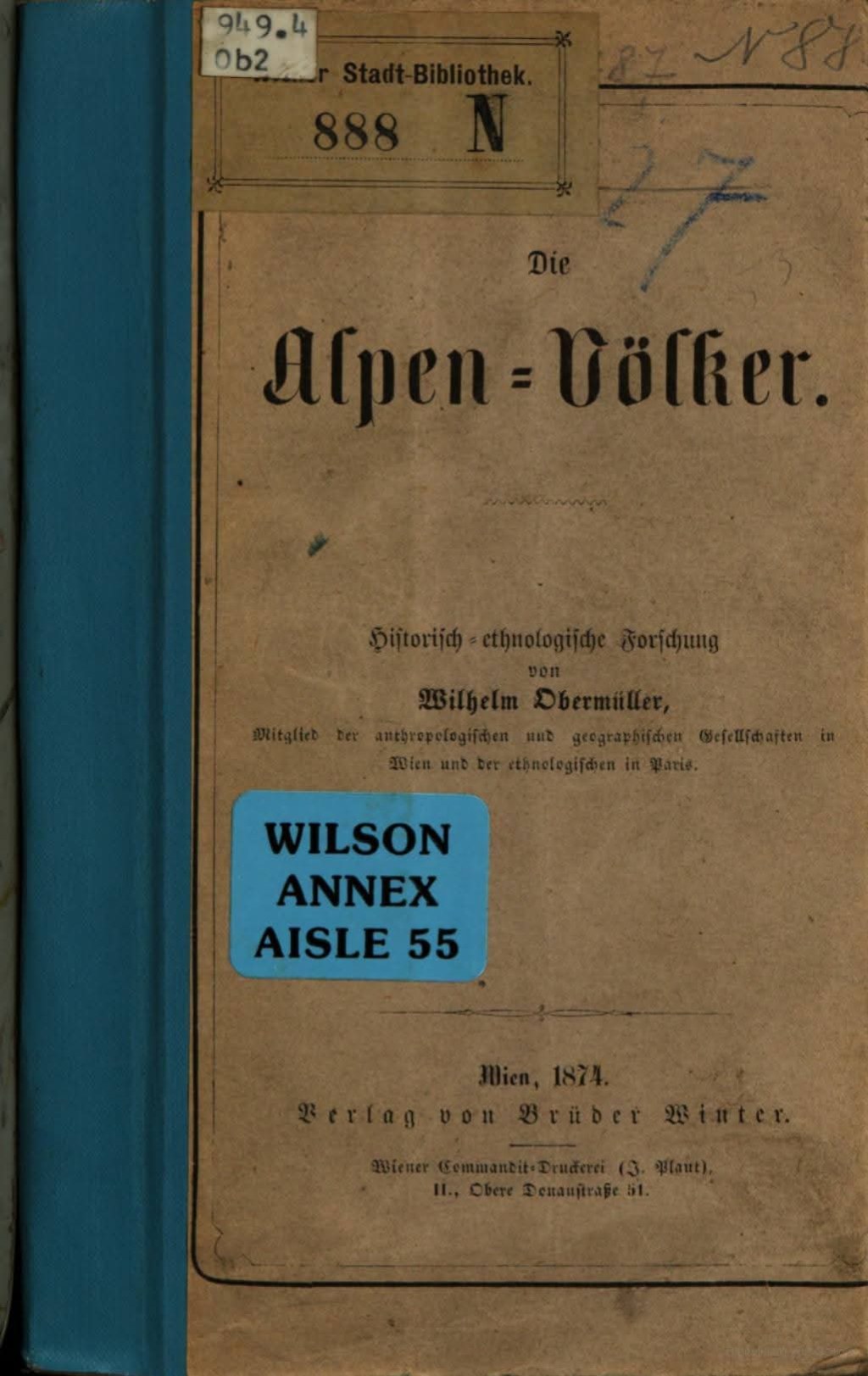
Their mythology has not been preserved in its complete form, but perhaps one day it will be reconstructed from the legends of the northern Albanians, which, as von Hahn notes, contain an extremely rich and ancient mythological material.
Of all the myths, only the Cretan ones still retain historical value, because they date from a time when the classical poets had not yet elaborated the subject in a fantastic and poetic way.
The Cretan legend follows almost exactly the Libyan tradition, but deals mainly with the figure of Zeus. According to her, this divine prince was born on the island of Crete, in a place called Dikte (Diodorus V. 70). Immediately after birth, his mother, Nhea, entrusted the child to the Curetes – shepherds of Caora, Shas – on Mount Ida, to raise him in secret, because Kronos, his father, wanted to kill him, since an oracle had predicted that he would be overthrown from the throne by his own son.
In a cave on the mountain, Zeus was nursed by the divine goat Amalthea, whose name is also found in Libyan legend as the mother of Dionysus. In some versions, she is described as a beautiful nymph who lived in the Keraunian mountains, on the western shores of the ocean.
The meaning of her name is as ancient and profound as the myth itself: Amalthea, or “maltheia”, can be translated as “mountain fairy” from the union of the words “mael” – meaning mountain – and “dea” or “thea” – meaning goddess. Thus, Amalthea emerges as the “goddess of the mountain”, a figure who embodies the connection between nature, the divine and the protection of new life.
This interpretation is particularly interesting, because in the Albanian language, the word “mountain” still retains the ancient meaning of sacred place, height and natural force. In this light, Amalthea can be seen as an Albanian jinn of pre-Greek mythology – a goddess of the mountains who nourishes, protects and sanctifies life.
This etymological and mythical connection between Crete, Libya and the Illyrian lands supports the idea that ancient Greek myths are not only Hellenic creations, but carry within them an earlier Pelasgian-Illyrian heritage, where the figure of the mountain fairy, under the name of Amalthea, remains a poetic memory of the mother goddess of the north.
1. Context of the fragmentAuthor is connecting Greek mythology (especially Cretan and Libyan) with Pelasgian and Illyrian origins, constructing an ethnocultural lineage that extends from the northern Balkans to Crete and North Africa.
In this context, he treats the figure of Amalthea — the goat or nymph who nursed the infant Zeus — as a legacy of pre-Greek-Illyrian myth.Etymology of “Amalthea”In Greek mythology, Ἀμάλθεια (Amáltheia) is usually a divine goat or a mountain nymph who nursed Zeus with her milk in the cave of Ida in Crete.
The name has been interpreted differently by ancient and modern scholars:• Traditional Greek interpretation: from the root “amalthos” (soft, softened), meaning “she who softens” or “she who nourishes with tenderness”.• Alternative interpretation: the author divides it into two parts:• “mael” / “mal” = mountain,• “dea” / “thea” = goddess,coming out in the meaning “mountain fairy” or “mountain goddess” — i.e. a nymph associated with the mountains.
This etymologically brings it closer to the Illyrian-Albanian languages, where “mal”, “malor”, “zanë” and “de/di” have similar meanings.Connection with “Amal” or “Amel”In modern languages (e.g. Albanian, Arabic, Latin), “Amal” or “Amel” have different meanings, but in this context the author is not using it in the modern sense of a personal name.
However, if we see it as a common Indo-European root, “Amal-” often appears as a tribal or royal root:• e.g. Amal-ungi (royal tribe of the Ostrogoths), where “Amal” means noble, bright.• this can also be associated with ideas of power, greatness, divinity — hence semantic proximity to the nourishing nymph of Zeus.In this way, the name Amalthea carries three layers of meaning:• Classical Greek – “she who soothes” (divine care).• Pelasgian-Illyrian – “mountain fairy” (natural origin, mountain goddess).• Germanic-Indo-European – “noble, bright” (later symbolic element).
Interesting observation: “Amalthea” and “mountain” in AlbanianIf we take the root mal/dea as the root, we have a beautiful translation that preserves the poetics of the myth:Amalthea = “Mountain Goddess”,i.e. the Mountain Fairy, the one who nourishes and protects the young gods — a figure very similar to the Albanian Fairies of northern legends


 Balkan Academia