
The fall of Caminar Sava and the massacre of his Arnauts ( Albanians) in the shadow of the Greek War of Independence
In the summer of 1821, during the early chaos of the Greek War of Independence, the city of Bucharest became the stage for a violent and tragic episode. At the center of this drama stood a controversial figure: Caminar Sava, a man remembered both as a traitor and a tool of greater political games. Closely tied to this bloody chapter were his Albanian mercenaries, or Arnauts—men who paid the ultimate price for a cause that was never truly theirs.
Caminar Sava and the Albanian Arnauts
Caminar Sava was once a commander in the ranks of the Greek revolutionary movement. However, he was publicly denounced by Alexandros Ypsilanti, leader of the Greek uprising and head of the secret revolutionary society Filiki Eteria, for alleged treason. Rumors had long claimed that Sava was killed by his own men for his betrayal.
Yet, on August 18, 1821, he appeared unexpectedly in Bucharest, accompanied by 500 Arnauts—hardened Albanian soldiers who had served in both Ottoman and regional armies—and 150 Hetaerists, Greek revolutionaries he had promised to protect.
Sava had assured the Hetaerists that he had secured amnesty for them from the Ottoman Seraskier (military governor) of Brăila, a city under Ottoman rule. Trusting him, they followed.
But upon arrival, the true nature of the arrangement was revealed. After receiving public assurances of safety, Sava handed the Greek fighters over to the Turks. They were immediately executed—shot and slaughtered without trial. It was a chilling display of political betrayal.
Fire, resistance, and the death of Sava
Just one day later, on August 19, Sava himself met a violent end. He was summoned to the residence of the Seraskier under the pretense of a formal reception. Instead, he was shot dead, a pawn no longer needed. His Arnauts, realizing the treachery and fearing their own fate, attempted to resist. They fortified themselves in several large houses across the city.
The Ottoman response was swift and merciless: the houses were set ablaze, and most of the Arnauts perished in the flames. Sava’s betrayal had come full circle. Used by the Ottomans to lure and eliminate revolutionary elements, he was then discarded and destroyed by the very regime he served.
Final resistance and the Ottoman repression
Despite the death of their commander, the Arnauts, along with Bulgarian and Pandur allies, continued to resist in the streets of Bucharest. Clashes erupted across the city, and many Ottoman soldiers were killed. In retaliation, the Ottomans burned entire quarters of the city, causing enormous civilian suffering. Fires raged, and many innocents died in the destruction that followed.
In the ensuing chaos, the Austrian consulate was looted, the property of Mr. von Fleischhakel taken. Even the Russian diplomatic agency was not spared—it too was destroyed by fire. The Ottomans, desperate to root out any remaining Greeks, stormed foreign diplomatic buildings, in clear violation of international norms.
Around 2,000 men had come in hopes of receiving amnesty. Almost all were killed—a devastating blow not only to the revolutionary movement but also to the credibility of Ottoman diplomatic promises.
The Albanian role
The Arnauts—Albanian mercenaries—played a crucial yet tragic role in this episode. Like many Albanians in the Balkans during the early 19th century, they were often caught between empires, hired as soldiers by Ottomans, local warlords, or revolutionaries. Their loyalty was contractual, not ideological, and this made them vulnerable in times of shifting alliances.
In this case, their fate was sealed by Sava’s machinations. They were neither defenders of Greek independence nor loyal servants of the Ottoman Empire. When Sava fell, they were offered no quarter. Their resistance was valiant, but ultimately futile.
The Ottoman authorities, having exploited the Arnauts for their own ends, exterminated them without mercy. It was a stark reminder of the disposability of Balkan fighters in the service of imperial agendas.
Diplomacy, delcarations and duplicity
In the days that followed, rumors swirled across Europe. The Ottomans claimed that a general amnesty had either been granted or would soon be proclaimed by the Sultan in Constantinople. The Seraskier of Brăila insisted that the massacre was merely the beginning of this new policy. Few believed it.
Some sources expected a formal declaration of Greek independence, modeled after that of the United States, to be announced soon—possibly timed with the support of a major European power, likely Russia or Britain. Reports from France, dated September 2, spoke of Lord Wellington meeting with ministers on the Eastern Question. British support for an independent Greece was being debated in high circles.
The legacy of betrayal
The events in Bucharest serve as a grim reminder of how revolutionary ideals, ethnic identities, and imperial politics clashed violently in the early 19th century Balkans. For the Arnauts, their fate was neither remembered as heroic nor as traitorous. They died in a foreign city, for a cause not their own, at the hands of the very empire that had often employed them.
Their story is not one of nationalist martyrdom, but of the dangerous ambiguity faced by Albanians in this period—mercenaries, villagers, and warriors whose lives were shaped not by ideology, but by survival in an empire falling into crisis.
References
Contemporary eyewitness reports from Bucharest, August 1821
Reports on Greek revolutionary movements
Correspondence from French and British diplomatic observers
Archival material on the Filiki Eteria and Ottoman administration in Brăila
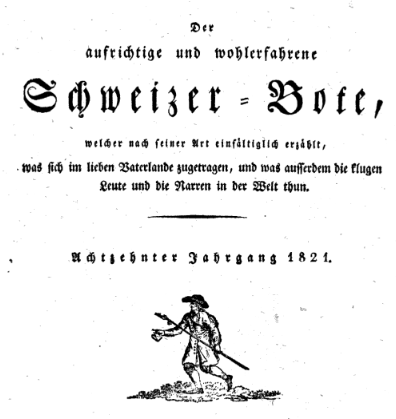
Newspaper article https://www.google.se/books/edition/Der_aufrichtige_und_wohlerfahrene_Schwei/w5RDAAAAcAAJ?hl=sv&gbpv=1&dq=arnauten+erschossen&pg=PA296-IA2&printsec=frontcover


 Balkan Academia