
Extracted and translated by Petrit Latifi.
These photos, extracted from the publication “Institute of Albanology, Prishtina Institute of Albanology, Prishtina, Association “Kosovo for Sandjak”, Exhibition: Sanxhak, History of National Pain”, show us the history of the Albanians of modern day Peshter, Sanxhak and Novi Pazar. These personalities ranged from lahutars (folklorists) to patriots to farmers, some of whom were murdered by Serbs, others were expelled. This work is valuable fo the historical insight and understanding the Albanian history and culture of these regions before they were violently assimilated.
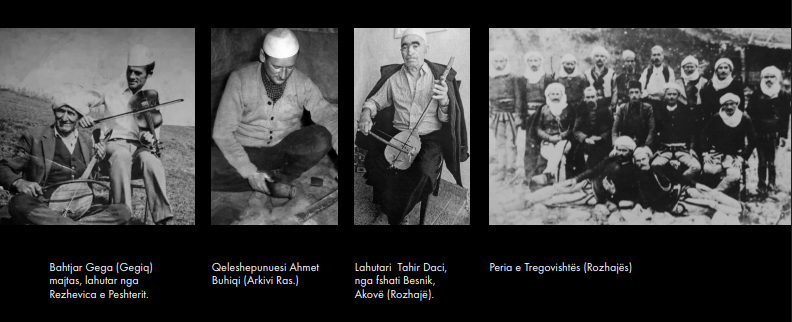


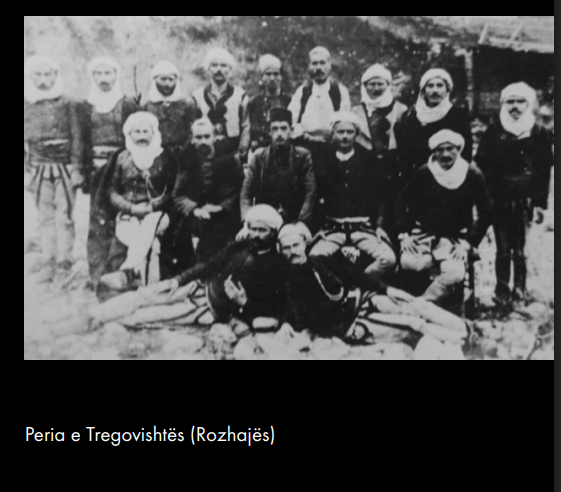
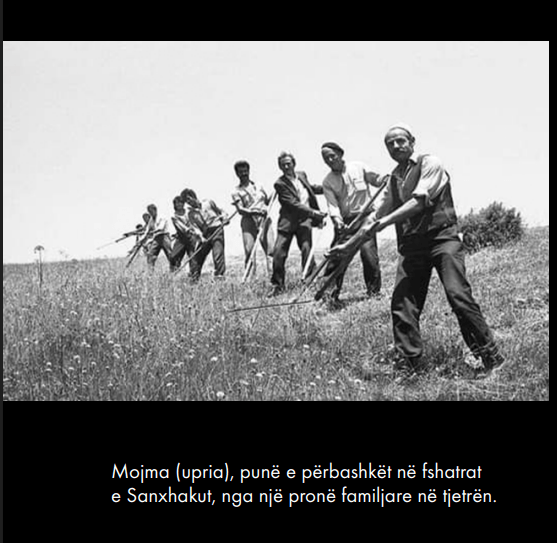
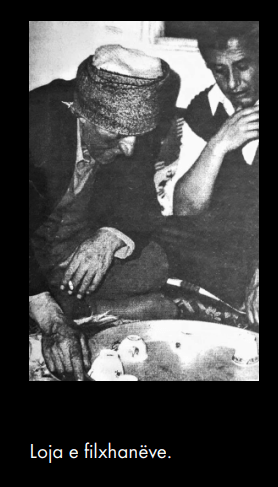
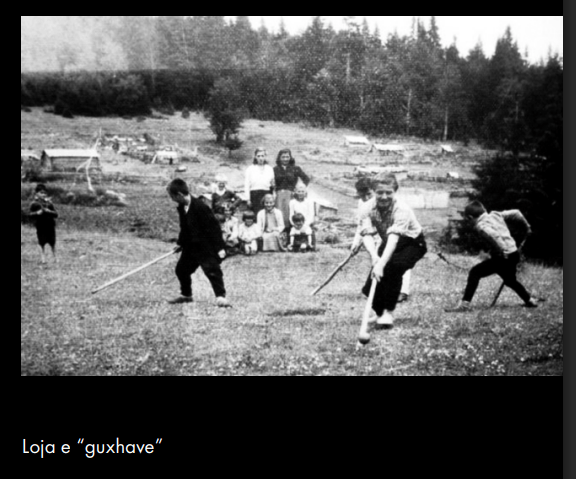


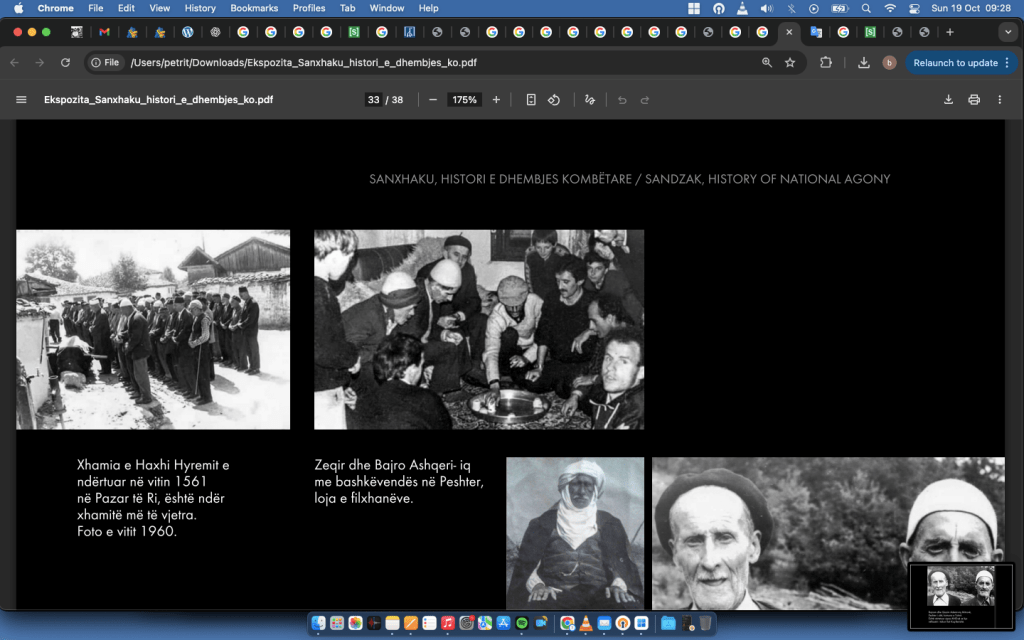
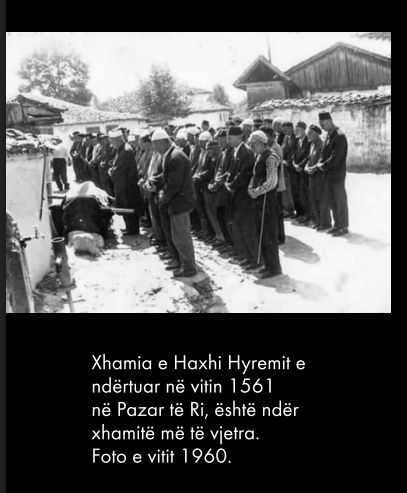


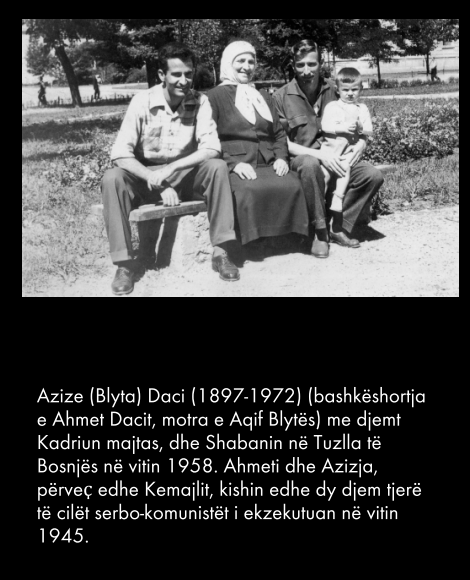
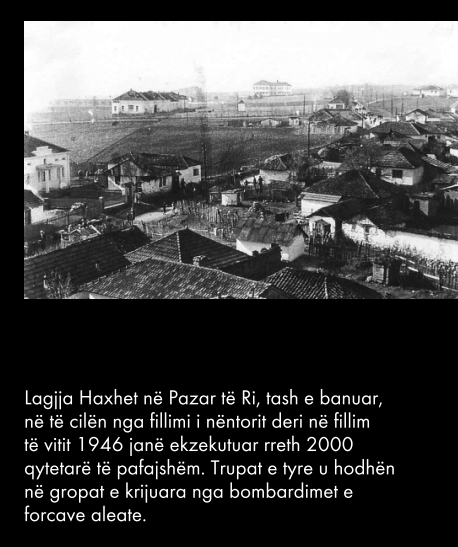





From the published exhibition (translated)
Our project aims to communicate the cultural heritage of the Sandzak of Pazar i Ri through photographs and archival documents.
The project will be implemented in the field of cultural, material and spiritual heritage. The project will exhibit photographs that show the Albanian autochthonousness in the Sandzak of Pazar i Ri.
The project will influence the local and international public’s awareness of the past, culture and traditions of the Albanian people in the Sandzak of Pazar i Ri and beyond. The role of photographs and archival documents in the preservation of national history.
The research that will be presented in the exhibitions that will be opened in various centers in
Kosovo, North Macedonia and Albania aims to familiarize the younger generation with the not-so-distant past of the Sandzak. The exhibition will make a great contribution to the recognition and preservation, as well as the cultivation of cultural heritage in general and the argumentation of the Albanian past in the Sandzak region in particular..
Historical data and archaeological findings show that the Rashka River valley (Arsa Ilire) has been inhabited by the Illyrians since ancient times. This fact is also proven by many toponyms preserved to this day, which testify to the Illyrian past.
Archaeological research, which has been carried out in Peshter, shows that this plateau in ancient times has been inhabited since the beginning of the Bronze Age. In one area of Peshter alone, 13 necropolises with muranas and two settlements have been registered. According to many data, it is known that the oldest inhabitants of Peshter and the surrounding areas were inhabited by the Illyrian Dardanian tribe.
The expansion of the Slavs, through the process of assimilation, caused a change in the ethnic composition of the Sandzak region. The penetration of the Slavs into the lands inhabited by the Illyrian-Albanian and Vlach populations caused great destruction and massacres, displacing the indigenous inhabitants from their fertile lands and expelling them as far as possible from the Sandzak into the mountainous regions. This region was continuously inhabited by Illyrian tribes and more recently by various tribes such as the Kelmends, the Kuçs, the Hots, etc.
This population underwent a long centuries-long assimilation, submitting to and imposing the Slavic language and culture, initially as Muslims and eventually as Bosniaks. However, all evidence shows that this region is still inhabited by Albanians today, although the vast majority of them declare themselves Bosniaks, and only in the second generation do they turn out to be pure Albanians. Cultural heritage is the physical heritage of artifacts and objects (attributes) of a group or society, which are inherited from past generations to present generations for the purpose of care for the benefit of future generations.
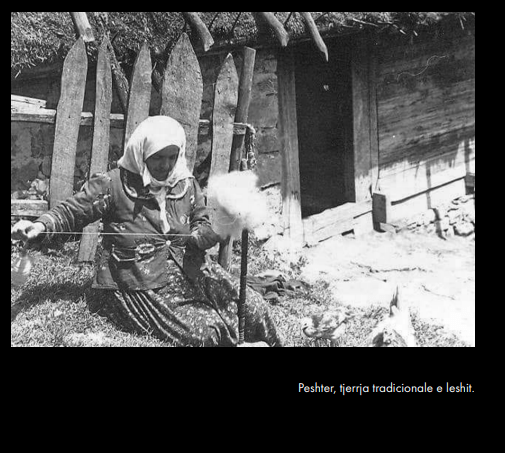
The cultural heritage of Sandzak includes cultural property, material culture, spiritual culture, (such as: folklore, traditions, traditional Albanian language and clothing, traditions, traditional language and rites), as well as natural heritage. Photographs document the essence of different eras better than any other medium, but they are more than a form of documentation. They incorporate artistic values - they tell stories that are unspoken or not written in words. As for Sandzak, the best form to bear witness to its Albanian past is photography.
Through photography we will document tradition, lifestyle, clothing, culture, tools, housing, and food. The preparation, exhibition, publication of the catalog, and preservation of the photographs will provide a great scientific contribution. The very fact that the exhibitions will be opened in 4 centers in Kosovo, two in Macedonia, and two centers in Albania, one in Montenegro, will be a contribution that will arouse great interest among the public and our students in general from the Albanian lands and beyond.
The exhibition will have a significant impact on current students and those who will come to study this region, which makes a great contribution to raising the national consciousness of the Albanian regions that are almost assimilated. SANDZAK, HISTORY OF NATIONAL AGONY Our project aims to present the cultural heritage of the Sanjak of Novi Pazar through photos and archival documents. The project will be implemented in the field of cultural, material and spiritual heritage.
The project will exhibit photos showing Albanian autochthony in Sanjak of Novi Pazar.
The project will affect the knowledge of the local and international public about the past, culture and tradition of
the Albanian people in Sanjak of Novi Pazar and beyond. It will aim to attract the attention of the general public and
researches in particular about the role of photos and archival documents in preserving national history. The research
materials that will be presented in the exhibitions, and which will be opened in various centers in Kosovo, Macedonia and
Albania, aims to acquaint the younger generation with the recent past of the Sanjak.
The contribution of the exhibition will
be great for the recognition and preservation and cultivation of cultural heritage in general and the argumentation of the
Albanian past in the province of Sandzak in particular.
Historical data and archaeological findings show that the valley of the river Rashka (Arsa Illyrian) since ancient
times has been inhabited by Illyrians. This fact is evidenced, among other things, by many toponyms preserved to this day,
which testify to the Illyrian past.
Archaeological excavations, which have been carried out in Peshter, show that this plateau as a whole has
been inhabited since the beginning of the Bronze Age. In one area of Peshter alone, 13 Murano necropolises and two
settlements have been registered. According to many records, it is known that the oldest inhabitants of Peshter and the
surrounding areas were generally inhabited by the Illyrian-Dardan tribe.
The expansion of the Slavs, with the process of assimilation caused the change of the ethnic composition of the
Sandjak region. The Slavs have inhabited the Rashka river valley from the VII-th century onwards.
The penetration of the Slavs in the lands inhabited by Illyrian-Albanian and Vlach populations caused great
destruction and massacres, displacing the autochthonous inhabitants from their fertile lands and expelling them as far as
possible from the Sandjak in the mountainous areas.
This area was continuously inhabited by Illyrian tribes and recently by different tribes such as Kelmendas,
Kuç, Hot, etc.
This population underwent centuries of assimilation by subjugating and imposing the Slavic language and culture first as Muslims and finally as Bosnians. But, all the evidence shows that this area even today is inhabited by Albanians, even though the majority of them declare themselves Bosnians although not far from the
second generation they are pure Albanian.
Cultural heritage is the physical heritage of artifacts and objects (attributes) of a group or society which are
inherited from past generations to present generations for the purpose of caring for the good of future generations.
The cultural heritage of the Sandjak includes cultural property, material culture, spiritual culture (such as: Albanian
folklore, traditions, language and traditional clothing, traditions, language and traditional rites), as well as natural
heritage. Photos document the essence of different eras better than any other medium, but they are more than a form
of documentation. They incorporate artistic values – they tell untold or unwritten stories. As for Sandjak, the best
way to prove it Albanian past is photography.
Through photography we will document the traditions, way of life, clothing, culture, tools, houses, food, etc
which we will prove with come through photos.
The preparation, display, publication of the catalogue and preservation of photos will make a great scientific
contribution. The very fact that the exhibitions will be opened in 4 centers in Kosovo, two in Macedonia, and two
centers in Albania, one in Montenegro, will be a contribution that will arouse great interest of the public and our
students in general and the Albanian nation beyond.
The exhibition will have a significant impact on current students and those who come to study this region,
which makes a great contribution to raising national awareness in the Albanian areas that are almost assimila ted.
An Albanian volunteer serving in the Albanian Legion,
established in January 1916 by the Austro-Hungarian Army.
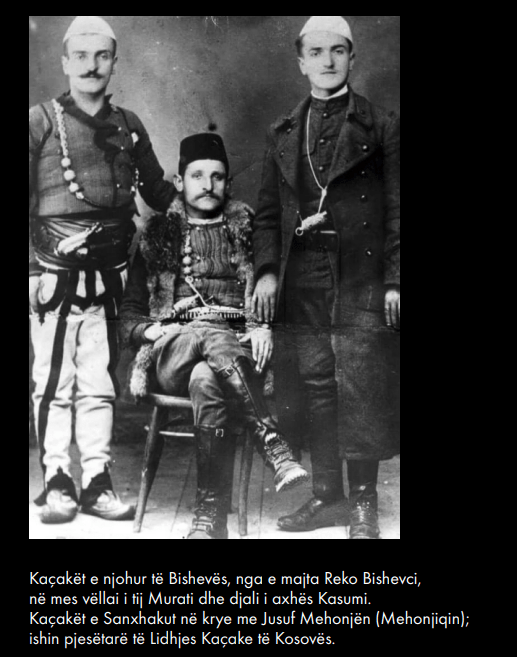
The well-known Kaçaks of Bishevo, from left Reko Bishevci,
in the middle his brother Murati and uncle Kasumi’s son.
The Kaçaks of Sandzak led by Jusuf Mehonje (Mehonjiq);
were members of the Kaçak League of Kosovo.
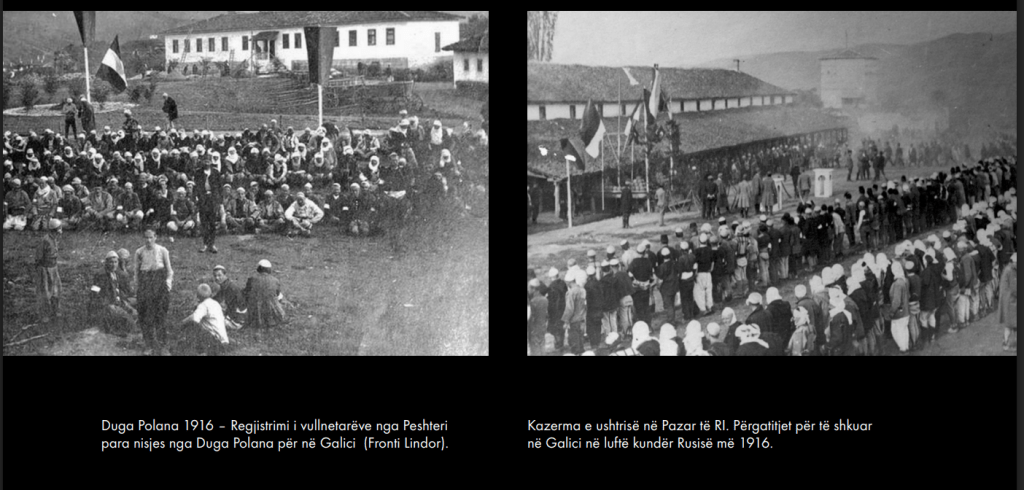
Duga Polana 1916 – Registration of volunteers from Peshteri
before departure from Duga Polana to Galicia (Eastern Front).
Army barracks in Pazar i RI. Preparations to go
to Galicia in the war against Russia in 1916.
Amir Aga’s Inn in Pazar i Ri, built in the late 17th century
and early 18th century.
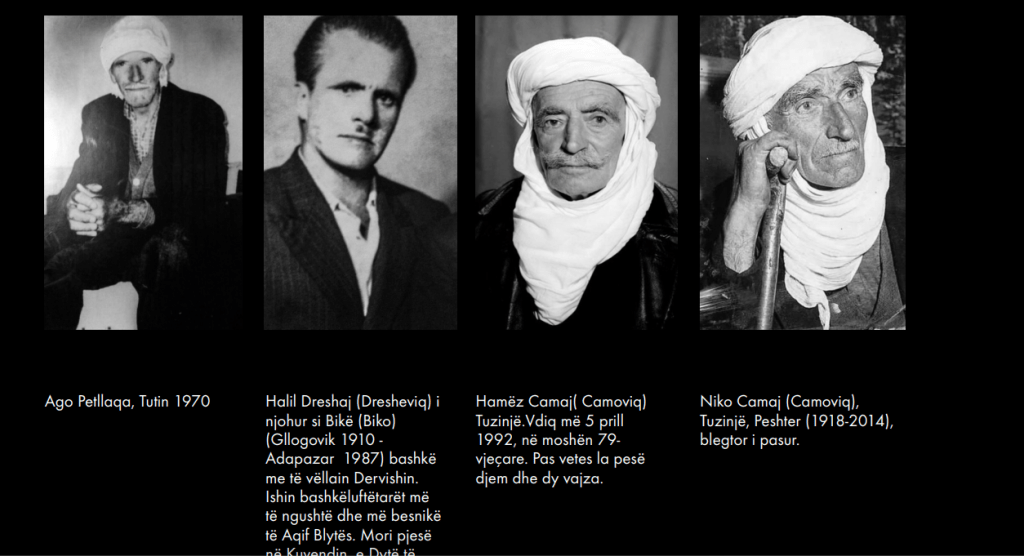
Dervish Mitrovica (born around 1885-1890). He was born in Pazartë Ri (delegate of the Vlora Assembly) in 1912 with his sons Muharrem and Dr. Xhelali, a journalist of the time. He died in Zadar in 1935. The fighters of Plavë and Gucië in 1912. Ago Petllaqa, Tutin 1970 Halil Dreshaj (Drešević) known as Bikë (Biko) (Gllogovik 1910 Adapazar 1987) together with his brother Dervish. They were the closest and most loyal comrades of Aqif Blyta. He participated in the Second Assembly of the organization “Besa Kombëtare”, known as the Assembly of Doberdol. Hamëz Camaj (Camović) Tuzinjë. He died on April 5, 1992, at the age of 79. He left behind five
sons and two daughters.
Niko Camaj (Camovic),
Tuzinje, Peshter (1918-2014),
wealthy farmer.
Jusuf Mehonja (Mehonjiqi),
8.1883, in the village
of Gërncarevë-Shahovic, was killed
by the Serbian gendarmerie in
Shijak, on 12.3.1926,
Member of the Kosovo Kaçak Movement.
Feriz Sallku (Cërnish 1875- Fier 1943), one of the three most famous Kaçaks of the Sandzak. He was killed by the Serbian gendarmerie in an ambush in 1943, near his house in Fier, Albania.
Qeleshepunuesi. Before World War II in Pazartë Ri there were 28 tailors, 33 shoemakers, 33 mittens, 10 abaxhins, 6 qeleshepunuesi etc.
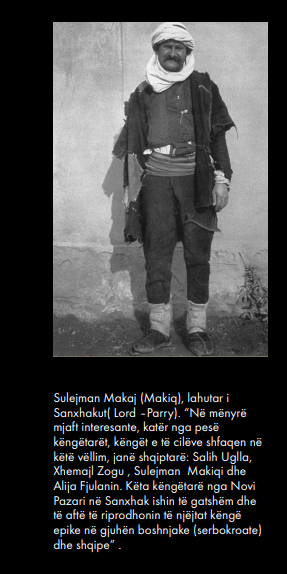
Salih Uglla (Uglanin) (1849-1945) was a lahutar from the Sandzak of Pazartë Ri. He was among the lahutars from whom the Kreshnik Cycle was compiled by two American researchers in the 1930s, Millman Parry and Albert Lord.
Avdullah Ferizi (Avdo Mexhdovic) from the village of Obrovë, near Akova (Bello Pole) (1875-1953). He was a singer-lute player. Avdo is one of the greatest epic poets of Sandzak and beyond. His epic poem The Marriage of Mehë Smajlagiqi has 12,311 verses, as many as the “Iliad” and “Odyssey” combined.
The New Bazaar, the Bezistan and the New Bazaar Castle (Yeni Pazar), are believed to have been built in 1692.
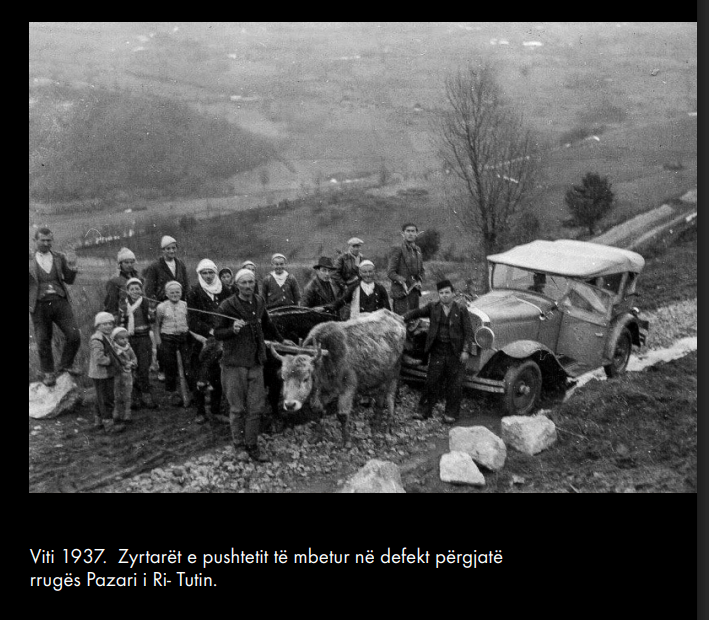
Government officials left in a defect along the New Bazaar-Tutin road.
The inn in the New Bazaar. These inns also served as meeting places for knights from different regions, who exchanged songs and legends among themselves and spread them in all directions.
On the way to Akovë (Bijelo Polje), on market day, 1935.
Photo taken by American researchers.
Senica (Sjenica), market day, 9.9.1938.
Akovë (Bijelo Polje), market in 1935.
Photo taken by Harvard researchers.
Highlanders of Akovë (Rozhajë)
in the 1970s.
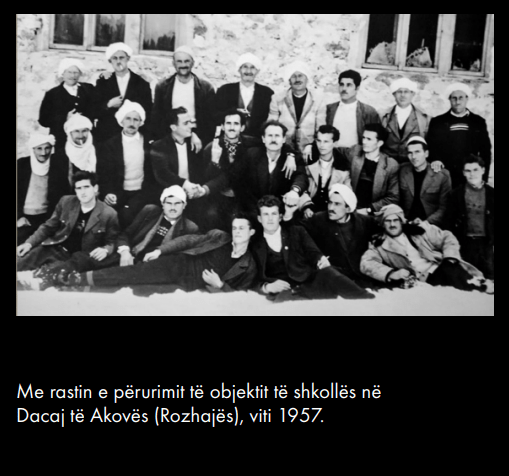
On the occasion of the inauguration of the school building in Dacaj, Akova (Rozhajë), 1957. Volunteer fighters in defense of Novi Pazar, 1941. Novi Pazar, 1941, remarks from the authorities about speculators and fraudsters. Sulejman Daci, the first, dressed in black, Aqif Blyta, and the fourth in a row from the officers, Azem Ajhovic. Albanian volunteers from Kosovo helping to defend Pazari i Ri, in 1941.
“Naim Frashëri” primary school, Pazari i Ri, 1943.
Abdullah Zajmi and his students began their career in 1942
in Prishtina, but were soon sent to Suhodoll in Pazari i Ri,
where Xhevdet Doda, Xhafer Xërxa, Xhemalaudin
Presheva, Heteme Shala, etc. also worked. The President of the Republic of Albania dr. Sali Berisha, with Decree No. 811, dated April 11, 1994, decorated for his work in opening and advancing Albanian schools in
Kosovo, in the period 1941-1942.
Teachers: Abdullah Zajmi,
Avni Zajmi and Xhemalaudin
Presheva, together with the students of
the “Naim Frashëri” primary school in
Pazari i Ri.
Shaban Palluzha, Palluzhë 1871Trestenik (Drenicë) February 21, 1945, after an invitation for help, was put in charge of more than 3000 volunteer forces from Kosovo in the defense of Pazar i Ri from the Chetnik extermination.
Forces of the SS division “Prince Eugen” in Pazar i Ri.
Xhemajl Konica- çanin (1919- December 1944) was born in Konica, commander of the Anti-Communist People’s Militia, in the uniform of the Albanian Army. Martyred in the war against the partisans, in the village of Hazanë near Petnjica.
Members of the Anti-Communist Muslim Militia of Sandzak, in national dress.
Aqif Blyta with his father, Emin Aga, whom the Serbian photographer Rada Profilović hid from the partisans and preserved in 1945. He was born in 1887 in Pazar i Ri, to father Emin Aga and mother Jaldëzja. The Blyta family came from Gjakova. Aqif Blyta, in 1945, photographed at the moment of his arrest by the partisans.
He was arrested in Gjakova and brought to the Pazar i Ri prison and was tortured cruelly for three weeks until his last moments, together with his son-in-law Ahmet Daci. Mahije Komoni Blyta, (1898-1980), wife of Aqif Blyta, comes from the Komoni family of Gjakova. Mahije Komoni Blyta (1898-1980), wife of Aqif Blyta, hospitalized after Aqif Blyta’s execution, had her house and all her property confiscated; she lived in poverty in a social housing. Aqif Blyta’s house, nationalized by the Serbian government, before it was demolished.
The aforementioned house can be seen at the foot of the building nearing completion. Today, a memorial plaque is located at this very spot, placed in 2012. Aqif Blyta’s house in Pazar i Ri, where in 1933 two people attacked and seriously injured him. More than 10,000 Albanians from different regions demonstrated against this brutal act against Aqif Blyta.
1974, “Gërmia” among the three department stores that Novi Pazar had at the time.
Large violent rally after the Communist partisans took power in Pazari e Ri (Novi Pazar)
In 1938, Aqif Blyta was elected deputy of the Sandzak Province, Tutin Zone, inhabited by an absolute Albanian majority.
In the period 1941-1945, Aqif Blyta was the commander of the war for the defense of Pazari e Ri from Chetnik and partisan forces.
Mulla Omer Çelaj (1888-1945) from Uglja e Peshterit to Istanbul, after moving with his family. Mullah Omar survived being shot 17 times in the body and stabbed in the throat with a bayonet.
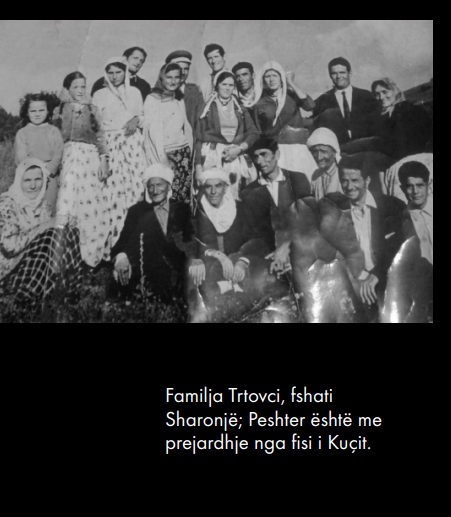
The Trtovci family, the village of Sharonje; Peshter is from the Kuçi tribe.
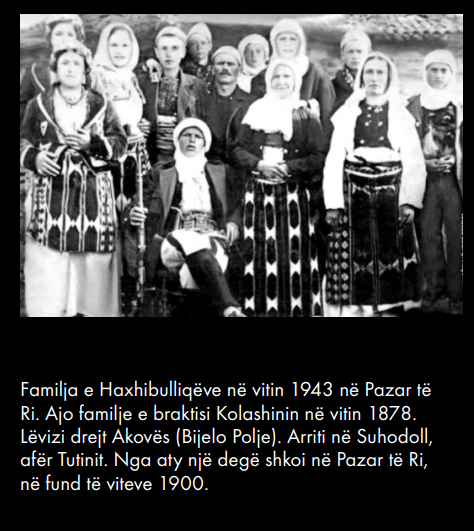
The Hadzibullić family in 1943 in Pazar i Ri. That family left Kolasin in 1878.
It moved towards Akova (Bijelo Polje). It arrived in Suhodoll, near Tutin. From there a branch went to Pazar i Ri,
in the late 1900s.
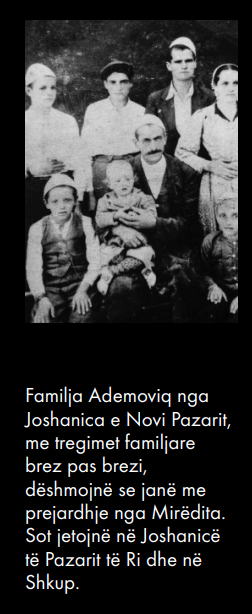
The Ademović family from Jošanica in Novi Pazar,
with family stories from generation to generation,
testify that they are from Miredita.
Today they live in Jošanica in Pazar i Ri and in Skopje.
Shefko Murić, from Grahova, Akova (Rozhajë), with his
wife Emina and his daughter Azemina.
School in the village of Llukocrevë in Pazar i Ri, 1945.
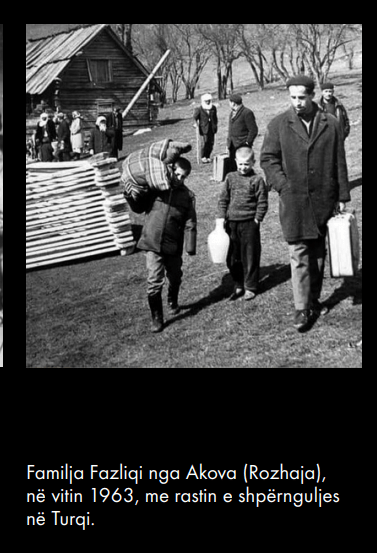
The Fazliqi family from Akova (Rozhajë),
in 1963, on the occasion of the move
to Turkey.
Ramë Rexhë Daci and
Azem Hak Daci.
Bihorasi locals, Petnica in 1947.
Abaz Kardoviqi, alongside Mulla Jakup Kardoviqi-Kombi,
Shaban Palluzhë, A. Blyta, Boletinë, Mulla Zeka
Bërdyna, S. Fazlië and others. With his sons, he
took part in the Sandzak wars.
Mehmet Husiqi, Akova (Rozhajë) region, 1950-1960, with his wife, nephews, nieces and young women.
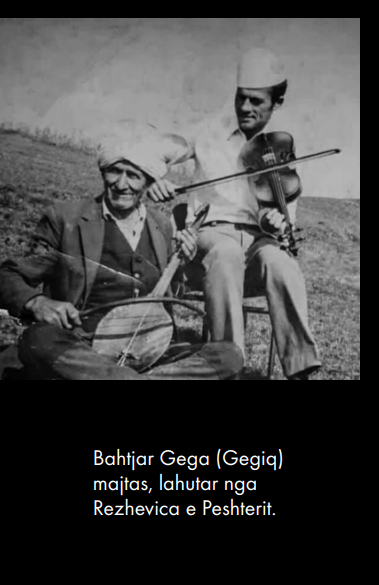
School in the village of Sebeçevo in Sandzak, in 1942. Albanian teacher teaches women to read and write. Drith Square (Žitni trg) and the mosque of Ejup Bey, demolished immediately after the LDB. View of the town of Pazar i Ri, early 1980s. Mojma (upria), a common work in the villages of Sandzak, from one family property to another. The game of cups. The game of “guxha” Bahtjar Gega (Gegiq) on the left, a lahutar from Rezhevica in Peshter. The flute maker Ahmet Buhiqi (Ras. Archive) The lahutar Tahir Daci from the village of Besnik, Akovë (Rozhajë). Peria e Tregovishtës (Rozhajës)
Sulejman Makaj (Makiq), lahutar of the Sandžak (Lord –Parry). “Interestingly, four of the five singers whose songs appear in this volume are Albanian: Salih Uglla, Xhemajl Zogu, Sulejman Makiqi and Alija Fjulanin. These singers from Novi Pazar in the Sandžak were willing and able to reproduce the same epic songs in Bosnian (Serbo-Croatian) and Albanian.”
References
Sanxhaku, histori e dhembjes kombëtare : ekspozitë = Sandzak, history of national agony ; exhibition /. ISBN 978-9951-24-126-7

 Balkan Academia