
Summary:
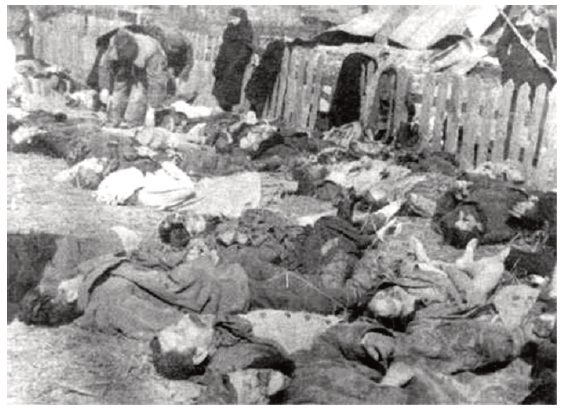
The text outlines systematic violence and persecution against Albanian Muslims in the Balkans between 1912 and 1939. Beginning with the Balkan Wars, it describes massacres such as that in Raven (Gostivar), where villagers were reportedly forced to convert to Orthodoxy under threat of death. It also examines the ideological role of the Serbian Orthodox Church, which, through nationalist publications, encouraged or justified violence committed by Chetnik militias.
During World War I and the interwar years, expulsions, destruction of mosques, and large-scale demographic engineering intensified. Reports cite thousands of Albanians killed, hundreds of villages destroyed, and mass deportation plans involving up to 400,000 Muslims to Turkey. Further atrocities, including the 1924 Shahoviq and Pavino Polje massacres, exemplified the continued targeting of Muslim communities under the Kingdom of Yugoslavia.
The account situates these events within the legacy of the 1913 and 1919 peace treaties, arguing that the resulting political order legitimized Orthodox expansionism and led to a demographic and cultural catastrophe for Balkan Muslims, who lost an estimated quarter of their population by the mid-1920s.
Atrocities against the Albanians of Raven in Gostivar during the Balkan War (1912-1913)
“The magazine “Makedonski Golos” published a letter describing the massacre carried out in the village of Raven in Gostivar, in order to force the Albanian population of the Muslim confession to accept the Orthodox religion. The letter, among other things, states: “The population was subjected to a general slaughter, and the houses were completely burned down. In response to prayers for mercy, the Serbs proposed to the surviving Albanians that they should accept the “Serbian religion” or else they would be slaughtered to the last man”. Thoma Murzaku: “Measures with a socio-cultural character for the denationalization of Albanians in the violated areas”, “Fjala”, year XXIV, no. 1/1991, p.”

Burned houses
The Serbian Orthodox Churchs role in the atrocities against Albanians in 1912-1913
“In the organs of the Serbian Orthodox Church, such as in the “Vesnik Srpske Crkve”, not only was the expansionist policy of the Kingdom of Serbia supported, but also the popular masses, especially the Chetniks, were inspired for war. Under the guise of “liberating the holy land of Dušan”, no mention was made of the crimes of the “volunteers” (Chetniks), led by priests.
In this regard, it is worth mentioning the massacre of the “volunteers” of the Serbian army, led by Orthodox priests, in which 500 women, children and the elderly were massacred. In the press of the Serbian Orthodox Church, by various authors, such as in the articles of priest Panta Dragojević: “Clergy in the service of the homeland”, “On the popular prophecy”, “Kosovo is taking revenge”, not only are the crimes not tried, but religious and moral justifications are stated and offered. The Serbian campaign was not only accompanied by massacres, but also by forced conversions, and when they refused to convert, both Muslims and Catholics were shot.”

World War I
“During World War I, the massacre of the Albanian population continued unabated, according to a letter from the “Kosovo National Defense Committee” sent to the US Government and the Paris Peace Conference, 6,040 people were killed in Kosovo and 3,873 houses were destroyed.
The ethnic Albanian regions, especially Kosovo, were subjected to Serbia’s colonialist policy, the war against the Albanian language, the conversion of mosques into stables and ammunition depots resulted in the expulsion of around 90,000 to 150,000 Muslims. The Belgrade government was not satisfied with the number of Albanian deportees, during the year the government officially requested from the Republic of Turkey to accept 300,000 – 400,000 Muslim Albanians.
Negotiations began during the year and ended on 11. 07. 1938, the result of which was that Turkey was ready to accept 40,000, respectively up to 400,000 people, since families had an average of ten members. The general plan for the deportation of Albanians was to begin in 1939 and last six years.”
Atrocities against Albanians during the creation of the Kingdom of Serbs, Croats and Slovenes (SKS) by Herzegovinian gangs led by Maja Vujović and Petar Rogan.
“With the creation of the Kingdom of the Serbs, the policy of exterminating Muslims continued in Kosovo, Bosnia and Herzegovina, Sandžak and Macedonia. It is estimated that in the first years after the establishment of the unified kingdom, over 3,000 Muslims from Bosnia and Herzegovina were illegally and without trial expelled from Bosnia and Herzegovina by the gangs of Maja Vujović and Petar Rogan.
The extremely difficult situation of Muslims at that time, namely the state violence exercised against Albanians in Kosovo, Sandžak and Macedonia, is most convincingly demonstrated by the reports of the then reis-ul-ulema Ibrahim ef. Maglajlić, (an exponent of the Belgrade regime), sent to the Belgrade government in 1933, after an inspection trip to these regions (Inspekcijsko putovanje po Juznoj Srbiji).
These submissions present in detail examples of the destruction of Muslim cemeteries, the demolition of a considerable number of mosques, the lack of religious teachers for Muslim students in areas where the majority of the population was Muslim, and in particular in the Vardar, Zeta and Morava banovinas.
As a particular pressure of a material nature, there has been the expropriation of Muslim property and unfair compensation, which has caused a wave of displacement; insulting the religious feelings of Muslim children in compulsory school literature, forcing children to participate in Orthodox and Saint Savinian religious holidays, etc.”
The masscres of 1924 in Shahoviq and Pavino Polje near Bijelo Polje by Montenegrin criminals Lazo Bogićević
“These were complementary means of a long-term political strategy. One of the most serious massacres against Muslims in the Kingdom of Yugoslavia took place in early November 1924 in the villages of Shahoviqi and Pavino Polje, near Bijelo Polje.
After the murder of the chieftain of Kolasin, Boško Bošković, on 7. 11. 1924, for which the court decision had baselessly accused the Muslims, at the instigation of Nikodim Cemović, the chieftain of the Bijolo Polje district, and the “pogllavar” Lazo Bogićević, an armed Montenegrin mob of more than 2,000 “men” during the night of 9 and 10. 11. 1924, slaughtered and killed nearly 600 innocent Muslims, men, women and children in these two villages.”
The Treaty of Versaille of 1919 and the consequences for Albanians
“The secret Treaty of London (1913) and the Versailles Peace Treaty (1919)191 had serious consequences for the Albanians, the Serbian, Montenegrin, Bulgarian and Greek occupying armies in the Albanian territories occupied during the Balkan Wars (1912-13) and during World War I they razed to the ground more than 800 Albanian localities, killed or permanently disappeared about 350,000 Albanians and expelled from their ethnic homes over 500,000 others.
In addition to territorial invasions, all the Balkan peoples of Muslim faith have experienced great human losses, which have been the result of genocidal wars, forced expulsions and displacements. To what extent has the loss of people been, here is just an illustrative example, during the years 1912-1926, in the final phase of the solution of the “Eastern Question”, the Muslims of the Balkans lost 27% of their own population, which according to all international parameters is considered a demographic catastrophe.
At the beginning of the century. XX the main European powers have developed and defended the thesis on the “legitimate heirs” of the Balkan peoples, a principle by which the wars of conquest of Orthodox states are legitimized.”
Source
“i pjesa e parë – Shoqata Kulturore. “https://www.yumpu.com/xx/document/view/4652197/i-pjesa-e-pare-shoqata-kulturore


 Balkan Academia