
Authored by Albert V. Nikolla. ISBN : 978-2-87485-042-4. D/2024/11.189/1 .
The power of the Albanian Language is unimaginable. In this interesting publication the author Albert Nikolla lists:
- Undeniable words artifacts.
- Primitive Etymons & Semantic Matrices

In a recent scientific article published in the journal Science (May 2023), the origin of the Indo-European languages, including Albanian along with Armenian and Greek, is investigated using sophisticated and combined laboratory methods—linguistic, anthropological, archaeological, genetic, and gramatiko-mathematical, based on algorithms. The published data confirms that Albanian is the oldest Indo-European language still spoken, as other languages like Hittite have since died out.
It is interesting to note how the research, primarily conducted through computational linguistic studies, confirms the antiquity and originality of the Albanian language with undeniable data. The researchers also performed DNA studies and verified that the Albanian population is indigenous and very ancient in these lands. Furthermore, recent archaeological and genetic studies have proven that the first European lived in the western Balkans, specifically in Drenas, Kosovo, 50,000 years ago.
The language tree diagrams support a hybrid model for the origin of Indo-European languages. In summary, based on this study, it is evident that Indo-European languages are spoken by nearly half of the world’s population, but their origin and dispersal remain a subject of debate.
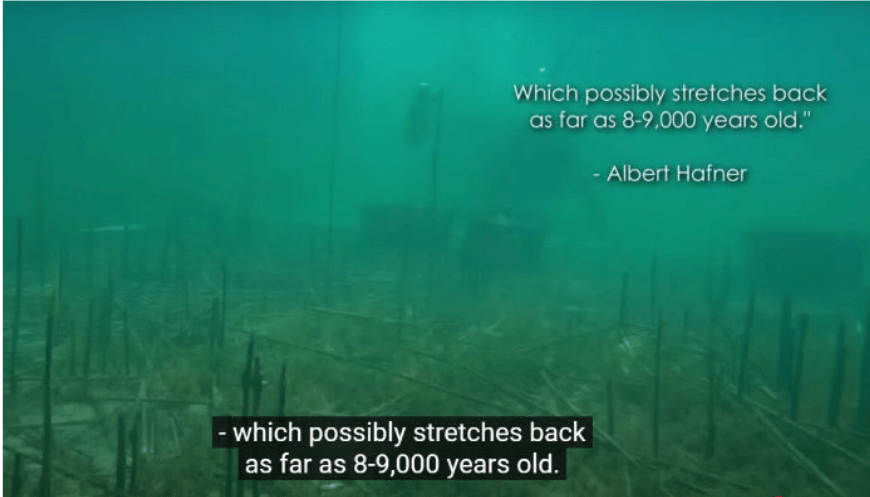
However, the first settlement, or the first prehistoric city built on water, was discovered in the village of Lin, Pogradec, and dates back 9,000 years. This settlement is considered the oldest, as the archaeological artifacts found represent the later stages of this civilization, which may have begun 20,000 years ago.
Paul Heggarty et al., linguists at the Max Planck Institute, present a database of 109 modern and 52 historical Indo-European languages calibrated over time, with an initial origin south of the Caucasus. Their results suggest an emergence of Indo-European languages about 8,000 years ago, which overturns the Yamnaya Steppe origin hypothesis and reinforces the Balkan-Anatolian origin hypothesis. T
hese findings lead to a ‘hybrid’ scenario that reconciles current linguistic and ancient DNA evidence, pointing to both the Balkan Peninsula and the Anatolian region of the Near East as a primary source, and the Steppe as a secondary homeland.

The Science article highlights that nearly half of the world’s population speaks a language belonging to the Indo-European language family. Nevertheless, the location of the common language’s homeland (Proto-Indo-European) and the timing and reasons for its spread across Eurasia remain unclear.
This indicates that the Indo-European languages naturally created a highly efficient grammatical and word-formation system, which was simple and met the communicative needs of the Indo-European tribes.
The Infinitive (Paskajorja) was widely used in languages such as Sumerian and Hittite. Today, many languages do not have it, but Gheg Albanian does: */Me punu/ (to work) – */ me rru/ (to live) – */me shku/ (to go),- */me ec/ (to walk), /me ba/ (to do/make) ,- */me gran/ (to eat), */me dit/ (to know) ,” etc. It is a timeless, indefinite, or everlasting verbal form. It is simultaneously past, present, and future. From this form of conjugation in Albanian, we have marvellous words, like */punushëm/ (able to be worked/industrious), /jetushëm/ (able to be lived/viable), */shkushëm/ (able to be gone), */dijshëm/ (knowable/wise), */ecshëm/ (walkable), */grangshëm/ (edible), /dishëm/ (knowable/wise).
Where does the word /paskajore/ itself come from? It has a very old origin.
The verb */Ka/ (to have) with the semantic negative prefix */s/ gave its semantic antipode, the other verb */ska/ (does not have), from which the form */Skai/ (infinite/endless) derives. By adding the other verb */pa / (to see/look), we have the second-rank verb, the admirative: */paska/ (A sight that does not have – a sight that is lost = Infinite) and the determinant: */paskai/ or /paskaj/. And by adding the concept of time to the word */paskai/ or */paskaj/ /(Infinite space), with the semantic suffix */or/ (time), the other forms are created: */paskajor/ (infinite/adjective), */paskajore/ (infinitive/noun) – and */paskajim/ (endlessness/infinity)…
From the beginning of the language with the 1.8-million-year-old verbs of Homo Erectus, */pa/ and */ka/ up to modern times */skaj/ – */skajim/, */paskaj/, */paskajor/ and */paskajore/ – / paskajim/ etc/. This is the living history of the Albanian Language. Do you understand then that the word /Skay/ in English is borrowed from Albanian… On the other hand, the verb */shoh/ (to see), its second person singular, produces another number of quite interesting words like */shih/ (see!),- /shik/ (look/glance) -/shiko/ (look!), */shikim/ (view/sight) – */shikueshmëri/ (visibility), etc., which are also related to space.
Even the word /infinit/ (infinite) itself is Albanian, and comes from the Arvanitic version, the expression */In fi ni/ which corresponds to the Gheg : /Hin fi nih/[/Hin/ = Hyn (Enters), */Fi/, = është filli (is the thread) and */nih/ – */nihe/, (Negates)] and with a long */i’/ the opposite of negation, the affirmation itself -/Nii-Niij/ (I hear/listen), from the Indo-European */ndih-goj/ (I hear the mouth)- */I hear/…
If you are referring to the third aspect (old dialects/speech forms), these are some of the Albanian language “artifacts” that are deeply studied by linguists:
The Gheg Infinitive (Paskajorja): As you yourself emphasize, the form with the particle */me’/(e.g., */me punu/ – (to work), */me ditë/ – (to know’). This form, although not part of the standard language, is considered a very old relic and a rare feature preserved in the Gheg dialect. Archaic Forms Preserved in the Basic Vocabulary: Albanian has preserved several Indo-European words that have been lost or have highly altered forms in other languages, serving as */artifacts/ for linguists. Examples are words like:
Djerr (uncultivated land) – which derives from the two-word compound (to smell/sense an odor) often linked to an old Indo-European root for /desolate place/.
Zemer (heart/core part) – Which derives from the two-word compound /Za merr/ (Inspiration or energy by means of the heartbeat), has forms that follow very old vowel rules.
The words; */ie/ (madhër) -from Homo Erectus Language; and */Naan/ (mother) – (some scholars see it as a preserved archaic form). Rare Modal Forms: The use of forms with */me pas/ + participle (e.g., */të ka/ and */të kam/ , */tu pa/ e */të pam/ -or */me pas me punu/ – (‘I will have worked’) in some dialects (expressing a deep future) or specific ways of expressing desire or possibility. Old Case Forms (Dative/Locative): In some areas, an old */locative/ usage (for place) of nouns remains that is no longer found in the standard language.
Linguistic artifacts are not hypothetical constructs. They are the meaningful phonetic components of a language, and are far more significant than historical documents themselves. They possess an undeniable scientific advantage: Artifacts, being sounds and structures, are much more scientific because they cannot be manipulated. This greatly favors the Albanian language against Greek and Latin, whose primary linguistic artifacts are allegedly derived from Prehistoric Albanian or Illyrian.
Language is a product of humanity’s technological development. Among the oldest attested human words are these two terms. */Gju/ (knee/to hunt) {gjueti (hunting) – gju-e-ti = Gheg: A po gjue ti! (Are you hunting!) and Tosk: A po gjuan ti! (Are you hunting!)}, and its logical semantic opposite in unity, rest: */gjum/- */gjumi/ (sleep)… {Gju-mi = Hunting ceased, i.e., rest}. These are words that are 1.8 million years old, spoken by Homo Erectus.
There are many other Albanian words that are 1.8 million years old: */ui-/\uj/ (water) – the initial human word, from which all water-related words globally derive, such as in Coptic [Ancient Egyptian] */n’ui/, in Vietnamese and Mandarin */n’ui ‘k/, in Italian */aq-u-a/, in French /ea-u/, and */n-u-a yé/ {Albanian: n’uj a je – ‘are you in water?’ *(right arrow) ‘wet’], and in Celtic languages */Uoter/ = */U o ter/ [uj i tër = ‘entire water’ (right arrow” ‘clean drinking water’]. Hunting and the discovery of water mark the technological genesis of man, and consequently belong to the ‘first speaker’—Homo Erectus.
Other fundamental words include */Ba/ [father] and */ma/ [mother]. What did the */Ba/ do? The */Ba/ (Ba-nte = carried) food and */binte/ (brought) it to the */shpe-ll /(cave, i.e., primitive shelter or man). And the */ma/? The */ma/ carried the children, in the womb and later in the */shpe/ [cave-house]. Observe how the first language was born logically. The naming process follows action and function, as defined by Saussure. As you can see, Albanian never ceases to amaze!
Action names the concrete or abstract object,’ states F. De Saussure. When one */gjum/ (sleeps), one does not */hum/ (get lost), but rather ceases hunting and rests (*/nuk gju/ – */gju mi/, as in Gheg, */mi at/ [on that], *(albanian standart : mbi ta) [on them], */mi ty/– */mi ne/ [on us]] – which exhibits a logic of action. The logic of primitive man is applied. The word */Hum/ (to get lost) originates from the cry of falling into an abyss, */UUUU‘, from which stems the word */Um/ [lost] in Arvanitika (the Albanian dialect of Greece) and the word */Hum/ in Gheg, and subsequently the words */hume/ (loss), */humner/ (abyss), etc… Language possesses a concrete action-logic… Albanian exhibits an inherent internal logic, – a logic that other languages lack, or only possess through the etymon:
“The infinitive” (Paskajorja) in Hittite (the ancient Anatolian language) is the same as in Albanian. This comes as no surprise, as the Galatians of Anatolia, direct descendants of the Hittites, spoke an Albanian dialect until the end of the 18-th century, when they were assimilated by the Seljuk tribes, with the help of the Ottoman Turks.
Hittite is considered one of the oldest languages of the Anatolian branch of the Indo-European family, spoken in present-day Anatolia around the second millennium BC.
The infinitive in Hittite appeared through uninflected verbal stems, which served to express actions without a determined tense or subject. The infinitive form often ended in -*/wanzi/ (d’hanzi) – in Gheg Albanian */dhansi/ or -*/wan/(in ggheg albanian : dhan), which represented a general action or a purpose.
*/dāi-wanzi/ (for giving/to give) which is related to old Gheg Albanian */Dai d’hansi/ or */daj dhansi/ (a division for giving – destined to be given)
*/šiyāi-wanzi/ (for holding/to hold) */si jap d’han zi/ (as */I give a giving/ – or – */I do not give it for giving/)
As seen in this example, Albanian etymologically and semantically explains the very words of the Hittite language, but it also demonstrates that it possesses an older mechanism for the infinitive than Hittite itself, derived from Gheg Albanian!
Reference
The power of the Albanian Language is unimaginable by Albert V Nikolla. 2024. Academia.edu.


 Balkan Academia