
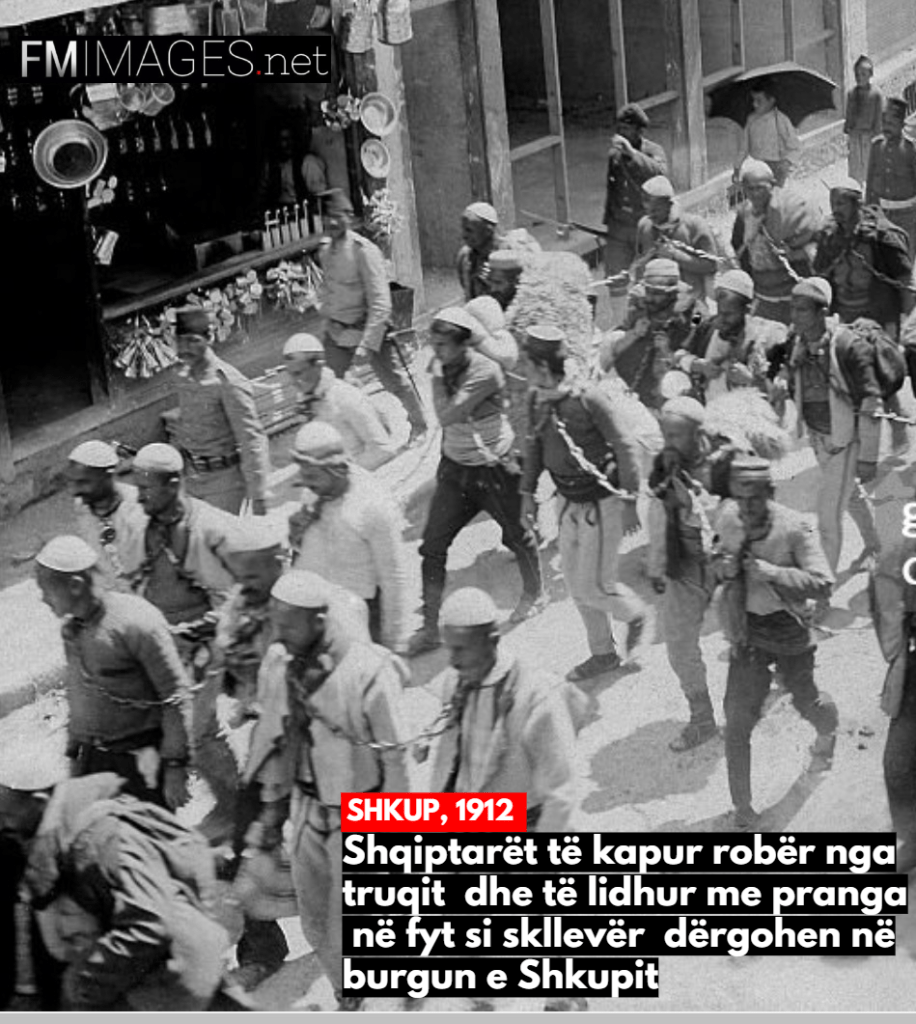
Skopje, 1912: Albanian rebels captured by the Turks and bound with shackles around their necks like slaves are sent to the Skopje prison.
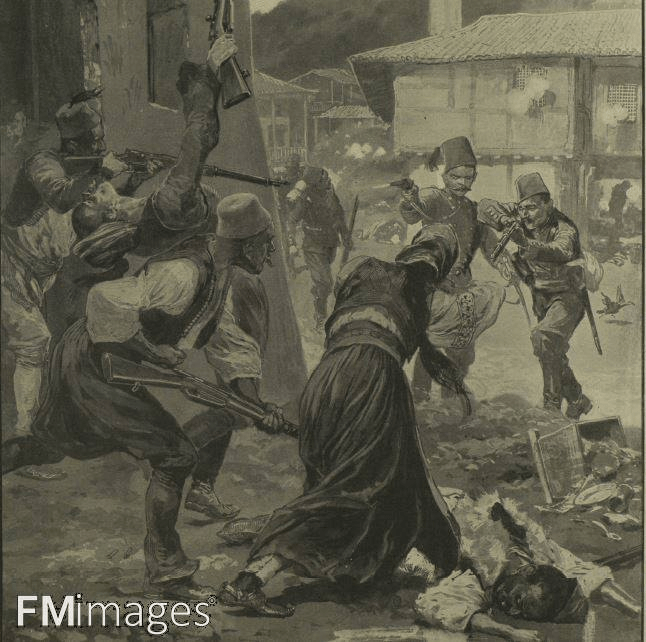
KOSOVO, 1903: Albanians in close combat with the Turks in Kosovo.
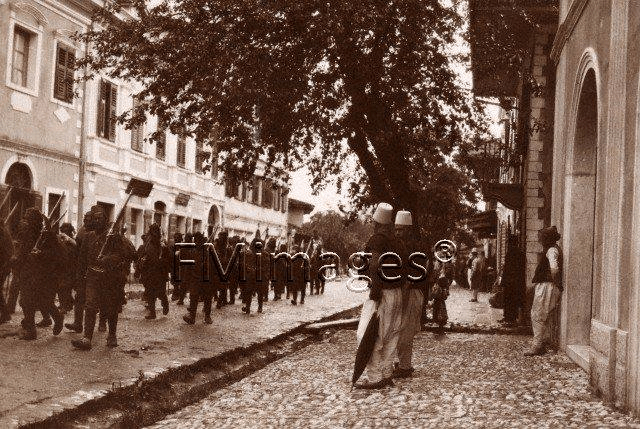
SHKODER, 1911: THE TERRIBLE TURKS – Turkish soldiers marching towards the Highlands to crush the Albanian uprising. The Times: The Turkish army led by Ibrahim Pasha was marching from Shkoder, burning every Albanian village along the way. Thousands of refugees fled to Montenegro from Turkish repression.

Battle of Kaçanik Gorge, 1910: An original painting of the Battle of Kaçanik Gorge published in a Turkish newspaper in 1910. Enraged Turks bombarding Albanian villages with cannons.

SKOPJE, 1912: Albanian rebels in the prisons of the Ottoman Empire, view of an Albanian who was captured by the Turks during the uprising in 1912.

Albanians captured and forced to parade through Belgrad, 1912.

MITROVICE, 1903: Albanian fighters neck-to-neck with the Turks, during the bloody fighting in Mitrovica. Engraving from the Austrian newspaper Das interessante Blatt
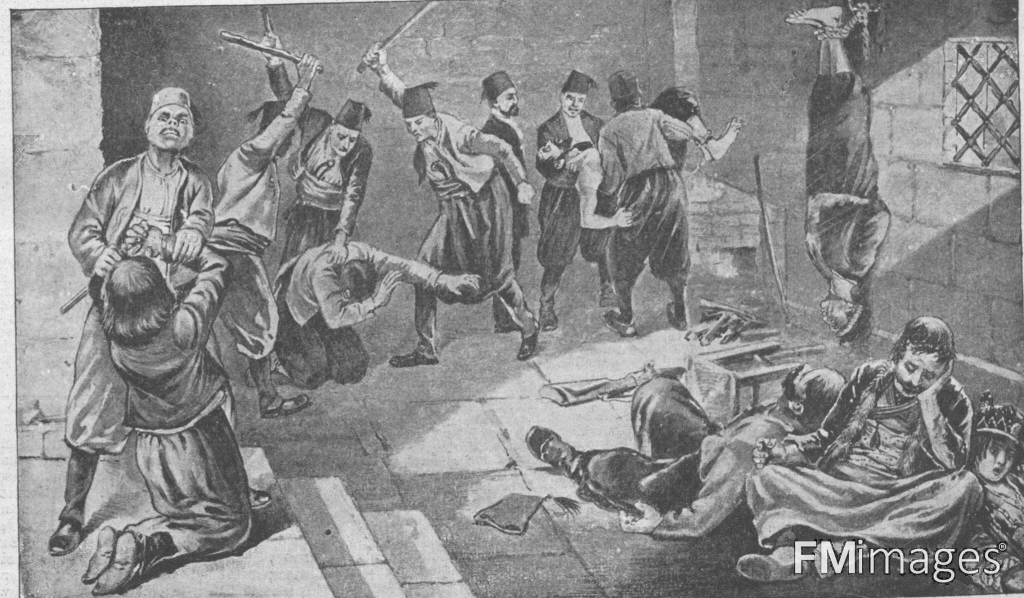
SKOPJE, 1903: Torture methods carried out by the Turks in the prisons of Skopje
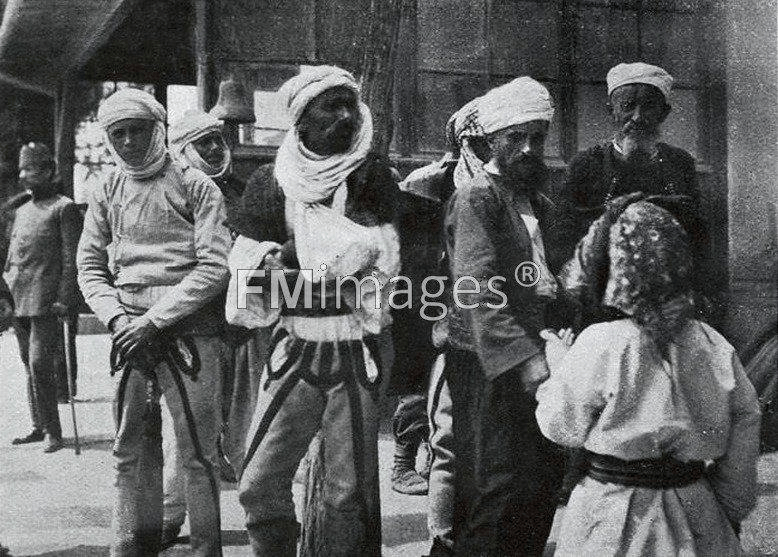
MITROVICE, 1912: Albanian rebels captured by the Young Turks in Mitrovica.
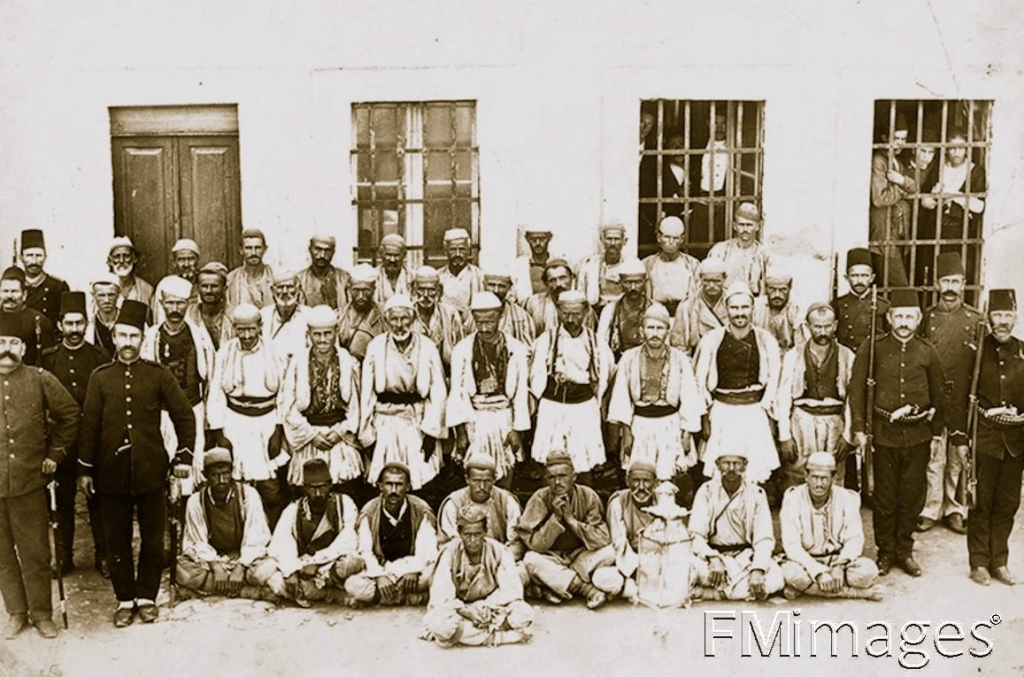
ALBANIA, 1911: Albanians from Shpati imprisoned by Turkish troops in the Elbasan Castle. Credit: Bukurosh Dylgjeri

MANASTIR, 1908: Albanian rebels before the Turkish judiciary in Manastir. Hundreds of thousands of Albanians were sentenced to syrgjyn – “forced exile” to the deserts of Asia, by the Turkish rulers. Syrgjyn was the most severe punishment, it was death for life.

Albanian rebels defending their village against Turkish soldiers
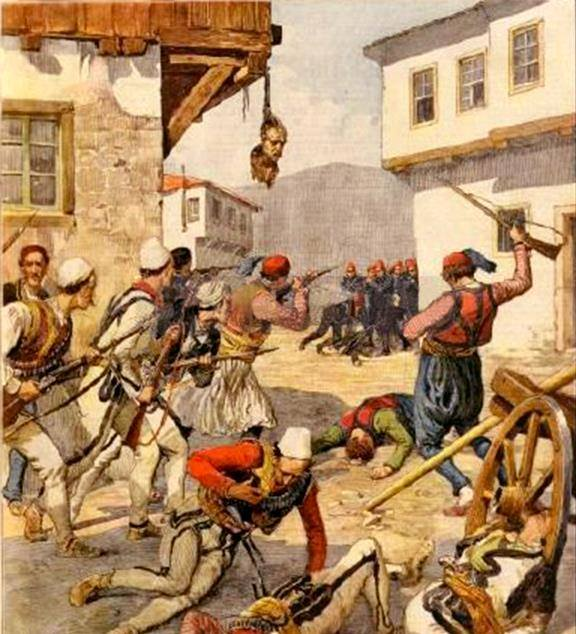
KOSOVO, 1903: Episode of war between Albanian rebels and Turkish soldiers in a village in Kosovo. Source: Italian newspaper: Domenica del Corriere

MIRDITE, 1911: STONE AND AMBUSH FOR THE TURKS Albanian men and women in Mirdite set up stone ambushes against the Turkish invaders, a strategy inherited from the time of Skanderbeg.
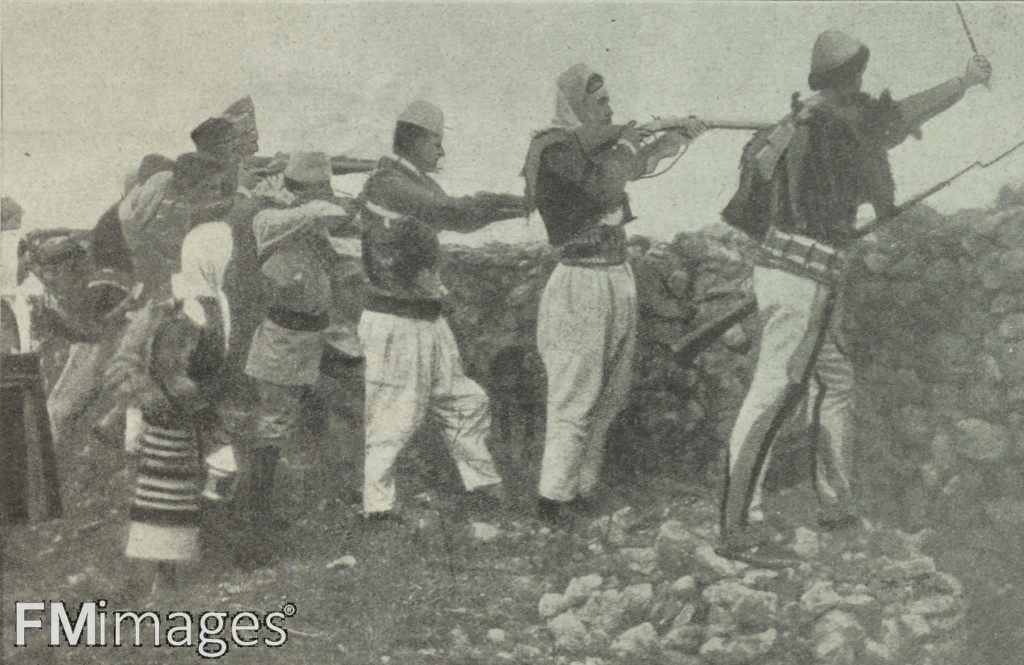
The Uprising in the Highlands of 1911: During the battle against the Turkish invaders in the village of Dinoshë, in the Highlands
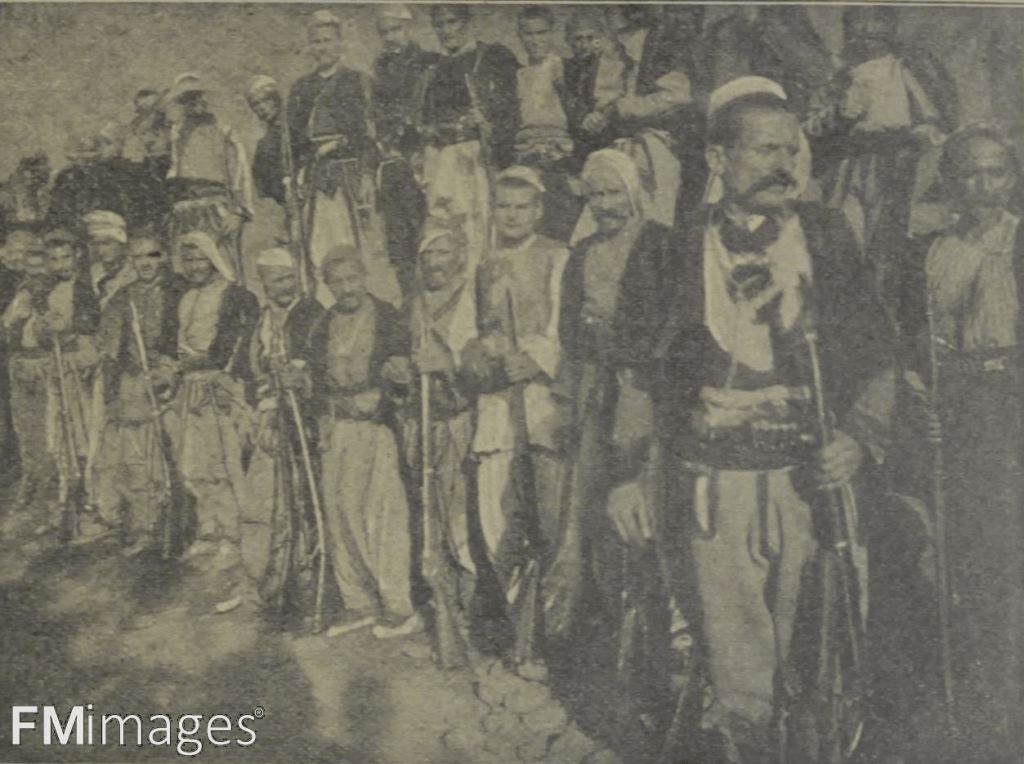
PEJE, 1912: Albanian rebels from the Dukagjini region, against Turkish rule

ALBANIA, 1911: Uprising in Albania, against Turkish rule.
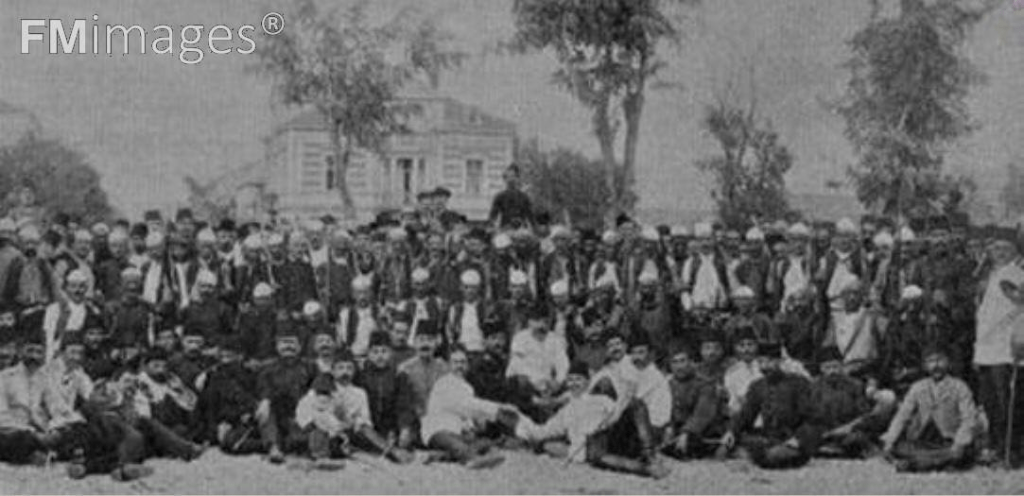
MANASTIR, 1908: Albanian rebels in Manastir against Turkish rule.

SKOPJE, 1912: Bajram Curri with fellow soldiers during the liberation of Skopje from the Turkish invaders. Credit: Luce

Uprising in Albania, 1911: In April 1911, the Uprising began in the Highlands against the Turkish occupation.
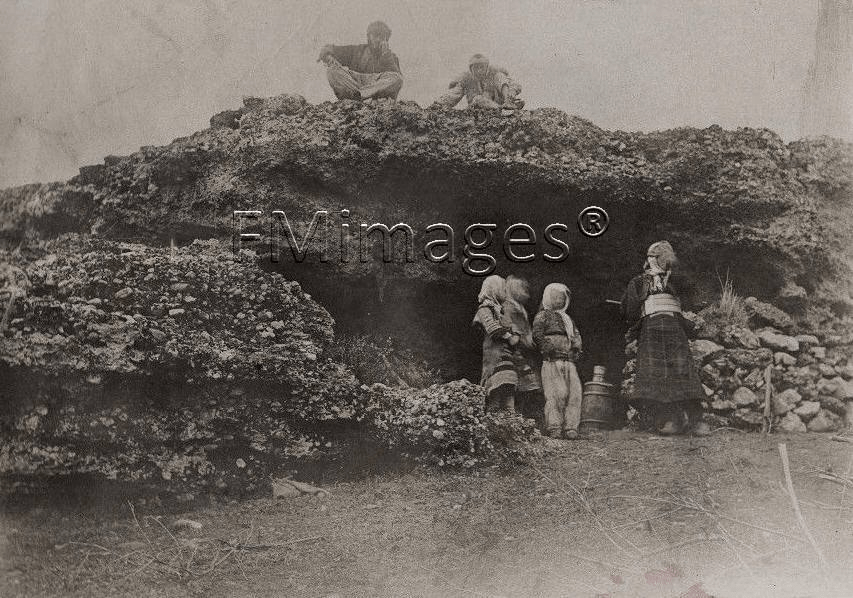
REVOLT IN ALBANIA, 1911: An Albanian refugee family sheltered in a cave in Malesia who fled for fear of Turkish persecution during the Malesia Uprising – 1911.

ALBANIA, 1911: The Highland Uprising – A group of armed insurgents who participated in the revolt led by Dede Gjo Luli, against Turkish rule.

ALBANIA, 1909: Albanians on the verge of uprising against Turkish rule

REVOLT IN ALBANIA, 1910 Idris Seferi with Albanian rebels in Kaçanik, during the uprising against Turkish rule in Kaçanik.
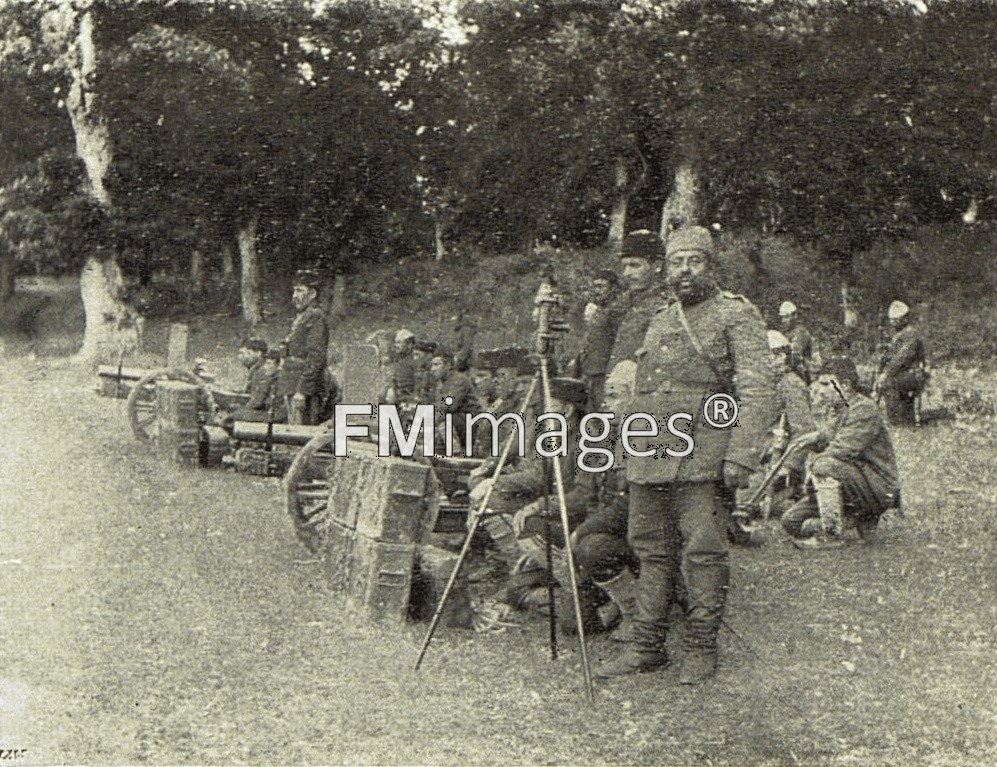
KOSOVO, 1911: Turkish soldiers shelling the village of Isniq near Peja with artillery. During the Albanian uprising in the Dukagjini region. Some Albanian soldiers are also seen here with plis, but it is known that military service during Ottoman rule was compulsory and Albanians were powerless to oppose the orders of their Turkish superiors.

Pristina, 1903: Pristina Prison, the photo shows Albanian prisoners in the Pistina prison during Ottoman rule
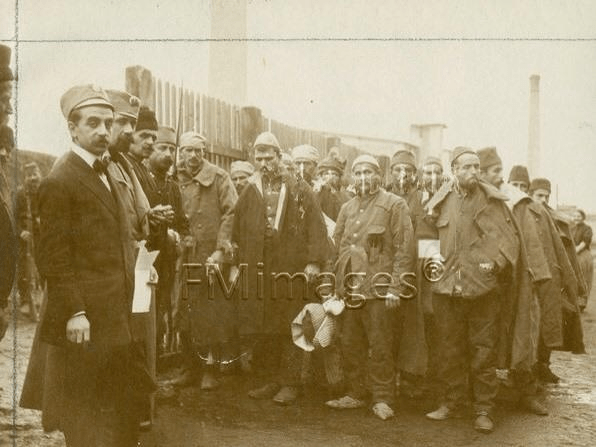
Skopje, 1912: Albanian and Ottoman soldiers, captured as prisoners of war by the Serbs, are deported to Istanbul.
Source
FM Images Albania

 Balkan Academia