
Summary: The 1626 Venetian payroll list of sailors and officers—long interpreted as evidence of Montenegrin mercenaries—actually documents ethnic Albanians serving in the Venetian navy. While Yugoslav historians like Gligor Stanojević argued that “Albanesi” meant Montenegrins, the linguistic and geographic evidence proves otherwise. The soldiers’ names (Gjin, Prenk, Kola, Gega, Leka, Spata, Progoni, Mida, Suma) and places of origin (Shkodër, Lezhë, Ulcinj, Krujë, Bojana, Zadrima, Rodoni) are unmistakably Albanian. The list includes both Catholic and Muslim Albanians, reflecting the multi-confessional character of early modern Albania. Venetian records consistently used “Albanese” ethnically, not geographically—confirming that these were true Albanians, not Slavs.
Introduction
In the historiography of the former Yugoslavia, it has long been claimed that the “Albanians” (Albanesi) serving on Venetian armed barges in the early 17th century were in fact Montenegrins from the coastal hinterland. This position was articulated most famously by Gligor Stanojević in his 1971 article “Jedan platni spisak mornara i oficira mletačkih naoružanih barki iz 1626. godine” (Istorijski zapisi, vol. 24, pp. 363–372).
Yet a close linguistic, geographic, and ethnographic analysis of the 1626 payroll list itself reveals the opposite. The soldiers and sailors registered as Albanesi were overwhelmingly ethnic Albanians — drawn from the Albanian-speaking regions of Shkodër, Lezhë, Ulcinj, Kruja, Zadrima, and Bojana — not Slavic “Montenegrins.”
This article reexamines Stanojević’s document and reconstructs the historical and linguistic evidence showing that the so-called “Venetian Albanians” were truly Albanians in ethnicity, language, and identity.
The Venetian “Militia Albanese”
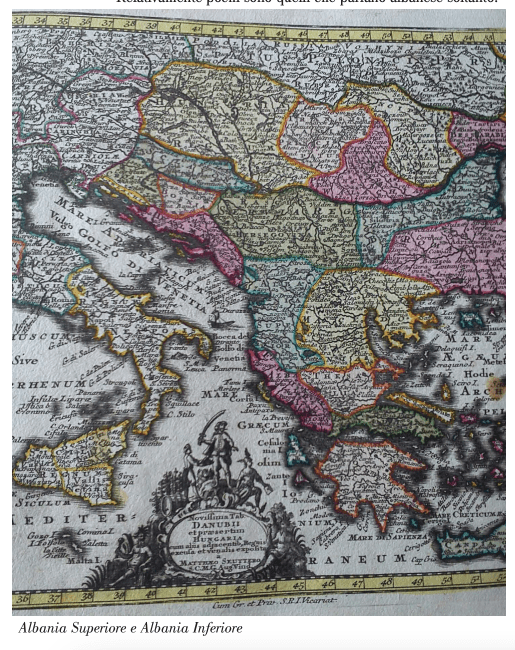
Throughout the 16th and 17th centuries, the Republic of Venice maintained specialized military and naval units known as the Militia Albanese or Compagnie d’Albanesi — “Albanian Companies.” These troops were recruited from Venetian Albania (Albania Veneta), a province extending from Kotor (Cattaro) to Lezhë (Alessio).
Venetian administrative and naval records consistently use the term Albanese ethnically, not merely geographically. “Albanian” meant a soldier of Albanian speech and origin — whether Catholic or Muslim — serving under Venetian command.
The payroll list from November 1626, preserved in the Archivio di Stato di Venezia (series Provveditore generale in Dalmazia et Albania, filza 440), is the most complete surviving register of these men. It names 9 companies (compagnie) with over 450 officers and sailors, their fathers’ names, places of origin, and pay.
Stanojević’s interpretation
In his 1971 commentary, Stanojević concluded that most men listed as Albanesi were “in fact Montenegrins,” arguing that they hailed from “Crna Gora and the present Montenegrin coast.” This interpretation must be understood in its Yugoslav nationalist context. At the time, it was ideologically inconvenient to emphasize a strong Albanian presence along the Adriatic coast — particularly in regions such as Ulcinj, Mrkojevići, Paštrovići, Spič, and Bar, which 20th-century Montenegro claimed as “Slavic.”
However, in the early 1600s there was no Montenegrin ethnic identity in the modern sense, and these areas were ethnographically and linguistically Albanian or bilingual. Venetian sources themselves never use the word Montenegrino — they consistently say Albanese.
Onomastic evidence: The names are Albanian
A careful linguistic reading of the 1626 list demonstrates overwhelmingly Albanian onomastics — personal names, surnames, and toponyms.
Here are some representative examples:
| Venetianized Form (1626) | Albanian Form | Type | Region |
|---|---|---|---|
| Giez Gini | Gjin Gini | Given + Surname | Shkodër |
| Prenz Suma | Prenk Suma | Patronymic | Shkodër |
| Colla Scura | Kola Skura | Surname | Lezhë |
| Pema Spata | Pjetër Shpata | Family of Shpata | Epirus–Venetian Albania |
| Lecha Progoni | Lek Progoni | Noble lineage | Kruja |
| Gegha Mida | Gega Mida | Family name | Shkodër |
| Peppa Laci | Pepa Leçi | Family name | Shkodër |
| Lorenzo da Croia | Lorenc nga Kruja | Toponymic | Krujë |
| Paulo da Scutari | Pal nga Shkodra | Toponymic | Shkodër |
| Meemet da Alessio | Mehmet nga Lezha | Muslim Albanian | Lezhë |
| Assan da Clementi | Hasan nga Kelmendi | Tribal origin | Northern Albania |
| Prenz da Boiana | Prenk nga Bojana | Toponymic | Bojana delta |
| Colla Dallessio | Kola nga Lezha | Toponymic | Lezhë |
| Doda da Blinista | Doda nga Blinishti | Toponymic | Lezhë region |
| Gegha Pessa | Gega Pesha | Family name | Shkodër |
| Nica Leciari | Nikça Leçiari | Surname | Shkodër |
| Ossain d’Antivari | Hasan nga Tivari | Muslim Albanian | Bar |
| Sinan da Dolcigno | Sinan nga Ulqin | Muslim Albanian | Ulcinj |
| Mustafa da Dolcigno | Mustafa nga Ulqin | Muslim Albanian | Ulcinj |
| Paulo da Albania | Pal nga Shqipëria | Explicit ethnicity | “from Albania” |
More than 80 such names occur across the nine companies — about 20% of the entire list — making it statistically impossible to interpret “Albanesi” as merely “Montenegrins.”
Religious and cultural aspects
The 1626 list includes both Catholic and Muslim Albanians.
Catholic names like Gjin, Kola, Prenk, Lek, Pjetër, Marin, Pal coexist with Muslim ones such as Hasan, Mehmet, Jusuf, Sinan, Osman, Ibro.
This religious duality is characteristic of early modern northern Albania, not Montenegro, where Islam had not yet penetrated in the early 17th century.
Venetian recruitment thus reflected the multi-confessional Albanian population of the Adriatic frontier — men who were bilingual, maritime-skilled, and fiercely loyal to their Venetian employers.
Albania Veneta
Every geographic indicator in the payroll corresponds to the Albanian-speaking Adriatic coast:
- Scutari (Shkodër)
- Alessio (Lezhë)
- Croia (Kruja)
- Dolcigno (Ulqin)
- Boiana (Bojana river)
- Rodoni (Cape Rodon)
- Blinista (Blinisht)
- Zadrima
These are unmistakably Albanian toponyms. The repeated appearance of “da Albania” or “d’Albania” makes the ethnic reality explicit.
Venetian Usage of “Albanese”
Contemporary Venetian records show that “Albanese” was not a generic term. In naval payrolls, Albanesi were contrasted with Dalmati, Grechi, or Schiavoni. Each denoted a distinct ethnolinguistic group within the Republic’s forces.
For example:
“compagnia de’ soldati Albanesi”
“barka armata servita da gente Albanese”
In no case is “Albanese” used to mean “Montenegrin.” The very absence of Montenegrino from 16th–17th-century Venetian documents is decisive.
Identity in the Adriatic Frontier
The 1626 payroll reveals a multiethnic, multilingual Adriatic world — but its “Albanesi” were Albanians in the full sense of the term.
The men listed served under Venetian flag, yet maintained their own names, language, and regional identities.
Venetian Albania (Albania Veneta) was thus not a mere provincial label; it was a living Albanian maritime zone, whose people provided sailors, soldiers, translators, and officers to Venice for centuries.
Conclusion
The Venetian Albanesi of 1626 were not “Montenegrins misnamed.”
They were Albanians — Shqiptarë — drawn from the coastal and highland communities of northern Albania, from Shkodër to Ulcinj, Lezhë to Krujë.
Their presence on Venetian armed barges confirms the deep Albanian contribution to the Adriatic maritime tradition and the military history of the Republic of Venice. Stanojević’s reinterpretation, shaped by the nationalist historiography of 20th-century Yugoslavia, cannot stand against the clear linguistic, toponymic, and documentary evidence.
When the Venetian records say Albanesi, they mean exactly what they say: Albanians.
Albanian names in the 1626 Venetian Naval Payroll
| Recorded Name (1626) | Likely Albanian Form | Type / Origin | Notes |
|---|---|---|---|
| Peppa Laci | Pepa Leçi | Family name | Leçi common in Shkodër region |
| Pema Spata | Pjetër Shpata | Noble lineage | From Shpata family (Epirus–Venetian Albania) |
| Colla Scura | Kola Skura | Patronymic | Skura family attested in Albania Veneta |
| Coila Giani | Kola Gjani / Gjinaj | Personal/family name | “Gjin” root Albanian Christian |
| Giez Gini | Gjin Gini | Personal name | Very common Albanian Christian name |
| Vasili Renesi | Vasil Rrënësi | Surname | Rrënës area, Lezhë |
| Nicolo d’Antivari | Nikollë i Tivarit | Toponymic | Tivar (Bar) — Albanian-speaking area |
| Peppa Laci | Pepa Leçi | Family name | Shkodër Catholic family |
| Prenz Scuttari | Prenk Shkodrani | Toponymic | From Shkodër |
| Doda Sinii | Doda Sini | Family name | Northern Albanian (Malësia) |
| Mema Barbazon | Mema Barbazoni | Personal name | Mema = Albanian given name |
| Colla Trumpsci | Kola Trumpësi | Family name | Trumpësi region in Lezhë |
| Gin Sumeza | Gjin Suma | Family name | Famous Shkodran lineage |
| Pema Samarisi | Pjetër Samari | Family name | Appears in Albanian Catholic records |
| Pal Giuroi | Pal Gjuroj | Patronymic | Albanian form of Gjuro / Gjuraj |
| Angel Radi | Angel Radi | Surname | Albanian surname (Shkodër–Ulqin) |
| Prenz da Scuttari | Prenk nga Shkodra | Toponymic | From Shkodër |
| Alexi da Rodoni | Aleksi nga Rodoni | Toponymic | Cape Rodon (northern Albania) |
| Domenico da Scutari | Domenik nga Shkodra | Toponymic | Clear Albanian provenance |
| Paulo da Scutari | Pjetër / Pal nga Shkodra | Toponymic | From Shkodër |
| Prenz da Boiana | Prenk nga Bojana | Toponymic | Shkodër delta area |
| Lorenzo da Croia | Lorenc nga Kruja | Toponymic | From Kruja, central Albania |
| Francesco Poruba | Frang Poruba | Family | Poruba family attested Ulcinj–Shkodër area |
| Paulo da Albania | Pal nga Shqipëria | Explicitly Albanian | Self-identified as “from Albania” |
| Giez d’Albania | Gjin nga Shqipëria | Explicitly Albanian | Recorded as “from Albania” |
| Marco Progoni | Mark Progoni | Family name | Medieval Albanian noble family from Kruja |
| Lecha Progoni | Lek Progoni | Family name | Albanian variant of Alex / Aleks |
| Gegha Mida | Gega Mida | Family name | Common Shkodran surname |
| N’cha Mida | Nikça Mida | Personal name | Northern Albanian (Malësia) |
| Marin Mida | Marin Mida | Family name | Shkodran |
| Gegha Pessa | Gega Pesha | Family name | Pesha surname in Shkodër–Lezhë |
| Gegha Cruta | Gega Kruta | Family name | Kruta family from Krujë region |
| Peppa Grubani | Pepa Grubani | Family name | Albanian Catholic surname |
| Prenz Cruta | Prenk Kruta | Family name | Same lineage as above |
| Bibba Mida | Biba Mida | Family name | Biba = Albanian given name |
| Pera Sestani | Pjetër Shtestani | Toponymic | Shestani = Shestan region (Ulcinj–Shkodër) |
| Nica Leciari | Nikça Leçiari | Family name | Related to Leçi |
| Peppa Samarisi | Pepa Samari | Family name | Albanian |
| Gegha Tiesa | Gega Tiesa | Family | Northern Albania |
| Prenz da Boiana | Prenk Bojana | Toponymic | Shkodër delta |
| Lecha Dallessio | Lek D’Alessio | Toponymic | From Lezhë (Alessio) |
| Peppa Dallessio | Pepa D’Alessio | Toponymic | From Lezhë |
| Colla Dallessio | Kola D’Alessio | Toponymic | From Lezhë |
| Ramo Dallessio | Ramo D’Alessio | Toponymic | From Lezhë |
| Meemet da Alessio | Mehmet nga Lezha | Muslim Albanian | From Lezhë |
| Doda da Blinista | Doda nga Blinishti | Toponymic | Blinishti, region in Lezhë |
| Michir da Zadrima | Mikel nga Zadrima | Toponymic | Zadrima plain, north Albania |
| Giez Mida | Gjin Mida | Family | Shkodër lineage |
| Prenz Tanami | Prenk Tanami | Family | Tanami surname, Shkodër |
| Giez da Potechia | Gjin nga Puka | Possibly “Puka” | North Albania |
| Marin Gionga | Marin Gjonga | Family | Albanian surname |
| Marin da Mussan | Marin nga Mëson (Malësia) | Possibly Albanian | |
| Ivan da Boiana | Gjon nga Bojana | Toponymic | Shkodër river delta |
| Mustafa da Dolcigno | Mustafa nga Ulqin | Muslim Albanian | Ulcinj |
| Sinan da Dolcigno | Sinan nga Ulqin | Muslim Albanian | Ulcinj |
| Assan da Clementi | Hasan nga Klementi | Tribal name | Kelmendi (northern Albania) |
| Ibro da Feelan | Ibro nga Filan (Shkodër) | Muslim Albanian | Possibly “Fushë-Lajë / Velipojë” |
| Assan da Rismani | Hasan nga Rizmani | Muslim Albanian | Albanianized surname |
| Ossain d’Antivari | Hasan nga Tivari | Muslim Albanian | Bar |
| Isuf Cadossi | Jusuf Kadushi | Muslim Albanian | Albanian Muslim name |
| Curt Morsa | Kurt Mursa | Muslim Albanian | Turkish loan used in Albania |
| Elesca Cambassi | Lesh Kambashi | Albanian | Catholic surname from Lezhë |
| Mal Cogliari | Mal Koliari | Albanian | From “Kolaj” |
| Duch Agliari | Dukagjini | Possibly corrupted | “Duch Agliari” ~ “Dukagjini”? plausible |
| Vussain Aimani | Hasan Imani | Muslim Albanian | Imani family, Shkodër |
| Lucca Aimani | Luka Imani | Family | Same lineage |
| Dua Aimani | Duka Imani | Family | Same |
| Gion Sestani | Gjon Shtestani | Toponymic | Shestan area |
| Zvanne da Spizza | Gjon nga Spica | Toponymic | Spič (Ulcinj), Albanian-speaking historically |
| Paolo da Scutari | Pal nga Shkodra | Toponymic | Albanian |
| Andrea d’Alessio | Ndrea nga Lezha | Toponymic | Lezhë |
| Alexi da Rodoni | Aleksi nga Rodoni | Toponymic | Cape Rodon |
| Domenico Michieli | Domenik Mikeli | Family | Albanian Catholic family |
| Prenz Suma | Prenk Suma | Family | Prominent Shkodran clan |
| Nicolo Gini | Nikoll Gjinaj | Family | Albanian Catholic family |
| Prenz da Scuttari | Prenk nga Shkodra | Toponymic | From Shkodër |
| Nicolo da Susana | Nikoll nga Shushani | Toponymic | Shushani near Ulcinj |
| Piero da Risano | Pjetër nga Risan | Toponymic | Risan (Venetian Albania, bilingual) |
| Mattio da Montenegro Vido | Matteo nga Mali i Zi | Bilingual | Likely Albanian family integrated in Montenegro |
| Ivo da Marcovichi | Gjon nga Markoviq | Toponymic | Albanian–Slavic mixed |
| Vuco da Dolcigno | Vuk nga Ulqin | Mixed | Albanian/Slavic bilingual name |
| Marco da Machina | Mark nga Makina | Place name | Kotor–Ulcinj zone |
| Giuro da Machina | Gjuro / Gjura | Albanian form | Catholic Albanian variant |
References
- Stanojević, Gligor. Jedan platni spisak mornara i oficira mletačkih naoružanih barki iz 1626. godine. Istorijski zapisi 24 (1971): 363–372.
- Archivio di Stato di Venezia, Provveditore generale in Dalmazia et Albania, filza 440.
- Kovjančić, R. Pomene crnogorskih plemena u kotorskim spomenicima (XIV–XVI vijek). Cetinje, 1963.
- Frashëri, Kristo. Historia e popullit shqiptar. Tirana: Toena, 2002.
- Norris, H.T. Islam in the Balkans: Religion and Society between Europe and the Arab World. Columbia, 1993.
- Šufflay, Milan. Serbët dhe Shqiptarët: Ndikimet kulturore ndërmjet Adriatikut dhe Ballkanit. Tirana, 1925.
- ResearchGate. “Albanian Soldiers in the Venetian Land Army across the Adriatic (18th Century).”

 Balkan Academia